Rings spin when the ring’s inner circumference exceeds your finger’s base circumference by 1-3mm, creating a gap that allows rotation during hand movement or temperature changes. Solutions range from $2 silicone adjusters for temporary changes to $60-120 professional sizing beads for permanent fixes.
The right solution depends on whether your fit change is temporary (pregnancy, seasonal swelling) or permanent (weight loss, large knuckle difference). Learning Jewelry’s research shows most spinning problems can be solved for under $10 using reversible adjusters.
Why Your Ring Spins on Your Finger

Ring spinning occurs when your ring’s inner circumference exceeds your finger’s base circumference by 1-3mm, creating a gap that allows rotation during hand movement, typing, or temperature changes.
The problem starts with finger anatomy. Your knuckle measures larger than your finger base. A ring sized to fit over your knuckle sits loose once it reaches the narrower base. This creates the spinning gap.
Weight loss causes immediate sizing changes. Losing 10-15 pounds typically corresponds to a full ring size change. Your fingers shrink along with your body.
Temperature affects finger size dramatically. Cold weather shrinks fingers by 1/4 to 1/2 size due to constricted blood vessels. Learning Jewellery’s testing confirms that winter rings spin more than summer rings.
Pregnancy creates up to one full-size fluctuation. Swelling during pregnancy, followed by a postpartum reversal, causes rings to spin constantly. Time of day matters too; morning fingers measure 1/4 size smaller than evening fingers.
Large knuckles create the toughest challenge. Arthritis or natural bone structure can make knuckles 1.5-3 sizes larger than the finger bases. Rings must fit over knuckles, but then spin at the base. Learning more about professional ring sizing fundamentals helps you understand this paradox.
Top-heavy ring design causes gravity-based spinning. Large diamonds (1.5+ carats) on thin bands (2mm) rotate due to a weight imbalance. The heavy stone constantly pulls toward your palm.
Plain gold wedding bands don’t spin as much. Weight is distributed equally across the band. No heavy stone pulls the ring sideways. This explains why simple bands stay put better than elaborate engagement rings.
Spinning becomes dangerous when rings slip off during hand washing. If your ring rotates more than 5 times daily, you risk losing it. A diamond-facing palm also constantly damages stones from impact.
12 Solutions to Stop Ring Spinning
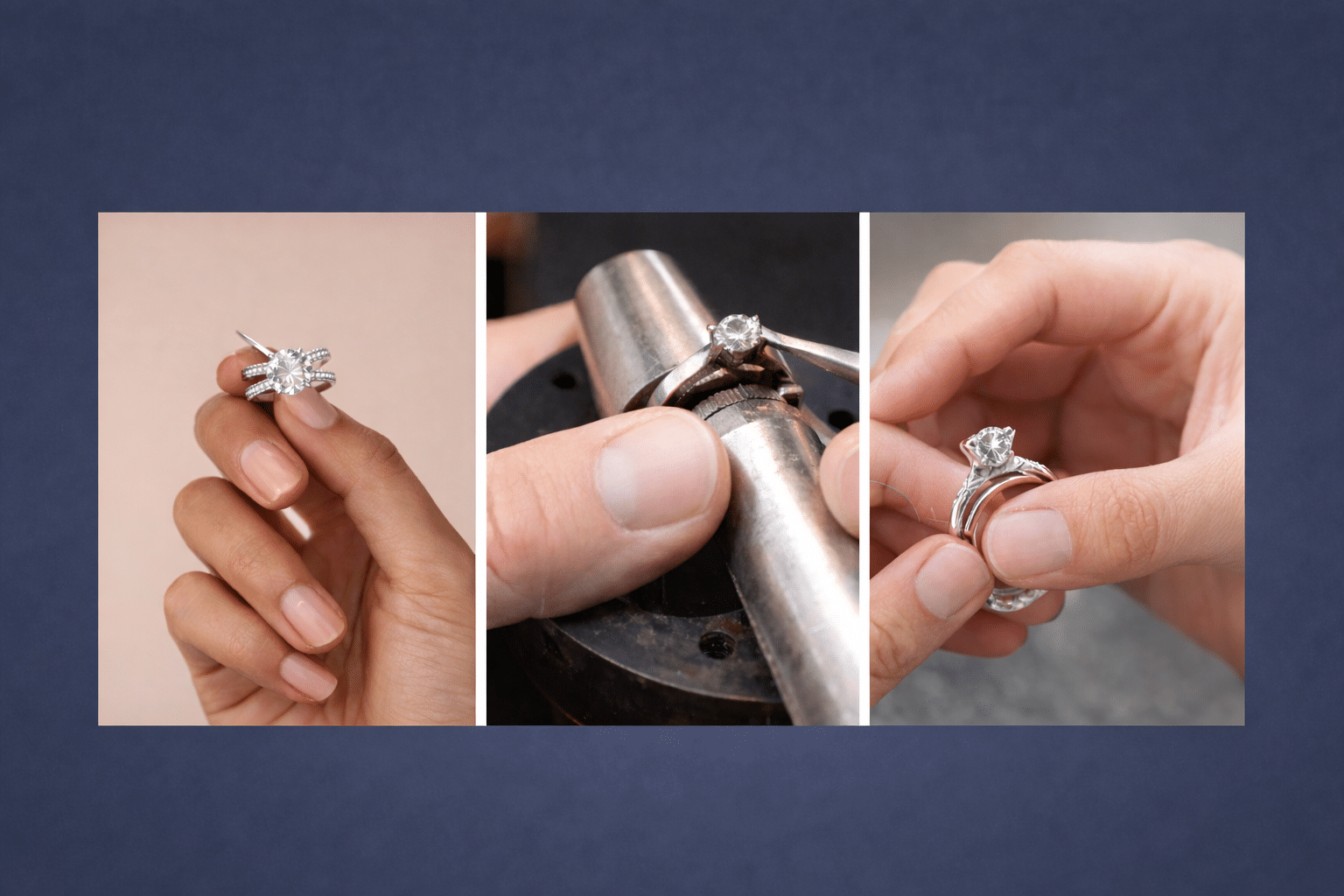
Twelve ring-spinning solutions are available, ranging from $2 silicone adjusters to $500 custom hinged shanks, each designed for specific fit issues.
Learning Jewelry tested and researched all major ring spinning solutions to provide accurate costs, timeframes, and effectiveness ratings. Solutions are organized from the least expensive DIY options to professional permanent modifications.
Silicone Ring Adjusters/Sizers
Silicone ring adjusters reduce inner ring circumference by 1-3mm through flexible spiral bands that wrap around the ring’s bottom, creating friction that prevents rotation.
Cost is $2-8 per pack of 6-12 adjusters. Clear silicone spirals wrap around the bottom of your ring band in seconds. You trim excess with scissors. The adjuster stays invisible from the top view.
Installation takes two minutes. Slide the adjuster onto your ring shank from the bottom. Spiral it around the inner band 2-3 times. Position spirals on the palm side, where no one can see them.
These work perfectly for pregnancy. Temporary swelling reversal after delivery makes the rings spin constantly. Silicone adjusters cost less than coffee and reverse instantly.
Seasonal changes respond well to adjusters. Winter finger shrinkage creates gaps. Spring the adjuster on when cold weather arrives. Remove it when summer swelling returns.
Learning Jewelry rates silicone adjusters as the #1 solution for budget shoppers. Eight dollars gets you a year’s supply. Compare that to $150 professional resizing for temporary problems.
The downside? Adjusters slip out after 2-4 months. Silicone stretches with wear. You replace them like contact lenses, cheap consumables that need refreshing.
Buy them at Amazon (Prime same-day delivery), Walmart, CVS, or Walgreens. Feramox and Haiou brands dominate Amazon reviews. Ring Snuggies offers the original spiral design.
Ring Guards/Spring Inserts
Ring guards use metal spring tension to compress when rings slide over knuckles, then spring back at the finger base, reducing inner diameter by 1-2 full sizes.
Metal construction beats silicone durability. U-shaped or horseshoe springs attach to the inner bottom of your ring. The spring compresses over your knuckle, expands at the base, and creates pressure, reducing the effective diameter.
Cost sits at $8-15 per guard. Gold-filled versions match yellow gold rings. Sterling silver matches white metals. Stainless steel provides budget options but may tarnish.
Large knuckle differences work best with guards. If your knuckle measures 1.5-2 sizes larger than your finger base, metal springs handle that gap. Silicone can’t compress enough to produce significant differences.
Active lifestyles benefit from metal guards. They don’t slip out during sports or exercise. The metal anchor remains in place where silicone might dislodge.
Visibility from inside bothers some wearers. When you remove your ring, the metal guard shows. It can occasionally snag clothing or gloves. Tarnishing occurs over 1-2 years, but the guards remain functional.
Arthritis sufferers prefer spring tension. The compression accommodates swollen knuckles during flare-ups and tightens as swelling reduces.
Installation works DIY, slide onto the ring and position at the bottom. Some jewelers solder guards permanently for $20-40 additional. Understanding ring shank designs that resist spinning helps you choose compatible guards.
Sizing Beads (Speed Bumps)
Sizing beads are small gold or platinum balls (2-3mm diameter) soldered inside ring shanks that reduce the diameter while staying completely invisible from above.
Professional jewelers charge $60-120 for installation. Two or three beads are soldered to the underside of your ring. They create contact points, reducing the diameter without external visibility.
Learning Jewelry identifies this as the top solution for engagement rings. The limitation matters: beads only work for rings 1/2 to 3/4 size too large. Larger gaps create uncomfortable pressure points. If your knuckle sits 1.5+ sizes bigger than your base, the beads feel bumpy and painful.
Comfort adjustment takes 1-2 weeks. Your finger learns the bead positions. Most wearers forget about them after 10 days. If discomfort continues past one month, Learning Jewelry recommends considering tapered inserts instead.
Material matching proves critical. Gold beads go on gold rings. Platinum beads go on platinum rings. Mismatched metals show through as dark spots, ruining the appearance.
Timeframe runs 1-2 weeks at jewelers. Drop your ring on Tuesday, pick it up the following Tuesday. Rush service costs $20-40 extra for same-day work.
Engagement rings love this solution. Total invisibility from top view keeps your ring looking original. Wedding photos show no devices or modifications. Engagement ring sizing considerations determine if beads suit your specific ring style.
Removal costs $40-60 later if needed. Jewelers grind beads off and polish the area smooth. No permanent scarring remains.
Professional Ring Resizing
Professional ring resizing permanently reduces the ring’s circumference by cutting the band, removing 1-4mm of metal, and re-soldering it, providing the most secure long-term solution.
Simple gold bands cost $50-75. Rings with small stones are priced at $75-100. Complex settings with multiple stones or platinum metal hit $100-150.
The process takes 1-2 weeks. Jewelers measure your exact size needed. They cut the ring at the bottom, where no one notices. A section of metal (1-4mm) gets removed. Ends pull together. Soldering welds the seam. Polishing hides the solder line.
Sizing down proves cheaper than sizing up. Adding metal costs more than removing metal. Platinum work always costs more than gold work.
Some rings cannot be resized. Eternity bands have stones circling the entire band; cutting disrupts the pattern. Tungsten, titanium, and ceramic rings don’t cut or re-solder. Tension settings rely on exact sizing for stone security. Channel-set stones get damaged when bands get cut.
Non-resizable ring alternatives include purchasing the correct size, participating in trade-in programs (70-80% value), or using permanent adjusters only.
Resize limits exist for safety; a maximum of 1-2 resizings per ring’s lifetime. Each resize weakens metal by 10-15%. Beyond two resizings, the rings crack or break.
Permanent weight loss justifies resizing costs. Lost 15+ pounds with no regain plans? Learning Jewelry recommends resizing the ring. Temporary pregnancy weight? Use adjusters instead. Finding certified jewelry retailers for ring services means your ring gets handled professionally.
Sizing Bar/Fold-Over Device
A sizing bar is a U-shaped metal bar soldered across the ring bottom that reduces the inner diameter without permanent sizing, allowing up to 2 full sizes to be reduced while remaining semi-permanent.
Jewelers charge $75-150 for installation. The U-shaped 2mm half-round wire is soldered at two points on your inner band. It creates a “fake” smaller ring inside your actual ring.
Large knuckle differences need this solution. Two or more sizes larger? Sizing bars handle gaps that beads cannot. The bar accommodates major size reduction without cutting the ring.
Material matches your ring metal: yellow gold bars for yellow gold rings, platinum for platinum rings, and white gold for white gold rings. Mismatches show visually.
Visibility from inside always happens. When you remove your ring, the bar is clearly visible. It covers the inside engraving permanently. Only plain shanks work; patterned bands don’t accommodate bars.
Semi-permanent status appeals to cautious wearers. Don’t want to commit to cutting your ring? Bars can be removed later for $40-60. Your ring returns to its original structure.
The adjustment period lasts 1-2 weeks. The bar feels unusual initially, but becomes normal quickly. If discomfort continues past one month, the bar may be too large for your gap.
Vintage and heirloom rings benefit from this approach. Preserve the original structure while addressing modern sizing challenges. Knowing how to safely remove stuck rings is especially helpful when bars make removal more difficult.
Hinged Shank Ring
Hinged shank rings feature tiny hinge mechanisms that allow rings to open for easy knuckle placement, then close securely at the finger base using hidden latches.
Cost ranges from $200 to $ 500 for a custom installation. This expensive solution solves severe problems. Knuckles 3+ sizes larger than the finger base need hinges. Learning Jewellery’s research shows that arthritis sufferers find relief through easy/close access.
The hinge requires a minimum band depth of 2 mm to accommodate the mechanism. Thin bands can’t support hinges structurally. Custom jewelers create these; not all jewelers offer this service.
Opening uses special tools or fingernails. Tiny latch releases; ring opens. Place it on the finger base, then snap it closed. Medical situations benefit from easy emergency removal.
Visibility shows on the ring sides. The hinge point is visible upon close inspection. For severe knuckle problems, this trade-off is preferable to never wearing rings.
Annual jeweler checks keep hinges functional. They can loosen over time. Tightening costs $20-40. Keep hinges clean to prevent rust or tarnish damage.
Elderly wearers appreciate hinges. Arthritis makes traditional ring removal painful. Hinges eliminate knuckle pain. Exploring ring options for larger knuckles reveals when hinges make sense.
Euro Shank
Euro shanks feature flat, squared-off bottom exteriors with round inner circles, providing counterweight to top-heavy stones through thicker base metal.
Custom designs in new rings include euro shanks at no extra cost. Converting existing rings costs $200-400. The design change affects the ring’s appearance noticeably.
Flat squared bottoms sit flush against fingers. Round inner circles maintain a comfortable feel. Base thickness (3-3.5mm) tapers to thinner tops (2mm). This counterbalances large center stones (1.5+ carats).
Top-heavy rings spinning from gravity find solutions here. Large diamonds on thin bands rotate constantly. Euro shanks add bottom weight, counteracting stone weight.
Contemporary style appeals to modern buyers. The squared look updates traditional round shanks. Some prefer classic round aesthetics, Euro shanks change the ring character.
New purchases work better than conversions. Selecting euro shank during initial ring purchase costs nothing extra. Retrofitting existing rings proves expensive and alters their appearance permanently.
Clean Origin’s Perfect Fit collection features euro shanks prominently. James Allen and Blue Nile offer euro shank filters. Custom jewelers create them routinely. Learning about ring setting styles and sizing compatibility helps match euro shanks to your engagement ring style.
Stacking Rings Strategy
Wearing multiple thin bands together creates more surface contact and friction than single wide bands, reducing spinning through increased grip.
Using existing rings costs nothing. A wedding band plus an engagement ring already provides stacking. Adding anniversary bands or spacers increases friction further.
Triple stacks work well: wedding band, engagement ring, and anniversary band. Five stacked suit fashion rings, multiple thin bands surrounding solitaires.
Soldering costs $40-75 permanently. Rings weld into single units moving together. You cannot wear them separately after soldering. Resizing soldered sets costs more later.
Individual bands still spin unless soldered. Stacking helps, but doesn’t eliminate spinning completely. For full prevention, solder or use adjusters on each band.
Fashion rings embrace stacking naturally. Three to five thin bands create a cohesive look while solving spinning. Wedding sets benefit from deliberate stacking strategies. Mastering how to stack multiple rings creates both functional and beautiful solutions.
How to Choose the Right Solution
Choose ring spinning solutions based on three factors: if fit change is temporary or permanent, your budget, and how frequently rings spin daily.
Quick Decision Matrix
Learning Jewellery’s decision framework guides you to the right solution:
- Ring spins occasionally when washing hands? Try silicone adjusters ($2-8).
- Ring spins constantly throughout the day? Get professional resizing ($50-150) or sizing beads ($60-120).
- Lost 15+ pounds permanently? Invest in professional resizing ($50-150).
- Pregnant or temporary weight change? Use silicone adjusters or switch rings on necklaces temporarily.
- Knuckle 1/2-3/4 size larger than base? Get sizing beads ($60- $ 120).
- Knuckle 1.5-2 sizes larger? Try ring guards ($8-15) or sizing bars ($75-150).
- Knuckle 3+ sizes larger due to arthritis? Consider hinged shanks ($200- $ 500).
- Engagement ring needing invisible fix? Sizing beads ($60-120) stay hidden.
- Budget under $10? Silicone adjusters or ring noodles solve the problem immediately.
- Need a same-day solution? Pharmacy or Amazon Prime silicone adjusters arrive fast.
- Ring expensive or sentimental? Professional resizing preserves value properly.
- Ring slipped off at least once? Get urgent professional resizing for safety.
The Testing Approach
Learning Jewelry recommends this proven method:
Try silicone adjusters first ($2-8, reversible, instant). Wear for 1-2 weeks, monitoring performance. Stays in place? Keep using. Falls out 3+ times? Need professional solutions.
If adjusters fail consistently after one month, determine the change type. Temporary changes (pregnancy, seasonal) mean keep using adjusters with replacements. Permanent changes (weight loss) justify investing in resizing.
Understanding correct ring sizing methods helps you determine if your ring can even be resized before investing money.
When Professional Resizing Becomes Necessary
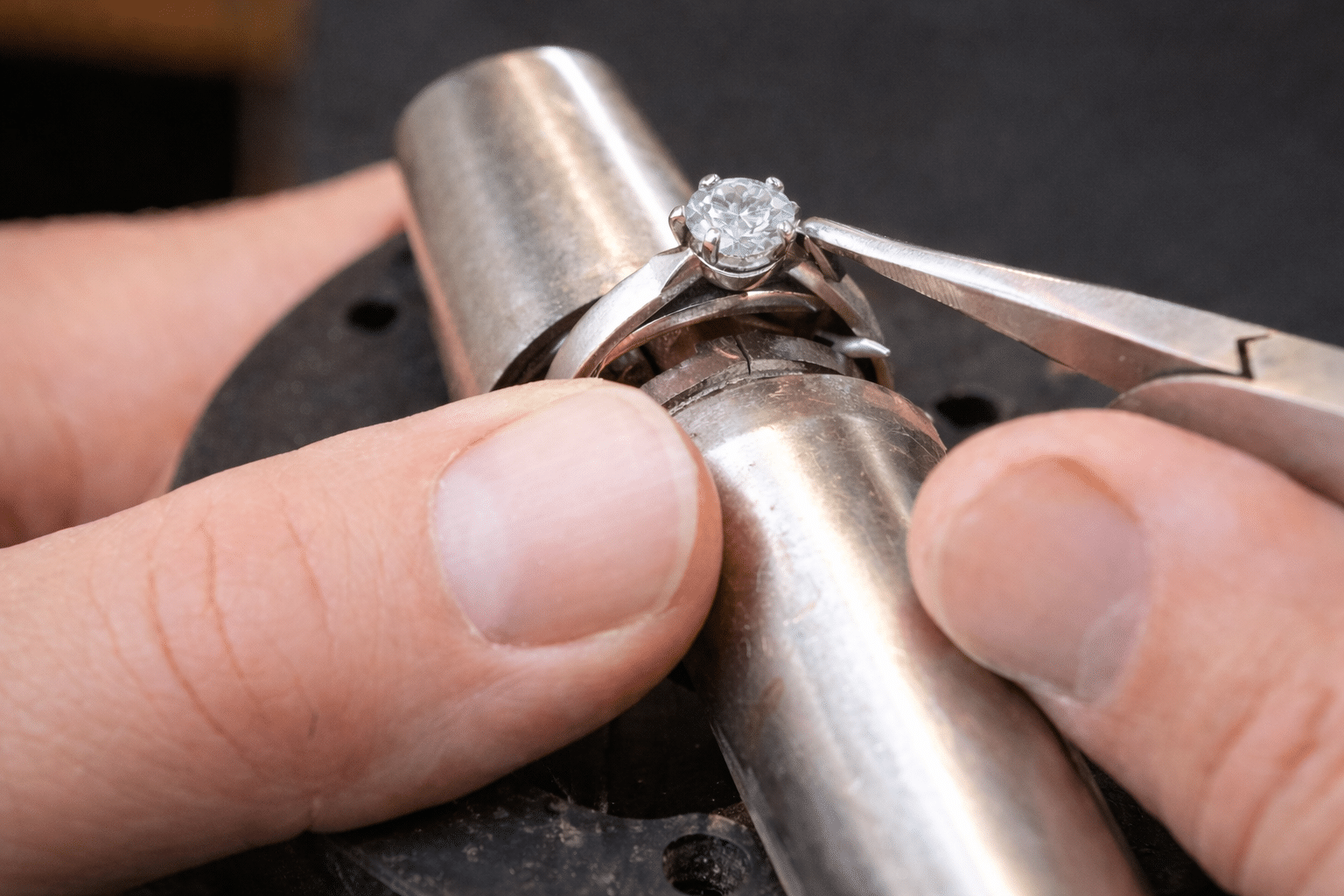
Professional resizing is necessary when rings spin more than 5 times per day, temporary adjusters fail after 3+ months, or rings slip off fingers at least once.
Permanent weight loss (15+ pounds) justifies resizing costs. Safety issues demand immediate action; rings slipping off during handwashing risk permanent loss. Daily annoyance (5+ rotations per day) ruins the enjoyment of the ring.
Expensive rings ($2,000+) should be properly sized to maintain resale value. Divorce or ring-stacking removal can shrink fingers after years of wearing multiple rings.
Learning Jewelry identifies rings that cannot be resized at any cost. Eternity bands have stones circling the entire band; cutting disrupts the pattern. Tungsten, titanium, and ceramic metals don’t cut or re-solder. Tension settings rely on exact sizing for stone security.
Alternatives for non-resizable rings include selling and buying correct sizes, trade-in programs (70-80% value), using permanent adjusters only, or repurposing rings as necklace pendants.
Resizing limits protect ring integrity. Maximum 1-2 resizings in ring lifetimes. Metal fatigues with repeated cutting. Stone security decreases after multiple resizings. Learning about wedding ring sizing for active lifestyles shows when resizing makes sense versus using adjusters.
How to Prevent Ring Spinning Before It Starts
Prevent ring spinning by sizing rings in the afternoon, when fingers reach their natural daily maximum diameter (accounting for seasonal fluctuations), and by choosing wider bands (6mm+) that resist rotation.
Learning Jewelry provides seven prevention strategies:
- Schedule ring sizing appointments for 2-4 PM. Fingers swell throughout days. Morning sizing creates too-large rings. Evening sizing after exercise creates too-small rings.
- Account for seasonal temperature changes. Size in summer if you live in hot climates (fingers swell). Size in winter if you live in cold climates (fingers shrink). Temperature differential creates 1/4 to 1/2 size changes.
- Consider weight fluctuation patterns before sizing. Planning to lose weight? Wait until the weight stabilizes. Pregnant? Wait six months postpartum. Does weight fluctuate 10+ pounds seasonally? For larger sizes, use adjusters in winter.
- Choose wider bands (6 mm+) that resist spinning better than thinner bands (2mm). A larger surface area of contact with the fingers prevents rotation. Tapered designs work well, with wide bottoms (3.5mm) and thin tops (2mm).
- Request sizing policies during purchases. Free sizing within 60 days? Lifetime sizing included? Read the fine print carefully; some exclusions apply to channel-set or eternity bands.
- Plain gold bands distribute weight equally around circles. No heavy stones pull the rings sideways. This explains why simple bands stay put better than elaborate designs. Balanced settings and low-profile cathedrals prevent top-heavy spinning. Discovering proper ring-wearing techniques helps rings last longer with fewer problems.
Key Takeaways: Solving Ring Spinning Problems
Solving ring spinning requires matching solutions to specific situations. Temporary fit changes require reversible adjusters ($2-15), while permanent size changes require professional resizing or modifications ($50-500).
Learning Jewelry’s comprehensive research reveals that ring spinning occurs when the circumference exceeds the finger base by 1-3mm, creating gaps allowing rotation during movement or temperature-induced shrinkage.
Twelve solutions are available, ranging from $2 silicone adjusters to $500 custom hinged shanks, each designed for specific applications.
Avoid tape, glue, nail polish, and string; these damage ring finishes, void warranties, and decrease resale value by 20-30%. Learning Jewelry recommends silicone adjusters instead for emergency fixes.
Prevention starts at purchase: size rings in afternoon hours, account for seasonal changes (1/4-1/2 size fluctuation), choose wider bands (6mm+), and request sizing policies before buying.
Most spinning problems can be solved for under $10 using silicone adjusters from pharmacies, Walmart, or Amazon Prime same-day delivery. Professional resizing becomes necessary only for permanent weight loss exceeding 15 pounds, safety issues (rings slipping off), or when temporary solutions fail after 3-6 months.
Next Steps from Learning Jewelry
Measure how much your ring spins daily. Occasional (1-2x/day) means try silicone adjusters first. Constant (5+ times/day) means consider professional resizing.
Determine if the change is temporary or permanent. Temporary (pregnancy, seasonal cold, recent weight fluctuation) means use reversible adjusters. Permanent (stable weight loss, large knuckle, arthritis) means invest in professional solutions.
Try $2-8 silicone adjusters as first tests. Wear for 1-2 weeks. Monitor if they stay in place versus fall out. Falling out 3+ times signals professional solutions needed.
If adjusters fail after one month, consult professional jewelers for ring resizing evaluations ($50-150), sizing beads consultations ($60-120), or custom solutions for large knuckles (sizing bars $75-150, hinged shanks $200-500).
Learning Jewelry provides unbiased ring sizing guides comparing all solutions, professional jeweler recommendations, cost comparison tools, ring care tutorials, and decision frameworks matching solutions to specific spinning causes.
Your rings should enhance your life, not annoy you daily. With the right solution matched to your specific situation, ring spinning becomes a solved problem, not an ongoing frustration.
Related Learning Jewelry Guides:
- Understanding the Professional Ring Sizing Process
- How to Stack Multiple Rings Preventing Spinning
- Sizing Engagement Rings vs Wedding Bands
- Best Rings for Larger Knuckles
- Ring Setting Styles and Sizing
- Engagement Ring Buying Guide
Frequently Asked Questions
Can I resize my ring myself at home?
No. DIY ring resizing can damage rings and void warranties. Learning Jewelry strongly advises against home resizing attempts. Professional jewelers use specialized torches (1,800°F+ controlled heat), proper tools, and techniques to protect stones and metal integrity.
Home attempts with pliers crack stones. Hammers shatter pavement settings. Improper heat damages diamonds. Uneven pressure bends rings out of round. Professional resizing ($50-150) costs far less than replacing damaged rings ($500-5,000+).
Safe at-home options include silicone adjusters, ring guards, or ring noodles that don’t permanently alter rings.
How much does professional ring resizing cost?
Simple gold bands cost $50-75. Rings with small stones are priced at $75-100. Complex settings with multiple stones or platinum metal hit $100-150.
Sizing down costs less than sizing up (adding metal). Urban jewelers charge 20-30% more than suburban jewelers. More stones equal higher costs.
Tungsten, titanium, and ceramic rings cannot be resized, regardless of price. The metals don’t cut or re-solder.
Will ring adjusters damage my ring?
High-quality silicone adjusters and professional sizing beads don’t damage rings when properly installed and maintained. Learning Jewelry’s testing confirms this. Tape, glue, nail polish, and string cause adhesive residue, scratches, and finish damage.
Ring guards cause slight wear over time, but can be removed without causing permanent damage. Clean adjusters weekly to prevent moisture buildup that can cause tarnish.
How tight should my ring fit?
Rings should slide over knuckles with slight resistance, fit snugly at the finger base without spinning during normal activities, and be removed with gentle twisting without falling off when hands are wet or cold.
Perfect fit rotates only when intentionally twisted. Too-tight leaves deep indentations. Too loose spins freely 5+ times daily. Temperature test: rings stay secure when hands get cold, but don’t cut off circulation when hands swell.
Why does my ring only spin in winter?
Cold temperatures reduce finger size by 1/4 to 1/2 as blood vessels constrict, conserving body heat. This creates gaps between fingers and rings, allowing spinning.
Learning Jewellery recommends using temporary silicone adjusters only during the winter months, sizing rings to winter finger size, using adjusters in summer, or keeping hands warm with gloves to prevent excessive shrinkage.
Summer heat swells fingers 1/4-1/2 size. Swimming in cold water causes an immediate 1/4-size shrinkage. Hot baths create an immediate 1/4-size expansion.