

You’ve spotted “925” stamped inside your ring or on a necklace clasp. That three-digit number tells you exactly what you’re holding: sterling silver jewelry containing 92.5% pure silver and 7.5% metal alloy. This 925 jewelry mark represents the international quality standard for silver, distinguishing real sterling silver from silver-plated pieces or base metals.
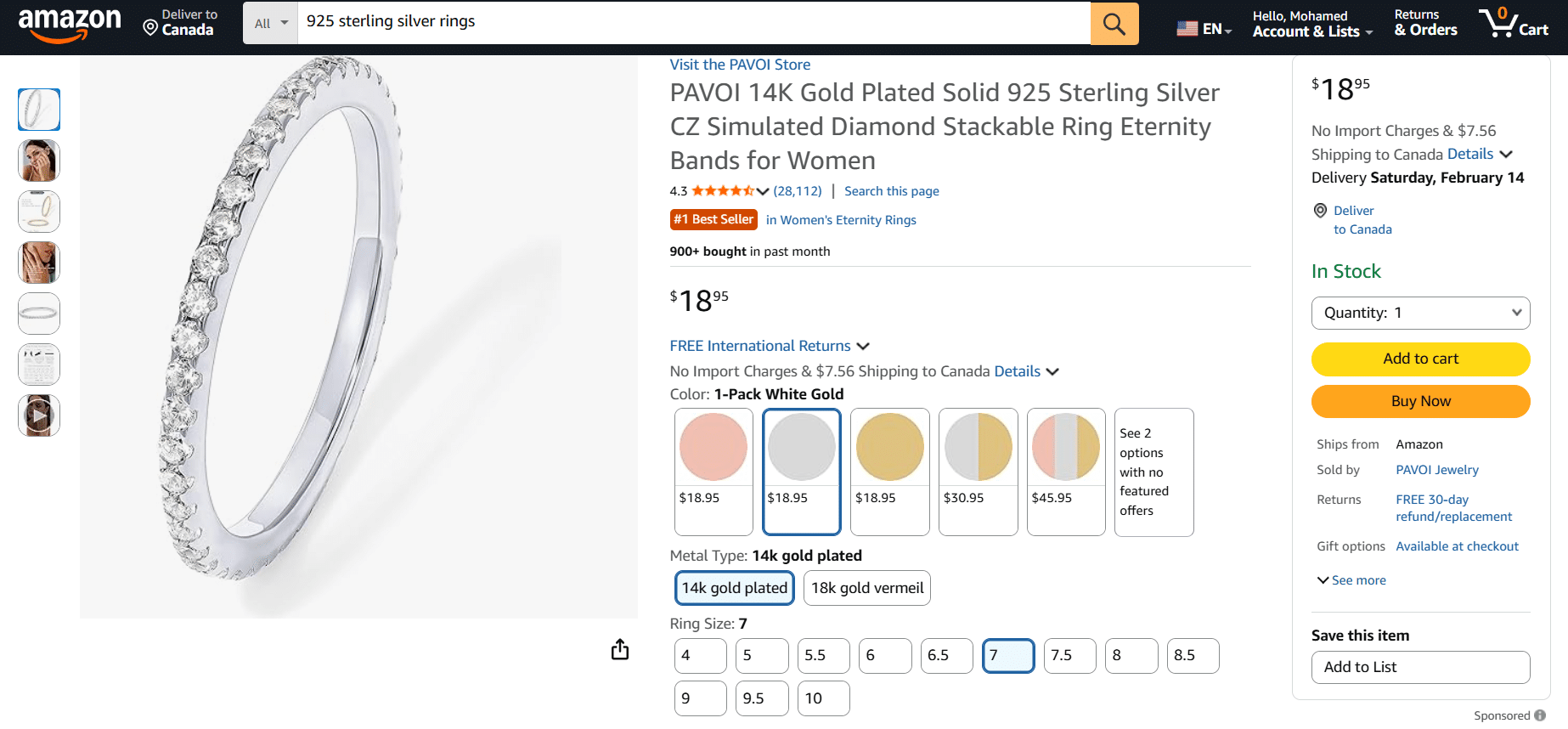
Minimalist. Stackable. Sparkling. Best-seller. Everyday-luxury.
Sterling silver uses copper alloy for durability since pure silver bends too easily for everyday wear. The 925 jewelry stamp appears on rings, necklaces, earrings, and bracelets worldwide, guaranteeing genuine silver content that holds value as a precious metal. Understanding this marking helps you verify authenticity, assess worth, and care for silver jewelry properly.
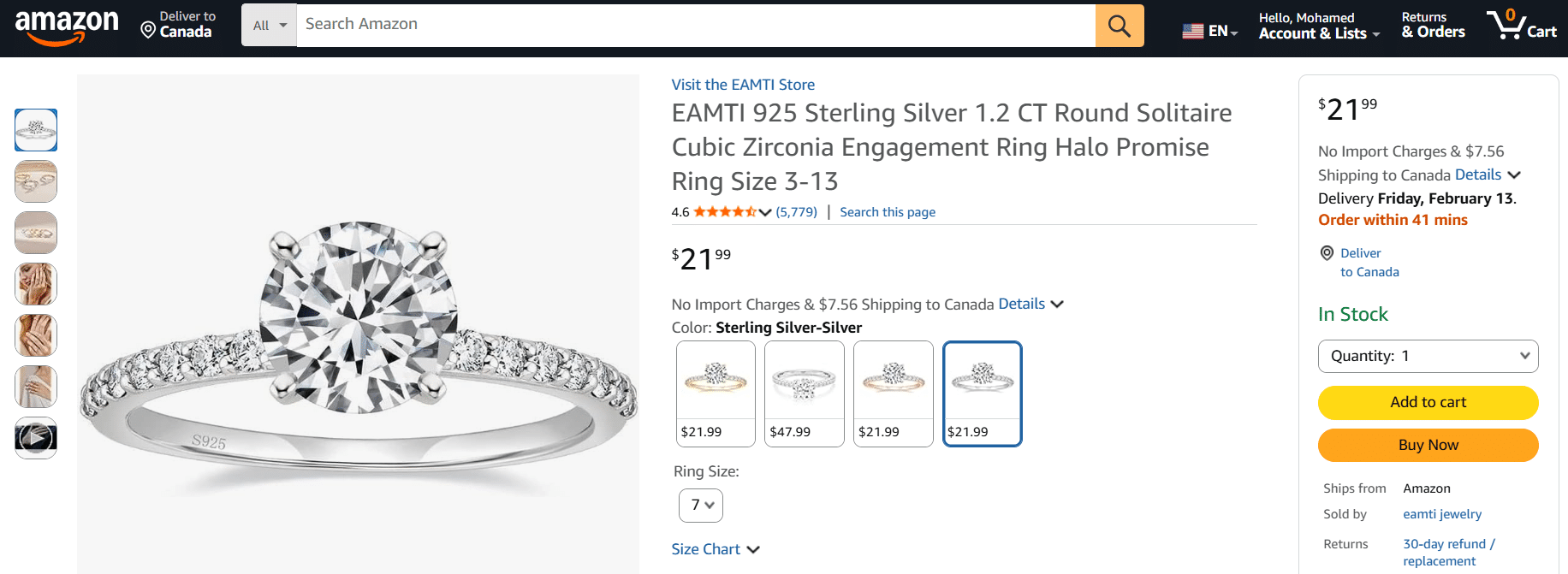
Elegant. Sparkling. Classic. Affordable. Engagement-ready.
What Does 925 Mean on Jewelry?
925 on jewelry means the piece contains 92.5% pure silver and 7.5% other metals, meeting the international sterling silver standard. This composition creates durable jewelry that maintains silver’s white luster while resisting the bending and scratching that makes pure silver impractical.
The 925 jewelry meaning traces back to centuries-old silversmithing standards. Pure silver (also called fine silver or 999 silver) measures 2.5 on the Mohs hardness scale, soft enough to dent with a fingernail. Adding 7.5% copper brings hardness to 3.0, producing metal that holds settings securely, maintains ring shapes, and withstands daily wear.
Legitimate manufacturers stamp “925” on every piece to verify silver content. You’ll find this 925 jewelry stamp:
- Inside ring bands (near the sizing marks)
- On necklace clasps and chain tags
- Behind earring posts or on butterfly backs
- On bracelet clasps or connector links
- Underneath pendant bails

Certified. Luxury. Brilliant. Timeless. Engagement-perfect.
Some pieces show alternative stamps like “S925,” “Sterling,” “STER,” or “STG”, all indicating the same 92.5% purity. Regional variations include “925 Italy” (manufactured in Italy) or “925 China” (manufactured in China), though the silver content remains identical regardless of origin.
Missing stamps raise authenticity concerns. Real sterling silver always carries verification marks. Unmarked pieces typically indicate silver plating over base metal, not solid silver construction.

Minimalist. Stackable. Affordable. Everyday-wear. Trendy.
Why is Sterling Silver 92.5% Not Pure Silver?
Pure silver is too soft for jewelry at 2.5 on the Mohs hardness scale, requiring copper alloy addition to reach 3.0 hardness for wearable durability. This trade-off between purity and practicality creates jewelry that lasts years rather than weeks.
Pure 999 silver behaves almost like thick clay. A pure silver ring would:
- Bend out of round with normal wear
- Scratch deeply from contact with keys or coins
- Lose prong settings holding gemstones
- Dent from pressure or impacts
- Deform if worn during physical activities
Copper specifically strengthens silver because both metals share similar atomic structures, creating a stable alloy that appears white-silver without color changes. The 7.5% copper addition increases hardness by 20% while maintaining the bright metallic appearance silver jewelry requires.
Other alloys work less effectively. Zinc creates brittleness at the percentages needed for hardening. Nickel causes allergic reactions in 10-15% of wearers. Copper provides strength without significant downsides, explaining its universal use in the 925 jewelry standard.
Some manufacturers produce Argentium silver, a variation using germanium instead of copper, for people with copper sensitivities. These pieces still stamp “925” since germanium serves the same strengthening purpose while meeting purity requirements.
The 92.5% ratio balances multiple factors: maximum silver content for value, minimum alloy for durability, and optimal properties for shaping jewelry. Going to 95% silver (950 Britannia silver) increases softness. Dropping to 90% affects appearance and reduces precious metal content too much for quality jewelry.

Stackable. Sparkly. Minimal. Elegant. Budget-friendly.
How to Tell If 925 Silver Is Real (6 Authentication Tests)
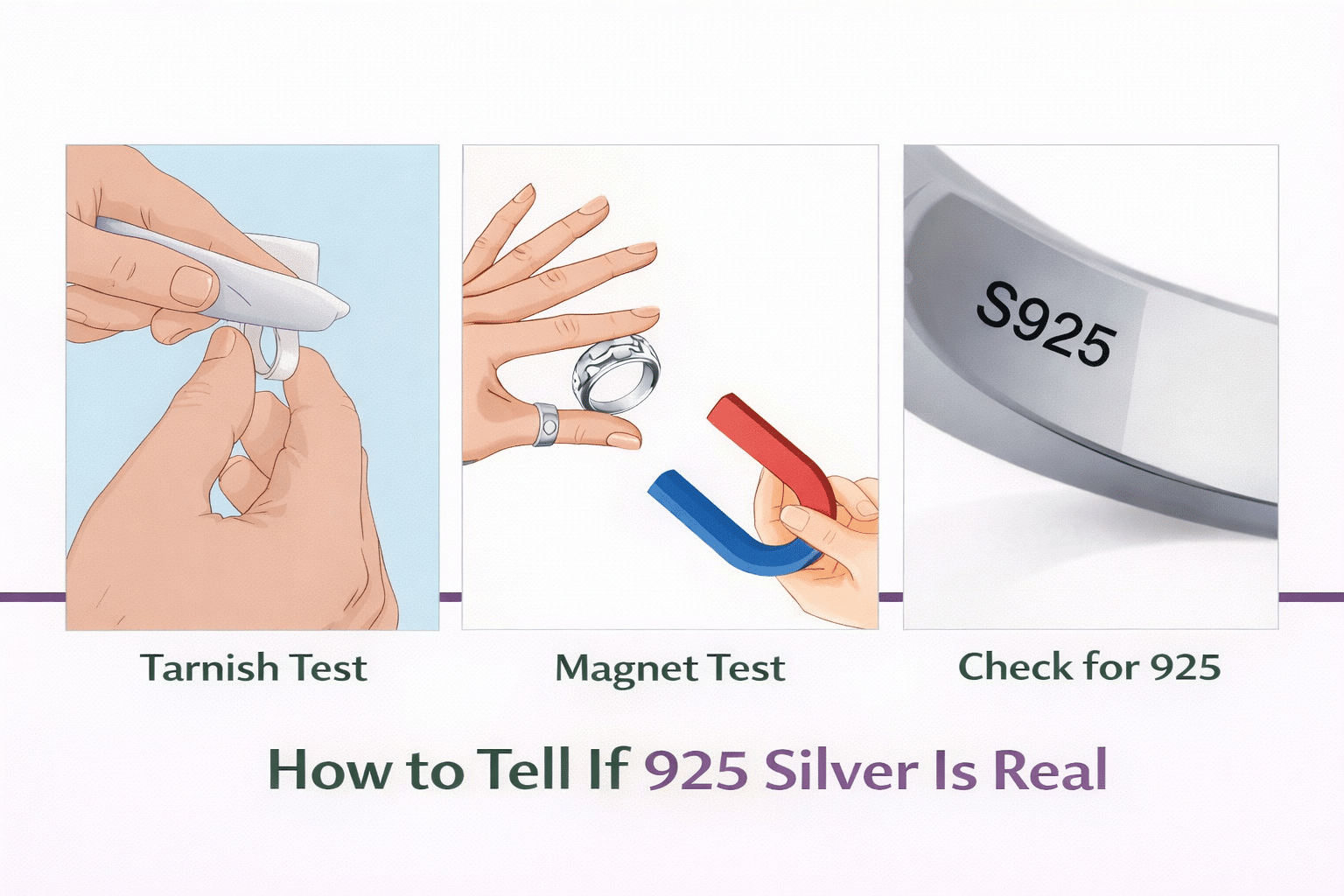
Authentic 925 silver passes the magnet test (non-magnetic), ice test (rapid melting), tarnish test (oxidizes naturally), clear stamp verification, sound test (high-pitched ring), and smell test (odorless). Fake pieces fail multiple tests.
The Magnet Test (Sterling Silver Is Non-Magnetic)
Real sterling silver shows no magnetic attraction. Place a strong neodymium magnet against the jewelry. Genuine 925 silver:
- Shows zero pull or stick
- Remains completely non-magnetic
- Feels no different with or without the magnet nearby
Counterfeit pieces often use nickel or steel underneath silver plating. These base metals attract magnets immediately, revealing the fake construction. Some sophisticated fakes use non-magnetic metals like aluminum or copper, requiring additional tests for verification.

Luxury. Sparkling. Timeless. Elegant. Wedding-ready.
The Ice Test (High Thermal Conductivity Verification)
Sterling silver conducts heat faster than almost any metal. Place an ice cube directly on the jewelry. Real 925 silver:
- Melts ice within 20-30 seconds
- Shows rapid water pooling underneath
- Feels cold to the touch almost instantly
The ice appears to melt “unnaturally” fast on genuine silver. Fake metals or silver-plated pieces show normal melting rates similar to ice on countertops. This test works best on larger pieces like bracelets or thick rings, where surface area allows clear observation.
The Tarnish Test (Real Silver Oxidizes)
Genuine sterling silver tarnishes over time as copper reacts with sulfur in the air. Check for:
- Black or brown discoloration on older pieces
- Darker areas in crevices and detailed sections
- Ability to remove tarnish with a polishing cloth
Brand-new pieces won’t show tarnish yet. Look at clasps or hidden areas that accumulate more oxidation. Fake silver plating typically doesn’t tarnish the same way; the thin silver layer wears off instead, revealing different-colored metal underneath.
Rhodium-plated sterling silver resists tarnishing due to its protective coating, but you can still verify through other tests. The rhodium layer (applied to some high-end pieces) prevents oxidation without changing the base metal composition.

Brilliant. Romantic. Durable. Affordable. Stackable.
Stamp Location and Clarity Check
Examine the 925 jewelry stamp closely. Authentic marks show:
- Clear, precise stamping with sharp edges
- Consistent depth across all numbers
- Proper placement in logical locations (inside bands, on clasps)
- Accompanying maker’s marks from reputable manufacturers
Fake stamps often appear fuzzy, off-center, or stamped in unusual locations like the outside of rings. Some counterfeit jewelry uses correct-looking stamps but fails physical tests, particularly pieces from unauthorized sellers or extremely low-priced “sterling silver” offerings.
The Sound Test (High-Pitched Ring)
Sterling silver produces a high-pitched, bell-like sound when tapped. Use a metal object (another piece of jewelry or coin) to gently strike the piece. Real 925 silver:
- Rings clearly for 1-2 seconds
- Sounds similar to a small bell
- Creates a higher pitch than brass or copper
This test works best on larger pieces like bangles or chains. Small earrings may not produce enough sound for reliable testing. Compare against known sterling silver if you have reference pieces.

When to Get Professional Verification
Jewelers use acid testing for definitive authentication. A small acid drop on an inconspicuous spot:
- Turns cream-colored on real sterling silver
- Shows bright red on base metals or fake silver
- Produces no color change on pure gold (distinguishing gold from silver)
Bring valuable pieces or suspected counterfeits to certified jewelers for testing. This service typically costs $10-20 and provides certainty about what is 925 jewelry versus plated imitations. Professional testing matters most for high-value purchases, estate jewelry, or pieces without clear markings.

Elegant. Sparkling. Luxury. Romantic. Statement.
Is 925 Sterling Silver Good Quality?
925 sterling silver is the international quality standard for silver jewelry, classified as a precious metal with durability suitable for daily wear, ranking above silver-plated options and below platinum or gold. This quality designation appears in fine jewelry stores worldwide.
Sterling silver falls into the “precious metal” category alongside gold, platinum, and palladium. The 925 standard ensures consistent quality regardless of manufacturer or country of origin. Jewelry stores stock sterling silver for several quality-related reasons:
Durability for Settings: The 3.0 Mohs hardness secures gemstone prongs and settings. Diamond, sapphire, emerald, and ruby rings use sterling silver when buyers want precious metal quality without gold pricing. Settings hold stones securely through daily wear.
Color Stability: Sterling silver maintains its white metallic appearance without plating requirements. Unlike white gold (which needs rhodium re-plating every 1-2 years), sterling silver stays consistently silver-colored with simple polishing.
Workability for Designs: Silversmiths shape 925 silver into intricate patterns, delicate chains, and detailed filigree work. The alloy’s properties allow both hand-crafting traditional designs and modern manufacturing techniques.
Value Retention: Sterling silver holds intrinsic value as a precious metal. Unlike costume jewelry or plated pieces with minimal scrap worth, 925 silver maintains a baseline value based on silver market prices.
Quality variation exists within sterling silver pieces based on craftsmanship, not metal content. A hand-forged sterling silver ring from an artisan jeweler shows higher quality construction than mass-produced pieces, though both contain identical 92.5% silver. The 925 jewelry mark guarantees metal quality; craftsmanship quality varies by maker.
Some people assume pure 999 silver outranks sterling in quality. For bullion or investment purposes, higher purity matters. For jewelry, pure silver’s softness creates inferior quality, bent rings, damaged settings, and deformed pieces. Sterling silver’s alloy content produces better-quality jewelry than pure silver ever could.

Classic. Brilliant. Hypoallergenic. Elegant. Everyday.
How Much Is 925 Sterling Silver Worth?
925 sterling silver’s scrap value equals 92.5% of silver’s spot price, currently approximately $17 per troy ounce, making sterling silver worth $15.70 per troy ounce for metal content alone. Finished jewelry always exceeds scrap value due to craftsmanship.
Current Silver Price Calculation
Silver prices fluctuate daily based on the precious metal markets. The 925 jewelry price calculation follows this formula:
Current silver spot price × 0.925 = Sterling silver per ounce value
As of February 2026, silver trades around $17-18 per troy ounce. Therefore:
- $17.00 × 0.925 = $15.70 per troy ounce
- $18.00 × 0.925 = $16.65 per troy ounce
This represents raw metal value only. An actual sterling silver necklace weighing one troy ounce (31.1 grams) would sell for considerably more due to design, labor, and retail markup.
Jewelry Value vs Scrap Value
Retail sterling silver jewelry costs 2-10 times its scrap value, depending on:
Design Complexity: Intricate handmade pieces command premiums over simple chains or bands. An artisan-crafted bracelet might cost $150 while containing only $30 worth of silver.
Gemstone Content: Sterling silver rings set with diamonds, sapphires, or other precious stones derive most value from the gems, not the metal. A $500 sterling silver engagement ring might contain $25 of silver and $450-475 of diamond value.
Brand Recognition: Designer jewelry or well-known brands (Tiffany, David Yurman, Pandora), prices reflect brand value more than metal content. A Tiffany sterling silver ring might retail for $200-500 despite containing $15-20 of silver.
Manufacturing Quality: Machine-made jewelry costs less than hand-forged pieces. Italian sterling silver chains (stamped “925 Italy”) typically command premiums due to the reputation for quality craftsmanship.

Trendy. Affordable. Hypoallergenic. Stylish. Everyday.
Factors Affecting the 925 Silver Price
Several elements influence what you’ll actually pay:
Retail vs Wholesale: Jewelry stores mark up wholesale costs 2-3 times. Online retailers often offer lower prices due to reduced overhead.
Weight: Heavier pieces cost proportionally more. A thick sterling silver cuff bracelet (80-100 grams) costs significantly more than delicate earrings (2-3 grams).
Market Timing: Silver prices peaked above $48/oz in 2011 and dropped to $14/oz by 2020. The current $17-18 range sits in mid-range historically.
Condition: Pre-owned or estate sterling silver sells for less than new pieces, often closer to scrap value unless from notable makers or showing exceptional craftsmanship.
Understanding these factors helps evaluate whether 925 jewelry is worth anything beyond sentimental value. Most sterling silver jewelry holds some resale value, though rarely approaching the original retail price.
925 Sterling Silver vs White Gold: Key Differences
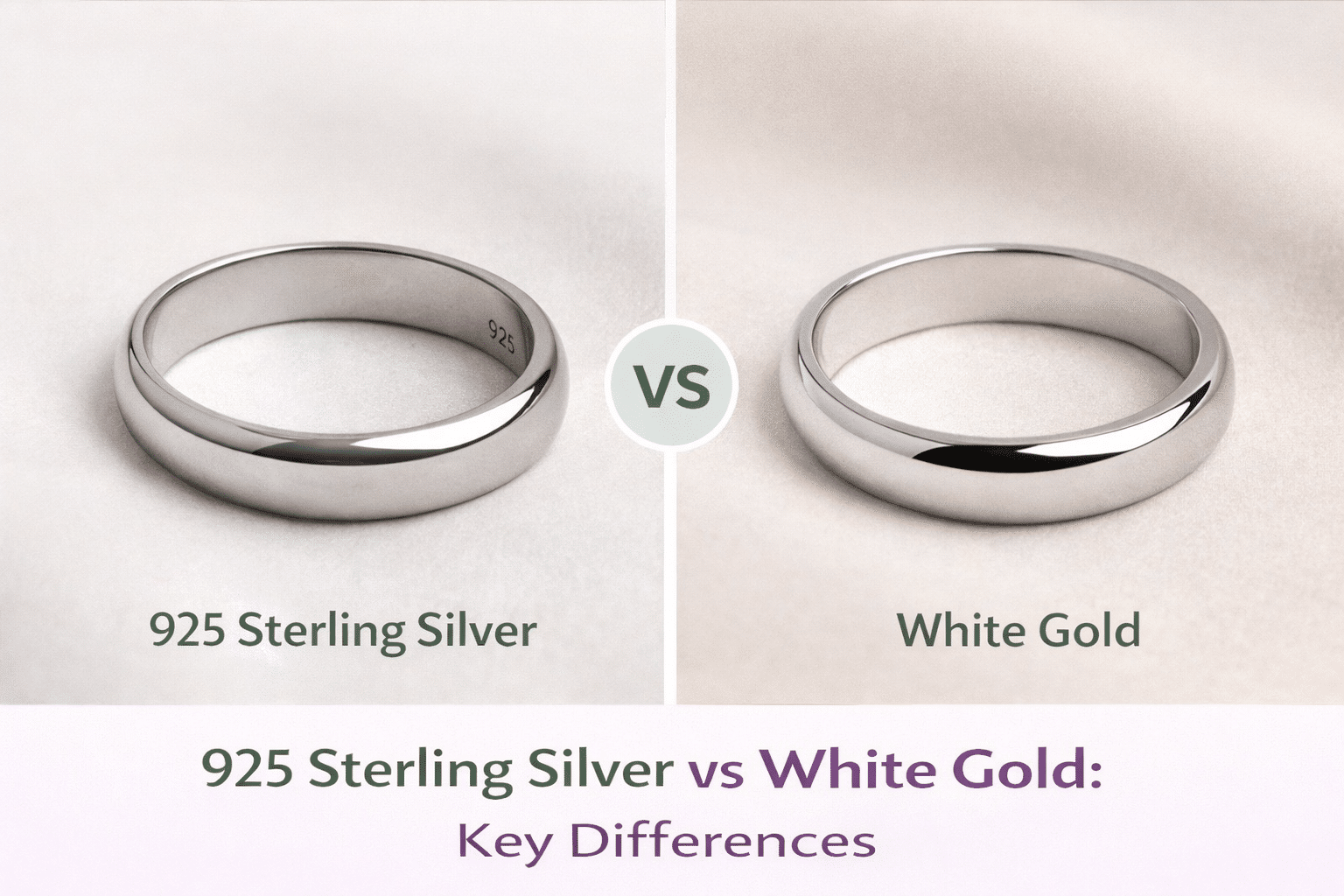
White gold contains gold alloy (10k-18k) with rhodium plating, costs 3-5 times more than 925 silver, offers greater durability (4.0 Mohs hardness), but requires periodic rhodium re-plating that sterling silver avoids. Each metal suits different priorities.
Composition Differences
Sterling silver uses 92.5% silver + 7.5% copper in a natural white color. White gold mixes pure gold with white metals (palladium, nickel, or zinc), then adds rhodium plating for a bright white appearance:
- 10k white gold: 41.7% pure gold + 58.3% white metals
- 14k white gold: 58.3% pure gold + 41.7% white metals
- 18k white gold: 75% pure gold + 25% white metals
Without rhodium plating, white gold appears slightly yellow or gray. The rhodium coating (applied after manufacturing) creates the bright white color people associate with white gold.
Price Comparison
Sterling silver costs $100-300 for typical rings or necklaces. Comparable white gold pieces run $400-1,500+ based on gold purity:
- Sterling silver ring (simple band): $80-150
- 10k white gold equivalent: $300-500
- 14k white gold equivalent: $500-800
- 18k white gold equivalent: $800-1,200
Higher gold karats increase costs proportionally. An 18k white gold engagement ring setting might cost $1,500-3,000 while an identical design in sterling silver runs $200-400. The price difference reflects gold’s higher precious metal value ($2,000+ per ounce vs silver’s $17 per ounce).

Minimal. Beachy. Elegant. Durable. Summer.
Durability and Maintenance
White gold (10k-14k) reaches 4.0 Mohs hardness, offering better scratch resistance than sterling silver’s 3.0. However, white gold’s rhodium plating wears off through friction with skin, clothing, and surfaces. This creates ongoing maintenance:
White Gold Maintenance:
- Re-plate every 1-2 years ($75-150 per service)
- Shows yellowing as rhodium wears thin
- Requires professional jewelry service
- Cannot be done at home
Sterling Silver Maintenance:
- Polish with a cloth when tarnished (at home, free)
- No re-plating needed
- Color remains consistent
- Simple care products ($5-10)
When to Choose Sterling Silver vs White Gold
Choose 925 sterling silver when:
- Budget limits spending to under $300-500
- Preferring low-maintenance jewelry
- Wanting interchangeable fashion jewelry
- Setting non-diamond gemstones (amethyst, topaz, citrine)
- Buying children’s jewelry (due to likely outgrowing)
Choose white gold when:
- Purchasing engagement rings or wedding bands
- Requiring maximum durability for daily wear
- Setting valuable diamonds (0.50ct+)
- Preferring jewelry as a long-term investment
- Budget allows $500-2,000+ range
Both metals create beautiful jewelry. Sterling silver offers accessibility and easy care, while white gold provides prestige and longevity for significant pieces.

Trendy. Minimal. Hypoallergenic. Stackable. Everyday.
What Does 925 Mean on Gold-Colored Jewelry?
Gold-colored jewelry stamped 925 is gold vermeil, sterling silver electroplated with 10k-24k gold, not solid gold, which uses 10k, 14k, or 18k stamps indicating actual gold content. The 925 jewelry gold appearance comes from plating over a silver base.
Gold vermeil (pronounced “ver-may”) requires specific construction standards:
- Base metal: Sterling silver (925) minimum
- Gold layer: 10k or higher purity gold
- Thickness: Minimum 2.5 microns (0.0001 inches) gold plating
- Process: Electroplating that bonds gold to silver
This differs from standard “gold-plated” jewelry, which uses brass or copper bases with thinner gold layers (often 0.5-1.0 microns). Vermeil’s sterling silver foundation and thicker gold coating create a longer-lasting gold appearance.

Cute. Minimal. Stackable. Sparkly. Affordable.
Identifying Gold Vermeil
The 925 jewelry stamp gold pieces show several characteristics:
Stamp Combinations: Look for “925” plus gold purity:
- “925 14k” or “14k 925”
- “925 Gold Vermeil”
- “925 GP” (gold plated)
- Sometimes just “925” on gold-appearing pieces
Color Variations: Vermeil comes in three gold colors:
- Yellow gold vermeil: Traditional gold appearance
- Rose gold vermeil: Pink-tinted gold (copper added)
- White gold vermeil: Bright white (palladium/rhodium)
Durability Expectations: Gold vermeil wears differently than solid gold:
- Lasts 1-3 years with daily wear
- Shows silver color where gold wears thin (high-friction areas)
- Can be re-plated when needed ($40-80 per piece)
- Avoids the green discoloration from brass-based plating
Price and Value Differences
Gold vermeil costs $50-300 for pieces that would run $800-2,000+ in solid gold:
Vermeil ring: $80-200
14k solid gold equivalent: $600-1,200
The 925 jewelry mark on gold items signals base metal value (silver) rather than gold value. Pawn shops and jewelers assess these pieces as sterling silver with minimal additional value for thin gold plating. Scrap value equals silver content only.
Some buyers prefer vermeil’s gold look at accessible prices. Others find the wear-through frustrating and invest in solid gold instead. Understanding the 925 stamp meaning on gold jewelry prevents overpaying for plated pieces, thinking they’re solid gold.

Sparkly. Elegant. Affordable. Trendy. Giftable.
Common 925 Sterling Silver Stamp Variations
Authentic 925 silver may be stamped S925, Sterling, STER, STG, or 925 Italy/China, with variations indicating manufacturer origin or regional preferences while maintaining the same 92.5% purity standard. All versions denote identical silver content.
International Stamp Standards
Different countries and manufacturers use various markings:
United States:
- 925
- Sterling
- STER
- .925
- S925
United Kingdom:
- 925
- Sterling Silver
- Lion Passant (walking lion symbol)
European Union:
- 925
- 800 (lower purity, common in antiques)
- Three-digit fineness numbers
Asia:
- S925 (most common in China, Thailand)
- 925 China
- 925 CN
The country name addition (925 Italy, 925 China) indicates manufacturing origin, not different purity standards. Italian-made sterling silver contains identical 92.5% purity to Chinese-manufactured pieces. Italy builds a reputation for chain-making expertise; China produces high-volume manufacturing.

Luxury. Sparkle. Stylish. Elegant. Best-Seller.
Maker’s Marks and Additional Stamps
Professional jewelers add company marks alongside purity stamps:
- Tiffany & Co.: “925” + “Tiffany & Co.” or “T & CO”
- Pandora: “925 ALE” (ALE represents the founder’s father’s initials)
- James Avery: “925” + “JA” or “James Avery”
- David Yurman: “925” + “D.Y.” or “David Yurman”
These additional marks verify authenticity for brand-name pieces. Counterfeiters sometimes stamp “925” but cannot legally use registered trademarks, making maker’s marks valuable authentication tools.
Warning: Fake Stamp Indicators
Some counterfeit jewelry uses convincing-looking stamps:
Red flags for fake 925 marks:
- Stamps on jewelry that fail physical tests (magnetic, no tarnish)
- Extremely cheap prices ($5-15 for complex pieces)
- Sold by unauthorized sellers or unknown websites
- Fuzzy or poorly defined number shapes
- Unusual stamp locations (outside of rings, random spots)
Chinese and Indian manufacturers sometimes apply fake stamps to brass or copper jewelry with thin silver plating. The stamp looks authentic, but the base metal reveals the fraud through testing. This explains why some “925 jewelry” sells for $10-20, it’s not actually 925 silver.
Buying from reputable jewelers, established online retailers, or certified sellers reduces counterfeit risk. The lowest prices often indicate fake merchandise rather than good deals.

Is 925 Sterling Silver Hypoallergenic?
Nickel-free 925 sterling silver is hypoallergenic for most people, though rare copper sensitivity may cause temporary green skin discoloration in high-acidity skin types, affecting less than 5% of wearers. The absence of nickel eliminates the most common metal allergy trigger.
Why Sterling Silver Suits Sensitive Skin
Nickel allergies affect 10-15% of the population, causing redness, itching, and rashes. Traditional sterling silver’s copper alloy avoids nickel completely, making it safe for nickel-sensitive individuals.
Hypoallergenic properties of 925 silver:
- Contains no nickel (the primary allergen)
- Uses copper (rarely causes reactions)
- Maintains pure silver majority (92.5%)
- Compared favorably to surgical steel or titanium for biocompatibility
Some vintage or imported sterling silver pieces may contain trace nickel amounts. Modern manufacturing standards require nickel-free composition, particularly in the United States and the European Union, where regulations limit nickel in jewelry.
Understanding Green Skin Discoloration
A small percentage of wearers notice green or black marks where sterling silver touches skin. This isn’t an allergic reaction, it’s a chemical process:
Why does skin turn green?
- Copper in the alloy reacts with skin acids
- High skin pH or perspiration accelerates the reaction
- Copper salts form (harmless green compounds)
- Transfer occurs particularly on fingers and wrists
Who experiences this:
- People with acidic skin pH
- Heavy perspiration during exercise or hot weather
- Certain medications that affect skin chemistry
- Hormonal changes (pregnancy, menopause)
The green color washes off easily with soap and water, causing no health concerns. It indicates real sterling silver since copper must be present for the reaction to occur, fake silver or silver plating won’t produce this effect.

Solutions for Copper-Sensitive Skin
If copper causes reactions, several alternatives exist:
Rhodium-plated sterling silver: A thin rhodium coating separates silver from skin, preventing green marks while maintaining 925 base metal. The plating wears off gradually, requiring re-application every 1-2 years.
Argentium silver: This 925-purity silver alloy uses germanium instead of copper, eliminating green skin issues entirely. Pieces stamped “925” are identical to traditional sterling silver.
Platinum or palladium: For complete sensitivity avoidance, choose platinum (950 or 999 purity) or palladium jewelry. These metals cost 5-10 times more than sterling silver but cause zero reactions.
Clear nail polish barrier: Painting a thin coat on jewelry that touches skin creates a temporary barrier. Reapply every few weeks as it wears off.
Most people wear sterling silver without any issues. True metal allergies (causing rashes or irritation) remain rare with nickel-free sterling silver. The cosmetic green marks from copper affect a small percentage of wearers and present easy solutions when they occur.

Elegant. Sparkling. Romantic. Timeless. Affordable.
Does 925 Sterling Silver Tarnish? (Prevention & Removal)
925 sterling silver tarnishes when copper content reacts with sulfur in the air, creating reversible black silver sulfide oxidation that’s removed with polishing cloth or silver cleaner within minutes. All real sterling silver eventually shows tarnish.
Why Sterling Silver Tarnishes (Copper Oxidation)
The 7.5% copper in sterling silver reacts with atmospheric sulfur compounds, producing tarnish through chemical oxidation:
Sulfur + Copper + Oxygen = Copper Sulfide (black tarnish)
Environmental factors accelerating tarnish:
- High humidity (coastal areas, humid climates)
- Air pollution (urban environments)
- Rubber bands or latex (contains sulfur)
- Eggs, onions, mustard (sulfur-containing foods)
- Wool storage (natural sulfur content)
- Perspiration (especially during exercise)
Tarnish appears as black, gray, or yellowish discoloration, typically starting in crevices or detailed areas before spreading across surfaces. The process takes weeks to months, depending on conditions, not days.
How to Prevent Tarnish (Storage Tips)
Proper storage slows tarnish dramatically:
Anti-tarnish storage methods:
Individual bags: Store each piece in small zip-lock bags, removing air before sealing. Plastic creates a barrier against atmospheric sulfur.
Anti-tarnish strips: Include 3M Anti-Tarnish Paper or treated fabric strips in storage containers. These absorb sulfur compounds from the air for 6-12 months.
Silica gel packets: Add moisture-absorbing silica packets (the small bags from new shoes or electronics). Humidity accelerates tarnish; silica prevents moisture accumulation.
Separate compartments: Keep sterling silver away from other metals. Don’t store with costume jewelry containing high-sulfur materials.
Wear regularly: Skin oils and regular handling actually protect sterling silver from tarnishing. Daily-worn pieces tarnish more slowly than stored jewelry.
Avoid storing in bathrooms (high humidity), near windows (temperature fluctuations), or in velvet-lined boxes (velvet sometimes contains sulfur compounds).
How to Remove Tarnish (Cleaning Methods)
Tarnish removal takes 2-10 minutes, depending on severity:
Method 1: Polishing Cloth (Best for Light Tarnish)
- Use a silver polishing cloth or a microfiber cloth
- Rub tarnished areas with straight back-and-forth motions
- Apply light pressure, not aggressive scrubbing
- Flip to the clean cloth section frequently
- Continue until shine returns (2-5 minutes)
Polishing cloths work best for regular maintenance, handling minor tarnish before it becomes heavy.
Method 2: Silver Cleaner (For Moderate to Heavy Tarnish)
- Apply liquid silver cleaner to a soft cloth or sponge
- Rub over tarnished surfaces
- Rinse thoroughly with water (soap residue causes new tarnish)
- Dry completely with a clean cloth
- Effective for heavily tarnished pieces (5-10 minutes)
Warning: Avoid silver dip cleaners on oxidized (intentionally darkened) sterling silver, antiqued finishes, or pieces with gemstones. These harsh chemicals remove decorative oxidation and can damage porous stones.
Method 3: Baking Soda Paste (Natural Alternative)
- Mix 3 parts baking soda + 1 part water into a paste
- Apply to tarnished areas with a soft cloth
- Rub gently in circular motions
- Rinse thoroughly and dry completely
Professional ultrasonic cleaning works for intricate pieces with hard-to-reach details, available at jewelers for $15-30 per cleaning.
Tarnish doesn’t damage sterling silver; it’s surface oxidation that reverses completely. Regular cleaning every 1-3 months maintains shine and prevents heavy tarnish buildup, requiring aggressive cleaning.

Romantic. Shiny. Feminine. Giftable. Stunning.
Can You Wear 925 Silver in Water?
Brief water exposure won’t damage 925 silver but accelerates tarnishing; avoid pools (chlorine causes corrosion), prolonged showers (humidity speeds oxidation), and ocean water (salt plus sulfur compounds). Water contact creates maintenance rather than destruction.
Water Exposure Effects on Sterling Silver
Pure water alone doesn’t harm sterling silver’s structure. The copper alloy won’t rust like iron or dissolve like some base metals. However, water creates conditions that speed tarnishing:
Tap water effects:
- Contains dissolved minerals that deposit on silver
- May include sulfur compounds (depending on water source)
- Leaves water spots that require extra polishing
Shower/bath effects:
- Steam and humidity accelerate oxidation
- Soap residue traps moisture against metal
- Shampoo chemicals may interact with copper
Swimming pool effects:
- Chlorine chemically reacts with copper alloy
- Creates green or black discoloration (permanent if severe)
- Weakens metal structure with repeated exposure
- Can damage gemstone settings
Ocean water effects:
- Salt plus sulfur compounds cause rapid tarnishing
- Minerals deposit in crevices and details
- Sand particles scratch polished surfaces
Practical Wear Guidelines
Safe for brief water contact:
- Washing hands at the sink
- Caught in a rain shower
- Accidental splashes while cooking
- Quick rinse to remove dirt
Remove before:
- Swimming (pools, ocean, lakes)
- Showering or bathing
- Washing dishes or laundry
- Cleaning with chemical products
- Exercising (perspiration accelerates tarnish)
If sterling silver gets wet accidentally, dry it thoroughly with a soft cloth immediately. Trapped moisture in settings or under stones creates tarnish spots that require extra cleaning effort.
Some people wear sterling silver jewelry constantly without issues. Others notice increased tarnishing with water exposure. Your local water quality and skin chemistry determine how much water affects your pieces.
The “waterproof” question often appears in online searches. Sterling silver isn’t waterproof in the sense of being impervious to water’s effects; it’s water-resistant for brief exposure but not designed for constant water contact like plastic or stainless steel.

Elegant. Sparkly. Lightweight. Trendy. Affordable.
Can 925 Silver Have Real Diamonds?
Genuine diamonds and gemstones are commonly set in 925 sterling silver, typically in smaller carat weights (0.10-0.50ct total weight) for engagement rings, earrings, and pendants, offering precious metal settings at lower costs than gold or platinum. Sterling silver provides secure settings for real stones.
Diamond Settings in Sterling Silver
Jewelers set authentic diamonds in sterling silver for several reasons:
Budget-conscious engagement rings: Sterling silver allows buyers to maximize diamond size while minimizing overall cost. A 0.50ct diamond in a sterling silver setting costs $800-1,500 total versus $1,800-3,000 in 14k white gold.
Fashion jewelry with accent diamonds: Sterling silver rings, pendants, and earrings often feature small diamond accents (0.01-0.05ct each). These real diamonds add sparkle without inflating prices to gold jewelry levels.
Estate and vintage jewelry: Many antique pieces from the 1800s-1950s used sterling silver for diamond settings before white gold became popular. These genuine diamond pieces carry historical value beyond metal worth.
Halo and cluster designs: Sterling silver works well for designs using multiple small diamonds in pavé or cluster settings. The lower metal cost allows more budget for the diamond quantity.
Verifying Diamond Authenticity
A 925 jewelry stamp doesn’t guarantee real diamonds; it only confirms a sterling silver base metal. Diamond verification requires separate testing:
Professional gemologist inspection: Jewelers use diamond testers measuring thermal conductivity. Real diamonds conduct heat differently from cubic zirconia, moissanite, or glass.
Magnification examination: 10x loupe reveals inclusions (imperfections) in natural diamonds. Perfect clarity under magnification suggests synthetic stones or simulants.
Certification: Diamonds over 0.30ct often include GIA, AGS, or IGI certificates verifying authenticity and quality grades (cut, color, clarity, carat).
Most sterling silver jewelry uses cubic zirconia (CZ) rather than real diamonds due to cost considerations. A CZ-set sterling silver ring sells for $40-80, while an identical design with real diamonds runs $200-500. The significant price difference indicates the stone type.
Common Gemstones in 925 Silver Settings
Beyond diamonds, sterling silver regularly pairs with:
- Amethyst, citrine, topaz: Durable stones under $100 per carat
- Garnet, peridot, aquamarine: Mid-range gemstones ($50-300 per carat)
- Lab-created gems: Identical chemistry to natural stones at 40-70% lower costs
- Semi-precious stones: Turquoise, opal, moonstone in bohemian designs
Sterling silver’s durability (3.0 Mohs) secures these stones effectively. Prongs and bezels hold gemstones safely through daily wear, though platinum or gold provides longer-lasting settings for heirloom pieces.
The combination of sterling silver and gemstones creates accessible fine jewelry, real precious metals paired with genuine stones at prices ordinary buyers can afford. This differs from costume jewelry (plated base metals with glass stones) while remaining below luxury jewelry pricing (gold/platinum with investment-grade gems).
How to Clean and Care for 925 Sterling Silver
Clean 925 silver with a polishing cloth for tarnish removal, mild dish soap for dirt, and store in anti-tarnish bags with silica gel packets to prevent oxidation between wearings. Regular maintenance preserves shine for decades.
Daily Cleaning Method (Dirt and Oils)
For jewelry worn regularly that appears dull but not tarnished:
- Mix warm water with 2-3 drops of mild dish soap
- Soak sterling silver for 5-10 minutes
- Use a soft toothbrush for crevices and detailed areas
- Rinse under running water until no soap residue remains
- Dry completely with a lint-free cloth (microfiber or cotton)
Never air-dry sterling silver; water spots create discoloration requiring extra polishing. Thorough drying prevents new tarnish formation.
Tarnish Removal (Black or Discolored Silver)
When tarnish appears:
Quick method (light tarnish):
- Use a silver polishing cloth
- Rub tarnished areas until shine returns
- Takes 2-5 minutes
- No water or chemicals needed
Deep cleaning (heavy tarnish):
- Apply liquid silver cleaner to a soft cloth
- Rub over all surfaces
- Rinse thoroughly
- Dry completely
- Effective for months-old tarnish
What to avoid:
- Toothpaste (too abrasive, creates micro-scratches)
- Paper towels (rough fibers scratch)
- Harsh chemicals (bleach, ammonia)
- Dishwashers (heat and detergent damage)
Storage Best Practices
Prevent tarnish between wearings:
Storage system:
- Clean and dry jewelry completely before storing
- Place each piece in an individual zip-lock bag
- Remove as much air as possible when sealing
- Add an anti-tarnish strip or silica gel packet to the storage container
- Keep in a cool, dry location (not bathroom)
Anti-tarnish products:
- 3M Anti-Tarnish Paper ($8-12 for pack)
- Silver storage bags ($10-20 for set of 10)
- Silica gel packets (free from product packaging or $5 for new pack)
Jewelry boxes with individual compartments work well if lined with anti-tarnish cloth. Avoid velvet-lined boxes unless specifically treated to resist sulfur, some velvets accelerate tarnishing.
When to Seek Professional Help
Take sterling silver to jewelers for:
- Severely tarnished pieces that don’t respond to home cleaning
- Broken clasps, bent prongs, or damaged settings
- Rhodium re-plating on rhodium-coated pieces
- Ultrasonic cleaning for intricate designs
- Jewelry with delicate gemstones requires specialized care
Professional cleaning costs $15-30 per piece and handles problems beyond home methods. Annual professional cleaning supplements monthly home maintenance, ensuring jewelry remains in excellent condition for 20-50+ years.
Sterling silver lasts for generations with proper care. Many families pass down sterling silver jewelry through multiple generations. The metal doesn’t degrade; it simply requires regular maintenance to stay beautiful.
Understanding Your Sterling Silver Jewelry
The 925 jewelry stamp guarantees you’re holding real sterling silver, 92.5% precious metal that holds value, accepts secure gemstone settings, and lasts for generations with basic care. Whether you’ve inherited sterling silver pieces, received them as gifts, or purchased them yourself, understanding the 925 jewelry meaning helps you verify authenticity, assess worth, and maintain the jewelry properly.
Sterling silver fills the space between costume jewelry and luxury pieces. It offers precious metal quality without gold’s pricing, making fine jewelry accessible for everyday wear. The durability of copper alloy prevents the bending issues that make pure silver impractical, while the 92.5% silver content maintains enough precious metal to hold real value.
Proper authentication protects you from counterfeit pieces. The magnet test, ice test, and tarnish patterns reveal genuine sterling silver versus fake stamps on plated metals. When questions arise about authenticity or value, certified jewelers provide professional testing that confirms exactly what you own.
Regular care, simple polishing, and proper storage keep sterling silver looking new for decades. The natural tarnishing process reverses completely with basic cleaning. Unlike gold’s rhodium plating requirements or the wear limitations of plated jewelry, sterling silver maintains its appearance through straightforward maintenance anyone can perform at home.
For more information about silver jewelry types and care, explore our complete silver education guide covering purity standards, authentication methods, and care techniques across all silver jewelry categories.
Frequently Asked Questions About 925 Silver
Is 925 sterling silver good quality?
Yes, 925 sterling silver represents the international quality standard for silver jewelry, offering durable precious metal construction that lasts decades with proper care. The 92.5% silver content balances value with wearability.
Can 925 sterling silver be fake?
Yes, counterfeit jewelry sometimes stamps “925” on plated or base metals. Authentic sterling silver passes magnet tests (non-magnetic), ice tests (rapid melting), and develops natural tarnish over time.
Why is 925 silver cheap compared to gold?
Silver’s raw material cost ($17/oz) runs significantly below gold ($2,000+/oz), making finished jewelry more affordable. The lower price reflects precious metal market values, not quality differences.
Do they put real diamonds in 925 silver jewelry?
Yes, genuine diamonds are set in sterling silver, particularly stones under 0.50ct total weight. Larger diamonds typically pair with gold or platinum settings for heirloom value and durability.
Does 925 sterling silver tarnish?
Yes, the copper content reacts with atmospheric sulfur, creating reversible tarnish. Regular polishing and proper storage in anti-tarnish bags prevent heavy oxidation buildup.
Is 925 sterling silver waterproof?
No, though brief water contact won’t damage the metal structure. Prolonged exposure (showers, swimming) accelerates tarnishing. Remove sterling silver before water activities.
Is 925 sterling silver hypoallergenic?
Generally, yes, particularly nickel-free versions. Copper content rarely causes true allergies, though some people notice harmless green skin marks from chemical reactions with skin acids.
What does 925 mean on gold jewelry?
Gold-colored pieces stamped 925 contain a sterling silver base with gold plating (vermeil), not solid gold. Solid gold uses 10k, 14k, or 18k stamps indicating actual gold content.
Related Guides: