Pink gemstones range from rose quartz at under $10 per carat to pink diamonds at $4 million per carat, 18 distinct stones across every price tier, durability range, and jewelry use case. Pink sapphire, morganite, and rhodolite garnet are the three most practical choices for daily jewelry wear, with Mohs hardness ratings of 9, 7.5–8, and 7, respectively.
Most natural pink gemstones get their color from chromium, manganese, or structural deformation, but treatment status varies by stone, and chain stores rarely disclose it. Choosing the right pink stone depends on three variables: intended jewelry use, durability requirements, and whether the natural color origin matters for your purchase.
“At Kay and Zales, staff were trained to steer buyers away from certain pink stones, not because they weren’t beautiful, but because the margin was better on alternatives. This guide tells you what that training never did.”, Juli Church, Certified Diamondologist, 6+ years, Kay and Zales
Pink Gemstones Chart, All 18 Stones Compared at a Glance
The fastest way to compare all 18 pink gemstones is by four practical attributes: Mohs hardness, price per carat, treatment status, and best jewelry use.
| Stone | Mohs | Price/ct | Treatment Common | Best Use |
| Pink Diamond | 10 | $10K–$4M | Irradiation (lab only) | Rings, pendants |
| Pink Sapphire | 9 | $500–$5,000 | Heat (very common) | Engagement rings |
| Pink Spinel | 8 | $200–$3,000 | None, natural color | Any fine jewelry |
| Pink Topaz | 8 | $20–$300 | Irradiation (most) | Pendants, earrings |
| Morganite | 7.5–8 | $100–$1,000 | Rarely treated | Engagement rings |
| Pink Tourmaline | 7–7.5 | $50–$500 | Heat (sometimes) | Rings, necklaces |
| Rhodolite Garnet | 7–7.5 | $50–$500 | None, always natural | Rings, earrings |
| Rose Quartz | 7 | $5–$20 | None | Pendants, beads |
| Pink Chalcedony | 7 | $20–$37 | Dyeing (often) | Beads, pendants |
| Pink Zircon | 6–7.5 | $50–$300 | Heat (always) | Pendants, earrings |
| Kunzite | 6.5–7 | $10–$20 | Rarely | Pendants only |
| Pink Moonstone | 6–6.5 | $7–$50 | None | Pendants, earrings |
| Pink Opal | 5.5–6.5 | $10–$100 | None | Pendants, earrings |
| Pink Fluorite | 4 | $10–$50 | None | Collector only |
| Pink Coral | 3–4 | $5–$50 | Dyeing (common) | Beads, carvings |
| Rhodochrosite | 3.5–4 | $20–$200 | None | Collector only |
| Pezzottaite | 8 | $1,500–$2,500 | None | Collector only |
| Pink Pearl | 2.5–4.5 | $50–$500 | Dyeing (sometimes) | Necklaces, earrings |
For a hardness comparison across tourmaline varieties specifically, the full tourmaline variety guide shows where pink tourmaline sits across the broader tourmaline family.
The 18 Pink Gemstones, Names, Colors, and What Makes Each Different
Each pink gemstone has a distinct mineral origin, color mechanism, and durability profile. Most buyers only discover the differences after they’ve already purchased.
- Pink Diamond Pink diamonds get their color from plastic deformation,a structural distortion during formation, not from trace minerals. No other gemstone gets its color this way. The Argyle mine in Western Australia closed permanently in 2020. It produced over 90% of the world’s pink diamond supply. All Argyle-labeled stones now for sale come from pre-2020 inventory. That inventory is finite and shrinking. A 0.10ct Argyle pink diamond today costs more than a 1ct white diamond at VS2 clarity. Natural pink diamonds: $10,000–$4M per carat. Lab-grown: $500–$3,000 per carat.
For certified pink diamonds from verified sources, see the best places to buy pink diamonds online. For grading specifics, Faint through Vivid intensity grades, the fancy pink diamonds guide covers the full GIA color grading system.
- Pink Sapphire Chromium determines pink sapphire’s intensity. More chromium means deeper pink. Pink sapphires rank 9 on the Mohs scale, second only to diamonds in hardness. Heat treatment is applied to most commercial pink sapphires. It improves both color and clarity. Most GIA certificates note this under “Comments.” Juli’s signal: “At Kay, heat-treated pink sapphires were sold at the same price tier as untreated stones. The certificate said ‘heated’ in small print. Most customers never asked.” Natural untreated: $1,000–$5,000/ct. Lab-grown: $50–$200/ct.
- Morganite Cesium and manganese give morganite its peachy-pink color. Color deepens noticeably in larger stones. Morganite is rarely treated; it is one of the most naturally clean pink gemstones on the market. Most engagement ring stones fall in the $200–$500/ct range. At 7.5–8 Mohs, morganite holds up well for daily wear with proper care. For vetted Morganite ring retailers, the morganite ring buying guide covers Juli’s specific recommendations.
- Rhodolite Garnet Rhodolite garnet has no treatment, ever. Natural color, always. This makes it the most treatment-honest pink stone on the market. Fine color runs around $100/ct with high brilliance and excellent clarity. Despite Mohs 7, rhodolite has no cleavage. That means it resists chipping better than softer stones with cleavage planes. A strong choice for protective ring settings on a mid-range budget.
- Pink Spinel Pink spinel was confused with sapphire and ruby for centuries. Gemologists only classified it as a separate species in the 1700s. Natural color, no treatment required,fine-quality pink spinel is rarer than pink sapphire in the commercial market. $200–$3,000/ct depending on saturation. Lab-grown pink spinel is available for buyers who want the look without the rarity premium.
- Pink Tourmaline Pink tourmaline spans a wide color range, from light blush to deep red-pink (called rubellite at its deepest). It is the October birthstone. Heat treatment is sometimes applied, but not always disclosed by retailers. The full tourmaline variety breakdown shows how pink tourmaline relates to watermelon, rubellite, and other tourmaline varieties.
- Pink Topaz Most natural pink topaz on the market is irradiated brown topaz. The irradiation converts brown corundum into pink. This is rarely disclosed at the point of sale. Naturally pink topaz does exist, but it is uncommon. At Mohs 8, pink topaz is durable. $20–$300/ct for treated stones. Natural untreated specimens: $100–$500/ct.
- Rose Quartz Rose quartz is the most affordable pink gemstone. The soft color comes from trace mineral inclusions, titanium, iron, and manganese. At Mohs 7, it holds up for pendants and beads. Not a ring stone. Some rose quartz shows asterism,a star effect on polished cabochons. $5–$20/ct.
- Pink Pearl Pink pearls come only from freshwater mussels. Most pink pearls in the commercial market are cultured, grown by pearl farmers rather than formed wild. Some receive mild red dye to enhance pale colors. Dyed pearls will lose color over the years of wear. For the full comparison of cultured vs. natural pearls and how color is graded, see the natural vs. cultured pearls guide.
- Pink Opal Pink opal comes primarily from Peru and Australia. It is a common opal, meaning no play-of-color. Soft salmon to medium pink body color. At 5.5–6.5 Mohs, it scratches easily. Vulnerable to dehydration in dry climates and cracks from temperature changes. Best in pendants with protective settings. $10–$100/ct.
- Pink Moonstone. Moonstone most commonly shows white body color with blue adularescence. Pink moonstone has no adularescence; it shows a salmon-to-rose body color without the optical effect. At 6–6.5 Mohs with perfect cleavage, it breaks more easily than its hardness suggests. Pendants and earrings only. $7–$50/ct.
- Kunzite Kunzite is visually striking, pink to violet-pink with good clarity. The problem: it fades permanently under UV light. One afternoon in direct sunlight causes measurable, irreversible color loss. Pendants are stored in dark conditions only. At $10–$20/ct, the price reflects the wear limitations.
13–18. Collector and Specialty Stones Pink fluorite (Mohs 4), rhodochrosite (Mohs 3.5–4), pink coral (Mohs 3–4, CITES-regulated, buy vintage only), pezzottaite ($1,500–$2,500/ct, found in only two global deposits), pink chalcedony (often dyed in commercial market), and aventurine (strawberry quartz, translucent, abundant, $2–$20/ct). These stones serve collectors, crystal enthusiasts, and low-impact jewelry. None qualify for engagement rings or daily wear rings.
Best Pink Gemstones for Engagement Rings, Juli Church’s Verdict
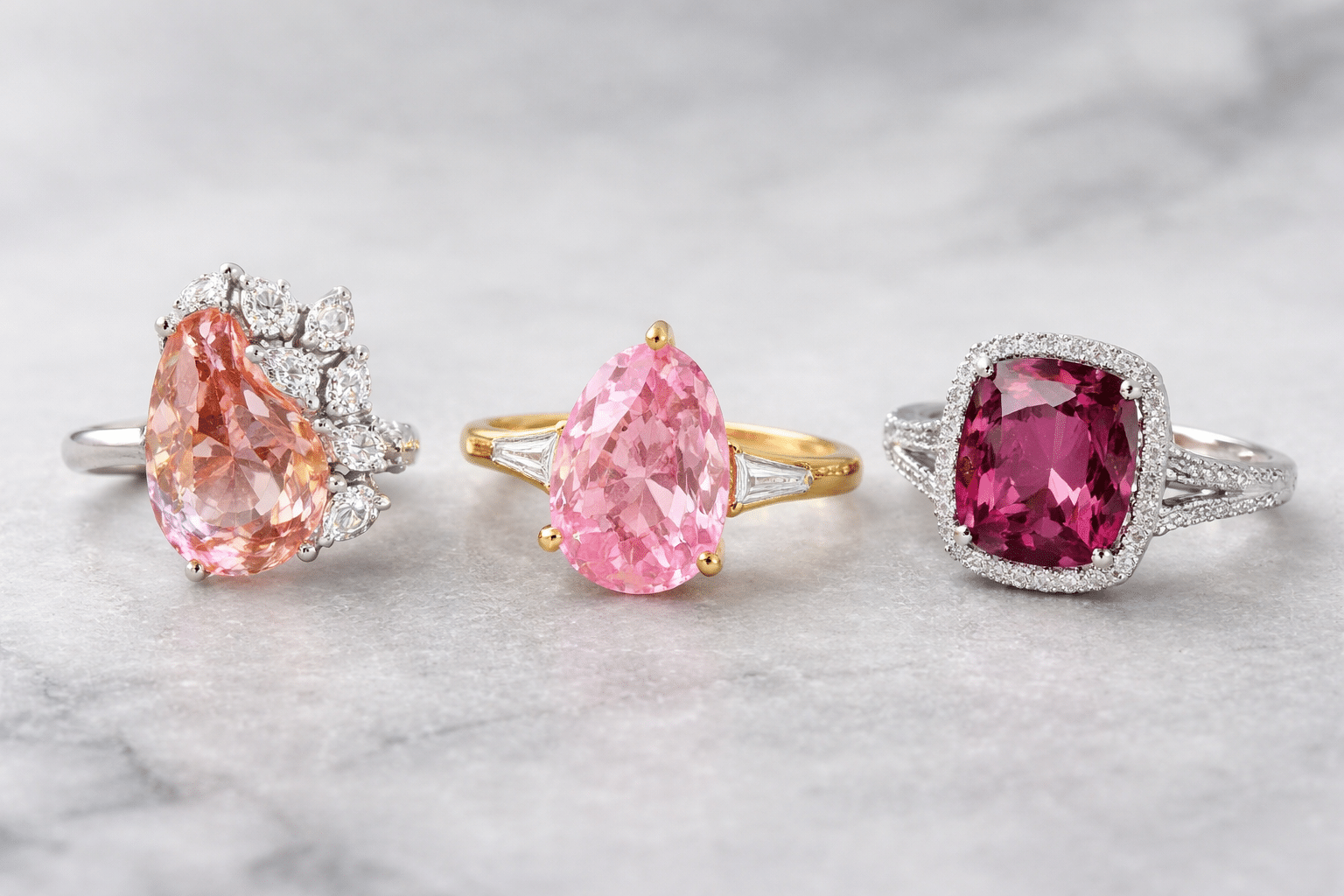
For a ring worn daily, a pink gemstone needs a Mohs hardness of at least 7.5. Below that threshold, airborne silicon dioxide particles (Mohs 7) will scratch the surface through normal daily contact. That requirement alone eliminates 10 of the 18 stones on this page.
Pink Sapphire (Mohs 9), Best Overall: Highest durability of any pink colored gemstone. Resists scratching from virtually all household surfaces. Available in certified natural and lab-grown options. Colors range from baby pink to deep magenta.
Morganite (Mohs 7.5–8), Best for Pale Pink or Large Stone. Color deepens at higher carats, cuts beautifully in larger sizes. Avoid ultrasonic cleaners. Color appears lighter in direct sunlight. Best in rose gold settings that complement the peach-pink tone.
Pink Spinel (Mohs 8), Best Underrated Choice. No treatment needed. Natural color stays stable for decades. Less well-known than sapphire, priced lower at comparable quality grades. A strong choice for buyers who want something distinctive.
Rhodolite Garnet (Mohs 7), Best Budget Ring Stone Technically below the daily-wear threshold, but garnet’s lack of cleavage compensates meaningfully. Harder to chip than softer stones at the same hardness rating. Best in bezel or cathedral settings that protect the girdle.
Stones to avoid in engagement rings:
| Stone | Why Not |
| Kunzite | Fades permanently in sunlight |
| Pink Opal | Cracks from temperature changes and drying |
| Pink Pearl | Scratches from dust alone, nacre dissolves from perfume |
| Pink Fluorite | Cleaves in four directions, breaks from lateral impact |
| Rhodochrosite | Scratches from everyday dust |
| Pink Coral | Organic material, degrades from sweat, chemicals |
Juli’s verdict: “If someone asks me for a pink engagement ring stone today, pink sapphire first, morganite second, pink spinel if they want something most people have never seen. Anything below Mohs 7.5, I’d recommend a pendant instead.”
Rarest Pink Gemstones, Ranked from Most to Least Rare
Rarity in pink gemstones is determined by geological scarcity, mine depletion, and the specific conditions required to produce saturated pink color.
| Rank | Stone | Why It’s Rare |
| 1 | Pink Diamond | Plastic deformation is required, statistically rare in diamond formation |
| 2 | Pezzottaite | Found in two global deposits only |
| 3 | Padparadscha Sapphire | Simultaneous chromium + iron required |
| 4 | Pink Spinel | Fine natural color without treatment, uncommon commercially |
| 5 | Natural Pink Topaz | Most commercial “pink topaz” is treated brown topaz |
| 6 | Kunzite | Limited sourcing locations: California, Afghanistan, Brazil |
| 7 | Rhodolite Garnet | Common garnet species, but fine hot-pink color is less frequent |
| 8 | Pink Tourmaline | Abundant, saturated rubellite-grade is the rare exception |
The Argyle mine closure in 2020 is the defining event in pink diamond scarcity. Over 90% of the global pink diamond supply came from that single mine. Pre-closure Argyle stones now trade at premiums that have increased every year since 2020.
Pink Gemstones by Shade: Which Stone Gives You the Pink You Want
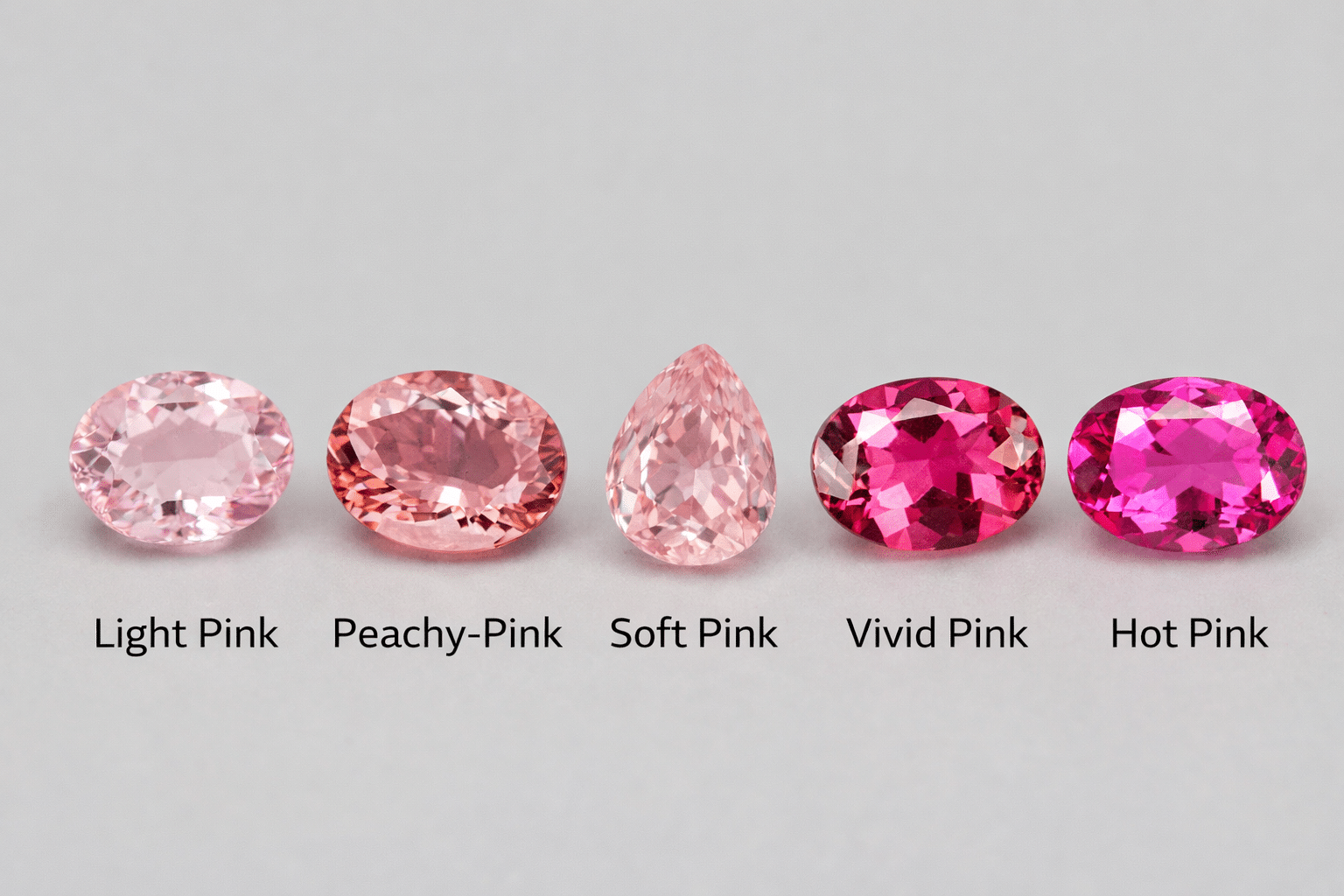
Pink gemstones span five shade tiers. Matching the right stone to your target shade matters as much as durability.
| Shade | Best Stones | Best Metal | Skin Tone |
| Pale / Blush | Morganite, rose quartz, pink moonstone | Rose gold, white gold | Any, especially fair |
| Light pink | Light pink sapphire, kunzite | Rose gold, yellow gold | Warm and neutral |
| Medium rose | Pink sapphire, rhodolite garnet | Yellow gold, rose gold | Warm tones |
| Hot / Vivid pink | Deep pink sapphire, rubellite tourmaline, pink spinel | Yellow gold | Deep, warm tones |
| Dark / Reddish pink | Rhodolite garnet, pezzottaite | Yellow gold | Deep undertones |
Metal logic: Yellow gold amplifies warmth in hot pink stones. Rose gold creates tonal harmony with blush stones. White gold cools every pink shade, works well for pale pinks, and reduces warmth in vivid pinks. On fair skin, white gold can wash out light pink entirely.
What Pink Gemstones Mean, Symbolism Buyers Ask About
Pink gemstones carry consistent symbolic associations with love, compassion, and emotional healing across most cultural contexts.
Rose quartz is called the “stone of love”, associated with self-love and emotional healing. Rhodonite carries associations with forgiveness. Pink tourmaline, the October birthstone, is linked to creativity and compassion. Pink pearl, the June birthstone, represents purity and wisdom.
Pink crystals and pink gemstones refer to the same physical minerals in different use contexts. “Crystal” typically indicates uncut or metaphysical use. “Gemstone” indicates a faceted, jewelry-quality application. The chemical composition is identical.
The same precious vs. semi-precious classification framework that applies to pink stones applies across all colored gemstone categories. The red gemstones guide covers how that classification works in practice.
Where to Buy Pink Gemstones, Juli Church’s Retailer Recommendations
The right retailer depends on which pink stone you’ve chosen. Three online retailers provide the per-stone 360° video and certification transparency that chain stores consistently fail to offer.
- Pink sapphire (natural): James Allen,per-stone 360° viewer, GIA and IGI certified, from $500/ct
- Lab-grown pink sapphire: Clean Origin, IGI certified lab-grown specialist, from $50/ct
- Morganite: Full retailer breakdown with vetted sources at the morganite ring buying guide
- Pink diamond (natural): Leibish & Co., specialist in natural fancy color, including remaining Argyle inventory
- Lab-grown pink diamond: James Allen and Brilliant Earth both carry IGI-certified options
- Pink tourmaline, pink zircon, pink spinel: Brilliant Earth, the widest certified colored stone inventory
Before purchasing any pink gemstone, verify four things: Certificate from GIA, IGI, or AGL (not in-house grading). Treatment disclosure in the certificate comments. Per-stone video at minimum 20x magnification. Return policy of at least 30 days.
Pink Gemstones That Are Not Safe for Rings
Six pink gemstones from this list should never be set in a ring worn daily. Buying any of them as a ring center stone is the most common pink gemstone purchasing mistake Juli saw at chain stores.
Kunzite fades permanently under UV light. One afternoon in direct sunlight causes irreversible color loss. Display jewelry stored in dark conditions only. Pink fluorite (Mohs 4) cleaves in four directions and breaks from lateral impact without visible cause. Rhodochrosite scratches from airborne dust particles because silicon dioxide at Mohs 7 exceeds its hardness. Pink pearl accumulates scratches from everyday contact. Perfume and sweat dissolve the nacre surface over time. Pink coral is CITES-regulated, and commercial harvest is restricted. New coral jewelry is ethically problematic. Buy vintage only through estate sales. Pink opal cracks from dehydration in dry climates and from temperature changes.
The same Mohs hardness thresholds that make these stones unsuitable for ring settings apply across other colored gemstone categories. The brown gemstones guide covers how this logic applies to amber, chocolate diamonds, and smoky quartz.
LearningJewelry.com gives buyers the information that chain store training programs are designed to suppress. Every stone on this page was evaluated against the same standard: what would Juli Church actually recommend, and what would she quietly steer you away from.
Frequently Asked Questions About Pink Gemstones
Q: Can pink gemstones fade or change color over time?
Only specific stones fade. Kunzite fades permanently under UV light. Dyed pink pearls and dyed pink coral lose color over the years of wear. Naturally colored pink stones, pink sapphire, rhodolite garnet, pink spinel, and morganite hold their color indefinitely under normal wear. The key question is whether the stone has a natural color or a treatment that affects long-term stability.
Q: What is the difference between a pink gemstone and a pink crystal?
The terms refer to the same physical material in different contexts. “Crystal” describes the uncut or metaphysical-use form of a mineral, like a rose quartz point sold in a crystal shop. “Gemstone” describes the same mineral after cutting and polishing for jewelry. The chemical composition is identical. The distinction is use context only.
Q: Are pink gemstones appropriate for men’s jewelry?
Pink gemstones carry no gender restriction in modern jewelry. Rhodolite garnet in yellow gold, dark pink tourmaline, and pink spinel read as gender-neutral in most settings. Shade matters more than stone species; deeper, more saturated pinks read more neutrally than pale blush tones. For men’s rings, the same durability rules apply: Mohs 7.5 minimum for daily wear.
Q: What is padparadscha sapphire, and how does it relate to pink sapphire?
Padparadscha is a specific corundum variety that combines pink and orange simultaneously. The name comes from the lotus blossom. The color requires both chromium (pink) and iron (orange) to be present at the same time, a rare geological condition. Padparadscha is significantly rarer and more expensive than standard pink sapphire: $3,000–$30,000 per carat for certified natural specimens.
Q: How do I verify a pink gemstone is genuine and not synthetic?
A GIA or IGI certificate confirms natural vs. lab-grown origin and discloses any treatments applied. Without a certificate, a trained gemologist using a refractometer and spectroscope can distinguish natural from synthetic for most stone species. For pink diamonds specifically, only specialized equipment detects CVD or HPHT lab-grown origin. Request a certificate for any pink gemstone purchase above $500 total.
Q: What is watermelon tourmaline, and does it count as a pink gemstone?
Watermelon tourmaline features a pink interior surrounded by a green outer zone, matching the cross-section of a watermelon. The pink portion qualifies as a pink gemstone. It is the same elbaite tourmaline species as standard pink tourmaline. Color zoning forms from shifting mineral concentrations during crystal growth. Watermelon tourmaline is primarily a collector’s stone rather than a standard jewelry application.
Q: What is the most affordable pink gemstone that still looks like a precious stone in a ring?
Rhodolite garnet at $50–$100 per carat delivers fine-color pink with high brilliance and no treatment, and it looks more expensive than its price point in yellow gold settings. For buyers wanting a larger stone on a limited budget, rose quartz in a bezel setting at $5–$20 per carat creates a distinctive piece. Neither competes with sapphire on durability, but both outperform their price tier on visual impact when cut well.
Q: Do pink gemstones work in vintage or antique settings?
Several pink stones were historically common in Victorian and Edwardian jewelry: pink topaz (often naturally pink in antique pieces, before commercial irradiation became standard), pink coral, and pink tourmaline appear frequently in estate pieces. Before repurposing any vintage pink gemstone setting, have a gemologist verify the stone’s current condition. Older stones develop internal fractures that are not visible without magnification.