
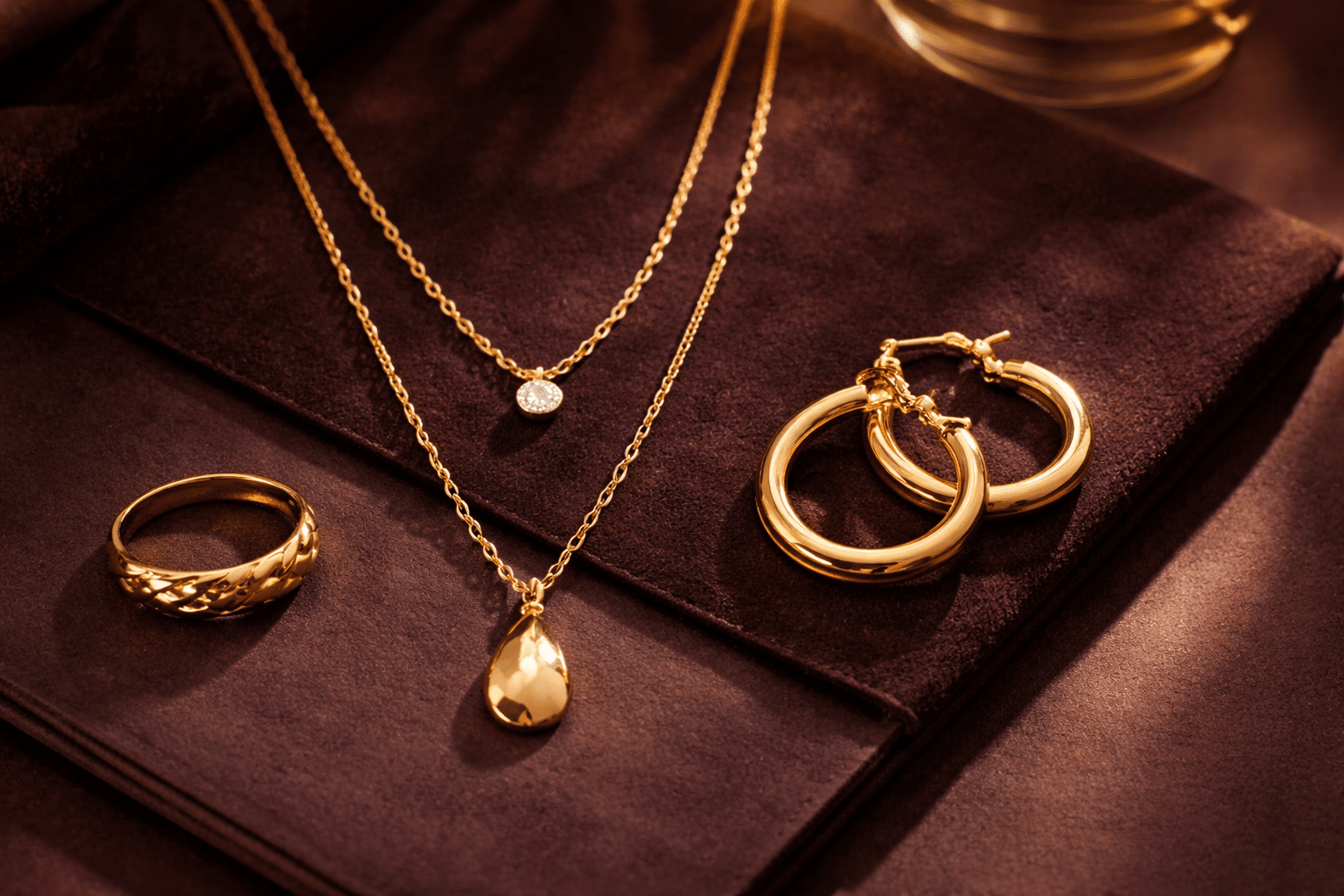
Gold-filled and gold-plated jewelry don’t wear the same over time. This breakdown of both types helps explain why.
You want jewelry you can put on each morning without thinking twice. Pieces that survive your commute, your workday, your gym session, and everything in between. Jewelry that still looks great after months and years of constant wear rather than weeks.

Triple Strand Yellow Gold Chain Necklace
Gold-filled jewelry delivers exactly this kind of durability. The thick gold layer bonded to its base metal core withstands daily friction, moisture exposure, and regular handling that destroys gold-plated alternatives within months. People wear gold-filled pieces continuously for years, even decades, without significant degradation.
But how durable is gold-filled jewelry really? Can it handle your specific lifestyle demands? Understanding gold-filled construction and performance characteristics helps you determine whether it matches your everyday wear requirements.
Juli “Jewels” Church, Certified Diamondologist at LearningJewelry.com, confidently recommends gold-filled for daily use: “When customers ask what jewelry can handle real life, work, kids, workouts, everything, I point them toward gold-filled. The durability matches their actual lifestyle rather than requiring them to baby their jewelry constantly. Gold-filled pieces become true everyday companions.”

What Makes Gold-filled Jewelry Durable?
Gold-filled durability stems directly from its construction method and gold content.
Substantial Gold Layer
Gold-filled jewelry contains a gold layer measuring 50-100+ microns thick. This substantial thickness provides genuine protection against wear rather than the microscopic coating found on gold-plated pieces (0.5-2.5 microns).
To visualize this difference: gold-filled layers are roughly as thick as a sheet of paper, while gold plating measures thinner than a human hair. That thickness difference translates directly into a durability difference.

Mechanical Bonding
Unlike electroplated gold that sits loosely atop base metal, gold-filled construction uses heat and pressure to permanently fuse gold to the base metal core. This mechanical bonding creates a molecular-level connection between layers.
The bond does not weaken or separate over time. Gold-filled pieces from the 1940s remain wearable today because their bonded construction maintains integrity across decades.

Minimum Gold Content Standards
Federal regulations require gold-filled jewelry to contain at least 5% gold by total weight. Quality manufacturers often exceed this minimum, providing even thicker gold layers and greater durability.
Look for markings like “1/20 14K GF” (5% gold content) or “1/10 14K GF” (10% gold content, premium durability).
Gold-filled Durability vs Other Options
Comparing durability across gold jewelry types clarifies where gold-filled stands.
Durability Factor | Gold-filled | Gold-plated | Solid Gold |
Daily Wear Suitability | Excellent | Poor | Excellent |
Scratch Resistance | Good | Poor | Moderate |
Tarnish Resistance | Excellent | Poor | Excellent |
Water Tolerance | Good | Poor | Excellent |
Friction Resistance | Excellent | Poor | Excellent |
Chemical Resistance | Good | Poor | Good |
Impact Resistance | Good | Moderate | Moderate |
Lifespan with Daily Wear | 10-20 years | 3-12 months | Lifetime |
Maintenance Requirements | Low | High | Low |
Repair Potential | Good | Limited | Excellent |
Gold-filled occupies the durability sweet spot, performing nearly as well as solid gold for daily wear at a fraction of the cost. Gold-plated cannot compete in everyday use scenarios.

Everyday Wear Scenarios: How Gold-filled Performs
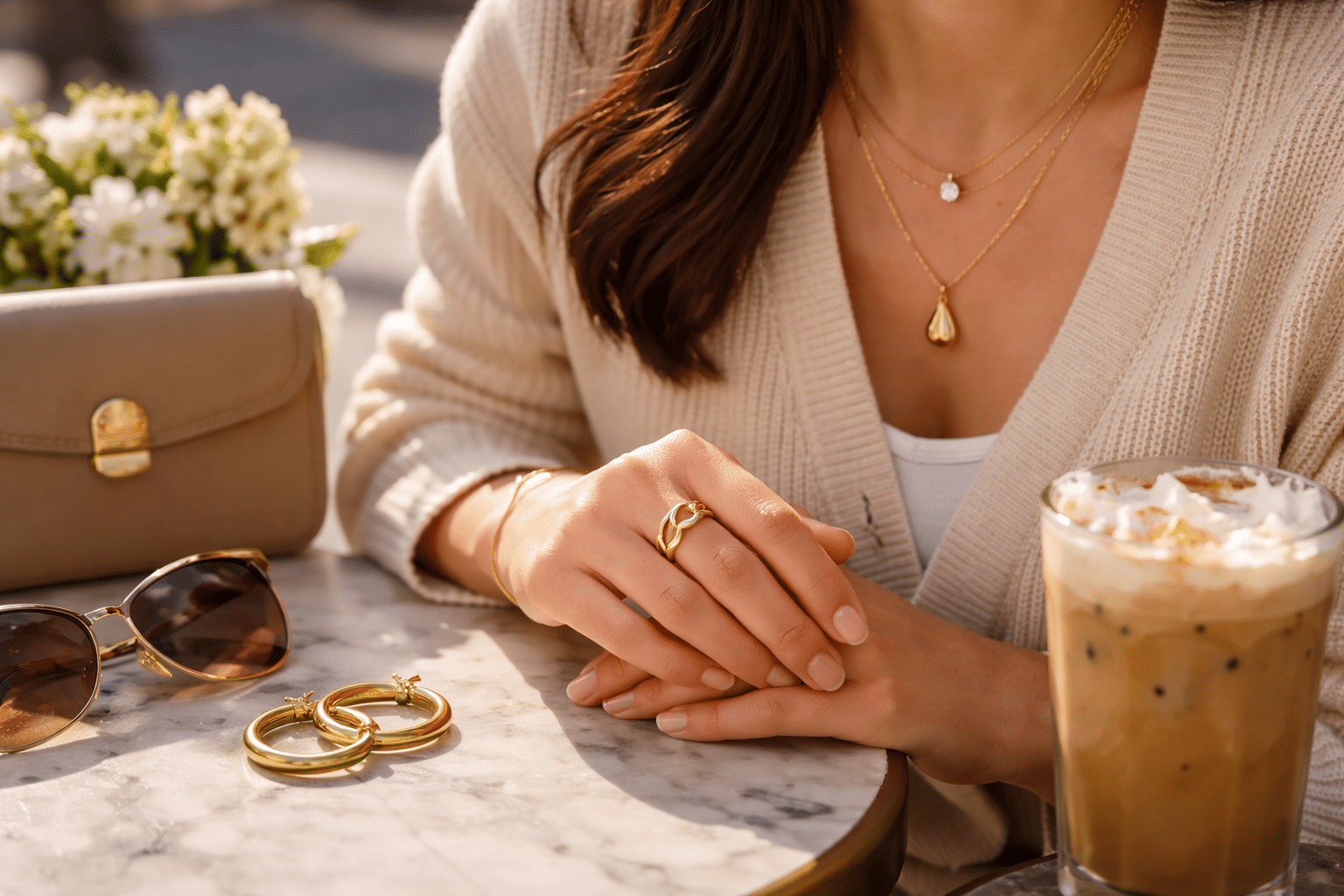
Real-world situations test jewelry durability constantly. Gold-filled handles common challenges effectively.
Office and Professional Environments
Typing, writing, shaking hands, carrying bags, and office work create continuous low-level friction on jewelry. Rings contact keyboards and desks. Bracelets brush against surfaces. Necklaces shift against clothing throughout the day.
Gold-filled handles these demands without visible degradation. Professional women wear gold-filled pieces daily for years while maintaining a polished appearance appropriate for client meetings and presentations.

Active Lifestyles
Gym sessions, yoga classes, recreational sports, and outdoor activities stress jewelry through sweat exposure, friction, and occasional impacts.
While removing jewelry before intense workouts remains ideal, gold-filled jewelry tolerates moderate activity better than alternatives. The thick gold layer resists sweat exposure that rapidly destroys gold plating.
Parenting and Childcare
Children grab jewelry, pull on necklaces, and create situations where durable construction matters. Parents need pieces that survive physical interaction without constant worry about damage.
Gold-filled withstands the tugging, grabbing, and general abuse that accompany caring for young children. The bonded construction resists separation even under stress.

Classic 14K gold chain bracelet
Healthcare and Service Industries
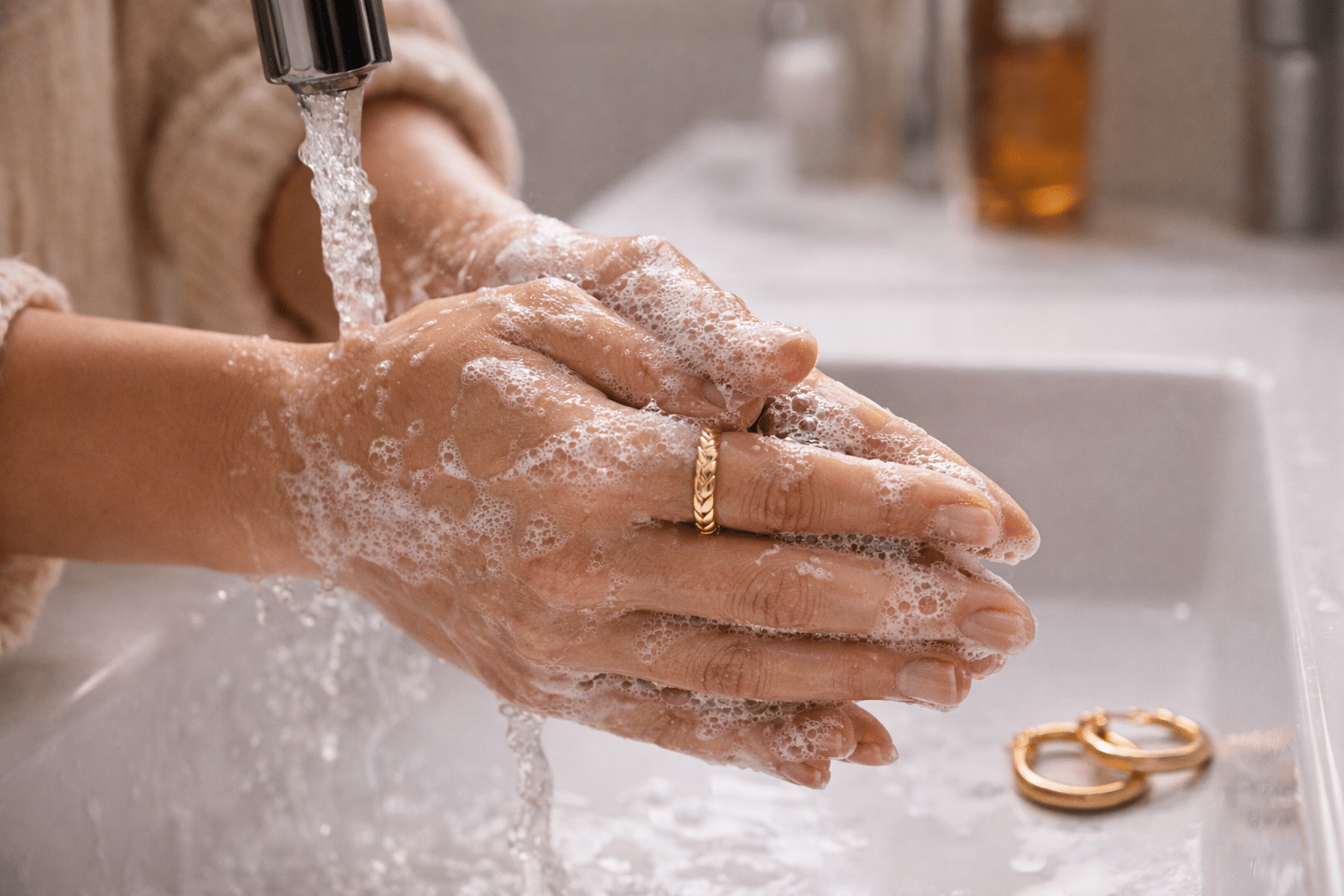
Frequent handwashing, glove changes, and sanitation requirements challenge jewelry durability significantly. Healthcare workers and food service professionals need pieces that survive constant moisture exposure.
Gold-filled handles frequent handwashing far better than gold-plated alternatives. While removing jewelry during work remains safest, gold-filled tolerates these demanding environments when necessary.
Household Activities
Cooking, cleaning, gardening, and general household tasks expose jewelry to moisture, chemicals, friction, and impacts regularly.
Removing gold-filled pieces before harsh chemical exposure (bleach, ammonia) protects them best. However, gold-filled survives occasional exposure that would immediately damage gold plating.

14K gold diamond tennis bracelet
Durability Testing: What Gold Filled Withstands
Understanding specific durability characteristics helps set realistic expectations.
Friction and Abrasion
Gold-filled’s thick layer withstands thousands of friction events before showing meaningful wear. Daily contact with clothing, skin, keyboards, and surfaces accumulates slowly rather than causing rapid degradation.
High-friction areas (ring bands, bracelet clasps, chain links at closure points) show wear first, but this process takes years rather than weeks or months.
Moisture Exposure
Gold-filled tolerates occasional moisture exposure reasonably well. Brief contact with water, sweat, or humidity does not cause immediate damage.
Extended or frequent moisture exposure accelerates wear over time. Removing pieces before showering, swimming, and heavy exercise extends lifespan but proves less critical than with gold-plated jewelry.

14K gold diamond tennis bracelet
Minor Impacts
Bumping jewelry against hard surfaces, dropping pieces occasionally, and general handling stress test durability regularly.
Gold-filled withstands minor impacts without structural damage. The mechanical bonding between gold and base metal maintains integrity through normal handling.
Temperature Fluctuations
Moving between air-conditioned interiors and hot outdoor environments, traveling to different climates, and seasonal temperature changes all affect jewelry.
Gold-filled handles normal temperature ranges without issue. Extreme heat (leaving jewelry in hot cars for extended periods) should be avoided, but typical daily temperature variations cause no problems.
Factors Affecting Gold-filled Durability
Several variables influence how well gold-filled jewelry performs for your specific situation.
Construction Quality
Not all gold-filled jewelry offers identical durability. Quality varies based on:
Gold layer thickness: Pieces exceeding the minimum 5% requirements last longer than those meeting bare minimums.
Base metal quality: Superior brass alloys provide a better foundation than cheap alternatives.
Bonding quality: Proper heat and pressure application create stronger bonds.
Overall construction: Well-made clasps, secure settings, and quality finishing contribute to longevity.
The best gold-filled jewelry comes from reputable manufacturers using quality materials and construction methods.

Individual Body Chemistry
Personal body chemistry affects jewelry wear rates. Acidic sweat accelerates gold degradation, even on thick gold-filled layers.
People who notice rapid deterioration of gold-plated jewelry due to body chemistry may experience faster-than-average wear on gold-filled pieces too, though the timeline extends from months to many years rather than weeks to months.
Care Practices
Proper care for gold-filled jewelry significantly extends durability:
- Removing before water and chemical exposure
- Cleaning regularly to prevent buildup
- Storing properly between wearings
- Handling with reasonable care
Well-maintained gold-filled pieces easily outlast neglected jewelry by years.
Wear Frequency
Daily wear accumulates more friction than occasional use. Pieces worn constantly show wear sooner than rotation pieces worn weekly.
However, gold-filled handles wear excellently. Gold-filled jewelry lasts 10-20 years with daily use, longer with moderate wear patterns.

Classic herringbone shine in 14K gold
Which Gold-filled Pieces Handle Daily Wear Best?
Certain jewelry types prove especially suited for everyday gold-filled wear.
Necklaces and Chains
Gold-filled chains handle daily wear excellently. The thick gold layer protects links from friction against skin and clothing. Quality chains maintain appearance through years of continuous wear.
Simple chain styles (cable, rope, box chains) prove most durable. Delicate chains with tiny links may require gentler handling.
Stud Earrings
Small gold-filled studs make ideal everyday earrings. Minimal movement means minimal friction. The gold layer protects posts and backs from moisture during daily insertion and removal.
Avoid heavy dangling earrings for constant daily wear; weight creates stress on posts and ear piercings.
Simple Rings
Gold-filled bands and simple ring designs handle daily wear well. The continuous gold surface resists friction from hand activities.
Rings experience more wear than other jewelry types due to constant hand use. Even durable gold-filled rings eventually show wear at the band interior, but this takes years rather than months.

Bangle Bracelets
Solid gold-filled bangles withstand daily sliding on and off wrists. The continuous construction eliminates weak points that might fail under stress.
Avoid thin, delicate bangles for rough daily wear; thicker construction provides greater durability.

Signs of Wear on Daily-Worn Gold-filled
Even durable gold-filled eventually shows wear with constant use. Recognizing normal aging helps assess piece condition.
Normal Aging (Years 1-5)
- Slight dulling in high-contact areas
- Minor surface scratches
- Reduced shine compared to new condition
Simple cleaning restores most normal aging signs. These changes indicate the piece is performing normally.
Extended Wear Signs (Years 5-15)
- Visible color variation between worn and protected areas
- Deeper scratches affecting surface finish
- Thinning at specific contact points
Pieces showing these signs remain fully wearable. Professional polishing can restore appearance.
End-of-Life Indicators (Years 15+)
- Base metal is becoming visible through the gold layer
- Skin reactions from exposed base metal
- Significant structural wear affecting function
These signs indicate the gold-filled piece approaches replacement time, but reaching this stage after 15+ years of daily wear demonstrates excellent durability.

Case Study: Michelle’s Everyday Gold-filled Experience
Michelle, a 45-year-old elementary school teacher from San Diego, shared her daily wear experience:
“Teaching demands durable jewelry. I write on boards, handle art supplies, help kids with projects, and wash my hands constantly throughout each day. Delicate jewelry simply does not survive my work environment.
I discovered gold-filled jewelry eight years ago after destroying countless gold-plated pieces. My initial investment included a simple chain necklace, small hoop earrings, and a thin bangle bracelet, about $180 total.
All three pieces remain in my daily rotation today. Eight years of teaching, summer activities, family life, and general wear. The necklace shows slightly less shine than when new, but looks beautiful and appropriate for work. The earrings appear nearly identical to day one. The bangle has minor surface scratches invisible from a normal distance.
Compare this to my gold-plated period: I replaced jewelry every few months. Pieces would look terrible within weeks of purchase. I spent more annually on cheap replacements than my entire gold-filled collection cost.
My morning routine now takes seconds: put on my gold-filled pieces and go. No worrying about whether today’s activities will ruin my jewelry. No checking for tarnishing. No green skin reactions.
For anyone whose daily life involves real activity and real demands, gold-filled proves worth every penny. The durability matches actual lifestyles rather than requiring you to treat jewelry like museum pieces.”

Maximizing Durability for Daily Wear
Simple practices extend gold-filled lifespan significantly:
Morning routine: Put on jewelry after applying all lotions, perfumes, and cosmetics.
Evening routine: Remove jewelry before showering. Wipe with soft cloth before storing.
Activity awareness: Remove before swimming, intense workouts, and chemical exposure.
Regular maintenance: Clean every few weeks. Inspect for wear points periodically.
Proper storage: Keep in a lined jewelry box or soft pouches away from humidity.
These habits add minimal time to daily routines while extending jewelry lifespan by years.
Video About: is gold-filled jewelry durable
For visual demonstration of gold-filled durability: