To avoid mistaking one for the other, it helps to know how gold-filled differs from gold-plated in materials and durability.
You inherited jewelry from your grandmother. You found pieces at an estate sale. You wonder whether that necklace you bought years ago is actually quality gold-filled or just cheap gold plating. Telling the difference matters; one type lasts decades while the other may already be deteriorating.

14K gold diamond tennis bracelet
Gold-filled and gold-plated jewelry look identical when new. Both display that warm golden color. Both feel like gold. Both can carry convincing appearances that fool casual observers completely. Yet their construction, value, and longevity differ dramatically.
Learning to identify gold-filled versus gold-plated protects you from overpaying for inferior products and helps you properly value pieces you already own. A few simple checks reveal the truth beneath the golden surface.

Juli “Jewels” Church, Certified Diamondologist at LearningJewelry.com, teaches identification techniques regularly: “Customers bring in jewelry asking what they actually have. Sometimes, pieces they thought were worthless turn out to be quality gold-filled. Other times, expensive-looking items prove to be cheap plating. Knowing how to identify the difference empowers better decisions, both for purchases and for understanding what you already own.”
Checking Stamps and Markings
The fastest identification method involves examining stamps and hallmarks.
Gold-filled Markings
Quality gold-filled jewelry carries specific stamps indicating content:
Common gold-filled stamps:
- 14K GF or 14KGF: 14 karat gold-filled
- 12K GF or 12KGF: 12 karat gold-filled
- 1/20 14K GF: Gold layer equals 1/20th (5%) of total weight in 14K gold
- 1/20 12K GF: Gold layer equals 1/20th (5%) of total weight in 12K gold
- 1/10 14K GF: Premium quality, gold equals 1/10th (10%) of total weight
- Gold-filled: Sometimes spelled out fully
- G.F.: Abbreviated marking
These stamps indicate the piece meets federal requirements for gold-filled designation, minimum 5% gold by total weight.

Gold-plated Markings
Gold-plated jewelry uses different stamp conventions:
Common gold-plated stamps:
- GP: Gold-plated
- GEP: Gold electroplated
- HGE: Heavy gold electroplate
- RGP: Rolled gold plate (thin gold layer, less than gold-filled)
- Gold-plated: Sometimes spelled out
- Vermeil: Gold plating over sterling silver (at least 2.5 microns thick)
These markings indicate a thin gold coating rather than substantial gold content.
No Markings
Many inexpensive pieces carry no stamps at all. Absence of markings typically indicates:
- Very cheap gold plating is not worth marking
- Costume jewelry with minimal gold content
- Pieces manufactured where marking requirements differ
- Counterfeit items avoid an accurate description
Unmarked “gold” jewelry should be assumed gold-plated or worse unless proven otherwise.

Marking Comparison Table
Marking | Type | Gold Content | Expected Lifespan |
14K GF, 1/20 14K GF | Gold-filled | 5%+ minimum | 10-30 years |
12K GF, 1/20 12K GF | Gold-filled | 5%+ minimum | 10-30 years |
1/10 14K GF | Premium Gold-filled | 10% | 20-40+ years |
GP, GEP | Gold-plated | <0.05% | 6 months-2 years |
HGE | Heavy Gold Electroplate | <0.5% | 1-3 years |
RGP | Rolled Gold Plate | 1-2% | 2-5 years |
No marking | Usually Gold-plated | Unknown | Assume minimal |
Where to Find Stamps
Stamps appear in specific locations depending on the jewelry type.
Necklaces and Chains
Check near the clasp; stamps typically appear on the clasp mechanism itself, on a small tag near the clasp, or on the jump ring connecting the clasp to the chain.
Bracelets
Examine the clasp area, interior of bangle bracelets, or small attached tags. Cuff bracelets may have stamps on interior surfaces.
Earrings
Look at earring posts, backs, or small stamps on the earring face where it connects to the post. Hoop earrings may have stamps on the clasp mechanisms.
Rings
Check the interior band surface. Stamps typically appear inside the ring, where they remain hidden during wear.
Using Magnification
Stamps on jewelry are often tiny, sometimes requiring magnification to read clearly. A simple jeweler’s loupe (10x magnification) makes identification much easier. Smartphone camera zoom can also help examine small markings.

Minimal diamond huggies for everyday shine
Visual and Physical Inspection Methods
When stamps are absent, worn, or unclear, other methods help distinguish gold-filled from gold-plated.
Examining Wear Patterns
Wear patterns reveal construction type on older pieces:
Gold-plated wear signs:
- Color changes at high-friction areas (clasps, chain links, ring bands)
- Brassy or copper undertones appearing where gold has worn away
- Visible base metal at edges and contact points
- Inconsistent color between worn and protected areas
Gold-filled wear signs:
- Minimal color change even on older pieces
- Consistent golden color throughout
- No visible base metal exposure except on very old/heavily worn items
- Surface scratches without color change beneath
Pieces showing base metal within months or a few years of use are almost certainly gold-plated. Gold-plated jewelry tarnishes predictably as thin layers wear through.

Modern layered gold chains with herringbone shine
Weight Assessment
Gold-filled jewelry feels noticeably heavier than gold-plated equivalents of similar size.
The substantial gold layer in gold-filled construction adds meaningful weight. Gold-plated pieces with minimal gold content feel lighter, sometimes hollow or flimsy.
Compare similar-sized pieces side by side. The heavier item is more likely to contain gold-filled construction.
Color Consistency
Examine color carefully across the entire piece:
Gold-filled: Consistent color throughout, even at edges, corners, and high-wear areas. The thick gold layer maintains a uniform appearance.
Gold-plated: May show subtle color variations where thin plating has begun wearing. Edges and corners may appear slightly different from protected surfaces.
Skin Reaction History
Past skin reactions provide identification clues:
Gold-plated indicators:
- Jewelry turning skin green
- Skin irritation or allergic reactions
- Discoloration appearing after short wear periods
Gold-filled indicators:
- No skin discoloration despite extended wear
- Comfortable wear without reactions
- Consistent performance across years of use
If a piece caused green skin or reactions, it almost certainly contains thin plating that wore through to expose base metals.

Classic herringbone shine in 14K gold
Professional Testing Methods
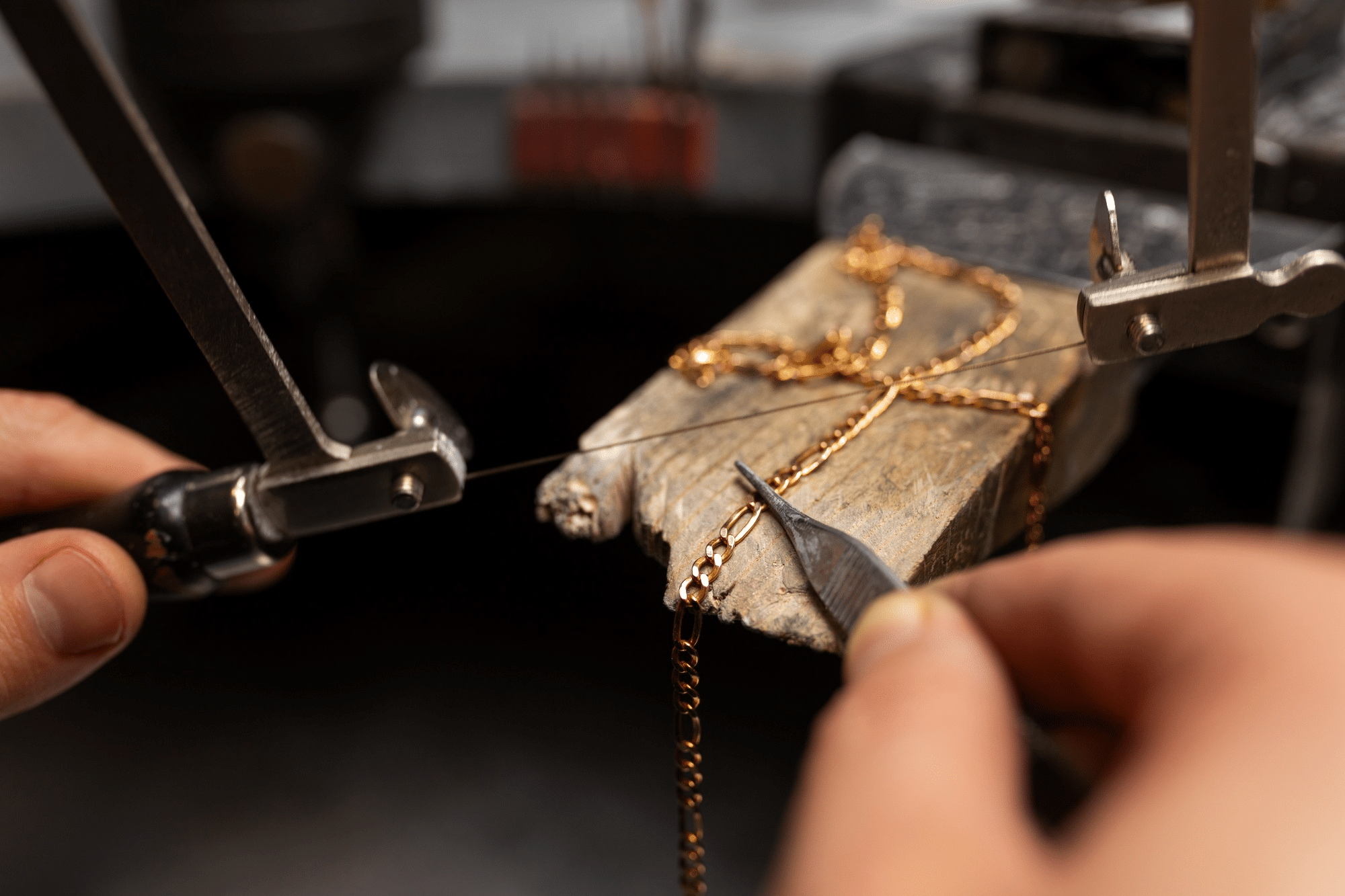
When visual inspection proves inconclusive, professional testing provides definitive answers.
Acid Testing
Jewelers use acid testing to determine gold content:
- A small scratch is made on an inconspicuous area
- An acid solution is applied to the exposed metal
- Reaction (or lack thereof) indicates gold content
Different acid strengths test different karat levels. No reaction to appropriate acid indicates genuine gold content at that surface level.
Acid testing confirms surface gold presence but cannot precisely measure layer thickness. It distinguishes gold from non-gold but does not perfectly differentiate thick gold-filled from thin gold plating.
XRF Analysis
X-ray fluorescence (XRF) scanning provides the most accurate identification:
- Non-destructive testing requiring no scratching
- Measures exact gold content and layer thickness
- Identifies base metal composition
- Provides definitive gold-filled vs gold-plated determination
XRF machines are expensive, limiting this testing to professional jewelers and appraisers. Testing fees typically run $20-50 per piece.

Luxe lab diamonds with a refined drop finish
Specific Gravity Testing
Measuring density through water displacement helps identify gold content:
- The piece is weighed in the air
- The piece is weighed and suspended in water
- Density calculation indicates likely composition
Higher density suggests greater gold content. This method provides an approximation rather than a precise identification, but helps distinguish major category differences.

Common Identification Mistakes
Avoid these errors when attempting to identify gold jewelry:
Trusting Appearance Alone
New gold-filled and gold-plated jewelry look identical. Golden color proves nothing about construction quality. Never assume based on appearance; always check stamps and other indicators.
Believing Seller Claims
Sellers sometimes misrepresent jewelry, accidentally or intentionally. Verify claims through stamps and physical inspection rather than accepting descriptions at face value.

Confusing Similar Terms
Terminology creates confusion:
- Gold-filled ≠ Gold-plated: Completely different construction and durability
- Rolled gold plate ≠ Gold-filled: RGP contains less gold than true gold-filled
- Heavy gold electroplate ≠ Gold-filled: HGE remains electroplated despite “heavy” designation
- Vermeil ≠ Gold-filled: Vermeil is plating over sterling silver, not mechanical bonding
Assuming Price Indicates Quality
Expensive pieces can still be gold-plated. Cheap pieces might be vintage gold-filled. Price alone does not determine construction type.
Ignoring Worn Areas
Examining only pristine surfaces misses important information. Check high-wear areas where construction differences become visible on older pieces.

Evaluating Inherited or Secondhand Jewelry
Inherited pieces and estate sale finds require careful evaluation.
Vintage Pieces (Pre-1980)
Older gold-filled jewelry often proves exceptionally high quality:
- Manufacturing standards are frequently exceeded by minimums
- Thicker gold layers than modern requirements
- Superior bonding techniques have been developed over the decades
- Many pieces remain perfectly wearable after 50+ years
Vintage gold-filled represents excellent value when found at estate sales or inherited from family members.
Assessing Inherited Jewelry
When evaluating inherited pieces:
- Examine all stamps and markings carefully
- Note wear patterns indicating age and construction type
- Consider family history, quality jewelry tends to be kept and passed down
- Seek professional appraisal for valuable-looking pieces
Inherited gold-filled jewelry carries both monetary and sentimental value worth preserving through proper care for gold-filled jewelry.
Estate Sale Purchases
When buying secondhand:
- Verify stamps before purchasing
- Examine wear patterns for construction clues
- Compare the weight to similar-sized pieces
- Ask the seller about the piece’s history and origin
- Price according to verified construction type

Classic 14K gold chain bracelets
Case Study: Jennifer’s Jewelry Identification Journey
Jennifer, a 44-year-old antique collector from Boston, learned identification techniques through experience:
“My grandmother passed down a jewelry box containing dozens of pieces. Some looked valuable. Others seemed like costume jewelry. I had no idea which was which.
My first approach, completely wrong, involved assuming the prettier pieces were more valuable. A stunning necklace I thought was gold-filled turned out to be cheap gold plating. A plain bracelet I almost donated proved to be quality 14K gold-filled from the 1950s.
Learning proper identification changed everything:
Stamp Checking: I bought a $15 jeweler’s loupe online. Suddenly, I could read tiny stamps I never noticed before. About half of my grandmother’s pieces carried clear gold-filled markings, 14K GF, 1/20 12K, and similar stamps.
Wear Pattern Analysis: Older pieces revealed their construction through wear. Gold-plated items showed brass at clasps and edges. Gold-filled pieces maintained consistent color even after decades.
Weight Comparison: Side-by-side comparison revealed obvious weight differences. Gold-filled pieces felt substantial. Gold-plated items felt light and sometimes hollow.
Professional Verification: For ambiguous pieces, I paid a local jeweler $30 for XRF testing on five items. Three were gold-filled (including two without clear stamps). Two were gold-plated.
The results amazed me. My grandmother’s collection included over 20 quality gold-filled pieces, probably worth $1,500-2,000 for the gold content alone, plus sentimental value beyond measure.
I now apply these identification skills when shopping at estate sales. Last month, I found a 1960s gold-filled bangle marked ‘1/20 14K GF’ priced at $8. The seller thought it was costume jewelry. I knew better.
Understanding how to identify gold-filled versus gold-plated versus solid gold turned my grandmother’s mixed collection into properly valued heirlooms and gave me skills for finding undervalued pieces myself.”

Quick Identification Checklist
Use this checklist when evaluating unknown jewelry:
Step 1: Find and Read Stamps
- Locate stamp (near clasps, inside bands, on tags)
- Use magnification if needed
- Identify marking type (GF = gold-filled, GP = gold-plated)
Step 2: Assess Physical Characteristics
- Compare the weight to similar-sized known pieces
- Check for hollow or flimsy construction
- Evaluate the overall quality feel
Step 3: Examine Wear Patterns
- Look at high-friction areas (clasps, edges, contact points)
- Note any color changes or base metal visibility
- Assess color consistency across the entire piece
Step 4: Consider History
- Any skin reactions when worn?
- How long has the piece maintained its appearance?
- What did the piece cost originally (if known)?
Step 5: Seek Professional Testing (If Needed)
- Acid testing for surface gold verification
- XRF analysis for definitive identification
- Professional appraisal for valuable pieces
Video Resource
For visual demonstration of jewelry identification techniques: