

Looking for comprehensive information on Best Settings for Lab Grown Diamond Stud Earrings? Visit our complete Lab Grown Diamond Stud Earrings Guide for everything you need to know.

Bold carats. Clean settings. Timeless lab-grown brilliance.
The setting holding your diamond matters nearly as much as the diamond itself. A stunning lab grown diamond deserves a setting that showcases its brilliance while keeping it secure through years of daily wear. Choosing the wrong setting leads to frustration, lost stones, snagged clothing, or diamonds that simply do not sparkle as they should.

Understanding setting options helps buyers make informed decisions, balancing aesthetics, security, and lifestyle requirements. Each setting style offers distinct advantages and trade-offs worth considering before purchase.
Juli “Jewels” Church, Certified Diamondologist at LearningJewelry.com, emphasizes setting importance: “I have seen beautiful diamonds ruined by poor settings. Thin prongs that bend, insecure backings that fail, bezels that block too much light. The right setting protects your investment while maximizing the diamond’s natural beauty.”
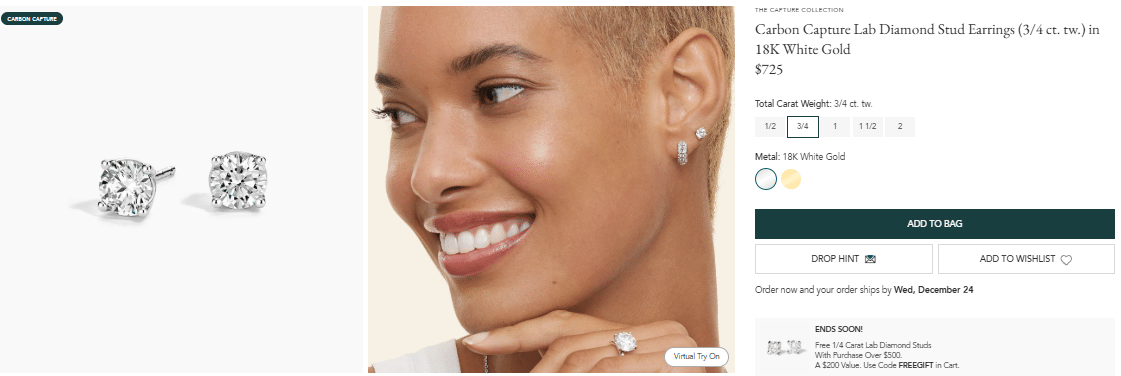
Timeless sparkle, responsibly grown—made to shine every day.
Why Earring Settings Matter
Settings serve multiple critical functions beyond simply holding diamonds in place.
Security: Quality settings prevent diamond loss through secure mounting and appropriate backing selection. Poor settings risk costly disappearances.
Light Performance: Setting design affects how light enters and exits diamonds. Some settings maximize brilliance while others reduce it for security trade-offs.
Durability: Settings must withstand daily wear, cleaning, and occasional impacts. Construction quality determines longevity.
Aesthetics: Settings contribute to the overall earring appearance. Style choices communicate personal taste and complement different occasions.
Comfort: Profile height, weight distribution, and backing type affect wearing comfort during extended use.

Iconic cuts. Instant elegance.
Prong Settings: Maximum Brilliance

Prong settings remain the most popular choice for diamond stud earrings. Metal prongs grip diamonds at specific points, elevating stones above setting bases while exposing maximum surface area.

Four-Prong Martini
The classic diamond stud setting. Four prongs secure diamonds while a tapered cone beneath creates elegant profiles. The martini shape (resembling an inverted martini glass) provides a secure foundation without excessive metal visibility.
Advantages:
- Maximum light entry for optimal brilliance
- Classic, timeless appearance
- Widely available across retailers
- Moderate price point
Considerations:
- Prongs can catch on hair and fabrics
- Requires periodic prong inspection
- Less secure than bezel alternatives
Four-prong martini settings suit most round brilliant, cushion, and oval diamonds effectively.
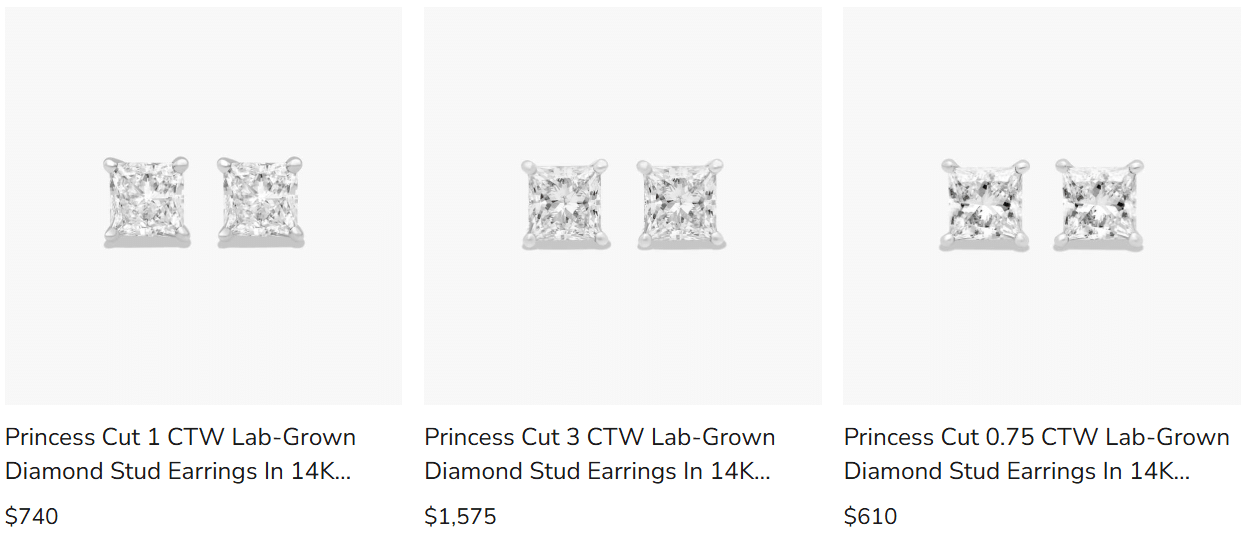
Six-Prong Crown
Additional prongs provide enhanced security for larger or more valuable diamonds. Six prongs distribute holding force across a greater circumference, reducing individual prong stress.
Advantages:
- Improved security over four-prong options
- Better protection for substantial diamonds
- Classic crown appearance
Considerations:
- Slightly more metal visible from above
- Higher cost than four-prong alternatives
- May appear heavy on smaller diamonds
Six-prong settings work particularly well for studs over 0.75 carats per earring where security justifies additional metal.
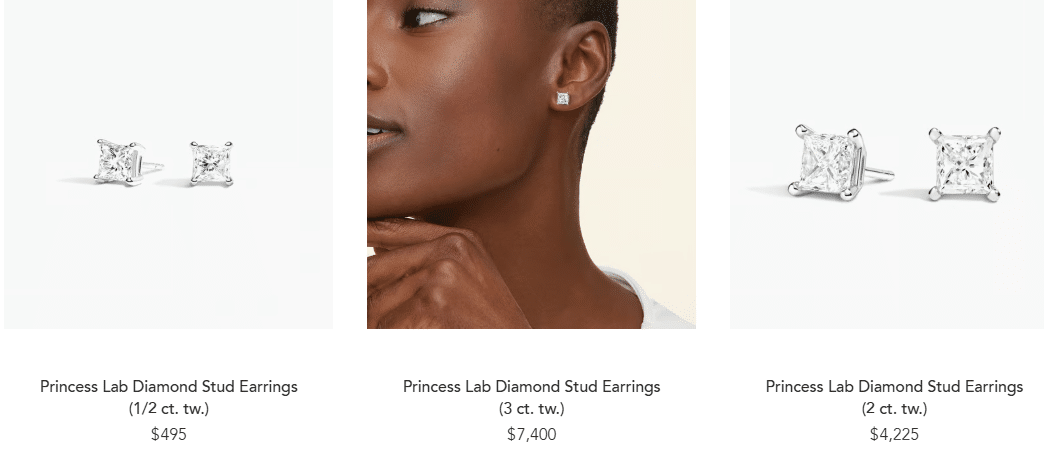
Three-Prong Martini
Minimalist prong configuration exposing maximum diamond surface. Three prongs provide adequate security while virtually disappearing from view.
Advantages:
- Minimum metal visibility
- Maximum diamond exposure
- Clean, modern aesthetic
Considerations:
- Less secure than four or six-prong options
- Not recommended for very active lifestyles
- Limited availability at some retailers
Three-prong settings suit buyers prioritizing diamond visibility above maximum security.

Bezel Settings: Maximum Security
Bezel settings wrap continuous metal rims around diamond perimeters. This ancient technique provides unmatched security for active lifestyles.
Advantages:
- Maximum protection against impacts
- No prongs to catch or snag
- Sleek, modern aesthetic
- Lower profile for comfort
- Simplified maintenance
Considerations:
- Reduced brilliance from blocked side light
- Diamonds appear slightly smaller
- Higher construction cost
- Limited style versatility
Bezel settings excel for healthcare workers, athletes, parents, and anyone whose lifestyle subjects jewelry to demanding conditions. The security benefits outweigh the brilliance reduction for many buyers.

Full Bezel vs Partial Bezel
Full bezels encircle diamonds completely. Partial bezels cover portions while leaving sections exposed for increased light entry.
Full bezels provide maximum security with clean aesthetic lines. Partial bezels compromise between security and brilliance, suitable for buyers wanting bezel protection without full light blockage.

Basket Settings: Secure Foundation
Basket settings create metal frameworks beneath diamonds, providing secure foundations while allowing light entry from multiple angles.
Advantages:
- Secure diamond mounting
- Good light performance
- Classic appearance
- Moderate pricing
Considerations:
- More metal is visible from the side profiles
- Can accumulate debris requiring cleaning
- Less modern than martini alternatives
For comparison between basket and prong configurations, see our guide on basket setting vs prong setting.

Halo Settings: Enhanced Presence

Halo settings surround center diamonds with smaller accent stones, creating enhanced visual presence and additional sparkle.
Advantages:
- The center diamond appears 25-50% larger
- Additional sparkle from accent diamonds
- Glamorous, eye-catching appearance
- The frame’s center stone is elegantly
Considerations:
- Higher cost (additional diamonds required)
- More maintenance (additional stones to secure)
- Fashion-dependent styling
- Not suitable for minimalist preferences
Halo settings suit buyers wanting maximum visual impact. Those preferring solitaire simplicity should explore prong or bezel alternatives.

Timeless sparkle, everyday confidence—classic studs done right.
Channel Settings: Smooth Security
Channel settings secure diamonds between parallel metal walls. While less common for single-stone studs, channel construction appears in multi-diamond earring designs.
Advantages:
- Smooth profile without protruding elements
- Secure diamond mounting
- Professional, clean appearance
- Ideal for linear diamond arrangements
Considerations:
- Limited to specific earring styles
- Less light entry than prong settings
- Resizing or repairs are more complex
Channel settings work well for anniversary bands, huggie hoops, and multi-stone earring designs.

Pure brilliance. Framed in timeless white gold
Setting Comparison by Priority
This comparison helps match settings to individual priorities.
Setting Type | Security Level | Brilliance | Modern Appeal | Price Point | Best For |
Four-Prong Martini | Good | Maximum | Classic | Moderate | Most buyers |
Six-Prong Crown | Very Good | Excellent | Traditional | Moderate-High | Larger diamonds |
Three-Prong | Moderate | Maximum | Modern | Moderate | Minimalists |
Full Bezel | Maximum | Reduced | Contemporary | Higher | Active lifestyles |
Partial Bezel | Very Good | Good | Modern | Higher | Balanced needs |
Basket | Very Good | Very Good | Classic | Moderate | Traditional taste |
Halo | Good | Enhanced | Glamorous | Highest | Maximum presence |
Backing Types: The Security Foundation
Backing selection affects security as significantly as the setting choice. The finest setting means nothing if inadequate backings allow earrings to slip away unnoticed.
Screw-Back
Threaded posts require screwing backs into place. Maximum security through an intentional engagement mechanism.
Best For: Valuable studs, active lifestyles, peace of mind
Consideration: Slightly less convenient for frequent removal
Push-Back (Butterfly)
Standard friction backs sliding onto posts. Convenient but less secure than alternatives.
Best For: Lower-value everyday studs, frequent removal needs
Consideration: Can loosen over time, higher loss risk
La Pousette
Premium hinged backs with secure locking mechanisms. Excellent security with easier handling than screw-backs.
Best For: Valuable studs, buyers wanting security with convenience
Consideration: Higher cost than standard options
Locking Back
Secure mechanisms that lock into place, providing a middle ground between push-back convenience and screw-back security.
Best For: Moderate-value studs, balanced security needs
Consideration: Quality varies between manufacturers
For studs representing significant investment, screw-backs or La Pousette options provide worthwhile security.

Matching Settings to Diamond Shapes
Certain settings complement specific diamond shapes more effectively.
Round Brilliant: Four-prong martini, six-prong crown, bezel, all work excellently
Princess Cut: V-prong for corner protection, bezel for maximum security
Cushion Cut: Four-prong, bezel, soft corners suit various settings
Oval: Four-prong with prongs at ends, bezel for protection
Emerald: Four-prong, bezel, step cuts suit clean setting lines
Where to Find Quality Settings
These retailers offer well-constructed setting options. For comprehensive guidance, see our best places to buy diamond earrings guide.
James Allen
Multiple setting options with detailed imaging showing construction quality. Their 360° videos reveal prong thickness and bezel fit before purchase.
Blue Nile
Quality settings across price points with educational resources explaining differences.
Brilliant Earth

Well-constructed settings with an ethical sourcing focus. Showroom locations allow hands-on examination.
Ritani

Virtual consultations help match settings to lifestyle needs and preferences.
Case Study: Rachel’s Setting Selection Journey
Rachel, a 36-year-old veterinarian from Denver, shared her setting decision process:
“My profession involves constant hand washing, animal handling, and occasional scratches or bites. Previous prong-set earrings caught on fur, scrubs, and examination gloves constantly. I lost one diamond when a prong bent during a difficult patient restraint.
After that loss, I researched settings obsessively. Bezel settings emerged as the clear solution for my lifestyle.
I purchased 1.5 TCW round brilliant lab grown studs in full platinum bezels with screw-backs from James Allen. Total investment: $1,450.

The difference proved immediate. No more snagging on anything. The smooth bezel profile survives my demanding workdays without concern. Yes, the brilliance is slightly reduced compared to prong settings, but I actually wear these earrings now rather than leaving them at home for safety.
Three years of veterinary practice later, these bezels show zero wear issues. The screw-backs have never loosened despite constant hand washing. Best setting decision I could have made for my lifestyle.”

Caring for Different Settings
Setting type affects maintenance requirements.
Prong Settings: Inspect prongs every 6 months for bending or wear. Regular cleaning prevents debris accumulation at prong bases.
Bezel Settings: Simpler maintenance with fewer crevices. Clean the junction between the bezel and the diamond periodically.
Halo Settings: Most maintenance-intensive. Multiple accent stones require inspection. Clean thoroughly between the center and halo diamonds.
Professional inspection annually catches potential issues before they cause diamond loss. Jewelry insurance protects against setting failures regardless of maintenance diligence.
For more comprehensive guidance, return to our main Lab Grown Diamond Stud Earrings Guide.