
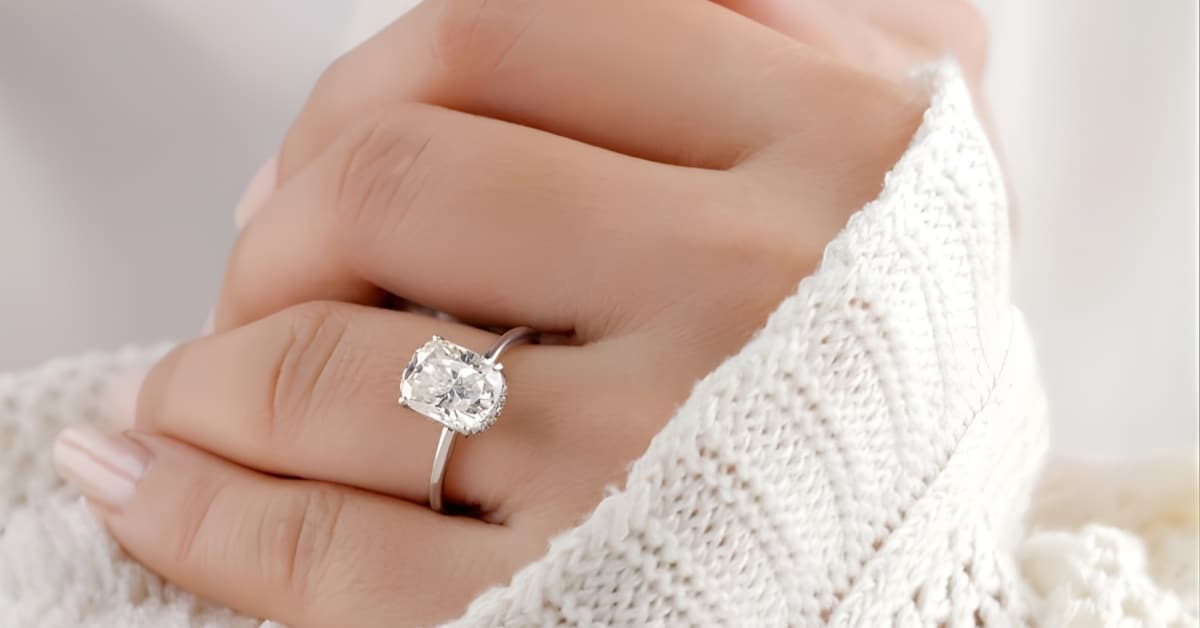

Brilliance in every shape. One smart choice
A 3 carat diamond makes a statement. When that stone catches light across a room, people notice. For decades, owning a diamond this size meant spending the equivalent of a new car, sometimes more. Lab grown diamonds have completely rewritten those rules.
Three carat lab grown diamonds deliver the dramatic presence and breathtaking sparkle of their mined counterparts while keeping tens of thousands of dollars in your pocket. But buying a stone this large requires careful consideration. At this carat weight, every quality factor becomes magnified. Poor choices show up more obviously, and smart decisions pay off more handsomely.

“Love shaped in pure brilliance.”
Juli “Jewels” Church, our Certified Diamontologist at LearningJewelry, spent years selling large diamonds at Kay and Zales. Her perspective on 3 carat stones: “When you move into this size range, cut quality becomes absolutely non-negotiable. A poorly cut 3 carat diamond looks worse than a well-cut 2 carat stone. Buyers often chase carat weight and sacrifice cut, and they regret it every single time.”
Why Choose a 3 Carat Lab Grown Diamond?

Lab grown diamonds make this size accessible to far more buyers. While a natural 3 carat diamond with respectable specifications commands $30,000 to $80,000 depending on quality grades, lab grown diamond prices for equivalent stones range from $5,000 to $15,000.
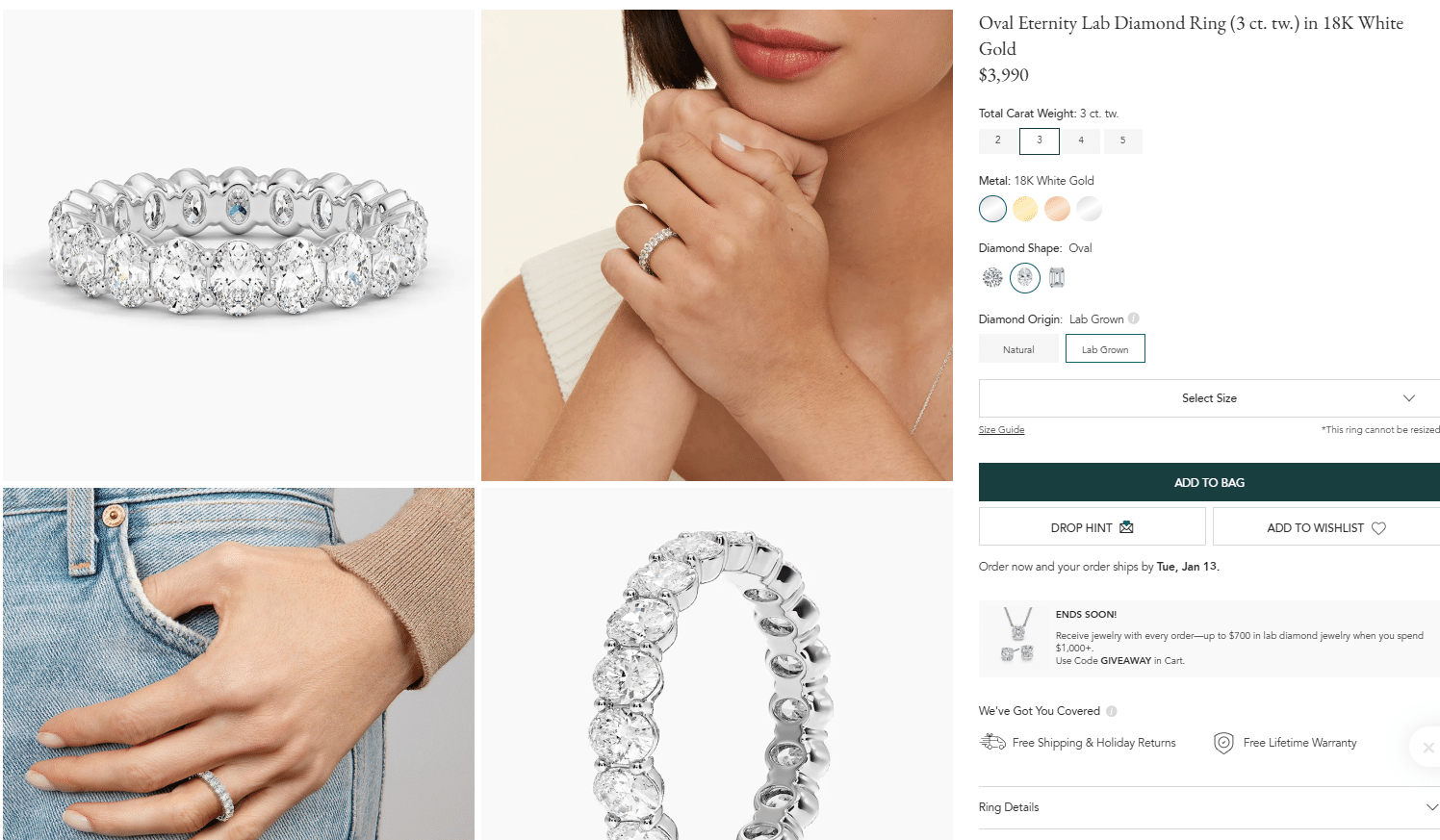
“Endless sparkle, effortless elegance.”
That price difference represents more than savings, it represents possibility. Couples who never imagined wearing a 3 carat diamond suddenly find themselves able to consider one seriously.
According to industry data from The Knot, average engagement ring spending reached $6,000 in recent years. A 3 carat lab grown diamond fits comfortably within or slightly above that average, whereas natural diamonds of this size remain firmly in luxury territory.
How Much Does a 3 Carat Lab Grown Diamond Cost?
Pricing for 3 carat lab grown diamonds varies significantly based on the 4Cs. Understanding these ranges helps set realistic expectations and identify good value when you encounter it.
Quality Level | Color | Clarity | Cut | Approximate Price Range |
Premium | D-E | VVS1-VVS2 | Excellent/Ideal | $10,000-$15,000 |
High Quality | F-G | VS1-VS2 | Excellent | $7,000-$11,000 |
Great Value | G-H | VS2-SI1 | Excellent | $5,000-$8,000 |
Budget Friendly | I-J | SI1-SI2 | Very Good | $3,500-$6,000 |
These prices reflect the diamond alone. Complete engagement ring costs add $800-$3,000 depending on your chosen ring setting and metal type.
Several factors explain price variations within each quality tier:
Diamond Shape: Round brilliant diamonds cost 20-30% more than fancy shapes at equivalent specifications. Their cutting process wastes more rough material, and market demand remains highest for rounds.
Fluorescence: Strong blue fluorescence can reduce prices by 10-15%. In some cases, fluorescence creates a hazy appearance in daylight. In others, it has zero visual impact. Evaluate each diamond individually rather than applying blanket rules.
Certification Lab: IGI-certified diamonds represent the industry standard for lab grown stones. Diamonds certified by lesser-known labs may appear cheaper but often grade more leniently, meaning the actual quality falls below stated specifications.
Retailer Markup: Online retailers typically offer 20-40% lower prices than brick-and-mortar jewelers for identical quality. Overhead costs drive this difference, physical stores pay rent, sales staff, and display inventory.

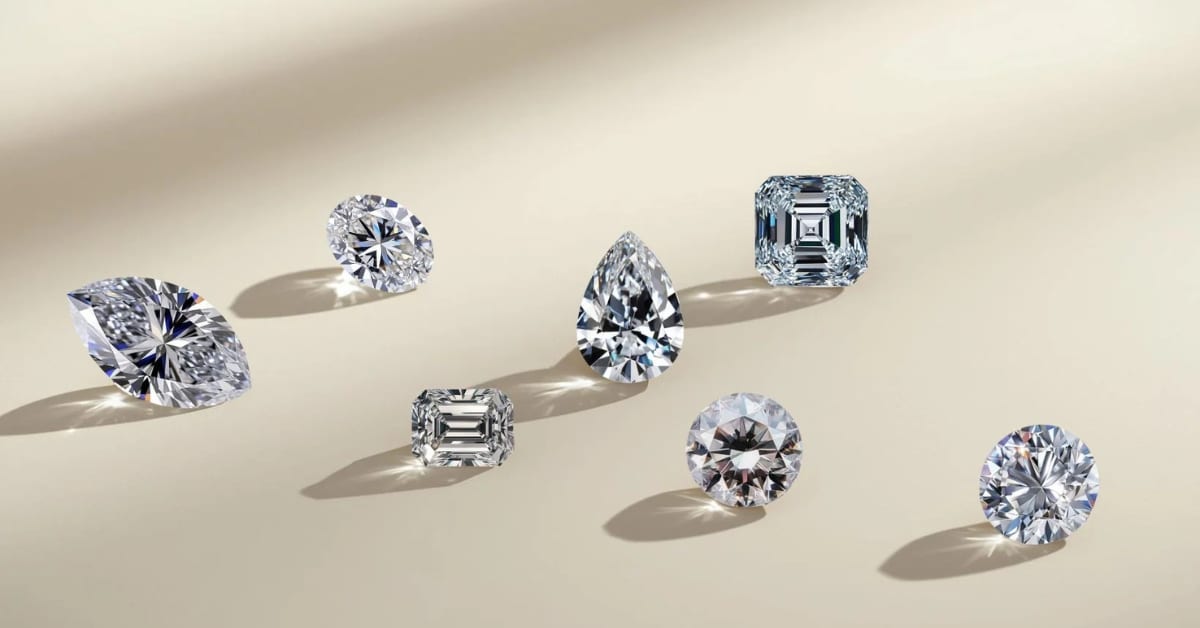
“Seven stones. One stunning shine.”
3 Carat Lab Grown Diamond vs Natural Diamond: Complete Comparison
Understanding lab grown vs natural diamond differences helps frame your decision properly. At 3 carats, the financial gap between options becomes especially dramatic.
Comparison Factor | 3ct Lab Grown Diamond | 3ct Natural Diamond |
Average Price Range | $5,000-$15,000 | $30,000-$80,000 |
Chemical Composition | Carbon Crystal | Carbon Crystal |
Hardness | 10 Mohs | 10 Mohs |
Visual Appearance | Identical | Identical |
Origin | Laboratory | Earth Mined |
Time to Create | 6-10 Weeks | 1-3 Billion Years |
Resale Value | 20-30% of Purchase | 40-60% of Purchase |
Environmental Impact | Significantly Lower | Higher |
Certification | IGI, GCAL | GIA, AGS |
Supply | Increasing | Fixed/Declining |
The numbers tell a clear story. A buyer choosing a lab grown 3 carat diamond over a natural equivalent keeps $25,000-$65,000 in savings, enough for a house down payment, wedding expenses, or investment portfolio contributions.
Juli Church adds perspective: “I sold natural 3 carat diamonds to customers who financed them over five years with interest. By the time they paid off the ring, they had spent even more than the sticker price. Lab grown diamonds let people own their rings outright from day one, debt-free.”

“A princess-cut sparkle made to stand out.”
Choosing the Right Shape for Your 3 Carat Diamond

Diamond shape dramatically affects how a 3 carat stone presents on the finger. Some shapes maximize face-up appearance while others prioritize depth and light return.
Round Brilliant
The most popular diamond shape offers maximum sparkle and fire. A 3 carat round brilliant measures approximately 9.3mm in diameter, substantial enough to command attention without appearing oversized on most hands. Round brilliants hide inclusions well and tolerate lower color grades effectively.
However, rounds carry premium pricing. Expect to pay 25-35% more for round brilliant compared to fancy shapes at identical quality grades.
Oval
Oval lab grown diamonds create an elongating effect on the finger while displaying excellent brilliance. Their elongated shape means a 3 carat oval appears larger than a 3 carat round despite identical weight. Typical measurements run approximately 11mm x 7.5mm.
Watch for the “bow-tie effect”, a dark shadow across the center visible in poorly cut ovals. Quality stones minimize this phenomenon through precise faceting.
Cushion
Cushion cuts blend vintage romance with modern brilliance. Their soft, rounded corners create a pillow-like appearance that many buyers find particularly elegant. A 3 carat cushion offers substantial presence while maintaining refined proportions.
Cushion cuts show color more readily than rounds, so consider staying in the G-H range for white appearance.
Radiant
Radiant cut diamonds combine the elegant rectangular shape of emerald cuts with the brilliance of round diamonds. Their cropped corners add geometric interest while maintaining durability, no sharp points to chip.
Radiant cuts hide inclusions exceptionally well, making SI1 clarity a viable option for eye-clean appearance at 3 carats.
Emerald
Emerald cuts take a different approach to beauty. Their step-cut faceting creates a hall-of-mirrors effect rather than the fiery sparkle of brilliant cuts. This showcases clarity exceptionally well, which means inclusions become more visible.
For emerald cut 3 carat diamonds, prioritize VS2 clarity or higher. The open table and long facets reveal imperfections that brilliant cuts would mask.
Quality Recommendations for 3 Carat Lab Grown Diamonds

At 3 carats, quality decisions carry amplified consequences. Here are practical recommendations based on Juli Church’s expertise and our research:
Cut: Never Compromise
Accept only Excellent or Ideal cut grades for round diamonds. For fancy shapes, examine proportions individually since standardized cut grades vary by lab. Look for symmetry and polish ratings of Excellent or Very Good minimum.
Poor cut quality at 3 carats creates noticeably dull diamonds. The size that should impress ends up disappointing.
Color: Strategic Selection Saves Money
G-H color grades appear white in most settings and lighting conditions. Moving from D to G color at 3 carats can save $2,000-$4,000 without visible difference once mounted.
Exception: If setting your diamond in platinum or white gold with a halo setting, surrounding melee diamonds might highlight color contrast. Consider F-G range for these designs.
Yellow gold and rose gold settings actually complement warmer color grades, making H-I diamonds excellent choices that save additional money.
Clarity: Eye-Clean Matters Most
VS2 and SI1 clarity grades frequently produce eye-clean 3 carat diamonds at substantial savings compared to VVS or IF grades. The key lies in examining each diamond individually.
Use 360° video tools offered by retailers like James Allen to inspect inclusions. A VS2 with inclusions near the edge differs dramatically from a VS2 with a visible inclusion under the table facet.
Diamond clarity grades impact price significantly at higher carat weights. Smart clarity selection at 3 carats can save $1,500-$3,000.

Where classic shine meets modern elegance
Best Settings for 3 Carat Lab Grown Diamonds
A 3 carat diamond deserves a setting that showcases its size appropriately while ensuring security.
Solitaire Setting
The solitaire setting lets a 3 carat diamond speak for itself. Clean lines draw attention to the center stone without competition. Four or six-prong configurations work beautifully at this size.
Thin bands (1.8-2.2mm) create visual contrast that makes the diamond appear even larger.
Cathedral Setting
Cathedral settings feature arched metalwork rising from the band to support the center stone. This design adds height and drama while providing excellent stability for larger diamonds.
The architectural element complements the statement nature of a 3 carat stone particularly well.
Three-Stone Setting
Flanking a 3 carat center stone with two smaller side diamonds creates balanced proportions and additional sparkle. Total carat weight increases while the design maintains elegance.
Side stones typically measure 0.30-0.50 carats each, complementing rather than competing with the center diamond.
Bezel Setting
Bezel settings wrap metal completely around the diamond’s girdle. This provides maximum security for active lifestyles while offering a sleek, modern aesthetic.
Full bezels slightly reduce visible diamond size compared to prong settings. Consider partial bezels or bezel accents if maximum size appearance matters to you.
Case Study: Michael’s 3 Carat Lab Grown Diamond Purchase
Michael, a 34-year-old software engineer from Seattle, contacted LearningJewelry to share his buying experience:
“I started with a $15,000 budget and initially assumed that meant a 1.5 carat natural diamond at best. A coworker mentioned lab grown options, and I started researching.
After reading guides on your site, I purchased a 3.02 carat oval lab grown diamond, G color, VS1 clarity, Excellent cut, from Clean Origin for $8,200. The IGI certificate confirmed all specifications.
I paired it with a platinum cathedral setting for $1,400 total. My complete ring cost $9,600, leaving budget room for a destination proposal trip.
My fiancée had no idea the diamond was lab grown until I told her months later. Her reaction? She was thrilled we made such a practical decision. Several friends have asked where she got her ‘huge’ ring, and we happily explain the lab grown advantage.”
Where to Buy 3 Carat Lab Grown Diamonds
Their 360° HD video for every diamond lets you examine 3 carat stones in detail before purchase. Non-commissioned gemologists provide unbiased guidance. Their selection of large lab grown diamonds continues expanding.
Competitive pricing and extensive educational resources make Blue Nile accessible for first-time buyers exploring larger stones.

Their commitment to ethical sourcing pairs well with lab grown diamond values. Strong 3 carat inventory with detailed imaging.
Virtual gemologist consultations help buyers evaluate large stones confidently. Competitive pricing on 3 carat lab grown diamonds.

Combines online selection with physical store presence for buyers wanting hands-on evaluation of larger diamonds.
Compare identical or near-identical specifications across multiple retailers. Price differences of 10-20% on the same quality stone happen regularly.
Caring for Your 3 Carat Lab Grown Diamond
Large diamonds attract attention—and fingerprints, lotions, and everyday grime. Regular cleaning maintains the brilliance your 3 carat stone deserves.
Weekly home cleaning with warm water and mild dish soap removes surface buildup. Professional ultrasonic cleaning every 6-12 months reaches debris trapped beneath settings.
Consider jewelry insurance for stones this valuable. Policies typically cost 1-2% of the ring’s value annually and cover loss, theft, and damage.
For more comprehensive guidance on lab grown engagement rings, return to our main Lab Grown Diamond Engagement Rings Guide.
Video Resource
For visual guidance on selecting large carat lab grown diamonds, watch this helpful breakdown: