

When exploring gold necklace chain types, understanding karat differences helps you choose chains that balance colour, durability, and value for your specific needs.
Gold karat numbers indicate purity, how much actual gold exists in the metal alloy. Higher karats mean more gold content and richer colour, but also softer metal that scratches and bends more easily. Lower karats contain less gold but offer superior durability for everyday jewellery.

Shop this lab grown diamond tennis necklace
The choice between 24K, 18K, and 14K gold chains affects appearance, longevity, comfort, and price. Each karat level serves different purposes, and none is universally “best.” Understanding these differences prevents overpaying for unnecessary purity or choosing gold too soft for your intended use.
This guide explains exactly what each karat level delivers, compares their practical performance for necklace chains, and helps you select the right gold purity for your priorities.

Add this gold chain to your collection
Juli “Jewels” Church, Certified Diamondologist at LearningJewelry.com, sees karat confusion regularly: “Customers assume higher karat always means better quality. For chains worn daily, that assumption leads to disappointment. A 24K gold chain looks stunning but scratches from normal wear and can deform under stress. Matching karat to lifestyle matters more than maximizing gold content.”
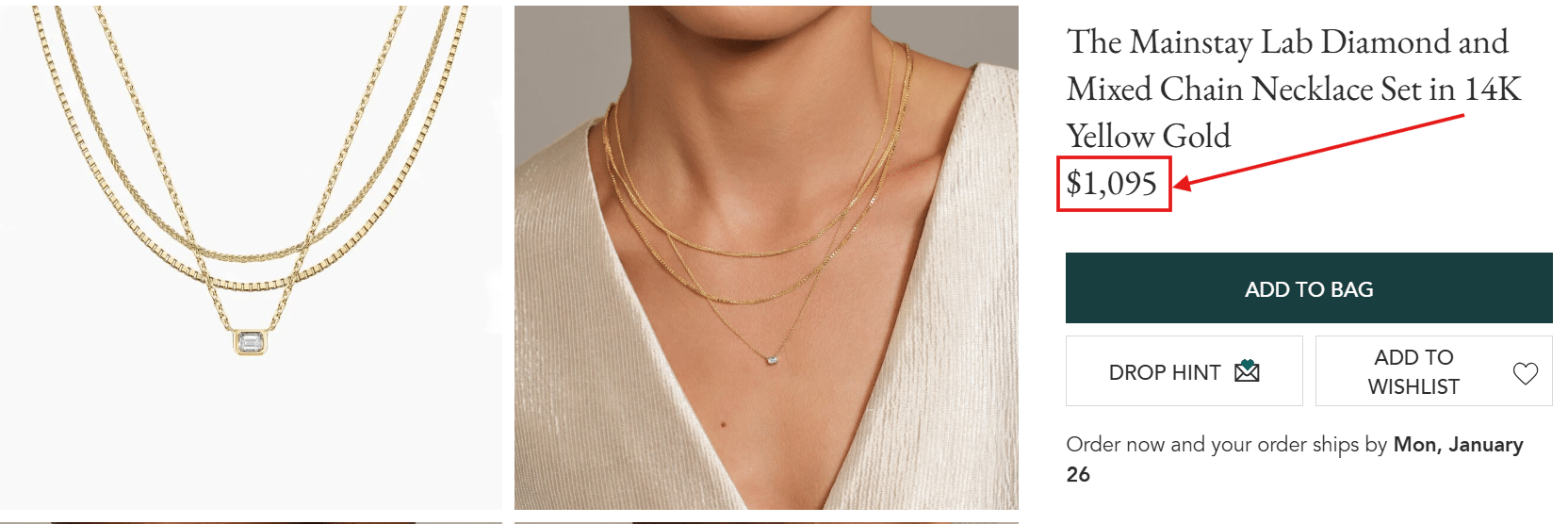
Shop this layered gold necklace set
Understanding Gold Karats
Gold purity is measured in karats (K or KT), representing parts of gold out of 24 total parts. Pure gold equals 24 karats, meaning all 24 parts are gold.
The Karat System Explained
Karat | Gold Content | Other Metals | Purity Percentage |
24K | 24/24 parts | None | 99.9% gold |
22K | 22/24 parts | 2 parts alloy | 91.7% gold |
18K | 18/24 parts | 6 parts alloy | 75% gold |
14K | 14/24 parts | 10 parts alloy | 58.3% gold |
10K | 10/24 parts | 14 parts alloy | 41.7% gold |
The “other metals” in gold alloys typically include copper, silver, zinc, and nickel. These additions provide strength, affect color, and make gold wearable as jewelry.

Add a Premium 14K Gold Wheat Chain to Your Collection
24K Gold Chains: Pure But Problematic
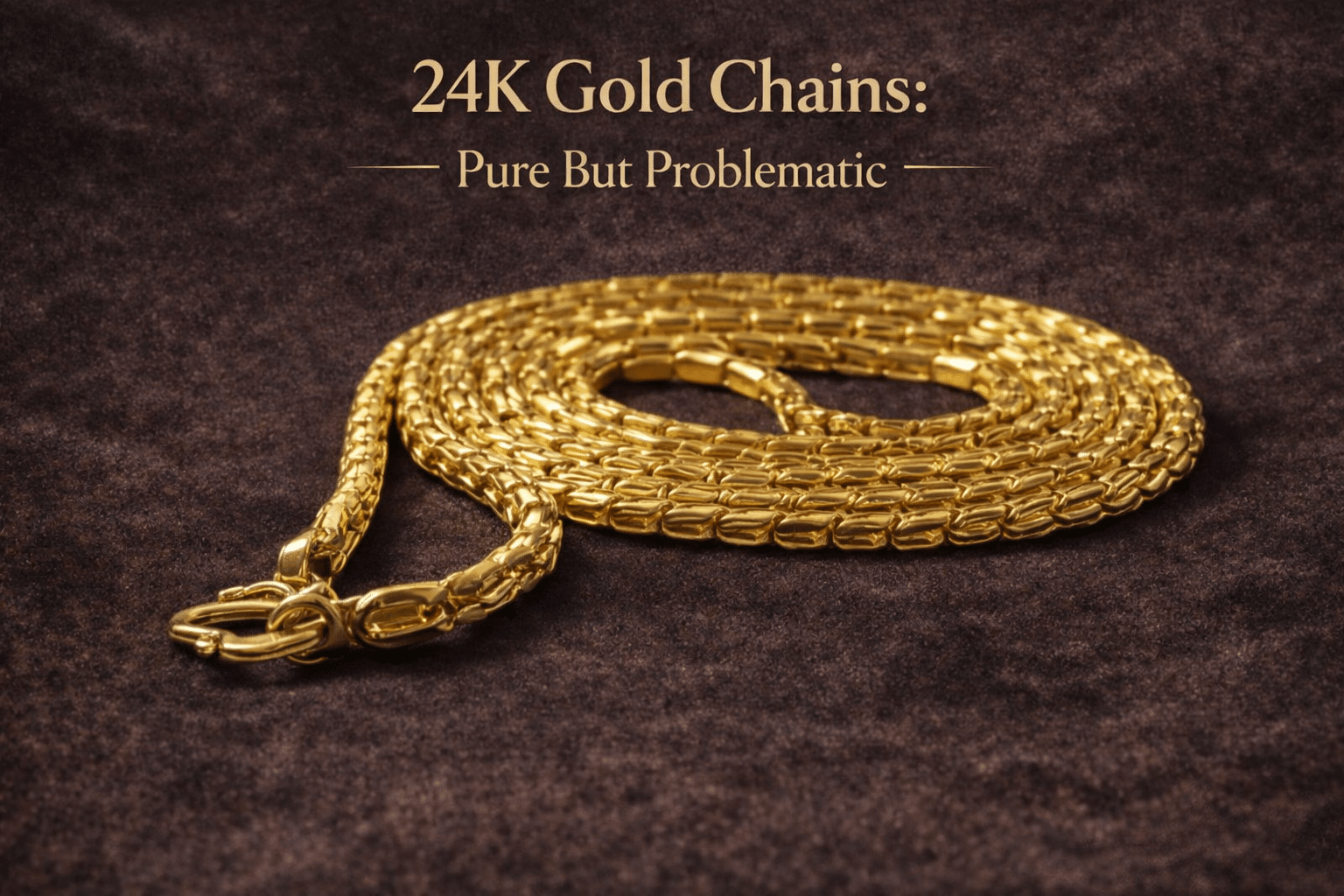
24K gold represents pure gold with virtually no other metals mixed in. This creates the richest, most saturated golden colour available.
24K Gold Characteristics
Color: Deep, warm, intensely yellow, the most vibrant gold colour possible
Softness: Extremely soft and malleable; bends and scratches easily
Weight: Heaviest option due to pure gold density
Price: Highest cost per gram among all karats

View current pearl necklace prices
24K Gold for Chains: The Reality
While 24K gold sounds appealing, it presents significant problems for necklace chains:
- Links deform under normal stress
- Clasps wear quickly and may fail
- Surface scratches appear within days of regular wear
- The chain can stretch and lose shape
- Repairs prove difficult due to softness
Best applications: Investment pieces, special display jewelry, cultural or ceremonial items
Avoid for: Daily wear, active lifestyles, pendant support
Most jewelry retailers rarely stock 24K gold chains because practical limitations outweigh the appeal of pure gold content. Chains in 24K gold are most common in Asian markets where cultural preferences favor high purity.
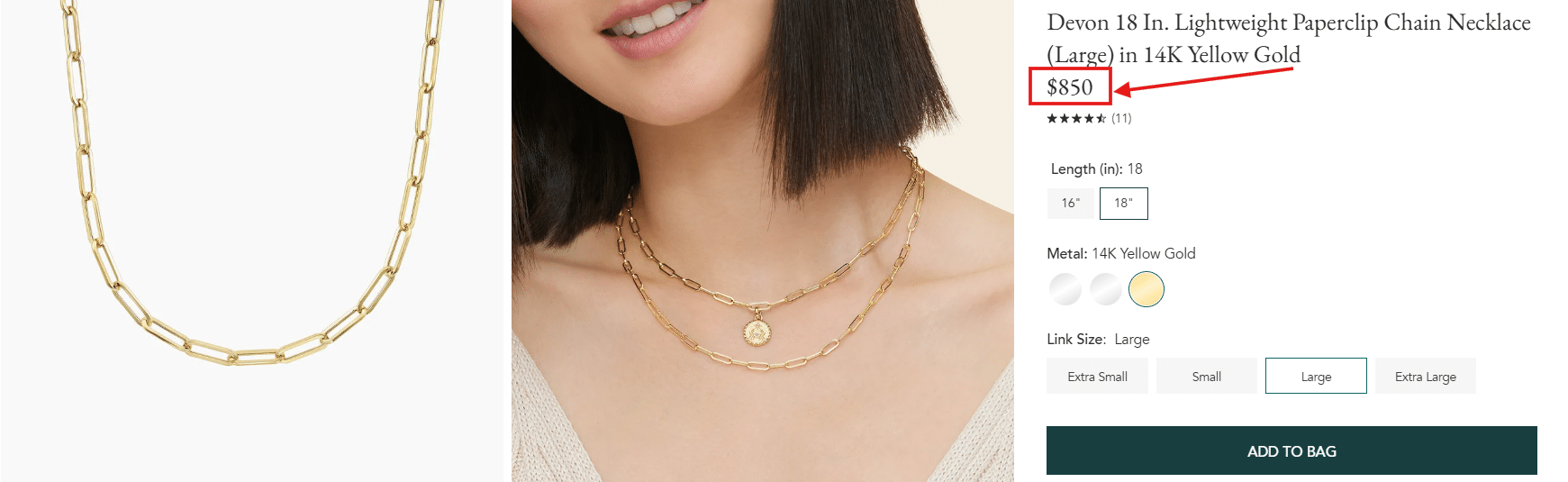
Explore similar link necklaces
18K Gold Chains: Rich colour with Improved Durability
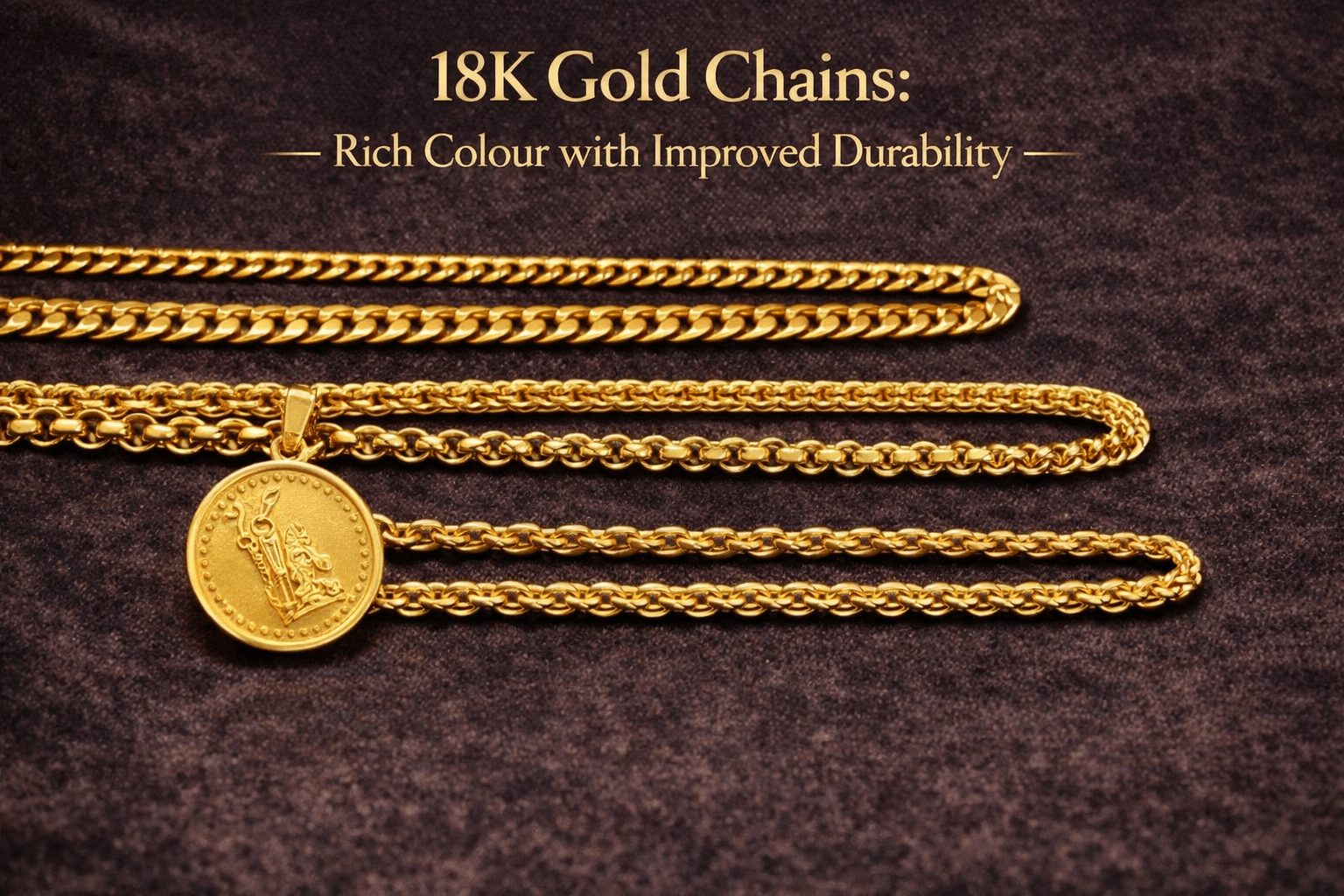
18K gold contains 75% pure gold alloyed with 25% other metals. This combination delivers rich golden colour while adding sufficient strength for wearable jewelry.
18K Gold Characteristics
Color: Rich, warm golden tone, noticeably deeper than 14K
Durability: Moderately durable; suitable for careful daily wear
Weight: Heavier than 14K, lighter than 24K
Price: Premium pricing, typically 30-50% more than 14K

View today’s diamond necklace price
18K Gold for Chains: Performance
18K gold chains work well for:
- Special occasion jewelry
- Pieces are worn occasionally rather than daily
- Buyers prioritizing rich colour over maximum durability
- Luxury gifts and heirloom pieces
Limitations to consider:
- Scratches more readily than 14K
- May show wear at high-friction points over time
- Higher cost requires greater investment
18K gold represents the sweet spot between colour richness and practical wearability for many buyers, particularly those who handle jewelry carefully.

this 14K gold snake chain from Blue Nile glides effortlessly on the neck
14K Gold Chains: The Practical Champion
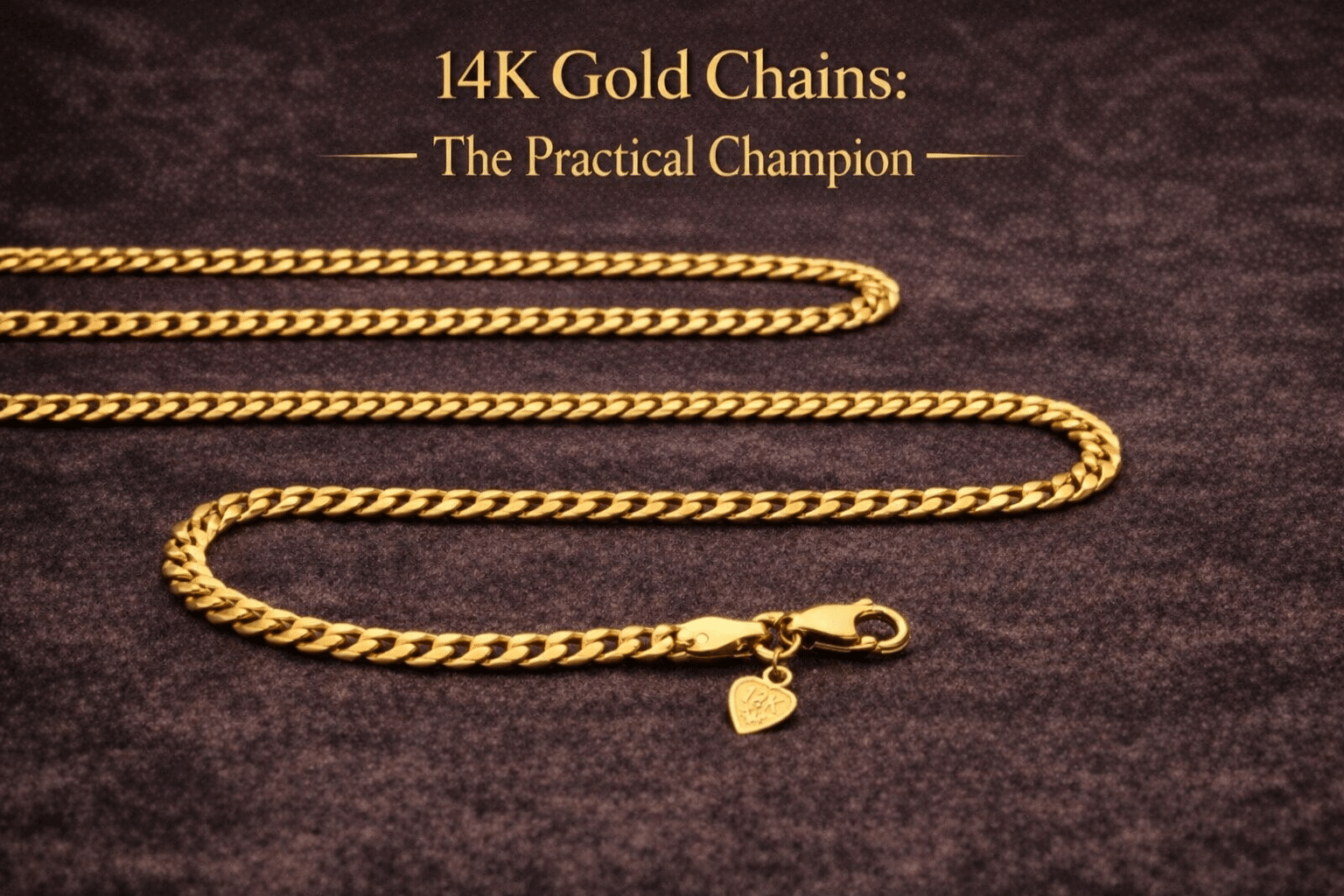
14K gold contains 58.3% pure gold with 41.7% alloy metals. This balance creates durable jewelry that handles daily wear while maintaining an attractive golden appearance.
14K Gold Characteristics
Color: Classic golden color, slightly lighter than 18K but still unmistakably gold
Durability: Excellent; withstands daily wear, minor impacts, and regular handling
Weight: Comfortable weight for all-day wear
Price: Most accessible solid gold option; best value for everyday jewelry
14K Gold for Chains: Performance
14K gold chains excel for:
- Daily wear without removal
- Active lifestyles
- Pendant support requires strength
- Budget-conscious quality purchases
- First solid gold purchases
14K gold dominates the American jewelry market for good reason; it delivers gold’s beauty and prestige at accessible prices while handling real-world use effectively.

Upgrade your look with a 14k figaro choker
Direct Comparison: 24K vs 18K vs 14K
Factor | 24K Gold | 18K Gold | 14K Gold |
Gold Content | 99.9% | 75% | 58.3% |
colour Richness | Most intense | Rich, warm | Classic gold |
Durability | Very low | Moderate | Excellent |
Scratch Resistance | Poor | Fair | Good |
Daily Wear Suitability | Not recommended | Careful wear | Ideal |
Hypoallergenic | Highest | Very good | Good |
Price (relative) | Highest | High | Moderate |
Resale Value | Highest per gram | High | Good |
Availability | Limited | Common | Most common |
Price Comparison by Chain Type
Chain Style (18″) | 14K Gold | 18K Gold | 24K Gold |
Cable Chain | $250-$500 | $400-$750 | $600-$1,100 |
Rope Chain | $400-$900 | $650-$1,400 | $950-$2,000 |
Cuban Link | $500-$1,200 | $800-$1,800 | $1,200-$2,600 |
Box Chain | $300-$700 | $500-$1,100 | $750-$1,600 |
Figaro Chain | $350-$800 | $550-$1,200 | $850-$1,800 |
Prices increase roughly 40-60% between 14K and 18K, and another 40-50% between 18K and 24K.
Colour Differences in Practice
Yellow Gold Appearance
24K yellow gold displays the deepest, most saturated golden color, almost orange-tinted in certain lighting. 18K yellow gold appears rich and warm but slightly less intense. 14K yellow gold shows classic golden tones that most people associate with “gold jewelry.”

Shop premium 14K yellow gold chain necklaces
White Gold Considerations
White gold chains contain gold alloyed with palladium, nickel, or silver to achieve silvery appearance. Karat affects white gold similarly:
- 18K white gold may show slight yellow undertones
- 14K white gold typically appears brighter white
- Both usually receive rhodium plating for enhanced whiteness
Rose Gold Variations
Rose gold gets its pink hue from copper content in the alloy:
- 18K rose gold appears softer pink with more gold richness
- 14K rose gold shows more pronounced pink/copper tones
For detailed material comparisons, see our guide on gold-filled vs solid gold chains.

Upgrade Your Look with a Wide Gold Herringbone Necklace
Choosing the Right Karat for Your Needs
Choose 14K Gold When:
- You plan to wear the chain daily
- Durability matters more than maximum gold content
- Budget optimization is important
- You lead an active lifestyle
- The chain will support pendants
Choose 18K Gold When:
- Rich colour is your priority
- You handle jewelry carefully
- The chain is for special occasions primarily
- You want a luxury appearance
- Budget accommodates the premium
Choose 24K Gold When:
- Cultural traditions favor pure gold
- The piece is primarily for investment or display
- You understand and accept durability limitations
- Occasional, careful wear only

Buy a Classic 14K Gold Wheat Chain Necklace
Regional and Cultural Preferences
Gold karat preferences vary significantly by region:
United States: 14K dominates due to durability-value balance
United Kingdom/Europe: 18K and 9K are common standards
Middle East: 18K and 21K preferred for richer color
Asia: 22K and 24K valued for purity and investment
Latin America: 18K popular for special occasion jewelry
These preferences reflect cultural values around gold purity, practical considerations, and traditional jewelry-making practices.

Your Go-To Gold Chain for Layering or Solo Wear
Where to Buy Quality Gold Chains
Finding reputable retailers matters regardless of the karat choice. Quality construction affects chain performance as much as gold content.
For recommendations on trusted sellers, see our guide to the best place to buy gold chains.
Key considerations when purchasing:
- Verify karat stamps (10K, 14K, 18K, 24K)
- Check clasp quality and security
- Examine link construction for consistency
- Confirm warranty coverage
- Review return policies

Case Study: Michael’s Karat Decision
Michael, a 42-year-old financial advisor from Houston, evaluated all three options:
“I wanted a substantial Cuban link chain, something I could wear to client meetings and casual weekends. Budget wasn’t the primary concern, but value mattered.
I tried on 14K, 18K, and 24K chains at a jewelry store. The 24K colour was gorgeous but felt almost too soft when I handled it. The jeweler showed me how easily it could be scratched with a fingernail, which ended my interest immediately.
The 18K and 14K difference was harder to evaluate. Side by side, the 18K looked richer. But separately, the 14K looked like perfectly normal gold. Nobody would compare without direct comparison.
The prices told the story: $1,400 for 14K versus $2,200 for 18K. The 18K was 57% more expensive for a colour difference only visible in direct comparison.
I bought the 14K Cuban link. Six months of nearly daily wear later, it still looks fantastic. Minor scratches polish out easily. The chain handles my lifestyle without concern.
For my purposes, 14K delivered everything I needed. Someone wanting maximum richness for special occasions might choose differently, but for everyday wear, 14K proved the smart choice.”
Video Resource for 24K vs 18K vs 14K Gold Chains
For visual comparison of gold karats: