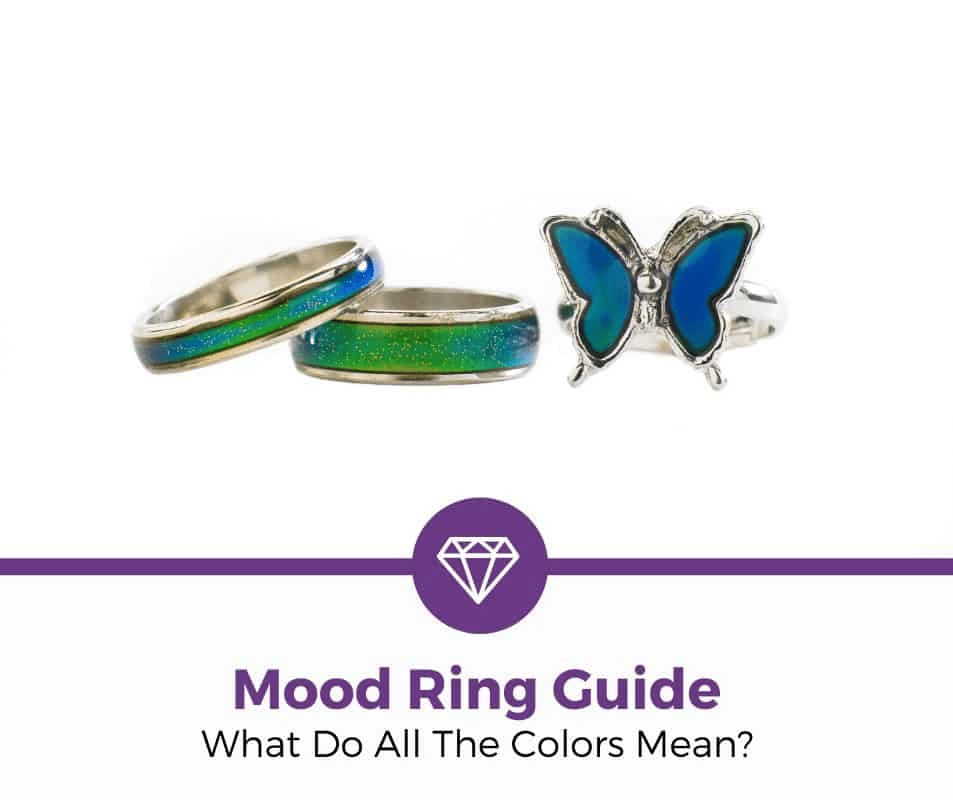
Mood rings change color based on your finger’s temperature, not by reading your thoughts. These temperature-sensitive rings contain thermochromic liquid crystals that shift through different colors as your skin temperature changes throughout the day. While marketed as emotion readers, they actually measure the warmth of your finger, which can be influenced by your emotional state, the room temperature, or whether you just held a hot cup of coffee.
The color spectrum ranges from black (coldest) through green (neutral) to purple and red (warmest). Each color corresponds to a specific temperature range, creating the illusion of reading your mood. Blood flow patterns change with stress and relaxation, affecting your finger’s temperature and triggering the color shifts you see.
Modern mood rings work the same way they did when Josh Reynolds and Maris Ambats invented them in 1975. The technology remains simple: thermochromic crystals sealed in glass or quartz react to temperature variations within seconds, displaying different wavelengths of reflected light as distinct colors.
What Is a Mood Ring?
Mood rings are temperature-sensitive rings containing thermochromic liquid crystals that change color based on finger temperature, creating the appearance of reflecting the wearer’s emotional state.
The ring consists of a clear quartz or glass stone filled with specialized liquid crystals. These crystals respond to temperature changes by twisting their molecular structure, which alters how they reflect light. What you see as a color change is actually the crystals reacting to the warmth or coolness of your finger.
Josh Reynolds and Maris Ambats created the first mood ring in 1975 during an era focused on self-discovery and emotional awareness. The timing was perfect, people wanted tools for understanding themselves, and the mood ring promised insight through a simple piece of jewelry. Original rings sold for $45, equivalent to roughly $250 in today’s dollars.
The 1990s brought a second wave of popularity as nostalgia for 70s culture surged. Today’s mood rings sell for $5 to $30 and serve as conversation pieces, gifts for curious kids, or reminders of a more whimsical era.
How Do Mood Rings Work? The Science Explained
Mood rings work by using thermochromic liquid crystals that twist and change molecular structure in response to temperature variations, reflecting different light wavelengths that appear as different colors.
The process starts with your body temperature. When you experience emotions, your nervous system affects blood flow throughout your body. Stress causes blood vessels in your extremities to constrict, reducing blood flow to your fingers and making them cooler. Relaxation has the opposite effect, blood vessels dilate, increasing circulation and warming your fingers.
Thermochromic liquid crystals are temperature-sensitive molecules arranged in a specific pattern. At different temperatures, these crystals twist to new positions. Each position reflects light differently, producing the colors you see. The crystals don’t actually produce color; they act like tiny prisms, bending light at different angles depending on their temperature.
The temperature changes don’t need to be dramatic. A shift of just 2-3 degrees Fahrenheit can trigger a color change from green to blue. The crystals are sealed under a glass or quartz dome to protect them from damage and maintain their sensitivity.
Your ring responds to several temperature influences simultaneously. Your emotional state affects blood flow, but so does the ambient temperature, physical activity, and even what you’ve recently touched. This is why mood rings work as novelties rather than precise emotional tools; they measure temperature, which correlates loosely with emotional arousal but isn’t a direct reading of your feelings.
Mood Ring Temperature Chart: What Temp Creates What Color
Mood ring colors correspond to specific temperature ranges, with black appearing at 60-65°F, green at normal body temperature around 72°F, and purple or red appearing at elevated temperatures above 83°F.
The temperature spectrum creates a predictable pattern:
60-65°F produces black or dark brown. Your fingers reach this temperature when blood flow is restricted, either from cold environments or stress responses that pull blood away from extremities.
66-72°F displays amber, yellow, or light green. These transitional colors appear as your fingers warm slightly, but haven’t reached a comfortable baseline temperature yet.
72-73°F shows green, the default color for most mood rings. This represents normal resting finger temperature in a comfortable environment.
74-82°F brings blue and teal shades. Your fingers warm to this range when blood flow increases during relaxation or pleasant social interactions.
83-90°F produce purple and violet. These warmer temperatures occur during emotional excitement, physical activity, or genuine romantic feelings.
Above 90°F creates red, the rarest mood ring color. Your fingers must be quite warm to reach this temperature, usually from intense physical activity, strong anger, or extreme excitement.
Individual rings vary based on crystal quality and formulation. Some rings are calibrated to show more color variation, while others display a narrower range. Your baseline body temperature also affects which colors you see most often. People with naturally warm hands spend more time in the blue-purple range, while those with cool circulation see more green and amber.
Complete Mood Ring Color Chart & Meanings
Mood ring color meanings range from black (stressed or cold) through green (calm and balanced) to purple and red (passionate or excited), with each color representing a different temperature-related emotional state.
The traditional interpretation assigns emotions to each color based on the correlation between temperature and arousal states. While not scientifically precise, these associations create a fun framework for understanding what you’re seeing.
What Does Black Mean on a Mood Ring?
Black indicates stress, tension, anxiety, or simply cold fingers, appearing at the coldest temperature range of 60-65°F.
Your mood ring turns black when blood flow to your fingers decreases significantly. This happens during genuine stress; your body’s fight-or-flight response pulls blood toward your core and away from your extremities. It also occurs in cold environments where your body conserves heat, or if you have poor circulation.
The color doesn’t always mean you’re anxious. Winter weather, air conditioning, or naturally cool hands can keep your ring in this range. If your ring stays black constantly, it might indicate the liquid crystals have degraded rather than reflecting a permanent state of stress.
What Does Brown or Gray Mean on a Mood Ring?
Brown and gray represent nervous, unsettled, restless, or distracted states, appearing at cool temperatures of 66-69°F.
These transitional colors sit between black and the warmer tones. Your ring displays brown or gray when your fingers are warming up from cold or cooling down from warmth. The in-between temperature suggests fluctuating blood flow, which can correlate with mild stress, anticipation, or distraction.
Brown often appears just before your ring turns black or just after it starts warming from black. Think of it as a warning stage before a full stress response or the recovery phase after anxiety passes.
What Does Yellow or Amber Mean on a Mood Ring?
Yellow and amber indicate nervous energy, excitement, creativity, or mixed emotions, appearing at cool-neutral temperatures of 69-72°F.
This color range represents an active but not quite comfortable state. Your fingers sit at the lower end of normal temperature, suggesting some level of activation. The interpretation can go two ways: creative excitement that hasn’t fully warmed your hands yet, or low-level anxiety that’s keeping your temperature slightly suppressed.
Many people see yellow when they’re brainstorming, working through a problem, or feeling anticipation about upcoming events. The color reflects engagement without full relaxation.
What Does Green Mean on a Mood Ring?
Green represents calm, relaxed, balanced, and comfortable feelings, appearing at a normal resting temperature of 72-73°F.
Most mood rings default to green because this color corresponds to average finger temperature in a comfortable environment. You’ll see green when you’re at rest, feeling neither stressed nor particularly excited. It’s the neutral baseline, not cold, not warm, just comfortable.
Green doesn’t mean you’re bored or emotionless. It indicates a peaceful state where your body isn’t activating stress responses or processing intense emotions. Many people spend most of their time in this range, which is perfectly normal and healthy.
What Does Blue-Green or Teal Mean on a Mood Ring?
Blue-green and teal indicate contentment, peaceful alertness, and optimistic feelings, appearing at slightly warm temperatures of 74-77°F.
This color sits between neutral green and warmer blue, suggesting you’re comfortable but engaged. Your fingers have warmed slightly above baseline, indicating good circulation without intense emotional arousal. People often see this color during pleasant activities that hold their attention, such as reading a good book, having a nice conversation, or working on a project they enjoy.
The teal range represents what psychologists call “flow state”, calm but focused, relaxed but attentive.
What Does Blue Mean on a Mood Ring?
Blue represents relaxation, happiness, social connection, and good moods, appearing at warm temperatures of 78-80°F.
Your ring turns blue when your fingers are noticeably warmer than neutral. This happens during positive social interactions, laughter, or genuine relaxation. The increased blood flow to your extremities indicates your nervous system is in a calm, open state rather than defensive or withdrawn.
Blue is one of the most common “positive” colors people see. It shows up during dinner with friends, while watching a funny movie, or during any activity that brings genuine pleasure without intense excitement.
What Does Dark Blue Mean on a Mood Ring?
Dark blue indicates deep relaxation, joy, romantic feelings, or blissful contentment, appearing at very warm temperatures of 81-83°F.
The darker, richer blue suggests your fingers are warmer than regular blue; you’ve moved beyond comfortable into genuinely warm. This often correlates with strong positive emotions: falling in love, experiencing deep joy, or feeling completely at peace.
The intensity of dark blue sets it apart from standard blue. While regular blue might appear during a good day, dark blue shows up during exceptional moments of happiness or connection.
What Does Purple or Violet Mean on a Mood Ring?
Purple and violet represent passion, romance, excitement, imagination, and very happy feelings, appearing at hot temperatures of 83-87°F.
Your ring turns purple when your fingers are quite warm, usually during emotional excitement. This color appears during early romance, creative inspiration, or any experience that generates positive arousal. The warmth indicates increased blood flow from genuine emotional engagement.
Purple combines the calmness suggested by blue with an intensity that pushes the temperature higher. It’s not just happiness; it’s enthusiastic, activated happiness.
What Does Pink Mean on a Mood Ring?
Pink indicates affection, loving feelings, happiness, curiosity, and tender emotions, appearing at warm temperatures of 79-82°F.
Pink sits between blue and purple in both color and temperature. It suggests warm feelings without the intensity of deep purple. Many people see pink during moments of gentle affection, thinking about someone they care about, receiving good news, or feeling curious about something interesting.
The color represents emotional warmth that’s sincere but not overwhelming. It’s the difference between contentment (blue) and passion (purple).
What Does Red Mean on a Mood Ring?
Red represents high energy, intense excitement, anger, passion, or adventurous feelings, appearing at very hot temperatures above 88°F.
Red is the rarest mood ring color because your fingers must be exceptionally warm to trigger it. The high temperature can result from positive intensity, extreme excitement, passionate love, adventurous thrills, or negative intensity, like anger or fear. The ring can’t distinguish between different types of arousal; it only measures that your body is highly activated.
Physical activity also produces red. If you’ve been exercising, your increased circulation and body heat can warm your fingers enough to trigger the red response, even if you’re emotionally neutral.
Do Mood Rings Really Work? The Truth About Accuracy
Mood rings accurately measure finger temperature but don’t directly read emotions, making them fun novelties rather than precise emotional tools since external factors like weather and physical activity also affect results.
The answer depends on what you mean by “work.” Do they change color? Yes, reliably. Do they measure your exact emotional state? No, they can’t.
Emotions do affect your body temperature through the autonomic nervous system. When you’re stressed, your body redirects blood flow away from your skin and extremities toward vital organs and major muscle groups. This defensive response lowers your skin temperature. Conversely, when you’re relaxed and happy, your blood vessels dilate, increasing circulation to your skin and warming your fingers.
The correlation between emotion and temperature creates the illusion that mood rings read your feelings. But many factors influence finger temperature simultaneously:
Room temperature affects your baseline. A cold office keeps your ring in the green-to-black range regardless of your mood. A warm room pushes it toward blue or purple.
Physical activity increases circulation and warms your entire body, including your fingers. Your ring might show purple after climbing stairs, even if you’re emotionally neutral.
What you’ve touched transfers heat. Holding a hot drink warms your ring temporarily. Touching something cold does the opposite.
Time of day matters. Most people’s body temperature varies throughout the day, slightly cooler in the morning and warmer in the afternoon.
Health and circulation create individual baselines. Some people naturally have warm hands; others have cool extremities regardless of their emotional state.
The rings work best as general arousal indicators. They can show whether you’re in a calm state versus an activated state, but they can’t specify which emotion you’re experiencing. Anger and excitement both produce warm fingers. Sadness and cold weather both produce cool fingers.
Use mood rings as conversation starters or self-awareness tools rather than diagnostic instruments. Notice patterns in when your ring changes color, but don’t rely on it to understand your emotional state.
Mood Ring History: From 1970s Invention to 90s Nostalgia
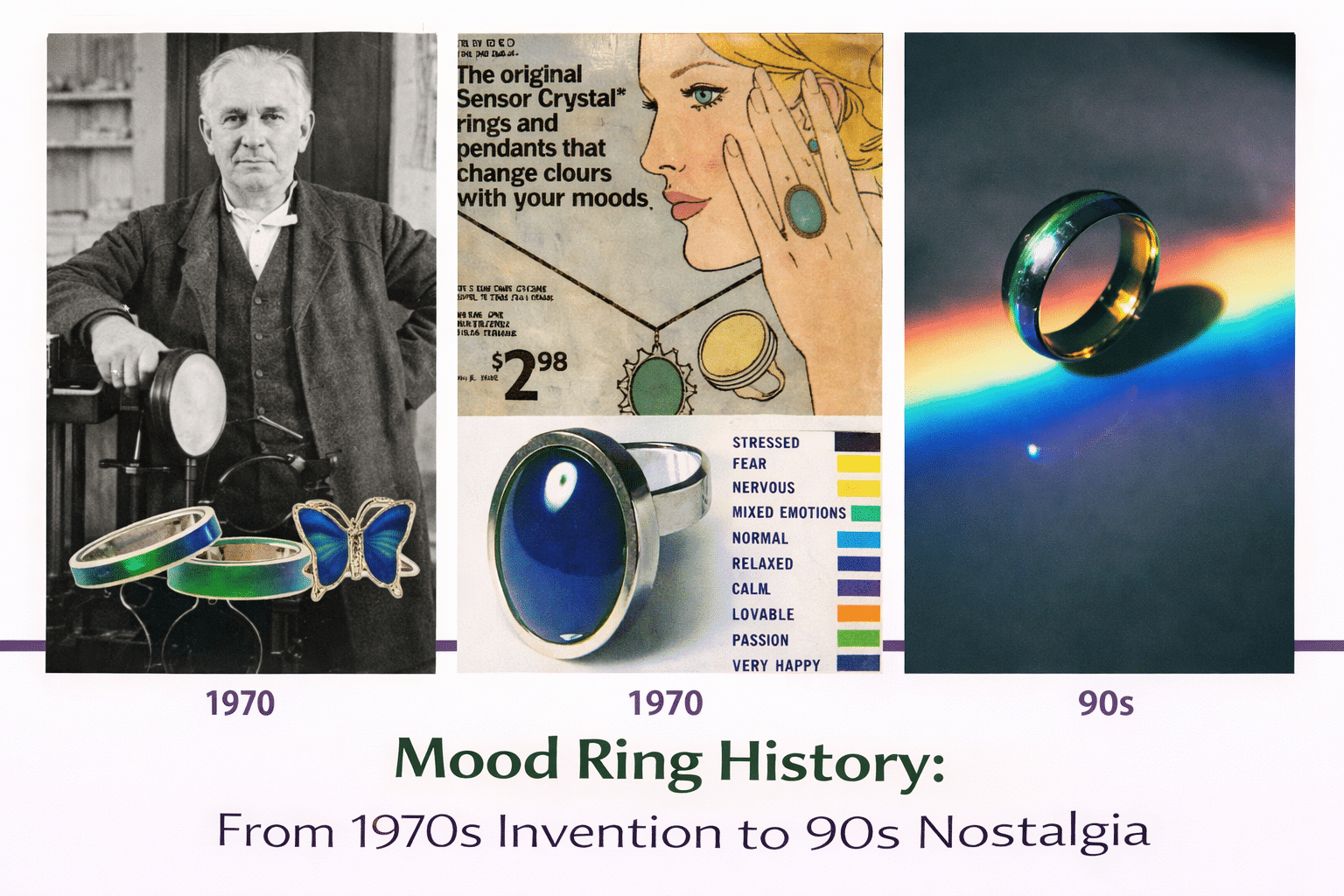
Mood rings were invented in 1975 by Josh Reynolds and Maris Ambats during the self-discovery era of the 1970s, originally selling for $45 (equivalent to $250 today) before experiencing a major resurgence in the 1990s.
The story includes an earlier claim. Marvin Wernick said he conceived the idea of color-changing jewelry around 1965 but never pursued a patent. By the time Reynolds and Ambats brought their version to market in 1975, the cultural moment was perfect.
The 1970s emphasized personal growth, emotional awareness, and alternative approaches to understanding the self. Mood rings fit perfectly into this zeitgeist, a tool that supposedly reveals your inner emotional state through mystical color changes. The reality of thermochromic crystals seemed almost magical to consumers unfamiliar with the technology.
Original mood rings commanded premium prices. At $45 in 1975 dollars, they cost the equivalent of $250 in 2026 money. Despite the high price, they sold millions during their first few years on the market. The novelty, combined with the era’s fascination with self-discovery, made them cultural phenomena.
The fad faded by the early 1980s as the rings became common and the novelty wore off. They lingered as minor accessories but lost their cultural significance.
The 1990s brought an unexpected revival. Nostalgia for 70s culture surged, and mood rings returned as both sincere fashion accessories and ironic throwbacks. Younger buyers who hadn’t experienced the original trend discovered them fresh, while older shoppers enjoyed the nostalgic connection.
Modern mood rings sell for $5 to $30, making them accessible to wider audiences. They’ve evolved from statement jewelry into casual novelties, party favors, and gifts for curious kids. The thermochromic technology remains unchanged, but the cultural context has shifted from serious self-discovery tool to whimsical accessory.
How Long Do Mood Rings Last? Care & Lifespan
Mood rings typically last 2-3 years with proper care, but exposure to water, harsh chemicals, or extreme temperatures can shorten their lifespan or cause the liquid crystals to stop functioning.
The liquid crystals inside your mood ring degrade over time. Even with perfect care, they eventually lose their ability to shift between colors. Quality determines longevity; premium rings with better seals and higher-grade crystals outlast budget versions.
Expected lifespans by quality level:
Budget rings ($1-5) last 6-12 months before the crystals degrade or water seeps in through poor seals.
Mid-range rings ($10-20) function for 2-3 years when cared for properly.
Premium rings ($25+) can last 3-5 years with excellent seals and high-quality thermochromic compounds.
What shortens the mood ring?
Water is the primary killer. The liquid crystals must remain sealed in an airtight chamber. Water penetration clouds the crystals and stops color changes. Remove your ring before washing hands, showering, swimming, or doing dishes.
Chemical exposure damages the crystals. Cleaning products, perfumes, lotions, and chlorine can seep through microscopic gaps in the seal or react with the metal setting, compromising the seal’s integrity.
Temperature extremes stress the crystals. Freezing temperatures can crack the seal or permanently alter the crystal structure. Extreme heat (above 130°F) can break down the chemical bonds in the crystals.
Physical damage to the setting can break the seal. Dropping your ring or banging it against hard surfaces risks cracking the glass dome or loosening the seal.
Care instructions to extend lifespan:
Remove your ring before any water contact. This single habit prevents most premature failures.
Store in a dry location at room temperature. Avoid leaving your ring in cars, where temperature swings are dramatic.
Keep away from chemicals. Remove before applying perfumes, lotions, or handling cleaning products.
Handle gently. The glass or quartz dome can crack with enough impact.
Signs your mood ring is dying:
The ring stays in one color permanently, regardless of temperature changes. This indicates the crystals have degraded.
Colors appear cloudy or murky instead of clear and distinct. The seal may have failed, allowing moisture inside.
The ring won’t change color even when exposed to temperature extremes. Dead crystals lose all responsiveness.
Visible cracks in the dome or separation between the stone and the setting signal seal failure.
When these signs appear, the ring has reached the end of its functional life. You can’t repair or restore dead liquid crystals.
Why Is My Mood Ring Stuck on One Color? Troubleshooting
Mood rings get stuck on one color when the liquid crystals degrade from age, water damage, or temperature extremes, or when your finger maintains a constant temperature due to the environment or circulation patterns.
If your ring stays black constantly:
Your environment might be too cold. Rooms below 65°F keep the crystals in the black range regardless of your emotional state. Try warming your hands and moving to a warmer room.
You might have naturally cool circulation. Some people’s hands stay cold even when they’re relaxed and comfortable. This is normal variation, not a mood ring defect.
The crystals might be dead. If warming your hands thoroughly doesn’t change the color at all, the liquid crystals have likely degraded. Test by immersing the ring (not your finger) in warm water for 30 seconds. If it doesn’t change, the crystals are done.
If your ring stays blue constantly:
You might maintain a consistently comfortable temperature. If your environment is stable and you’re generally relaxed, your finger temperature could stay in the blue range most of the time. This doesn’t indicate a problem.
The crystals might have failed in the blue position. Older rings sometimes get stuck at one color as the crystals lose their ability to transition. Test with temperature extremes, place the ring in cold water, then warm water. If it doesn’t change, it’s dead.
If your ring stays green constantly:
Green is the default neutral position. Seeing green most of the time suggests you maintain average finger temperature, which is perfectly normal. Only worry if the ring never changes even during temperature swings.
The crystals may have aged to a neutral state. As mood rings approach the end of their lifespan, they often settle into green permanently.
If your ring won’t change at all:
The liquid crystals have degraded. This is the most common failure mode for older rings. The crystals lose molecular flexibility and can no longer twist to reflect different colors.
Water penetrated the seal. Moisture inside the crystal chamber prevents color changes and often creates a cloudy appearance.
The ring experienced extreme temperature exposure. Leaving it in a freezing car or very hot vehicle can permanently damage the crystal structure.
There’s no fix for dead crystals. Once they fail, replacement is the only option. Most mood rings are inexpensive enough that replacing them makes more sense than attempting repair.
Real vs. Fake Mood Rings: How to Tell the Difference
Real mood rings use thermochromic liquid crystals sealed under a glass or quartz dome and respond quickly to temperature changes, while fake mood rings use heat-sensitive paint that responds slowly or not at all.
Characteristics of real mood rings:
The stone appears as a smooth, rounded dome made of glass or quartz. You can see depth if you look closely; the liquid crystals sit behind a clear covering.
Color changes happen within 10-30 seconds when you warm the ring in your hands. The transition is noticeable and moves through distinct colors rather than gradual fading.
Real mood rings display 6-10 different colors across their full temperature range. You won’t see all colors at once, but warming and cooling the ring should produce multiple distinct shades.
Prices typically range from $5 to $30 for quality versions. Very cheap rings (under $3) usually use inferior materials or paint instead of real crystals.
The color changes have clear boundaries. When the ring shifts from green to blue, you see green on one part and blue on another, not a muddy blend.
Characteristics of fake or paint-based rings:
The surface is flat or barely raised, with color applied as a coating rather than sealed inside a dome.
Color changes take several minutes or don’t happen at all. Paint-based coatings respond much more slowly than liquid crystals, if they respond at all.
The color palette is limited, often just 2-4 colors instead of the full spectrum. Transitions are gradual fades rather than distinct color boundaries.
Very low prices ($1-3) indicate painted coatings or very low-grade materials. While price isn’t a guarantee, it’s a strong indicator.
The coating can scratch or wear off. Paint-based color-changing materials are surface applications that degrade with normal wear.
How to test:
- Warm the ring in your hands for 30 seconds while counting. A real mood ring should shift at least one or two colors during this time. If nothing happens, it’s either fake or dead.
- Look for a visible dome. Real mood rings have depth; the liquid crystal layer sits behind a protective covering. Flat surfaces suggest paint.
- Check the color transitions. Real crystals create sharp color boundaries as different areas reach different temperatures. Paint creates gradual blends.
Ask about the materials. Reputable sellers specify “thermochromic liquid crystals” and “quartz” or “glass dome.” Vague descriptions like “color-changing technology” often hide inferior materials.
Are Mood Rings Dangerous? Safety & Materials
Mood rings are generally safe to wear since modern versions use sealed non-toxic thermochromic liquid crystals in glass or quartz settings, though old rings from the 1970s may contain mercury-based crystals that could be hazardous if the seal breaks.
Modern mood rings (post-1980s):
The thermochromic compounds used today are non-toxic and completely sealed inside the glass or quartz dome. You never come into contact with the liquid crystals during normal wear.
Skin reactions to the stone itself are extremely rare. The glass or quartz barrier prevents any chemical contact with your skin.
Metal band allergies are possible. If you react to the ring, the culprit is usually nickel in the metal setting, not the mood stone. People with nickel sensitivities should choose sterling silver or stainless steel settings.
Vintage mood rings (1970s):
Early mood rings sometimes used mercury-based thermochromic compounds. While sealed, any ring from this era carries potential risk if the seal breaks.
If you own a vintage mood ring and the seal appears damaged, there are cracks in the dome, visible moisture inside, or separation between the stone and setting, stop wearing it. Mercury exposure poses health risks.
Proper disposal of broken vintage rings matters. Don’t throw them in regular trash. Contact your local hazardous waste facility for mercury-containing items.
General safety considerations:
Small parts create choking hazards for children under three. Keep mood rings away from babies and toddlers who put objects in their mouths.
Mood rings aren’t medical devices. Never use a mood ring to diagnose health conditions, emotional disorders, or psychological states. They measure temperature, not wellness.
Remove before medical procedures. If you’re having an MRI and your ring has a metal setting, remove it beforehand. For other procedures, ask your healthcare provider.
Swimming and bathing damage the seal over time, even if the ring appears waterproof initially. Water exposure is the leading cause of premature failure.
Modern mood rings pose minimal safety concerns when used as intended, as novelty jewelry for older children and adults. Treat vintage rings with caution and dispose of damaged ones properly.
Who Are Mood Rings Good For? Gift Guide
Mood rings make ideal gifts for children ages 8-14 interested in science or self-awareness, 90s nostalgia enthusiasts, or anyone who enjoys whimsical jewelry that serves as a conversation starter.
Best recipients by age and interest:
Children ages 8-14 get the most enjoyment. The rings combine fun with education, teaching about temperature, states of matter, and how emotions affect the body. They’re age-appropriate for kids old enough to care for jewelry but young enough to find the color changes magical.
Teenagers appreciate the self-expression aspect. Mood rings offer a low-pressure way to think about emotions without the intensity of journaling or formal reflection.
Adults born between 1980 and 1995 often enjoy the nostalgia factor. If you grew up in the 90s, a mood ring recalls childhood with a gentle dose of kitsch.
Science teachers use mood rings as demonstration tools. They provide hands-on examples of thermochromic reactions, states of matter, and the connection between emotions and physical responses.
Anyone who enjoys conversation-starting accessories appreciates mood rings. They’re unusual enough to prompt questions and discussions.
Occasions for giving:
Birthday gifts for pre-teens work well. The price point is appropriate for friends’ birthdays, and the novelty appeals to this age group.
Stocking stuffers add whimsy to holiday gifts. Small, inexpensive, and fun, mood rings fit perfectly in Christmas stockings.
Party favor bags for themed birthdays create memorable takeaways. Science parties, 90s throwback parties, or general celebrations all suit mood ring favors.
“Just because” gifts show thoughtfulness. A mood ring says “I saw this and thought of you” without requiring a special occasion.
Classroom rewards motivate students. Teachers can stock mood rings as prizes for achievements or good behavior.
Educational value:
Mood rings teach states of matter. The liquid crystals exist in a unique state between liquid and solid, demonstrating molecular flexibility.
They illustrate cause and effect. Kids can test hypotheses: Does thinking about something scary change the color? What about holding ice?
The rings introduce the scientific method. Children naturally experiment with their mood rings, developing observation and testing skills.
They open discussions about emotions and physical responses. The connection between feelings and body temperature helps kids understand the mind-body relationship.
Frequently Asked Questions About Mood Rings
Common questions about mood rings range from their scientific accuracy to practical concerns like lifespan and safety, with most answers emphasizing they measure temperature rather than directly reading emotions.
Do mood rings really work?
Mood rings work as temperature indicators; they accurately change color based on finger temperature. They don’t directly read emotions, but since emotions affect blood flow and skin temperature, there’s an indirect connection. Think of them as fun novelties that reflect general arousal level rather than precise emotional diagnosis tools. External factors like room temperature and physical activity also affect the colors you see.
Why is my mood ring stuck on blue?
Rings stay blue when your hands maintain a warm, comfortable temperature consistently. This could mean you’re genuinely relaxed most of the time, or your environment keeps your fingers in the blue temperature range. Test by placing the ring in cold water, then warm water. If it changes color, the ring works fine and simply reflects your stable temperature. If it doesn’t change, the liquid crystals have degraded.
How long do mood rings last?
Quality mood rings last 2-3 years with proper care. Budget versions last 6-12 months. Lifespan depends on avoiding water, chemicals, and temperature extremes. Signs of dying include staying stuck on one color, a cloudy appearance, or no response to temperature changes. When liquid crystals degrade, replacement is the only option.
Can mood rings kill you?
No. Modern mood rings are safe; they use sealed, non-toxic thermochromic crystals in glass settings. The biggest safety concern is metal band allergies (nickel), not the mood stone. Vintage 1970s rings may contain mercury-based crystals; avoid these if the seal appears broken. For modern rings, standard jewelry safety applies.
What does purple mean on a mood ring?
Purple indicates passion, romance, excitement, or very happy feelings. It appears at warm temperatures (83-87°F), usually when you’re experiencing positive emotional arousal like a new crush, creative inspiration, or intense joy. The warmth comes from increased blood flow during pleasurable experiences.
Why do mood ring colors vary between different charts?
Different manufacturers use different liquid crystal formulations with varying temperature sensitivities. The emotion interpretations are marketing descriptions rather than scientific standards. However, most agree on the general spectrum: black/brown (cold/stressed) moving through green (neutral) to blue/purple (warm/happy). The basic pattern remains consistent even if specific interpretations differ.
What does it mean when a mood ring turns black?
Black appears at the coldest temperature range (60-65°F), indicating either genuine stress (blood flow restricted to extremities) or simply cold fingers from the environment or circulation. Cold weather, air conditioning, or natural cool hands can keep your ring black without any emotional distress. Context matters; look at other factors before assuming stress.
Do mood rings work for everyone?
Mood rings respond to finger temperature regardless of who wears them, but individual baselines vary. People with naturally warm hands see blue and purple more often. Those with cool circulation see more green and black. The rings work mechanically for everyone, but the colors you see depend on your personal temperature patterns.
Related Guides:
gemstone authenticity testing
jewelry care and cleaning
complete jewelry education guides