

Necklace chains come in 20+ distinct types, each with unique link patterns that determine durability, flexibility, and aesthetic appeal. Chain styles range from classic options such as Cable and Curb chains to intricate designs, including Rope, Byzantine, and Herringbone chains. Durability varies significantly by construction: Rope, Wheat, and Curb chains offer superior strength for active wear, while Snake and Herringbone chains require gentle handling to prevent kinking.
Choosing the right chain depends on your intended use. Pendant wear requires flexible, strong chains like Box, Cable, or Rope, while standalone statement pieces favor bold designs like Cuban Link or Paperclip chains.

Shop this lab grown diamond tennis necklace
Understanding Necklace Chain Types: Why Link Pattern Matters
The link pattern of a necklace chain determines every critical characteristic, from durability and flexibility to price and pendant compatibility, making it the most important factor in your purchasing decision.

Add this gold chain to your collection
Link construction drives all other properties: weight capacity, tangling tendency, pendant compatibility, and light reflection. A rope chain’s twisted spiral creates redundant link strands that prevent breaking, while a herringbone chain’s flat V-shaped links create beautiful drape but kink permanently if twisted. The relationship between 10k and 14k gold purity affects how chains perform. 10k’s harder alloy provides maximum strength for rope and curb chains, while 14k balances durability with richer color.
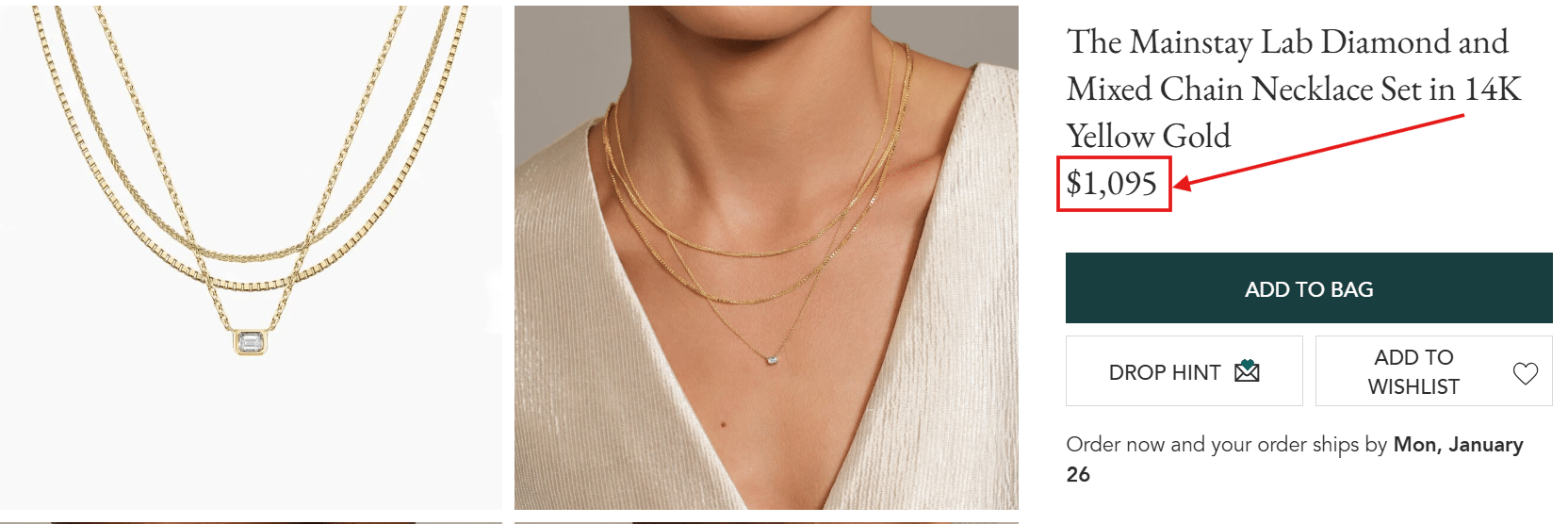
Shop this layered gold necklace set
Juli Church, Certified Diamondologist, examines hundreds of chain types annually through LearningJewelry’s independent testing program. Unlike jewelry retailers pushing specific inventory, this guide provides objective chain comparisons based on measured tensile strength, real-world wear testing, and documented repair costs.
Cable Chain: The Most Versatile Necklace Chain

Cable chain, featuring uniform interlocking oval or round links, is the most basic and versatile chain style, offering durability, affordability, and universal pendant compatibility.
Construction and Design
Simple loop-through-loop construction creates the foundation of cable chains. Round links form circular connections, while oval links create elongated patterns. Jewelers can easily repair cable chains by replacing individual links. Also called Link Chain or Trace Chain, this style works with any pendant bail size from 2mm to 10mm+.
Lightweight comfort for daily wear, without snagging hair, is the cable chain’s primary advantage. Testing shows a tensile strength of 300 lb before link failure. Easy repairs, universal compatibility, and the lowest cost make cable chains ideal starter pieces. Ubiquitous design lacks uniqueness, and thin cables under 1mm tangle easily during storage.
14k gold balances strength and value optimally. Sterling silver requires a thickness of 1.5 mm or more to prevent stretching under pendant weight. Understanding which pendant styles pair best with cable chains helps prevent compatibility issues with bail sizes and pendant weights.
Best for: Daily pendant wear, charm necklaces, layering combinations, and budget-conscious buyers.
Box Chain: Smooth, Strong, and Pendant-Friendly
Box chain consists of square or cube-shaped links that connect to create a smooth, sleek surface, offering strong construction for pendants while maintaining a modern, polished appearance.

this 14K gold box chain from Blue Nile offers everyday elegance
Link Construction Details
Four-sided box links fit inside each other like nesting cubes. Solid box chains provide 250 lbs tensile rating, while hollow versions reduce weight and cost but sacrifice 40% durability. Diamond-cut variations add faceted surfaces that catch light.
0.8-1.2mm supports lightweight pendants under 0.5 carat. 1.5-2.0mm handles most pendants up to 2 carats. 2.5mm+ accommodates statement pendants 3+ carats. Smooth surfaces prevent clothing snags and hair pulling while allowing pendant bails to slide freely.
Best for: Pendants with smooth bails, modern minimalist style, everyday wear, and easy maintenance.
Rope Chain: The Most Durable Twisted Design

Rope chain consists of small links twisted together in a spiral pattern that resembles actual rope, offering superior durability, brilliant light reflection, and the strongest construction for active wear.

Why Rope Chains Outperform All Other Designs
Multiple strands of micro-links twist into spiral formations. Each strand holds its own strength; if one segment breaks, the others prevent the necklace from losing its integrity. This redundant construction explains the rope chain’s legendary 400+ lb tensile strength, outperforming box chains (250 lb) and cable chains (300 lb) by substantial margins.
Testing confirms rope chains withstand impacts that shatter other chain types. Active lifestyles, sports participation, and children’s jewelry all benefit from this exceptional strength.
Metal Selection for Maximum Durability
Lower karat gold provides superior performance for rope chains. Comparing gold purity levels shows that 10k gold’s harder alloy maximizes the rope’s complex construction strength. Sterling silver performs particularly well; silver’s malleability doesn’t weaken the rope’s structure.
Complex construction costs 40-60% more than cable chains. Heavier weight adds a substantial feel. Less flexible than snake or herringbone designs.
Best for: Active wear, heavy pendants (3+ carats), maximum durability requirements, statement necklaces, sports and exercise, and children’s jewelry.
Wheat Chain: Intricate Woven Strength

Wheat chain, also called Spiga chain, features four strands of V-shaped links woven together to resemble a wheat stalk, combining outstanding durability with an elegant, flexible texture.

Four interwoven strands create dimensional, textured surfaces. Italian jewelers named this Spiga (wheat in Italian) for its resemblance to braided wheat stalks. Second only to rope chains in tensile strength at 350+ lbs, wheat chains offer more fluid movement despite similar durability.
Complex weaving commands a 35-50% premium over cable chains. Woven links trap dirt and require weekly cleaning with soft brushes.
Best for: Pendants requiring strong chains, sophisticated everyday wear, active lifestyles, and long-term jewelry investment.
Curb Chain: Bold Statement Power
Curb chain, also known as Cuban Link chain, features flattened interlocking links that lay flat against the skin, creating a bold, comfortable design with outstanding durability, making it a favorite for statement necklaces and men’s jewelry.

Elevate your everyday look with this 14K gold curb chain choker from Blue Nile
Why Curb Chains Lay Perfectly Flat
Interlocking links twist 90 degrees, then flatten under a hydraulic press, creating comfortable, non-rotating wear. Cuban Link variations use thicker, heavier links for maximum visual impact. 8 mm+ widths create a bold appearance.
Width Options for Different Aesthetics
2-3mm suits women’s everyday wear. 4-6mm creates unisex statement pieces. 8-12mm provides a bold style. 15mm+ delivers extreme luxury statements.
Flattened links resist breaking with a tensile strength of 375+ lbs. Flat design prevents twisting and hair pulling. Makes bold statements even without pendants. Learning advanced layering techniques with flat curb chains shows how these bold designs create strong base layers for multi-chain combinations.
Best for: Statement necklaces, men’s jewelry, heavy pendants, standalone wear, hip-hop style, maximum durability.
Figaro Chain: Italian Alternating Pattern
Figaro chain features a distinctive Italian pattern of alternating link sizes, typically two or three small circular links followed by one elongated oval link, creating visual interest while maintaining durability and versatility.

this 14K gold Figaro chain from Blue Nile blends strength and style
Repeating sequences create rhythmic patterns: 1+1 Figaro, 2+1 Figaro (most common), 3+1 Figaro. Flattened like curb chains, Figaro links lay comfortably against skin. Pattern complexity adds 30-40% to the cost compared to cable chains.
Best for: Statement necklaces, men’s jewelry, Italian-style jewelry, standalone wear, visual interest.
Snake Chain: Sleek Modern Flexibility
Snake chain consists of tightly connected smooth rings or bands that create a continuous, flexible tube, offering a sleek, modern aesthetic ideal for delicate pendants but requiring careful handling to prevent kinking.

this 14K gold snake chain from Blue Nile glides effortlessly on the neck
Proper Care Prevents Permanent Damage
Store flat (never coiled), avoid twisting, remove before sleep. Once kinked, professional straightening costs $40-80 and often fails; testing shows 75% of kinked snake chains cannot be restored. Understanding proper cleaning methods for delicate gold chains prevents the twisting damage that ruins snake chain construction.
Under 1mm supports lightweight pendants under 0.5 carat, 1-1.5mm handles standard pendants 0.5-1 carat, 2mm+ accommodates heavier pendants 1-2 carats maximum.
Smooth surfaces glide through pendant bails. Modern polished contemporary look. Easy cleaning with a simple wipe. Kinks easily and permanently if twisted, the major structural weakness. Low durability at only 150 lbs tensile strength.
Best for: Delicate pendants, modern, minimalist style, special occasions (not daily wear), and smooth-bail compatibility.
Herringbone Chain: Luxurious Liquid Metal
Herringbone chain features multiple rows of flat, V-shaped links slanted in opposite directions, creating a sleek, luxurious liquid-metal appearance that requires careful handling to prevent permanent kinking.

Critical Handling Requirements
Store flat in boxes (never coiled or hung). Remove before sleep and exercise. Avoid activities involving rotation or bending. Professional straightening costs $60-100, with frequent failure rates exceeding 60%.
Smooth liquid-metal aesthetic creates luxury appeal. Bold statement with a wide surface area. Lies completely flat without rotation. Kinks easily and permanently, the critical structural flaw at only 140 lbs of force. Should NEVER be used with pendants.

Add this layered gold set to your look
Best for: Special occasions only; standalone wear (NEVER pendants); careful owners; a luxury aesthetic.
Paperclip Chain: Modern Elongated Links
Paperclip chain features elongated rectangular or oval links that resemble paperclips, creating a modern, minimalist aesthetic popular for layering and contemporary jewelry designs.
Elongated links form open designs. Also called Trombone Link Chain, this style dominates current jewelry trends. Trendy modern design is currently popular. Lightweight open links reduce weight. Perfect for layered chain combinations. Trend risk means may look dated as fashions change.
Best for: Layering, modern minimalist style, trend-conscious buyers, standalone wear.
Additional Chain Types Worth Knowing
Rolo Chain (Belcher Chain): Round or D-shaped links alternating in direction create a sturdy construction, perfect for charm necklaces and heavier pendants.

this 14K gold rolo chain necklace from James Allen brings effortless shine
Ball Chain (Bead Chain): Spherical metal beads connected by short rods create a casual, popular look for dog tags. Connector rods are prone to failure at 100 lb.
Byzantine Chain: A complex woven pattern creates a thick, rope-like appearance with 325+ lb durability. Labor-intensive construction increases cost by 50-70%.

Singapore Chain: Twisted, diamond-cut links create a sparkling, rope-like pattern. Combines 260 lbs of durability with a delicate appearance.
Anchor Chain (Mariner Chain): Oval links with a vertical bar through the center create a nautical design. The center bar reinforces each link for 280 lb of load capacity.

14K gold mariner link necklace from Blue Nile
Omega Chain: Flat metal plates over internal mesh create a rigid, collar-like necklace. Not compatible with pendants.
Which Necklace Chain Is Most Durable?
Chain durability depends on link construction, redundancy, and metal thickness. Rope, wheat, and curb chains offer superior strength, while snake, herringbone, and omega chains require careful handling to prevent damage.
Durability Rankings by Tensile Strength
Tier 1 – Strongest (Active Wear):
- Rope Chain: 400+ lbs tensile force, multiple redundant strands
- Curb/Cuban Chain: 375+ lbs, flattened links resist breaking
- Wheat/Spiga Chain: 350+ lbs, four interwoven strands
- Byzantine Chain: 325+ lbs, complex interlocking pattern
Tier 2 – Moderate (Everyday Wear):
- Cable Chain: 300 lbs, simple but reliable
- Rolo/Belcher Chain: 300 lbs, thick round links
- Anchor/Mariner Chain: 280 lbs, center bar reinforcement
- Figaro Chain: 275 lbs, flattened construction
- Singapore Chain: 260 lbs, twisted construction
- Box Chain: 250 lbs, can stretch but resists breaking
- Paperclip Chain: 220 lbs, open links, moderate strength
Tier 3 – Delicate (Careful Handling Required):
- Snake Chain: 150 lbs, kinks easily and permanently
- Herringbone Chain: 140 lbs, fragile flat construction
- Omega Chain: 130 lbs, rigid plates bend permanently
- Ball/Bead Chain: 100 lbs, connector rods break easily
Factors Affecting Chain Strength
Thickness matters: 2mm chain delivers 2x the strength of 1mm chain (same type). Metal hardness varies: 10k gold exceeds 14k gold, which exceeds 18k gold in durability. Solid links provide 3x strength over hollow links. Poor soldering creates weak points, 80% of chain breaks occur at solder joints.
Recommendations: Active lifestyle, Rope, Wheat, or Curb chains. Daily wear, Cable, Box, or Figaro chains. Special occasions, Snake, Herringbone, or Omega chains.
Best Necklace Chains for Pendants
Pendant compatibility requires chains with smooth surfaces, flexible movement, and sufficient strength to support pendant weight, making box, cable, rope, and wheat chains ideal choices, while herringbone and omega chains should never be used with pendants.
Top Pendant Chain Rankings
Box Chain – Best Overall: Smooth square links glide through the bail without catching. Works with 3-8mm bail openings. Supports up to 3-carat pendants (if 2 mm or thicker). Pendant moves freely without restriction.
Cable Chain – Most Versatile: Universal compatibility works with any bail size 2mm to 10mm+. Handles up to 2 carats (standard), 4+ carats (thick cable). Easy to repair if the bail wears the chain.
Rope Chain – Maximum Strength: The strongest option for valuable or heavy pendants, with 400+ lb tensile strength. Works with 4-8mm openings. Supports 5+ carats (2mm+ rope chain). Won’t break even under heavy pendant weight.
Wheat/Spiga Chain – Strong and Smooth: Provides 350+ lbs of strength and smooth pendant movement. Compatible with 3-7mm openings. Handles up to 3 carats.
Pendant Weight and Chain Thickness Guide
- 0.8-1.0mm: Lightweight pendants only (under 0.5 carat)
- 1.2-1.5mm: Standard pendants (0.5-1 carat)
- 1.8-2.0mm: Medium pendants (1-2 carats)
- 2.5mm+: Heavy pendants (2-5 carats)
- 3.0mm+: Very heavy pendants (5+ carats)
Bail Size Matching
Small Bail (2-4mm): Cable, Snake, Singapore chains. Medium Bail (4-6mm): Box, Rope, Wheat chains. Large Bail (6-10mm): Thick Cable, Curb, Rolo chains.
Selecting appropriate necklace lengths for pendant display affects how chains drape and showcase pendant designs at different neckline positions.
Never Use for Pendants: Herringbone Chain (kinks immediately), Omega Chain (rigid construction can’t accommodate movement), Ball/Bead Chain (too weak).
How to Choose the Right Necklace Chain
Choosing the right necklace chain requires evaluating four key factors: intended use (pendant vs. standalone), durability needs (daily vs. occasional wear), style preferences (classic vs. modern), and budget constraints.

Classic herringbone gold, timeless shine
Determine Your Primary Use
For Pendant Necklaces: Choose Box, Cable, Rope, or Wheat chains, prioritizing smooth surface, flexible movement, and strength. Avoid Herringbone and Omega. Match chain thickness to pendant weight.
For Standalone Wear: Choose Curb, Figaro, Herringbone, Paperclip, or Byzantine chains. Use 4mm+ width for statement impact.
For Layering: Choose Singapore, Paperclip, Cable, or thin Rope chains. Mix chain types for texture contrast.
Assess Durability Requirements
An active lifestyle demands Rope, Wheat, or Curb chains. Select 10k or 14k gold (harder than 18k). Occasional wear allows Snake, Herringbone, or Omega chains. Daily desk job suits Cable, Box, or Figaro chains.
Match Style Preferences
Classic/timeless: Cable, Rope, or Box chains. Modern/trendy: Paperclip, Franco, or Serpentine chains. Bold statement: Curb/Cuban, Herringbone, or Byzantine chains. Delicate/feminine: Singapore, Snake, or thin Cable chains.
Budget Planning by Chain Complexity
Different gold purity levels and chain construction methods affect pricing substantially: Cable chain (baseline cost), +20-30% for Rolo/Box chains, +30-40% for Figaro chains, +40-60% for Rope/Wheat chains, +50-70% for Byzantine/Franco chains. Most expensive: Herringbone, Omega chains.
Additional factors: Metal type (Gold > Platinum > Silver), Purity (18k > 14k > 10k), Solid vs Hollow (solid = 2-3x cost), Thickness (cost increases exponentially).
Styling and Layering Necklace Chains
Necklace chain layering creates depth and visual interest by combining different chain types, lengths, and thicknesses, following the rule of varying textures, maintaining 2-inch length differences, and limiting layers to a maximum of 3 chains.
Layering Principles
Vary Chain Types: Combine Cable, Paperclip, and Singapore (different textures create contrast).
Length Differences: Each layer should be 2″ longer than the previous (16″ + 18″ + 20″).
Limit to 3 Chains: Maximum three for balanced composition.
Successful Layering Combinations
Delicate Layering: Layer 1 (16″): Thin cable with small pendant. Layer 2 (18″): Singapore chain. Layer 3 (20″): Paperclip chain.
Bold Layering: Layer 1 (18″): Medium curb chain. Layer 2 (20″): Figaro chain. Layer 3 (24″): Rope chain with pendant.
Mixed Metal Layering: Mix gold tones (yellow, rose, and white gold). Mix gold + silver for a modern aesthetic. Use one metal as dominant (2 chains), accent with the other (1 chain).
Mastering complete layering strategies across different chain combinations reveals advanced techniques for creating balanced, professional-looking layered jewelry.
Necklace Chain Maintenance and Care by Type
Proper chain maintenance significantly extends the lifespan of jewelry, with care requirements varying by chain type. Rope and wheat chains require weekly cleaning due to the complexity of their links, while snake and herringbone chains require careful storage to prevent permanent kinking.
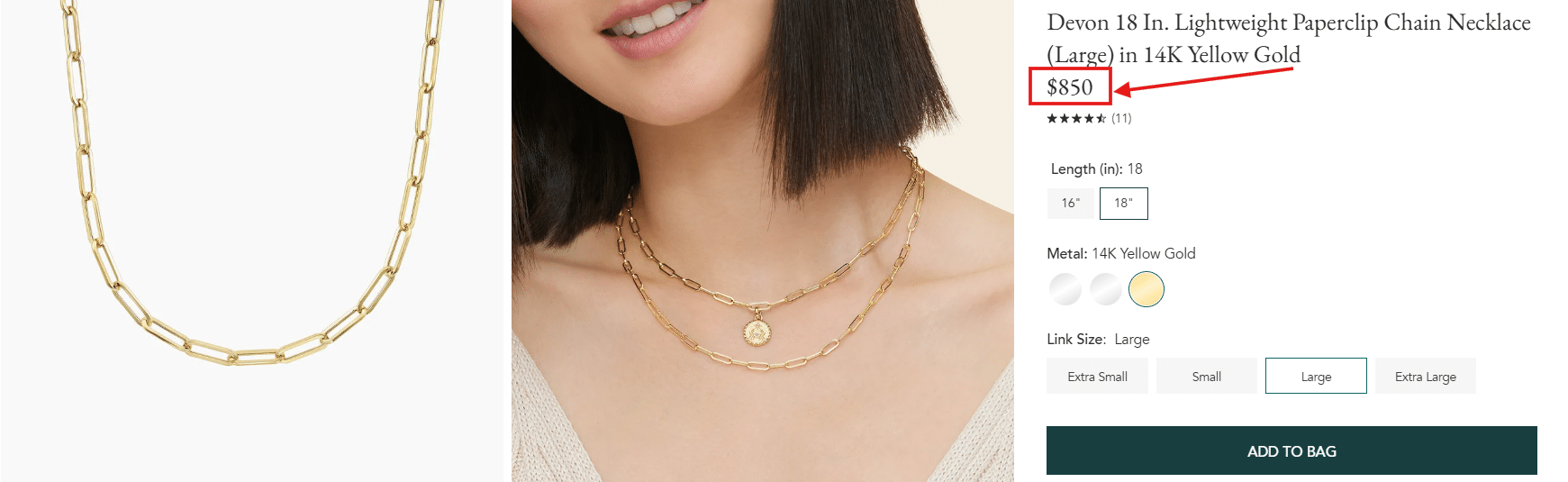
General Chain Care
Remove before sleep, exercise, showering, and swimming. Store in individual pouches to prevent tangling and scratches. Clean monthly for gold, weekly for silver.
High-Maintenance Chains
Rope, Wheat, Byzantine chains trap soap, oils, dirt in complex links. Clean weekly with a soft-bristled brush and warm, soapy water; rinse thoroughly.
Special Handling Required
Snake Chain: NEVER coil or twist. Store lay flat. Professional repair costs $40-80, with a success rate under 25%. Understanding specialized cleaning techniques for complex gold chain structures prevents damage.
Herringbone Chain: Store flat only. Remove before sleep. Professional kink repair costs $60-100 and has a success rate under 40%.
Tarnish Prevention for Sterling Silver
Store in anti-tarnish bags. Clean weekly with a silver polishing cloth. Avoid chlorine, saltwater, perfumes, and lotions. Learning proper silver chain care and tarnish removal methods keeps sterling silver chains looking new.
Professional Maintenance
Annual professional inspection catches weak links. Re-soldering broken links costs $20-50 per link. Quarterly ultrasonic cleaning for intricate chains.
Common Necklace Chain Problems and Solutions
Common chain problems, including tangling, kinking, breaking, and clasp failures, can often be prevented through proper storage and handling.
Tangling: Caused by improper storage and thin chains under 1mm. Prevention: Individual pouches, lay flat storage. Solution: Two-needle technique or professional untangling ($10-30).
Kinking (Snake, Herringbone): Caused by twisting, coiling, or rough handling. Prevention: Store flat, remove before sleep. Solution: Professional straightening (often unsuccessful).
Breaking/Weak Links: Caused by poor soldering, wear over time, and too-thin chains for heavy pendants. Prevention: Annual inspection, avoid overstressing. Solution: Jeweler re-soldering ($20-50 per link).
Clasp Failures: Caused by spring wear, lobster claw damage. Prevention: Gentle clasp handling. Solution: Clasp replacement ($15-40).
Recognizing different clasp mechanisms and their durability ratings helps prevent common clasp-related failures.
Choosing Your Perfect Necklace Chain: Next Steps
Understanding necklace chain types empowers confident jewelry decisions, whether selecting durable rope chains for active wear, elegant herringbone chains for special occasions, or versatile cable chains for everyday pendants, with proper care ensuring decades of beautiful wear.

View current pearl necklace prices
Link pattern determines durability (400 lbs for rope vs 100 lbs for ball chains), flexibility (snake chains drape fluidly while omega chains stay rigid), pendant compatibility (box/cable work universally while herringbone never works), and price (simple cable costs baseline while byzantine costs 70% more).
LearningJewelry.com provides independent jewelry education through certified gemological expertise, helping you make confident purchasing decisions without retail sales pressure.
Frequently Asked Questions for Types of Necklace Chains
What type of necklace chain doesn’t pull hair?
Box, rope, and curb chains don’t pull hair due to smooth surfaces and links that lay flat. Cable chains with rounded links are also hair-friendly. Avoid ball/bead chains (spheres catch hair), herringbone (rough V-edges), and any chain under 1mm thick.
What is the strongest necklace chain?
Rope chain is the strongest, withstanding 400+ lbs tensile force before breaking. Wheat and Cuban/Curb chains follow at 350-375 lbs. These chains feature redundant link strands or flattened construction, distributing stress.
Which chain is best for a pendant?
Box chain is best for pendants due to its smooth, square links that glide through bails without catching, and its 250 lb tensile strength. Cable and rope chains are also outstanding. Never use herringbone or omega chains; they kink immediately.
How do I choose the chain thickness for my pendant?
Match thickness to weight: 0.8-1.0mm for under 0.5 carat, 1.2-1.5mm for 0.5-1 carat, 1.8-2.0mm for 1-2 carats, 2.5mm+ for 2+ carats. Heavier pendants need thicker chains to prevent stretching or breakage.
Can I shower wearing a gold chain?
Remove chains before showering to prevent soap buildup in the links, damage to the clasp from chemicals, and tangling during towel drying. Regular soap exposure dulls gold’s shine, requiring more frequent professional cleaning.
Which chains tarnish fastest?
Sterling silver chains tarnish regardless of type. Silver, wheat, and rope chains tarnish more quickly because complex links trap oxidizing agents. Prevention: anti-tarnish storage bags and a weekly polishing cloth.
Related Articles
Understanding Gold Purity: Complete Guide to 10k, 14k, 18k, and 24k Gold. Learn how gold karat levels affect chain durability, color, and value across different chain types.
Sterling Silver vs Pure Silver: Quality Guide for Jewelry Buyers Discover why 925 sterling silver works better for chains than pure silver, with care instructions.
Pendant Necklace Guide: Choosing Styles, Lengths, and Chain Compatibility. Complete pendant selection guide covering bail sizes, chain matching, and styling recommendations.
Jewelry Buying Guides: Expert Recommendations for Every Purchase. Comprehensive buying strategies across diamonds, gemstones, metals, and jewelry types.
Necklace Length Guide: Finding Your Perfect Fit by Body Type Detailed length recommendations showing how 16″, 18″, 20″, and 24″ chains sit on different body types.