For complete guidance on selecting the right diamond, visit our diamond buying guide covering color, clarity, and certification.

See the true size and brilliance before you buy.
Diamond clarity grades look like alphabet soup: FL, IF, VVS1, VVS2, VS1, VS2, SI1, SI2, I1, I2, I3. The scale contains eleven grades spanning from absolutely flawless to heavily included. Understanding what each grade actually means transforms confusing abbreviations into practical buying knowledge.
The clarity scale measures internal inclusions and external blemishes formed during a diamond’s creation. Every natural diamond contains some characteristics; the question is whether those characteristics affect appearance to the naked eye or only appear under laboratory magnification.
Most buyers overspend on clarity grades they cannot actually see. A VS2 diamond and a VVS1 diamond look identical during normal wear, yet the VVS1 costs significantly more. Knowing where each grade falls on the visibility spectrum helps allocate budget toward characteristics that actually matter.

Juli “Jewels” Church, Certified Diamondologist at LearningJewelry.com, explains the practical reality: “The clarity scale exists for laboratory classification, not everyday observation. Most grades above SI1 produce diamonds that appear flawless to anyone without magnification. Buyers paying premium prices for FL or IF clarity purchase invisible improvements, satisfying on paper but undetectable on the finger.”
The Complete Diamond Clarity Scale

The GIA diamond clarity scale contains six categories subdivided into eleven specific grades.
| Grade | Name | What It Means | Visibility to the Naked Eye |
| FL | Flawless | No inclusions or blemishes at 10x magnification | Invisible |
| IF | Internally Flawless | No inclusions, only minor surface blemishes at 10x | Invisible |
| VVS1 | Very Very Slightly Included 1 | Minute inclusions are extremely difficult to see at 10x | Invisible |
| VVS2 | Very Very Slightly Included 2 | Minute inclusions are very difficult to see at 10x | Invisible |
| VS1 | Very Slightly Included 1 | Minor inclusions are difficult to see at 10x | Invisible |
| VS2 | Very Slightly Included 2 | Minor inclusions are somewhat easy to see at 10x | Invisible |
| SI1 | Slightly Included 1 | Noticeable inclusions are easy to see at 10x | Usually invisible |
| SI2 | Slightly Included 2 | Noticeable inclusions are very easy to see at 10x | Sometimes visible |
| I1 | Included 1 | Obvious inclusions are visible to the naked eye | Visible |
| I2 | Included 2 | Obvious inclusions easily visible may affect brilliance | Clearly visible |
| I3 | Included 3 | Prominent inclusions affecting transparency and brilliance | Very obvious |

Flawless and Internally Flawless (FL-IF)

A rare, flawless round IF Clarity diamond with exceptional brilliance.
Flawless diamonds represent the rarest clarity grade, containing no inclusions or blemishes visible under 10x magnification. Fewer than 1% of gem-quality diamonds achieve FL status.
Internally Flawless diamonds contain no internal inclusions but may have minor surface blemishes like tiny polish marks. These characteristics often disappear during setting or minor repolishing.
Visual Appearance
FL and IF diamonds appear absolutely clean under any magnification level. Gemologists examining these stones find nothing to plot on clarity diagrams.

A rare vintage-cut diamond with timeless character and warm brilliance.
Practical Considerations
The premium for FL/IF clarity runs substantially, often 20-30% above VVS grades for otherwise identical stones. These premium purchase characteristics are visible only under laboratory conditions.
FL/IF grades make sense for:
- Investment-grade diamonds requiring top specifications
- Collectors prioritizing absolute perfection
- Buyers where documentation matters more than visible differences
For engagement rings and jewelry worn daily, FL/IF clarity provides no visible advantage over lower grades.
VVS Clarity: Very Very Slightly Included
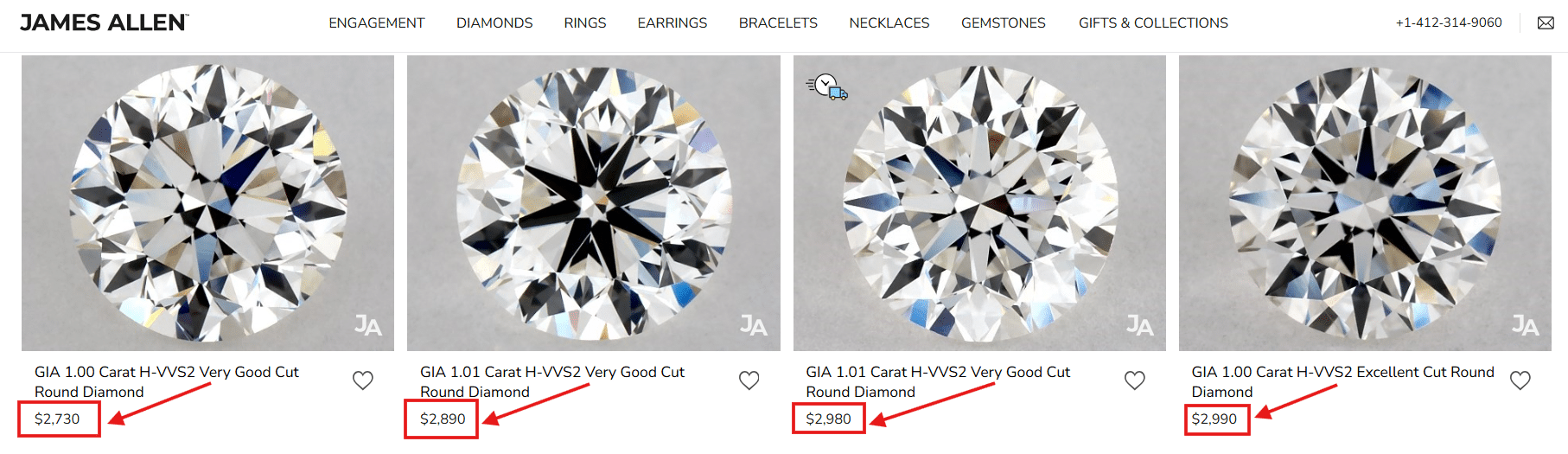
Same specs, different sparkle—cut quality makes the real difference.
VVS diamonds contain minute inclusions challenging trained gemologists to locate under 10x magnification. These stones appear flawless to casual observation and most professional examination.
VVS1 vs VVS2

The distinction between VVS1 and VVS2 involves inclusion location:
VVS1: Inclusions visible only from the pavilion (bottom) side under magnification
VVS2: Inclusions may be visible from the crown (top), but remain extremely difficult to find
For a detailed comparison, see our VVS1 vs VVS2 guide.
Visual Appearance
VVS diamonds appear eye-clean under all normal circumstances. Even jewelers examining these stones struggle to locate the minute inclusions that technically exist.
Common VVS inclusions include:
- Pinpoint inclusions (microscopic crystals)
- Tiny feathers (small internal fractures)
- Internal graining (growth irregularities)

A closer look at brilliance—where setting meets sparkle.
Practical Considerations
VVS clarity commands premium pricing for near-invisible characteristics. Buyers choosing VVS typically prioritize:
- Top-tier quality documentation
- Maximum possible clarity within budget
- Personal satisfaction knowing the diamond rates extremely high
The price jump from VS to VVS rarely delivers a visible improvement; both grades produce diamonds that appear flawless during wear.

Design your perfect ring—your diamond, your setting, your way.
VS Clarity: Very Slightly Included
VS1 and VS2 diamonds contain minor inclusions visible under 10x magnification but invisible to unaided observation. This grade range represents the sweet spot for most buyers.
VS1 vs VS2

VS1: Inclusions are difficult to locate even under magnification. Typically smaller or better positioned than VS2.
VS2: Inclusions are somewhat easier to find under magnification, but still invisible to the naked eye. Excellent value grade.
Visual Appearance
VS diamonds appear completely clean during normal observation. The inclusions exist; they simply cannot be seen without magnification.
Common VS inclusions include:
- Small crystals
- Feathers not reaching the surface
- Clouds (groups of tiny pinpoints)
- Needles (thin, elongated crystals)
Practical Considerations
VS clarity delivers the optimal balance for most engagement ring purchases:
- Guaranteed eye-clean appearance
- Significant savings versus VVS/FL grades
- Excellent quality perception
- Strong resale positioning
Most jewelry professionals recommend VS2 as the minimum clarity for buyers prioritizing quality perception alongside value.
SI Clarity: Slightly Included
SI clarity diamonds contain noticeable inclusions under magnification that may or may not appear to the naked eye. This grade range requires careful individual evaluation rather than blind grade reliance.
SI1 Clarity

Small changes in color, cut, and certification can noticeably affect diamond pricing.
SI1 diamonds contain inclusions easily visible under 10x magnification. The critical question: do those inclusions show without magnification?
Many SI1 diamonds qualify as eye-clean; inclusions remain invisible during normal wear. Others display visible characteristics depending on:
- Inclusion type (crystals more visible than feathers)
- Inclusion color (black inclusions are more obvious than white)
- Inclusion location (center table more visible than edge)
- Inclusion size (larger inclusions are more apparent)
SI1 represents excellent value when individual stones are verified eye-clean.
SI2 Clarity

See how cut quality impacts price—even with the same color and clarity.
SI2 diamonds more commonly show visible inclusions, though eye-clean SI2 stones exist. This grade requires even more careful individual evaluation.
Budget-conscious buyers can find beautiful SI2 diamonds, but each stone needs inspection. The grade alone does not guarantee an acceptable appearance.
Visual Appearance
SI clarity varies significantly stone-to-stone:
- Best SI diamonds appear identical to VS grades
- Worst SI diamonds show obvious inclusions, detracting from beauty
- The majority fall somewhere between, requiring individual assessment
Practical Considerations
SI clarity offers maximum size for the budget when:
- Each specific diamond is individually evaluated
- Eye-clean status is verified before purchase
- Inclusion type and location are acceptable
Never purchase SI clarity blindly based on grade alone. Always examine specific stones through imagery or in person.
Included Grades (I1-I2-I3)
Included diamonds contain obvious inclusions visible to the naked eye and potentially affecting brilliance, transparency, or durability.
I1 Clarity

Similar size diamonds with visible inclusions and different prices.
I1 diamonds show visible inclusions during normal observation. These characteristics are apparent without magnification but may not severely impact overall appearance.
Some I1 diamonds remain reasonably attractive for budget purchases, particularly in smaller sizes where inclusions appear less prominent.
I2 and I3 Clarity

Same look. Smarter price. Choose the best value.
I2 and I3 grades indicate significant inclusions, obviously affecting appearance. These diamonds may display:
- Clearly visible dark crystals
- Large feathers potentially impacting durability
- Clouding reduces brilliance and transparency
- Multiple inclusion types create a busy appearance
Most reputable jewelers avoid I2/I3 diamonds for engagement rings. These grades suit costume jewelry or industrial applications rather than fine jewelry.
Practical Considerations
Included grades offer the lowest pricing but significant trade-offs:
- Visible flaws during normal wear
- Potential durability concerns with certain inclusion types
- Limited resale value
- Quality perception issues
For meaningful jewelry purchases, SI2 represents the practical floor; below this, visible compromises become unavoidable.

How Clarity Affects Price
Clarity significantly impacts diamond pricing, though the relationship varies across the scale.
| Clarity Grade | Approximate Price Premium vs SI1 |
| FL | +60-80% |
| IF | +50-70% |
| VVS1 | +30-45% |
| VVS2 | +20-35% |
| VS1 | +12-20% |
| VS2 | +5-12% |
| SI1 | Baseline |
| SI2 | -10-20% |
| I1 | -30-50% |
The steepest price jumps occur at grade boundaries most buyers never see. FL/IF and VVS grades command premiums for laboratory distinctions invisible during wear.

Choosing the Right Clarity Grade
Optimal clarity selection depends on priorities and budget.
For Maximum Value
Recommended: SI1-VS2
Eye-clean SI1 or VS2 diamonds deliver a beautiful appearance at accessible pricing. Verify specific stones are eye-clean, then enjoy significant savings versus higher grades.
For Quality Confidence
Recommended: VS1-VS2
VS clarity guarantees eye-clean status without individual verification. Buyers wanting assured quality without stone-by-stone evaluation find VS grades deliver confidence.
For Premium Quality
Recommended: VVS2-VVS1
Buyers prioritizing top specifications without FL/IF pricing find VVS grades offer excellent quality positioning. These diamonds rate exceptionally high while remaining more accessible than flawless grades.
For Investment Grade
Recommended: IF-FL
Documentation-focused purchases requiring absolute top grades justify FL/IF clarity. The premium purchases certified perfection for investment purposes.

Case Study: Rachel’s Clarity Decision
Rachel, a 28-year-old marketing director from Chicago, navigated clarity choices systematically:
“My budget allowed approximately 1.20 carats with good specifications. I initially assumed higher clarity meant better diamonds, so I started looking at VVS1 options around 1.15 carats.
Then I educated myself about what clarity grades actually mean. VVS1 inclusions require gemologists with magnification to locate. I would never see them. Ever.
I shifted my search to VS2 and SI1 diamonds, examining each through James Allen’s 360° imaging.
My comparison of identical budgets:
VVS1 Option: 1.12ct, excellent cut, beautiful but smaller
VS2 Option: 1.28ct, excellent cut, eye-clean, noticeably larger
SI1 Option: 1.41ct, excellent cut, verified eye-clean, impressive size
I examined the SI1 carefully. The inclusion (a small feather near the edge) was invisible in the 360° video, even when I knew where to look. The diamond faced up completely clean.
I chose the 1.41ct SI1. My ring looks stunning; nobody has ever noticed any inclusion because there is nothing to see without magnification. The size difference between 1.12ct and 1.41ct is immediately obvious and draws constant compliments.
Understanding the clarity scale saved me from overpaying for invisible quality and let me maximize the characteristic everyone actually notices, size.”

See how a classic solitaire looks at today’s price
Video Resource
For visual demonstration of clarity grades:
Frequently Asked Questions: diamond clarity chart
What is the best diamond clarity to buy?
VS2 and SI1 grades offer the best value for most buyers. Both typically produce eye-clean diamonds at significantly lower prices than VVS or higher grades. VS2 guarantees eye-clean status; SI1 requires individual verification but delivers excellent value when confirmed clean.
Can you see the difference between VVS and VS diamonds?
Not without magnification. Both VVS and VS diamonds appear identical to the naked eye, completely clean and flawless. The distinction exists only under 10x magnification in laboratory conditions. Paying VVS premiums for visible appearance makes little practical sense.
What does SI1 clarity look like?
SI1 clarity varies by individual diamond. Many SI1 stones appear completely eye-clean, identical to higher grades during normal wear. Others show visible inclusions. Always verify specific SI1 diamonds through imagery or in-person examination.
Is I1 clarity bad for an engagement ring?
I1 diamonds show visible inclusions during normal observation. While some I1 stones remain reasonably attractive, most buyers prefer SI2 as the minimum engagement ring clarity. Visible flaws can detract from the ring’s beauty and affect quality perception.
What clarity is considered eye-clean?
VS2 and higher grades guarantee eye-clean status. SI1 diamonds are frequently eye-clean but require individual verification. SI2 diamonds occasionally achieve eye-clean status. I1 and below typically show visible inclusions.
Does a diamond shape affect clarity visibility?
Yes, certain shapes hide inclusions better than others. Round brilliant cuts mask inclusions most effectively through their facet pattern. Step cuts like emerald and Asscher reveal inclusions more readily, often requiring one grade higher clarity for equivalent appearance.
For complete guidance on selecting the right diamond, return to our diamond buying guide covering color, clarity, and certification.