

Colored diamonds break all the rules of traditional diamond shopping. Get a handle on how color grades work in our complete diamond guide.

For every 10,000 colorless natural diamonds mined, only one natural colored diamond emerges. That ratio alone demonstrates the extraordinary rarity of fancy colored diamonds compared to their traditional counterparts.
But within this already exclusive category exists a color so scarce that its existence defies probability. Fewer than 30 true red diamonds are known to exist worldwide, most weighing less than half a carat. These crimson marvels represent the absolute pinnacle of diamond rarity.

Darker. Deeper. Rarer , Explore More
Understanding what creates diamond color, why certain hues prove rarer than others, and what these extraordinary stones cost helps appreciate why collectors and investors pursue them so passionately.

Juli “Jewels” Church, Certified Diamondologist at LearningJewelry.com, puts colored diamond rarity in perspective: “Most people shop for colorless diamonds trying to avoid yellow tint. Fancy colored diamonds flip that equation entirely; the more saturated and vivid the color, the more valuable the stone becomes. Red diamonds sit at the absolute top because nature produces them so extraordinarily rarely.”
What Creates Diamond Color?
Diamonds are crystallized carbon lattices, but they are not always the transparent stones most people imagine. Fancy colored diamonds owe their hues to two primary factors: trace elements and structural distortions.

Trace Elements
Foreign atoms replacing carbon atoms in a diamond’s structure create specific colors:
- Nitrogen: Produces yellow and orange hues
- Boron: Creates blue diamonds
- Hydrogen: Can contribute to violet shades
These elements absorb specific light wavelengths, reflecting the remaining spectrum and creating the diamond’s perceived color.

Structural Distortions
Irregularities in carbon atom arrangement within the crystal lattice change how diamonds interact with light:
- Plastic deformation: Creates pink and red diamonds
- Radiation exposure: Produces green diamonds
- Crystal lattice anomalies: Generate various unique shades
Red and pink diamonds acquire their colors not from trace elements but from distortions occurring during their geological journey, making them fundamentally different from other colored diamonds.
Diamond Colors Ranked by Rarity

| Color | Rarity Level | Cause | Price Per Carat |
| Red | Extremely Rare | Plastic deformation | Up to $1 million |
| Blue | Very Rare | Boron trace elements | $600,000-$800,000 |
| Pink | Very Rare | Plastic deformation | $300,000-$500,000 |
| Orange | Rare | Nitrogen + structural anomalies | $100,000-$200,000 |
| Green | Rare | Natural radiation exposure | $80,000-$150,000 |
| Fancy White | Uncommon | Light-scattering inclusions | $10,000-$50,000 |
| Black | Uncommon | Graphite inclusions | $2,000-$5,000 |
| Yellow/Brown | Common | Nitrogen impurities | $1,000-$3,000 |

The Rarest Diamond Color: Red
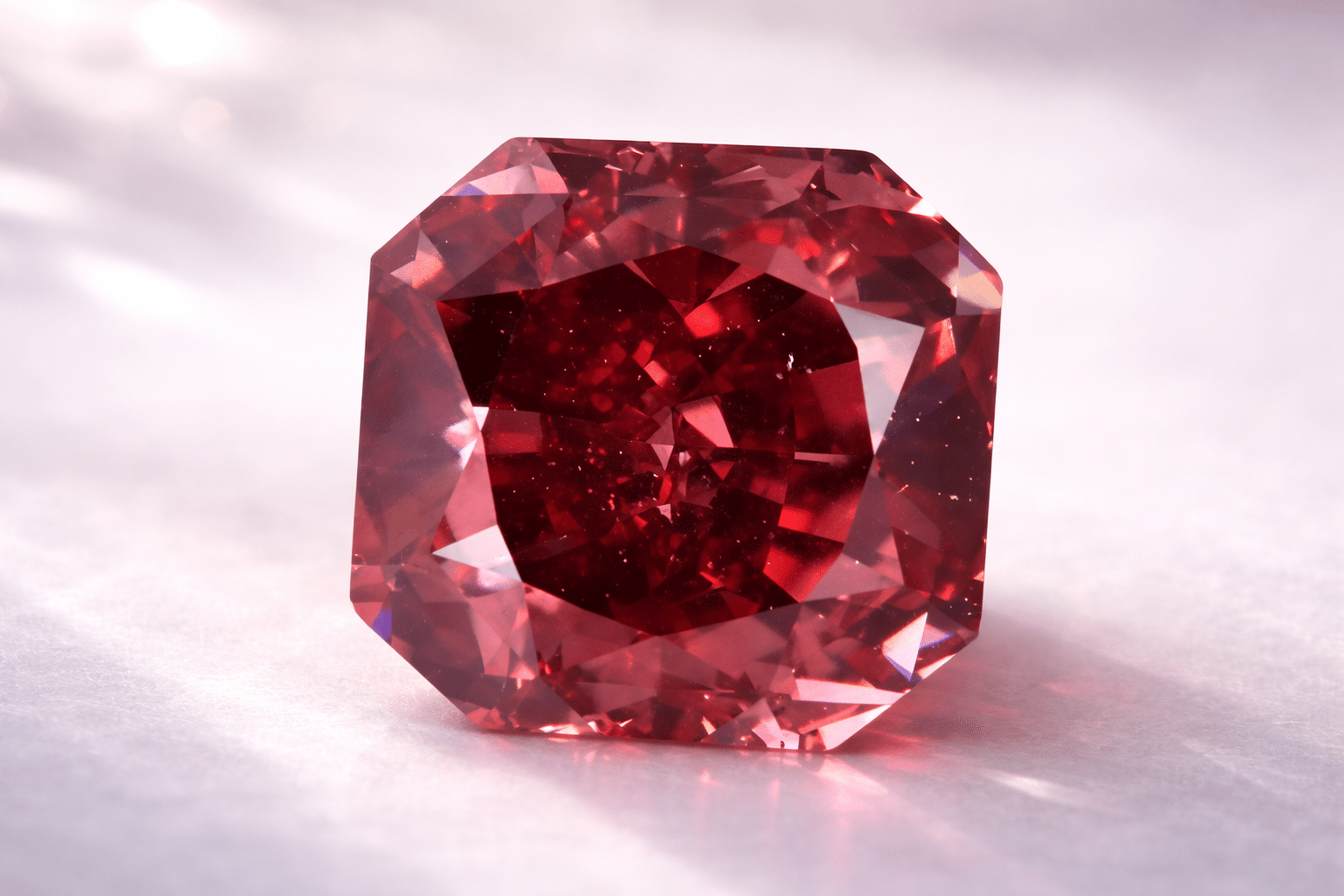
Red diamonds occupy the absolute pinnacle of rarity. Fewer than 30 true red diamonds, those without secondary colors like purple or brown, are known to exist. Most weigh less than half a carat.
The Science Behind Red Diamonds
Unlike other colored diamonds deriving color from trace elements, red diamonds owe their crimson hue to “plastic deformation.” During the diamond’s journey toward Earth’s surface, immense pressure alters its atomic structure, distorting the crystal lattice in ways that selectively absorb light.
This unique light interaction causes the diamond to emanate red. The phenomenon requires such precise geological conditions that it occurs almost never, explaining why red diamonds remain so extraordinarily scarce.

Where Red Diamonds Are Found
Red diamonds have appeared in scattered locations worldwide, but Australia’s Argyle mine produced most known specimens before ceasing operations in 2020. Brazil and Russia have also yielded occasional red diamond discoveries.
The Argyle mine’s closure makes future red diamond discoveries even less likely, potentially increasing existing stones’ value further.
Famous Red Diamonds
Each red diamond carries its own legend:
The Moussaieff Red: At 5.11 carats, this triangular marvel is the largest Fancy Red diamond ever graded by GIA. Discovered by a Brazilian farmer, it now belongs to Moussaieff Jewelers.
The Hancock Red: This sub-one-carat gem fetched $926,000 at a 1987 auction, setting a world record for price per carat at the time.
The De Young Red: Initially mistaken for a garnet and sold at a flea market, this 5.03-carat gem now resides in the Smithsonian Institution.

A closer look at brilliance—where setting meets sparkle.
Other Exceptionally Rare Colors
Blue Diamonds
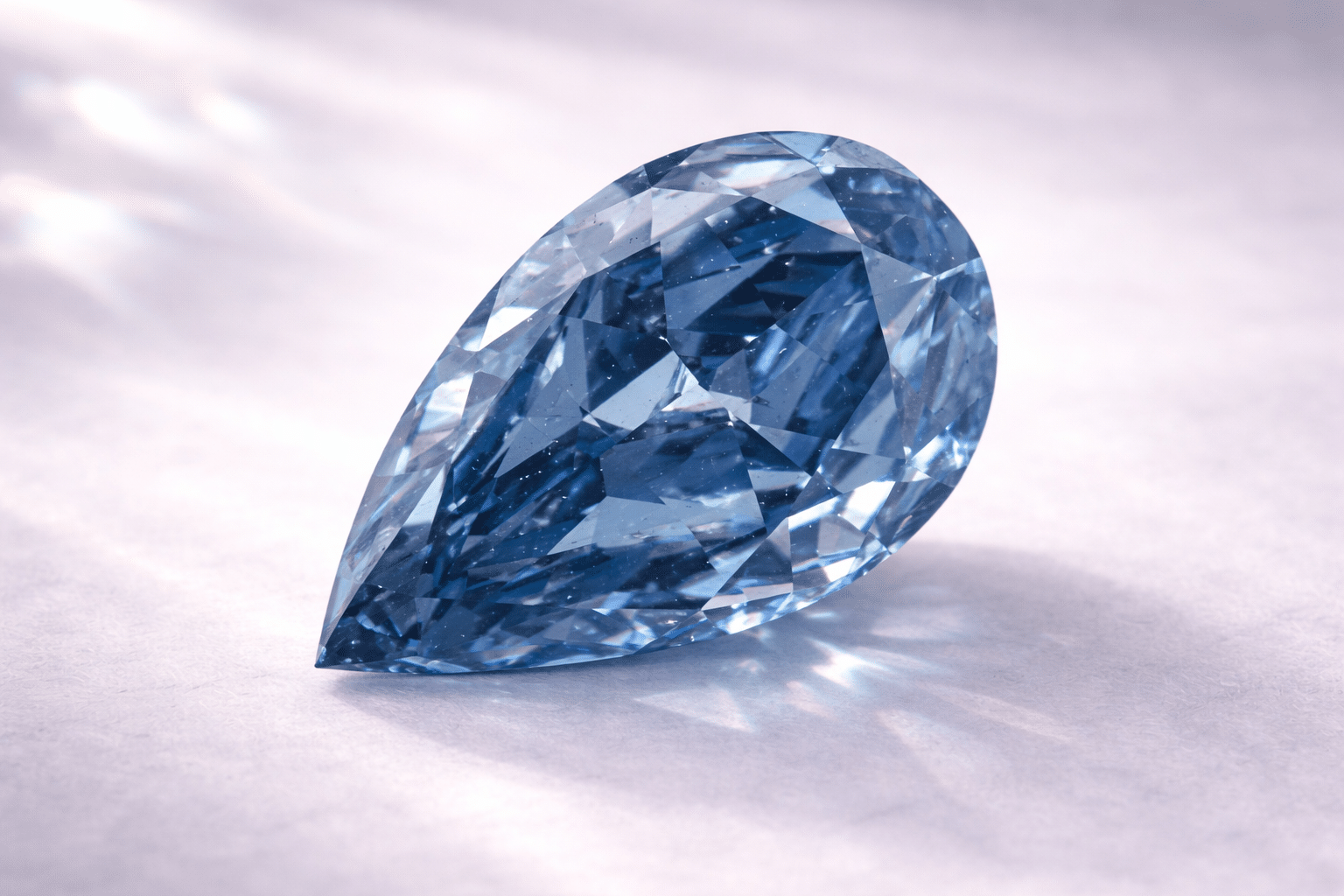
Blue diamonds derive their captivating shades from trace boron in their crystal structure. Boron atoms alter the diamond’s absorption spectrum, allowing only blue light to escape.
The depth of blue varies based on boron concentration, from pale sky blue to deep azure. Famous examples include the Hope Diamond (45.52 carats) and the Blue Moon Diamond (12.03 carats).
Blue diamonds rank second only to red in rarity and command prices between $600,000 and $800,000 per carat for vivid specimens.

See what true rarity looks like
Pink Diamonds
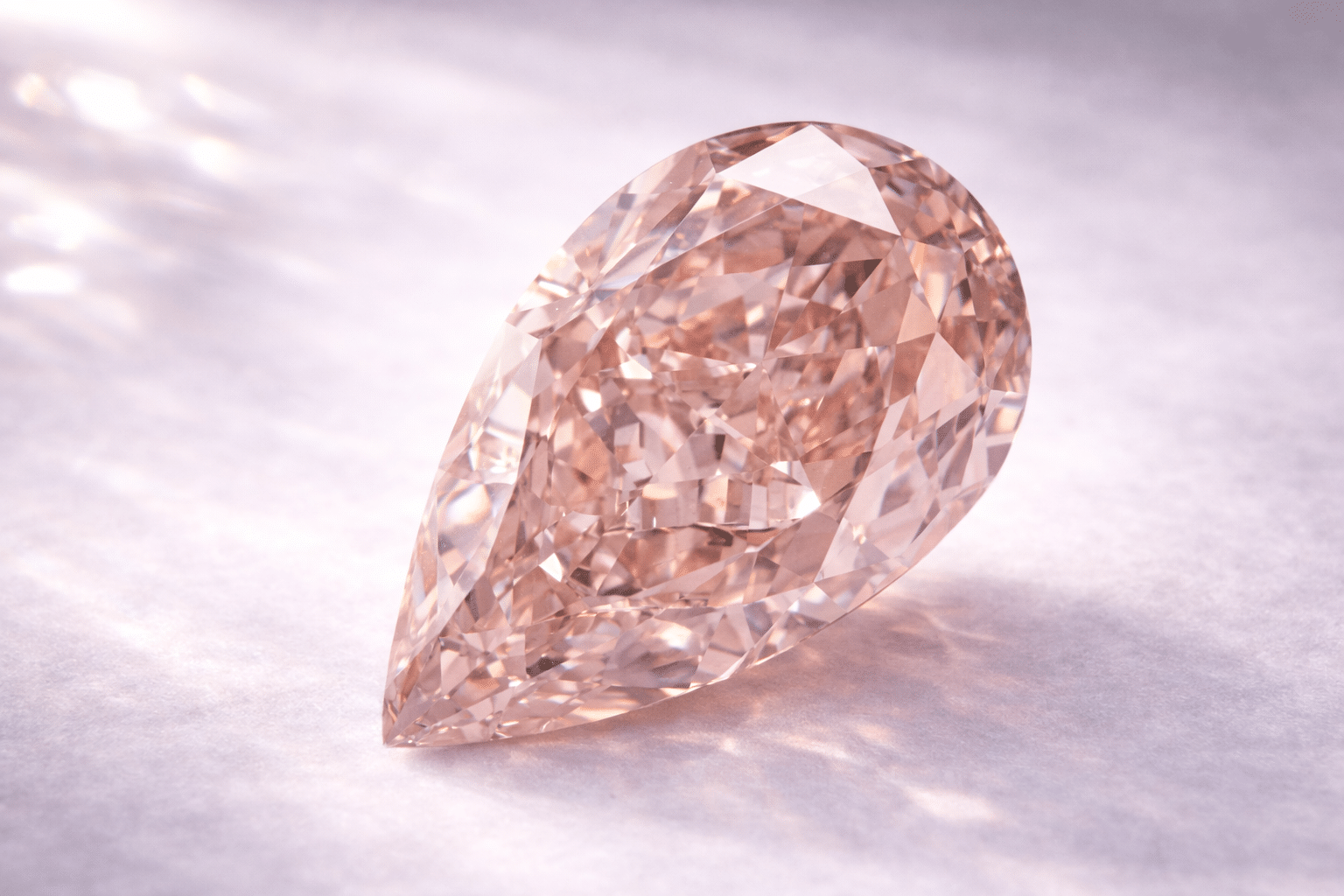
Pink diamonds acquire their romantic hues from crystal lattice distortions during geological formation, the same mechanism creating red diamonds, but with different results.
From soft pastels to vibrant fuchsias, pink diamonds encapsulate emotional resonance that makes them popular for engagement rings among those who can afford them. The Argyle mine produced approximately 90% of the world’s pink diamonds before closing.
Pink diamonds typically sell for $300,000 to $500,000 per carat for intense colors.

Green Diamonds

Green diamonds derive color not from trace elements but from natural radiation exposure over millions of years. This radiation creates lattice defects manifesting as green shades.
Interestingly, green color often concentrates near the diamond’s surface rather than throughout, making cutting decisions critical for preserving color.

More Accessible Colored Diamonds
Yellow and Brown Diamonds
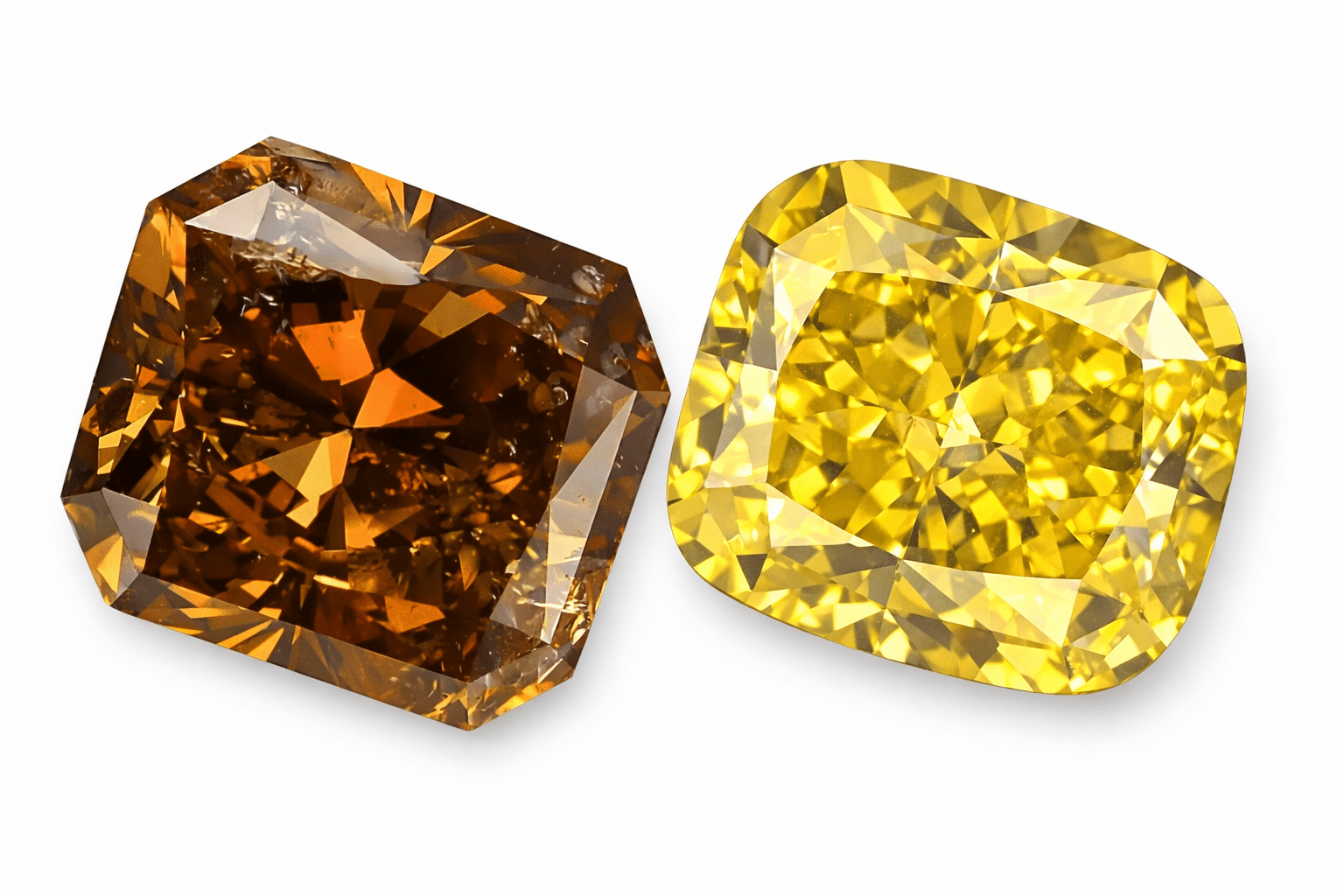
Yellow and brown diamonds represent the most common fancy colors. Nitrogen atoms create spectrums from pale champagne to rich cognac.
Their accessibility makes them affordable alternatives to rarer colors; prices range from $1,000 to $3,000 per carat, depending on saturation. “Canary” yellow diamonds with vivid saturation command higher prices.
For buyers wanting a colorless appearance, understanding diamond color vs clarity trade-offs helps optimize purchases. D color diamonds represent the opposite end of the spectrum, the complete absence of color.

Black Diamonds

Black diamonds derive their opaque appearance from microscopic graphite particles embedded within their structure. These particles absorb incoming light, creating velvety blackness.
Once considered industrial-grade, black diamonds have gained fashion popularity for their bold, unconventional aesthetic.

Fancy White Diamonds

Fancy white diamonds appear milky rather than transparent. Minute inclusions scatter light in unique ways, creating dreamlike, ethereal appearances.
These diamonds represent fascinating paradoxes, stones whose value comes from inclusions rather than their absence.

Grading Colored Diamonds
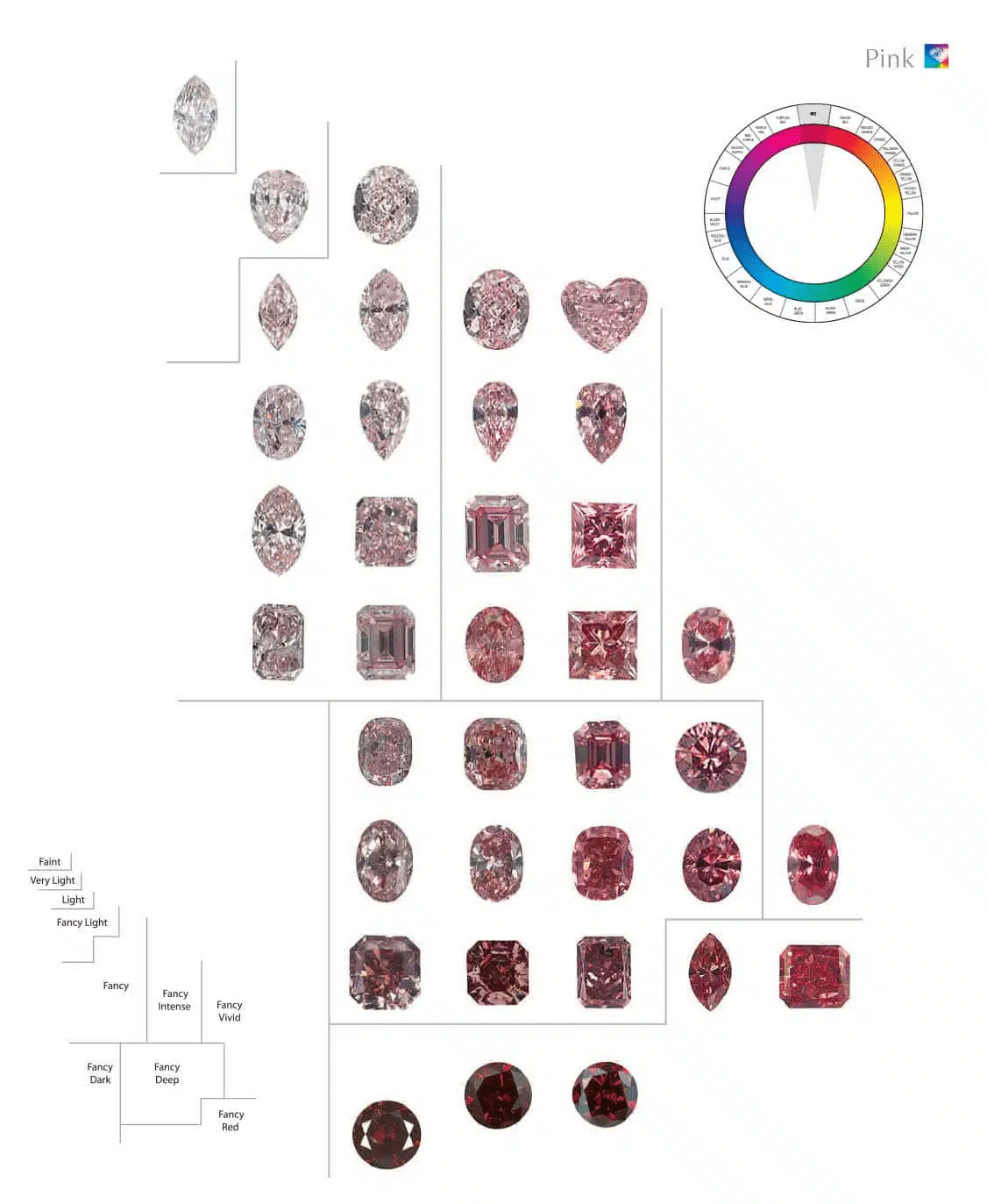
Colored diamonds follow different evaluation standards from colorless stones.
Beyond the 4Cs
The standard 4Cs (cut, clarity, carat, color) prove insufficient for colored diamonds. The Fancy Color Diamond Grading system evaluates three additional attributes:
Hue: The actual color (blue, red, pink, etc.)
Tone: Lightness or darkness of the color
Saturation: Strength or intensity of color appearance
Saturation Grades
| Grade | Description | Value Impact |
| Faint | Barely perceptible color | Lowest |
| Very Light | Slight color presence | Low |
| Light | Noticeable but pale | Moderate |
| Fancy Light | Clear color, lighter saturation | Good |
| Fancy | Definite color presence | Better |
| Fancy Intense | Strong, vivid color | High |
| Fancy Deep | Rich, dark saturation | High |
| Fancy Vivid | Maximum saturation | Highest |
A Fancy Vivid Blue diamond commands dramatically higher prices than a Fancy Light Blue; saturation directly impacts value.
Case Study: The Investment Perspective
Michael, a 52-year-old investment advisor from New York, explored colored diamonds as alternative assets:
“Traditional investments felt saturated. I researched tangible alternatives and discovered colored diamonds, particularly pink and blue, had appreciated significantly over the decades.
The Argyle mine closure in 2020 particularly interested me. With 90% of the pink diamond supply eliminated, existing stones became finite resources.
I purchased a 0.71-carat Fancy Intense Pink diamond for $185,000 in 2019. By 2024, comparable stones were selling for $280,000-$320,000, roughly a 50-70% appreciation in five years.
Red diamonds proved too expensive and illiquid for my purposes. But pink and blue diamonds in the 0.50-1.00 carat range offered the sweet spot between accessibility and rarity.
The key lesson: colored diamond investment requires patience and expertise. Unlike stocks, these assets do not trade on exchanges with transparent pricing. You need trusted dealers, proper certification, and long-term holding horizons.
For pure jewelry enjoyment rather than investment, more accessible colors like yellow and champagne deliver beautiful results at reasonable prices.”
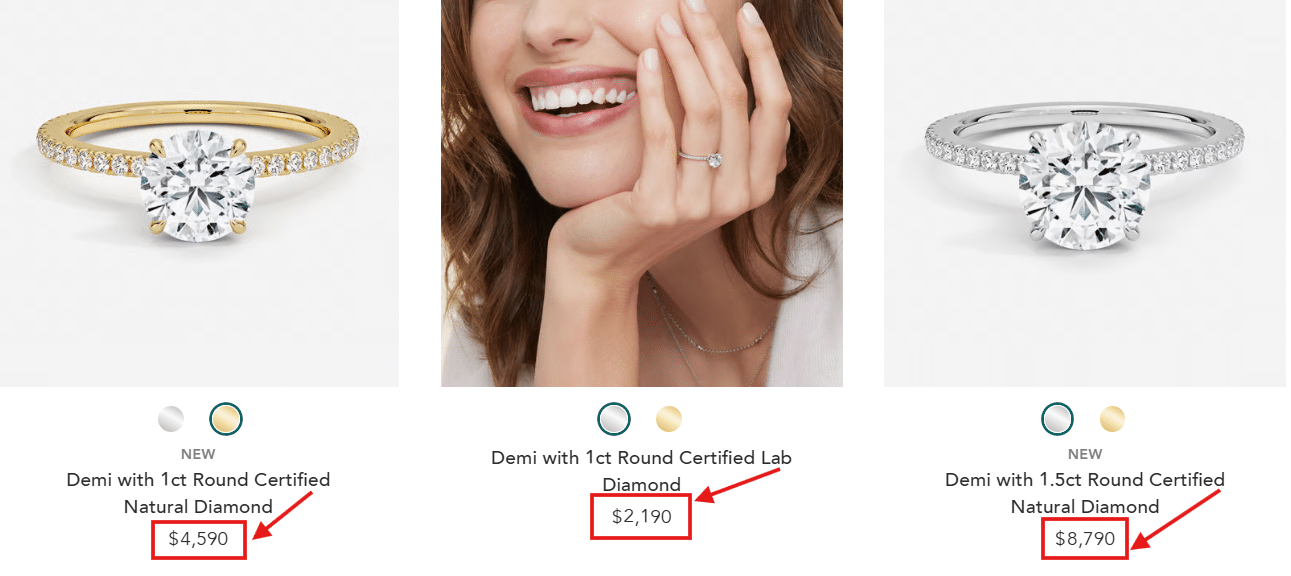
Compare today’s prices & explore the latest designs
Video Resource
For visual exploration of rare colored diamonds:
Frequently Asked Questions
What is the rarest diamond color?
Red is the rarest diamond color. Fewer than 30 true red diamonds exist worldwide, most weighing less than half a carat. Red diamonds can sell for up to $1 million per carat due to their extraordinary scarcity.
Why are red diamonds so rare?
Red diamonds derive color from “plastic deformation”, structural distortions occurring during geological formation under extremely specific conditions. Unlike other colored diamonds created by trace elements, red diamonds require precise pressure and formation circumstances that occur almost never in nature.
How much do rare colored diamonds cost?
Prices vary dramatically by color and saturation. Red diamonds reach $1 million per carat. Blue diamonds cost $600,000-$800,000 per carat. Pink diamonds range $300,000-$500,000 per carat. Yellow and brown diamonds, the most common fancy colors, cost $1,000-$3,000 per carat.
Are colored diamonds natural?
Both natural and lab-created colored diamonds exist. Natural fancy colored diamonds derive their hues from trace elements or structural distortions during geological formation. Lab-created colored diamonds can replicate these colors at lower prices. Always verify origin through certification.
What makes pink diamonds valuable?
Pink diamonds acquire color through crystal lattice distortions, the same mechanism that creates red diamonds. The Argyle mine (which produced 90% of pink diamonds) closed in 2020, making existing pink diamonds finite resources with increasing value potential.
How are colored diamonds graded?
Colored diamonds use the Fancy Color Diamond Grading system, evaluating hue (actual color), tone (lightness/darkness), and saturation (color intensity). Grades range from Faint through Fancy Vivid, with higher saturation commanding premium prices.
For a full breakdown on how to evaluate both colored and colorless diamonds, revisit our complete diamond buying guide.