Interested in I2 Clarity Diamonds? You’re in the right place.
In this guide, I’ll go over everything you need to know about I2 clarity diamonds and answer questions like:
- Why is it hard to find I2 clarity engagement rings?
- Are I2 diamonds cheap?
- What’s the difference between I1 and I2 clarity grades?
What are I2 Diamonds?
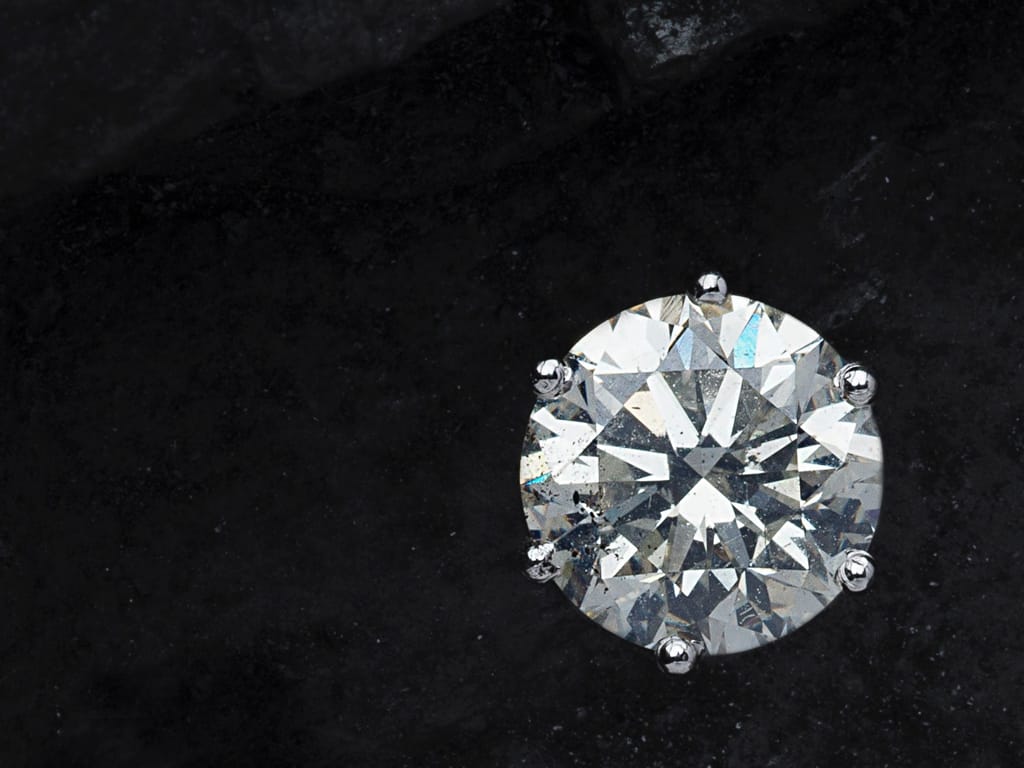
I2 diamonds have been given the clarity grade of “Included”. Included diamonds come in three sub grades: I1, I2, and I3. Diamonds on the Included grade tier have clearly visible inclusions with both the naked eye and under magnification.
Not too many retailers will sell I2 diamonds as a center stone. However, that doesn’t mean that you can’t find them. Places like Kay and Zales don’t offer any engagement ring below I1 clarity. However, the side stones are often I2 or I3 clarity diamonds.
I2 clarity diamonds are the second lowest clarity diamonds available in the industry.

Very small .16 carats I2 Clarity Marquise Accent Stone
Why Diamond Clarity Grades are Important
If you don’t know what included diamonds are, now’s your chance to learn.
Inclusions are natural imperfections that can happen in both the diamond growth process and the cutting/polishing process. Inclusions are clarity characteristics that are present in all diamonds.
Diamond clarity is one of the 4C’s of Diamond Quality, a system put forth by the Gemological Institute of America. The GIA sets all the standards for diamond quality, and their systems are used industry-wide.
The GIA assigns clarity grades to a diamond based on the details of the inclusions. Inclusions can be internal, or they can be external called surface blemishes. Blemishes and inclusions in lower clarity grades can impact both brilliance and durability issues.

Inclusions in bottom of SI2 Clarity Diamond

Inclusions in I1 Clarity Diamond
A diamond is eye clean when there are no obvious imperfections to the naked eye. However, there may be slight inclusions under magnification. I2 clarity diamonds are not eye clean. It’s highly possible you’ll see inclusions with the naked eye.
The GIA Clarity Scale
The GIA analyzes the details of inclusions in a diamond and takes into account the number, size, relief (in relation to the rest of the diamond, type, and color of inclusions present in a diamond.
This is the GIA Diamond Clarity Scale:

I2 Clarity Diamond vs I1 Clarity Diamonds
Both I1 and I2 diamonds are within the Included clarity tier. I1 is the higher clarity grade, while I2 diamonds are lower clarity diamonds.
As mentioned before, I2 clarity diamonds are often used for accent stones rather than the center diamond of an engagement ring. They are some of the lowest clarity grades for diamonds, and most people don’t want noticeable inclusions in their biggest diamond.
Overall, I1 clarity diamonds seems to be the minimum that retailers (both online and in-st0re) will offer as center stones in engagement rings. However, there are also many retailers that won’t offer any diamonds in the I grade range.
You shouldn’t expect a huge price shift from I1 clarity diamonds to I2 clarity diamonds, generally a 5-15% increase.
You will have more options searching for I1 clarity diamond engagement rings rather than I2 diamond rings. The inclusions in I1 clarity diamonds will still be noticeable because they are not eye clean diamonds. However, they will be less noticeable than in I2 diamonds.

I1 Clarity Emerald Cut Diamond

I2 Clarity Trapezoid Shape(1.98 cts)
I2 Clarity Diamonds vs SI2 Clarity Diamonds
Both SI Clarity and I clarity diamonds are not considered eye clean diamonds either. However, SI2 clarity diamonds have higher clarity than I2 diamonds.
SI2 clarity diamonds are part of the Slightly Included diamond clarity tier that consist of SI1 and SI2 clarity diamonds. On rare and unfortunate occasions, you may stumble onto an offbeat SI3 clarity diamond, which is basically the same as an I1 clarity grade.
SI Clarity diamonds have less inclusions than I2 diamonds. You can expect I2 clarity diamonds to have bigger inclusions than in SI2 clarity diamonds.
SI2 diamonds still have noticeable inclusions, but they may be positioned in different places, or they may be white inclusions. White colored inclusions tend to not be as easily visible as big, dark inclusions.
The chances of you finding an eye clean stone with an I2 clarity grade is almost non existent. They’re graded this low for a reason. But with SI2 diamonds, you have an increased chance of getting an eye clean diamond, so long as you have plenty of SI2 diamonds to choose from.
SI2 Clarity grade diamonds are two clarity grades higher than I2 diamonds, so you can be sure they’ll cost more than I2 diamonds. If you’re trying for a larger carat weight, you’ll definitely have more options and prettier choices with SI2 clarity diamonds.
Alongside having less visible inclusions, you should expect an SI2 diamond to be more expensive, so long as other quality factors are comparable.

SI2 Diamond Inclusions

I2 Clarity Diamond Inclusions
I2 Diamonds vs I3 Clarity Diamonds
I3 clarity diamonds are the lowest clarity grade available in the diamond industry. YOu can expect I3 diamonds to have more inclusions than I2 diamonds.
Neither an I2 diamond or I3 diamond should be a center stone. I3 diamonds are a low clarity grade that would not make an appealing diamond, despite how affordable they are in comparison to higher clarity grades.
Many online retailers won’t offer I2 diamonds or I3 diamonds even as melee stones in their diamond jewelry. The inclusions may not be as noticeable in smaller carat weights like 1/10 of a carat, but they can give off a grayish hue from the dark inclusions.
It’s not often you’ll find loose I3 clarity diamonds, so it’s hard to give a ballpark price comparison. Both grades are considered to be low quality diamonds, so the price difference tends to overlap in some areas.

Mixed Lot of I2 and I3 Diamonds
The Cost of I2 Clarity Diamonds
You’ve seen quite a few pics of what an I2 diamond can look like. Even though these images are at 40x magnification instead of the typical 10x they’re graded under, you can see many visible inclusions that don’t make the most appealing looking diamond.
Does it bother you to know that there are retailers selling engagement rings with I2 clarity diamonds in the ring setting for more than other retailers are selling SI2 engagement rings for?
It does me.
Even though an I2 clarity diamond is a low diamond clarity grade, you can still find them as accent stones for an engagement ring that costs thousands at popular chain retailers. It’s likely the center stone would be an SI2 and your accent stones would be I2 or I3.
You shouldn’t find an engagement ring with an I2 clarity center stone. If you do, it’s likely you’re shopping on a marketplace like Etsy or a private seller site online. People will price these differently.
Lab Grown Diamonds with I2 Clarity
Just as you shouldn’t expect I2 center stones in natural diamonds, you’re even less likely to find an I2 diamond that’s lab grown.
Lab grown diamonds are real diamonds, but don’t share the same value and price as naturally mined diamonds. They aren’t as rare and are produced in little time compared to the billions of years it takes to form in the earth.
The secluded lab environment makes it easier to produce diamonds with higher clarity grades, though lab grown diamonds still get inclusions. The types of inclusions are limited since they don’t have other earthly minerals and impurities mixing into the diamond crystal formation.
Why You Should Avoid I2 Clarity Diamonds for Engagement Rings
If you haven’t figured it out by now, not all diamonds are perfect for a diamond ring. Diamond shapes, carat weight, and ring settings are all about personal preference. Clarity grades are too, but most people want an eye clean diamond ring. And that’s not an I2 diamond.
You don’t want I2 clarity diamonds.
Sure, an I2 diamond (if you can find one) comes at a cheaper price than other diamond clarity grades. But that’s because it’s at the very bottom of the clarity quality.
Here’s the best reasons on why to avoid I2 clarity diamonds.
- An I2 diamond will have dark and noticeable flaws when looking at your diamond at eye level.
- Depending on the diamond shape and carat weight of your I2 diamond, the already noticeable inclusions could look even more obvious in certain shapes, like an emerald cut diamond.
- If most retailers won’t even grace their engagement rings with an I2 clarity diamond, you shouldn’t either.
- Even though I2 diamonds are unappealing, they can still cost hundreds and even thousands if part of ring setting like in Kay’s.
- The inclusions in an I2 diamond can make your diamond look grayish or dull, even if the light performance is good.
- They are poor quality and can even affect the structural integrity of your diamond if the blemishes are arranged against a cleavage plane. This can make your diamond vulnerable to chipping or breaking if dropped or struck.
In general, I don’t recommend buying low clarity grades such as those on the I scale. Many retailers and lab grown diamond retailers don’t offer any diamonds below SI clarity, which is a good thing in my opinion.
I’m not saying that you need flawless or internally flawless diamond clarity either, because I don’t recommend choosing the highest grades in every category. But don’t choose the lowest grades either. Your diamond’s cut quality is the most important, but everything else should be a balance of what you deem to be suitable.
Even if you’re on a tight budget, avoid I2 diamonds. SI2 clarity diamonds can be beautiful, albeit a bit more expensive. If they’re still too expensive for you, consider choosing an SI2 lab grown diamond that comes at a 20-40% discount than SI2 mined diamonds.
Just don’t buy I2 diamonds.