
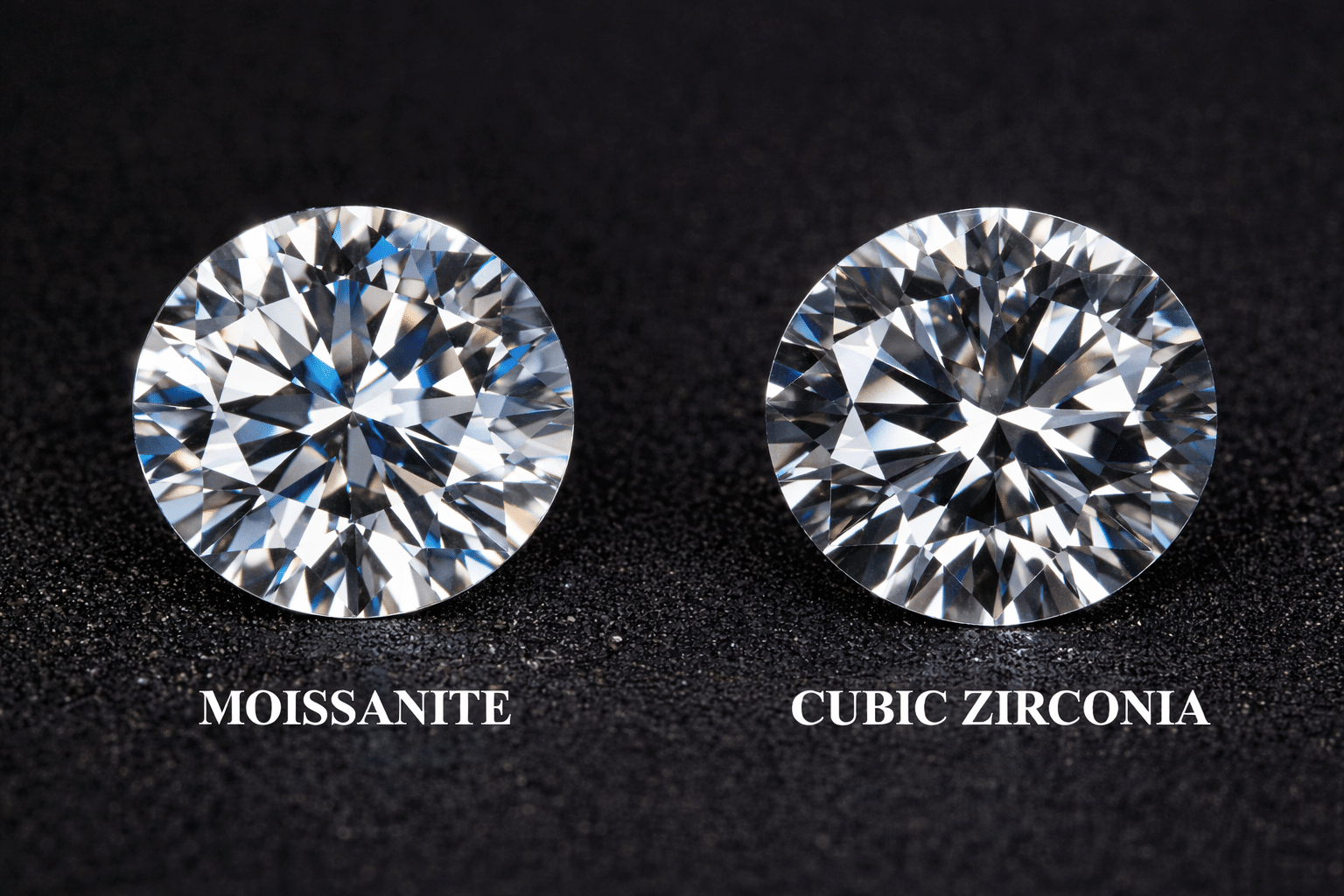
Moissanite and cubic zirconia rank as the most popular diamond alternatives, but moissanite delivers superior long-term value through higher durability and lasting brilliance. Moissanite scores 9.25 on the Mohs hardness scale with a 2.65 refractive index, producing intense rainbow-like fire that exceeds both cubic zirconia and natural diamonds.
Cubic zirconia measures 8-8.25 in hardness with a 2.15 refractive index, offering initial sparkle that typically clouds or scratches within 1-3 years of daily wear. Price differences reflect this durability gap: cubic zirconia costs $5-$100 per stone while moissanite ranges from $200-$600 per carat.
Engagement ring shoppers benefit most from moissanite’s lifetime performance, while cubic zirconia serves fashion jewelry needs. Both stones are lab-created using silicon carbide (moissanite) or zirconium dioxide (cubic zirconia).
Learning Jewelry’s gemstone research reveals these differences help buyers make informed decisions based on actual material properties rather than marketing claims.
What Makes Moissanite Different from Cubic Zirconia
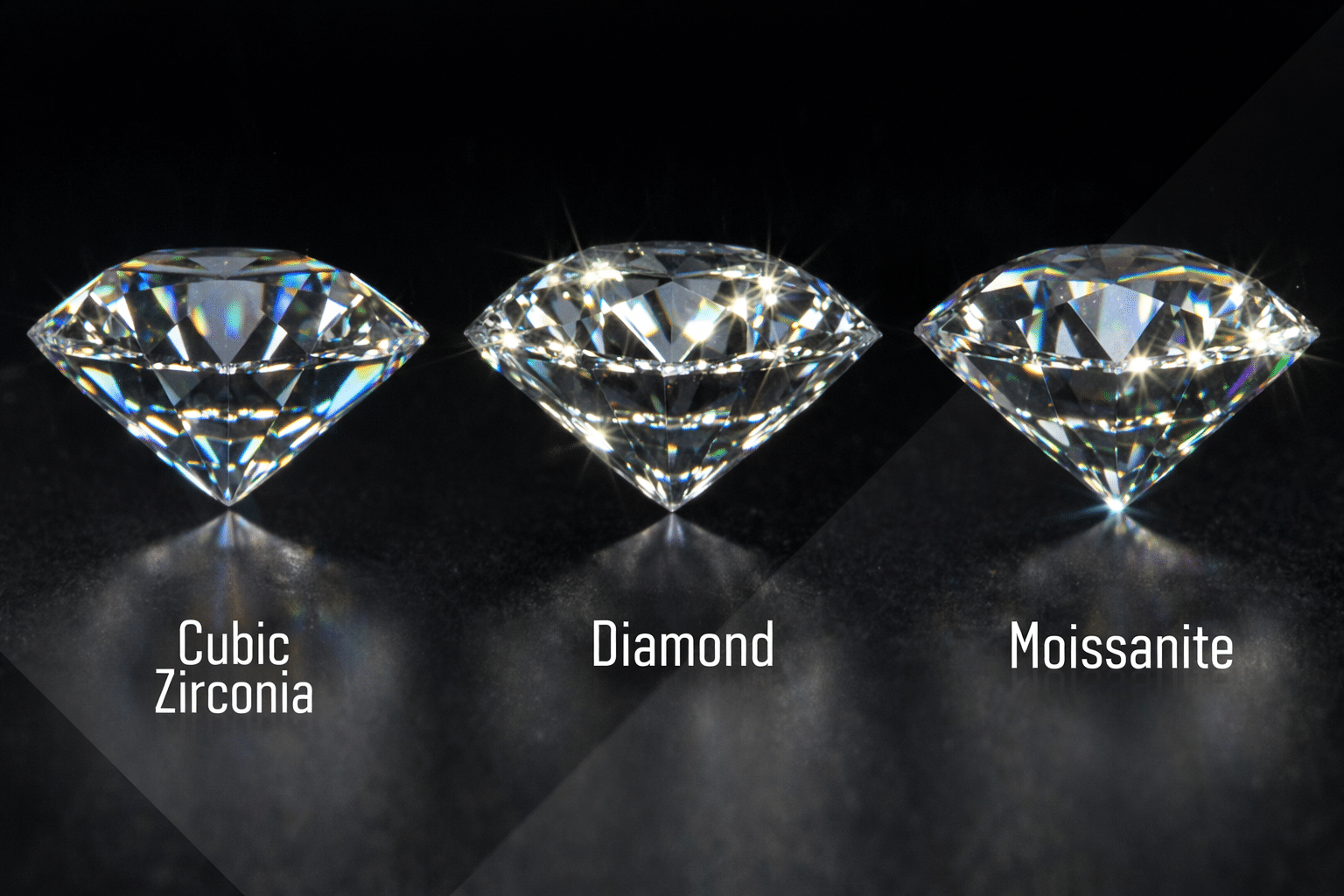
Moissanite and cubic zirconia differ fundamentally in chemical composition, hardness, and optical properties despite both serving as diamond alternatives.
French scientist Henri Moissan discovered moissanite in 1893 while examining rock samples from a meteor crater in Arizona. He initially believed he’d found diamonds, but later analysis revealed an entirely different mineral: silicon carbide. Natural moissanite originates from meteorites, earning it nicknames like “Space Diamond” and “Stardust.” Natural specimens are so rare that all jewelry-grade moissanite comes from laboratories.
Creating a single moissanite gemstone takes 2-3 months. Scientists mix silicon and carbon under extreme heat and pressure, forming silicon carbide crystals called preforms. These preforms are then cut and faceted to maximize light performance. Charles & Colvard pioneered moissanite synthesis and produced Forever One Moissanite, recognized as the highest quality available.
Cubic zirconia synthesis follows a different process. Manufacturers melt powdered zirconium oxide with calcium and magnesium, then allow the mixture to cool slowly. As temperatures drop, zirconium dioxide crystals form and can be faceted into gems. Three main production methods exist: the melting process, growth solution, and high-pressure high-temperature techniques.
Both moissanite and CZ can be produced in any color, though most buyers prefer colorless stones. Learning Jewelry’s comparison research across green gemstone alternatives shows how lab-created stones have expanded options across the color spectrum.
Moissanite vs Cubic Zirconia: Hardness and Durability Comparison
Moissanite’s 9.25 Mohs hardness rating makes it significantly more scratch-resistant than cubic zirconia’s 8-8.25 rating, directly impacting lifetime wearability.
The Mohs scale measures scratch resistance from 1 (talc) to 10 (diamond). Moissanite ranks as the second-hardest gemstone used in jewelry, trailing only diamond’s perfect 10. This means moissanite resists scratching from virtually all materials encountered in daily life.
Cubic zirconia’s softer composition makes it vulnerable to microscopic scratches that accumulate over time. These surface imperfections catch dirt and oils, creating the cloudy appearance CZ develops after 1-3 years of regular wear. The cloudiness isn’t removable through cleaning because it results from permanent surface damage.
Learning Jewelry’s cost analysis reveals moissanite’s economic advantage over replacement cycles:
10-Year Ownership Comparison:
- Cubic zirconia: $40 initial + $40 replacement every 2 years = $200+ total
- Moissanite: $400 one-time purchase = $400 total
While moissanite costs more upfront, avoiding repeated replacements makes it more convenient and eliminates the hassle of finding matching stones for ring sets.
Hardness measures scratch resistance, not impact resistance. Both stones can chip if struck at the right angle with sufficient force. Pointed shapes like marquise and pear cuts are more vulnerable to edge chipping. Protective settings like bezels and flush mounts reduce this risk compared to high-set solitaire designs.
Learning Jewelry’s testing research, similar to authentication methods for precious gems, shows that understanding material properties helps identify quality and predict longevity.
Brilliance and Sparkle: How Moissanite and Cubic Zirconia Reflect Light
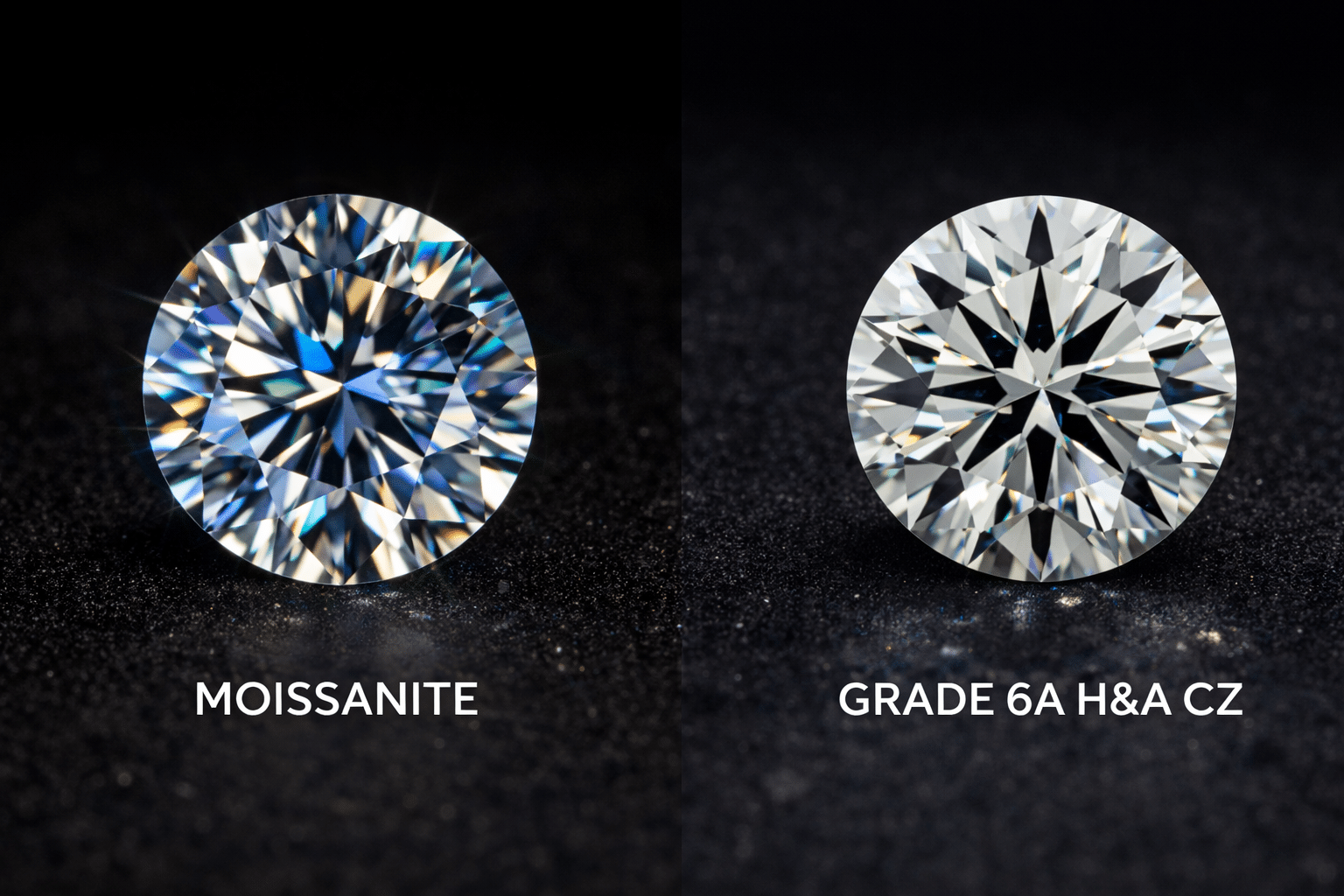
Moissanite’s 2.65 refractive index produces 30% more colorful light flashes than cubic zirconia’s 2.15 refractive index, creating distinctly different sparkle patterns.
Refractive index measures how much light bends when entering a gemstone. Higher numbers mean more dramatic light bending and stronger sparkle:
- Moissanite: 2.65-2.69
- Diamond: 2.42
- Cubic zirconia: 2.15-2.22
Moissanite produces twice the fire (rainbow-colored flashes) of diamonds. This creates the distinctive “disco ball” effect that makes moissanite instantly recognizable in bright lighting. Some people love this intense sparkle, while others prefer the subtler look of diamonds.
Cubic zirconia sparkles well when new, producing primarily white light reflections. The lower refractive index creates less dramatic light performance, and CZ can appear flat or glassy in low-light conditions. As surface scratches develop over time, light scatters unevenly and the stone loses its initial brilliance.
Both moissanite and CZ exhibit double refraction (birefringence), meaning light rays split into two beams when entering the stone. This differs from diamond’s single refraction but contributes to the sparkly appearance that both alternatives provide.
Visual Identification Tests from Learning Jewelry:
Tilt a stone under bright light. Moissanite displays intense rainbow colors across the facets, while CZ shows more uniform white sparkle. In dim lighting, moissanite continues sparkling noticeably, whereas CZ appears duller.
Gem shape affects sparkle intensity. Brilliant cuts (round, princess, oval, radiant, pear) maximize light return and create more sparkle. Step cuts (emerald, Asscher, baguette) have longer facets that produce dramatic flashes rather than continuous glitter, toning down the overall effect.
Appearance and Color: Moissanite vs CZ Visual Differences
Cubic zirconia can achieve perfect colorlessness equivalent to D-grade diamonds, while moissanite occasionally shows subtle gray or brown tints under certain lighting conditions.
CZ manufacturers can produce completely colorless stones that match the highest diamond color grades. This makes CZ visually identical to top-quality diamonds in terms of body color.
Moissanite typically appears near-colorless but can show faint tints depending on quality grade and lighting:
Moissanite Quality Grades (Learning Jewelry Classification):
- Super Premium (Forever One): DEF color equivalent – minimal tinting
- Premium: GH color equivalent – slight warmth visible in some lighting
- Regular: HI color equivalent – noticeable gray or brown tones
Even the highest-grade moissanite may display subtle color shifts under certain lighting conditions. This doesn’t indicate poor quality but reflects silicon carbide’s natural optical properties.
Density creates another visual difference. Cubic zirconia weighs approximately 1.7 times more than a diamond of the same size, making CZ noticeably heavier when held. Moissanite weighs slightly less than diamond, creating a lighter feel.
Both stones are available in fancy colors across the entire rainbow spectrum, though colorless versions dominate the engagement ring market.
Price Comparison: Moissanite vs Cubic Zirconia Cost Breakdown
Cubic zirconia costs $5-$100 per stone compared to moissanite’s $200-$600 per carat, but moissanite’s longevity makes it more economical over a 10-year period.
Cubic Zirconia Pricing:
- Range: $5-$100 depending on size and setting
- No standardized quality grading
- Widely available at department stores
- Zero resale value
- Found at Amazon, Ross, Walmart, Kohl’s
Moissanite Pricing:
- Range: $200-$600 per carat
- Forever One premium: ~$2,000 for a 2-carat ring
- Quality tiers affect pricing
- Limited resale value, but maintains semi-precious status
- Available through Helzberg Diamonds, Charles & Colvard, specialty jewelers
Diamond Comparison from Learning Jewelry Data: A 1-carat eye-clean diamond typically costs around $5,000, making both alternatives significant savings. However, moissanite and CZ are usually sold in larger carat weights because their lower cost allows bigger stones without dramatic price increases.
High-end jewelry stores like Jared and Zales rarely stock cubic zirconia due to its temporary nature and low profit margins. Moissanite has gained acceptance at fine jewelry retailers as a legitimate diamond alternative.
Learning Jewelry recommends purchasing from trusted gemstone retailers that provide quality assurance and return policies protecting buyers.
Which Lasts Longer: Moissanite or Cubic Zirconia for Daily Wear
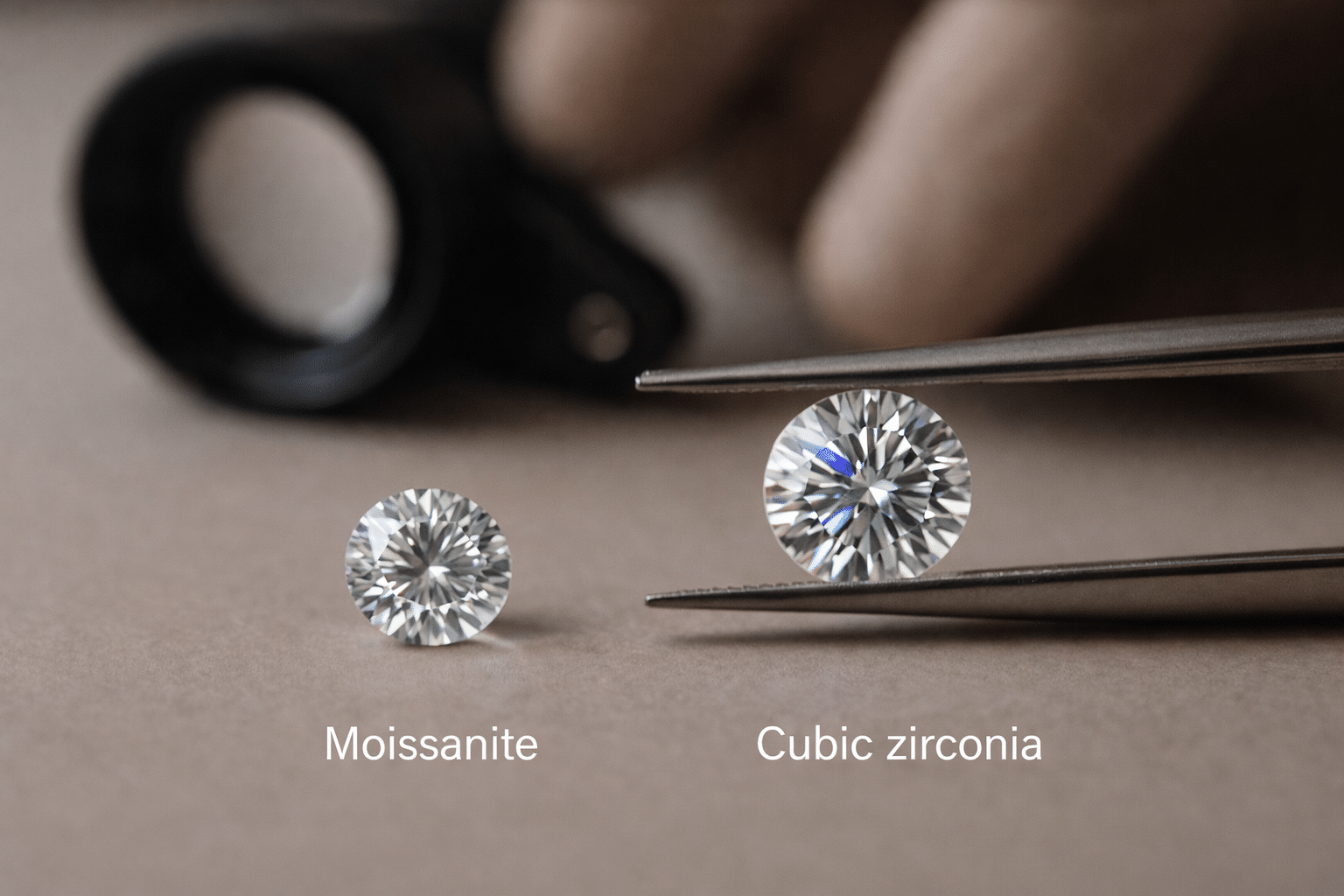
Moissanite maintains its brilliance and clarity for decades of daily wear, while cubic zirconia typically requires replacement after 1-3 years due to surface degradation and clouding.
Moissanite Lifespan:
- 20-40+ years with normal care
- No internal clouding or yellowing
- Minimal surface wear even after decades
- Lifetime warranties from Charles & Colvard
- Retains sparkle indefinitely
Cubic Zirconia Degradation Timeline:
- Months 1-6: Looks excellent
- Months 6-12: Microscopic scratches begin appearing
- Year 1-2: Noticeable dullness develops
- Year 2-3: Cloudy appearance, replacement needed
- No warranties available from sellers
The fundamental difference lies in material structure. Moissanite’s crystalline silicon carbide remains stable and non-porous. Cubic zirconia’s porous structure absorbs oils, lotions, perfumes, and soaps permanently. This absorption creates internal cloudiness that professional cleaning cannot remove.
Maintenance Requirements from Learning Jewelry Testing:
Moissanite attracts oils (lipophilic property) and needs regular wiping with a soft cloth. Weekly cleaning with warm water, mild soap, and a soft brush maintains optimal sparkle. Ultrasonic and steam cleaning are safe for moissanite.
Cubic zirconia requires gentler care due to surface softness. While frequent cleaning helps, it cannot prevent the gradual degradation from daily wear. Harsh chemicals accelerate damage, and ultrasonic cleaners can worsen existing scratches.
Moissanite vs Cubic Zirconia for Engagement Rings: Which to Choose
Moissanite serves as the superior engagement ring choice due to its lifetime durability and resistance to clouding, while cubic zirconia works better for temporary placeholder rings or fashion jewelry.
Engagement Ring Requirements:
- Daily wear for 40+ years
- Exposure to water, soap, lotion, and cleaning products
- Symbol of lasting commitment
- Potential for impacts during normal activities
- Heirloom potential for future generations
Why Learning Jewelry Recommends Moissanite for Engagement Rings:
The 9.25 Mohs hardness survives constant daily wear without visible degradation. After 5-10 years, moissanite looks virtually identical to the day of purchase. The lifetime warranty from manufacturers like Charles & Colvard provides added security.
Moissanite’s sparkle doesn’t fade over time, maintaining its distinctive fire through decades. This makes it suitable for heirloom pieces passed down through families.
When Cubic Zirconia Makes Sense (Learning Jewelry Guidance):
- Placeholder rings while saving for moissanite or diamond
- Travel rings to avoid wearing expensive jewelry abroad
- Testing ring size or style before final purchase
- Short-term engagements with planned upgrades
Social Considerations:
Moissanite has gained widespread acceptance as a legitimate diamond alternative. Many couples choose moissanite specifically for its unique properties rather than as a diamond substitute. Cubic zirconia still carries some stigma as “fake” or temporary.
Honesty with your partner about stone choice prevents future disappointment. Both options are ethical alternatives to mined diamonds, avoiding concerns about mining practices.
Setting Recommendations from Learning Jewelry:
Pair moissanite with precious metals (14k/18k gold, platinum) since the stone’s longevity justifies the investment in durable settings. Cubic zirconia is often set in gold-plated or alternative metals, which creates problems if resizing becomes necessary.
Stainless steel and other alternative metals are difficult for jewelers to resize or repair. Many gold-plated rings use stainless steel bases, making them essentially non-resizable. When shopping through Learning Jewelry’s recommended online retailers, verify metal composition and sizing policies.
How to Spot the Difference Between Moissanite and CZ
Visual and tactile tests can distinguish moissanite from cubic zirconia without professional equipment.
Weight Test (Learning Jewelry Method): Hold both stones of equal size. CZ feels noticeably heavier due to its density (1.7x diamond weight). Moissanite feels lighter, closer to a diamond’s weight.
Tilt Test: Rotate the stone under a bright light while watching the facets. Moissanite produces intense rainbow flashes across the surface. Cubic zirconia shows primarily white sparkle with less color dispersion.
Surface Inspection: Examine the stone’s surface closely, preferably under magnification. Worn CZ displays microscopic scratches, creating a slightly frosted appearance. Moissanite maintains a pristine polish even after years of wear.
Professional Testing: Jewelers use refractometers to measure refractive index (moissanite 2.65 vs CZ 2.15). Thermal conductivity testers designed for diamonds will identify moissanite but reject CZ. Under 10x magnification, gemologists can observe moissanite’s double refraction and occasional needle-like inclusions.
These identification methods parallel Learning Jewelry’s authentication techniques for other gemstones, emphasizing physical property testing over visual inspection alone.
How Moissanite and Cubic Zirconia Compare to Lab-Grown Diamonds
Lab-grown diamonds occupy the middle ground between moissanite and cubic zirconia, offering genuine diamond properties at prices 30-50% below mined diamonds.
Triangle Comparison (Learning Jewelry Analysis):
| Property | Lab Diamond | Moissanite | Cubic Zirconia |
| Hardness | 10 Mohs | 9.25 Mohs | 8-8.25 Mohs |
| Refractive Index | 2.42 | 2.65 | 2.15 |
| Price per carat | $800-$1,500 | $200-$600 | $5-$100 |
| Lifespan | Lifetime | Lifetime | 1-3 years |
| Resale Value | Limited | Minimal | None |
When Lab Diamonds Make Sense:
Some buyers prefer “real diamond” status even at higher cost. Lab diamonds offer identical physical properties to mined diamonds with significantly lower pricing. They provide the most traditional diamond appearance with less fire than moissanite.
Complete Alternative Hierarchy (Learning Jewelry Framework):
- Natural diamond (most expensive, traditional)
- Lab diamond (30-50% discount, identical to natural)
- Moissanite (85% discount, more fire than diamond)
- Cubic zirconia (98% discount, temporary solution)
The choice depends on budget, preferences, and intended use. Exploring Learning Jewelry’s full range of gemstone education guides helps buyers make informed decisions.
Making Your Choice: Moissanite or Cubic Zirconia
Your jewelry’s purpose, budget, and wearing timeline determine which stone delivers better value.
Learning Jewelry Recommends Moissanite For:
- Engagement rings or daily-wear jewelry
- Lifetime performance (20-40+ years)
- Intense rainbow fire and brilliance
- One-time investment, avoiding repeated replacements
- Scratch-resistant stone for active lifestyles
Learning Jewelry Recommends Cubic Zirconia For:
- Fashion jewelry for special events
- Occasional wear (not daily)
- Strict budget under $100
- Temporary placeholder rings
- Testing ring styles before final purchase
Both stones offer ethical alternatives to mined diamonds, created in controlled laboratory environments without mining concerns. Moissanite provides semi-precious stone value with lifetime durability, while cubic zirconia serves short-term needs at minimal cost.
The $400 moissanite investment eliminates replacement hassles and maintains appearance through the decades. The $40 cubic zirconia purchase accepts planned replacement as part of ownership.
Learning Jewelry serves as your trusted guide for gemstone decisions, providing unbiased education based on material properties and real-world testing rather than marketing claims. Our gemstone research helps you understand the differences between diamond alternatives, empowering confident purchases based on your specific needs and budget.
For additional guidance on moissanite properties, explore Learning Jewelry’s complete moissanite vs diamond comparison and jadeite vs nephrite gemstone guide, demonstrating how understanding material composition leads to better jewelry choices.
Frequently Asked Questions
Is moissanite the same as cubic zirconia?
No. Moissanite is silicon carbide with 9.25 Mohs hardness and 2.65 refractive index, while cubic zirconia is zirconium dioxide with 8-8.25 hardness and 2.15 refractive index. Learning Jewelry’s analysis shows they differ in composition, durability, sparkle intensity, and lifespan.
Will moissanite get cloudy over time?
Moissanite maintains clarity indefinitely because silicon carbide is chemically stable and non-porous. Cubic zirconia clouds within 1-3 years as its porous structure permanently absorbs oils and lotions, according to Learning Jewelry’s durability research.
Can moissanite pass a diamond tester?
Yes. Moissanite conducts heat similarly to diamond, so basic thermal testers often register it as diamond. Advanced testers can distinguish between the two through electrical conductivity differences.
Is cubic zirconia acceptable for engagement rings?
CZ works for temporary placeholder rings but typically degrades within 1-3 years of daily wear. Learning Jewelry recommends moissanite or lab-grown diamonds for permanent engagement rings, offering better longevity through decades of wear.
How can you tell the difference between CZ and moissanite?
Moissanite displays more colorful rainbow fire, weighs less (CZ is 1.7x denser), and shows double refraction under magnification. The weight difference is noticeable when holding stones of equal size.
Which sparkles more, cubic zirconia or moissanite?
Moissanite sparkles more intensely with colorful rainbow flashes due to its 2.65 refractive index compared to CZ’s 2.15. Learning Jewelry’s optical testing shows that moissanite produces fire exceeding both CZ and diamonds.
What are the disadvantages of moissanite?
Moissanite’s intense rainbow fire may be too bold for some preferences; it costs more upfront than CZ, and it may show subtle gray or brown tints in certain lighting despite being near-colorless.
Can you resize rings with moissanite or CZ?
Moissanite rings in precious metals (gold, platinum) can be resized easily at any jeweler. CZ rings often use gold-plated stainless steel or alternative metals that cannot be resized or cost more to resize than replacement.