Emerald and jade are distinct green gemstones with different mineral compositions, physical properties, and values. Emerald is a transparent beryl (7.5-8 Mohs hardness) colored by chromium, while jade refers to two minerals, jadeite and nephrite (6-7 Mohs). Despite lower hardness, jade’s interlocking crystal structure makes it tougher and more resistant to breaking than brittle emerald. Colombian emeralds generally command higher per-carat prices ($200-$100,000+), but rare imperial jadeite rivals or exceeds emerald value ($30,000-$3,000,000 per carat). Your choice depends on intended use: emerald for fine jewelry occasions, jade for daily wear durability.
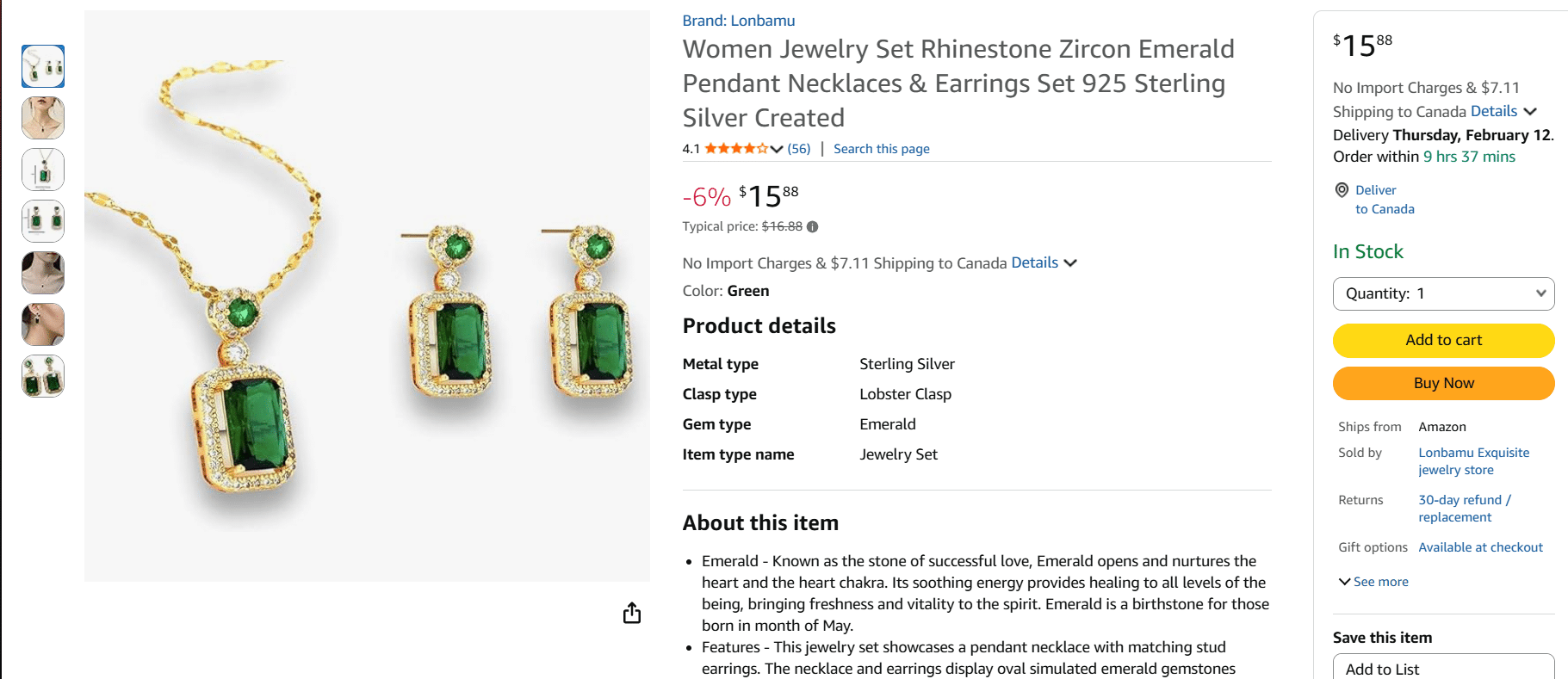
Luxury. Sparkling. Elegant. Timeless. Stunning.
Emerald vs Jade: Quick Comparison Table
| Feature | Emerald | Jade (Jadeite/Nephrite) |
| Mineral Type | Beryl (beryllium aluminum silicate) | Jadeite (sodium aluminum silicate) OR Nephrite (calcium magnesium silicate) |
| Transparency | Transparent to translucent | Opaque to semi-translucent |
| Hardness (Mohs) | 7.5 – 8.0 | Jadeite: 6.5-7.0 / Nephrite: 6.0-6.5 |
| Toughness | Brittle (prone to chipping) | Extremely tough (resistant to breaking) |
| Luster | Vitreous (glassy) | Waxy, greasy, or silky |
| Color Range | Green to bluish-green | Green, white, lavender, yellow, orange, brown, black |
| Color Source | Chromium and vanadium | Various mineral impurities |
| Typical Cut | Faceted (step cut, brilliant) | Cabochon, carved, beads |
| Inclusions | Jardin (garden) inclusions expected | Typically clean or fibrous texture |
| Primary Value Driver | Color intensity + clarity | Color saturation + translucency + carving artistry |
| Price Range (per carat) | $200 – $100,000+ | Nephrite: $5-$1,500 / Jadeite: $500-$3,000,000+ |
| Best For | Special occasion jewelry (protected settings) | Daily wear, carvings, cultural pieces |
| Famous Sources | Colombia (Muzo, Chivor), Zambia, Brazil | Myanmar (Burma), China, Russia, Canada |
| Cleavage | Imperfect (can split along planes) | None (interlocking structure) |
| Record Price | $5.51 million (Rockefeller Emerald) | $27.44 million (Cartier Hutton-Mdivani necklace) |

What Is Emerald? Understanding the Beryl Family
Emerald is the green variety of the mineral beryl, the same family that produces aquamarine and morganite. What separates emerald from pale green beryl is the intensity and saturation of its color.
Natural emerald gets its signature green from trace amounts of chromium, vanadium, or both within the beryllium aluminum silicate crystal structure. The presence of chromium creates the most desirable vivid green to bluish-green colors that collectors seek.

Natural. Lucky. Healing. Stylish. Meaningful.
The chemical formula for emerald is Be₃Al₂(SiO₃)₆, forming hexagonal crystals that can reach several inches in length. When these beryl crystals contain enough chromium to produce saturated green color, they earn the emerald classification.
Emerald deposits formed 2.97 billion years ago in Colombia’s Muzo and Chivor mines, though most commercial emeralds are younger at 65-200 million years old. The rarest emeralds come from hydrothermal veins where hot mineral-rich fluids deposited beryl crystals in metamorphic rock.
What Is Jade? Two Minerals, One Name
Jade isn’t a single mineral, it’s a cultural term for two distinct materials that early civilizations couldn’t tell apart: jadeite and nephrite.
Jadeite (sodium aluminum silicate) is the rarer, harder, and more valuable form. Jadeite belongs to the pyroxene mineral group and forms through high-pressure, low-temperature metamorphism in subduction zones. The chemical formula is NaAlSi₂O₆.
Imperial jade, the most prized jadeite, shows intense emerald-green color with semi-translucency that allows light to penetrate several millimeters into the stone. This type of jadeite comes almost exclusively from Myanmar’s Hpakant region and can command $30,000 to $3,000,000 per carat.
Nephrite (calcium magnesium iron silicate) is more common and tougher than jadeite. Nephrite belongs to the amphibole mineral group with the formula Ca₂(Mg,Fe)₅Si₈O₂₂(OH)₂. The interlocking fibrous crystal structure makes nephrite nearly impossible to break.

Chinese artisans carved nephrite for 7,000+ years before Myanmar jadeite entered trade routes in the 1700s. Today, most “jade” jewelry uses nephrite from Canada, Russia, and China, while high-end pieces feature translucent jadeite from Myanmar.
The two jade types look similar but differ in density (jadeite is denser), hardness (jadeite is harder), and crystal structure (jadeite has blocky crystals, nephrite has fibrous crystals).
Discover how to identify real jade from imitations

Romantic. Vibrant. Trendy. Affordable. Eye-catching.
Mineral Composition: Why Emerald and Jade Form Differently
The fundamental difference between emerald and jade starts at the atomic level.
Emerald forms from beryllium, aluminum, silicon, and oxygen with chromium or vanadium creating color. The beryl crystal structure allows these trace elements to substitute for aluminum atoms, producing the green hue. Higher chromium content yields more intense color, but too much chromium prevents crystal growth entirely.
Jadeite forms from sodium, aluminum, silicon, and oxygen under extreme pressure at subduction zones where oceanic crust slides beneath continental plates. The high-pressure environment, about 9,000-12,000 atmospheres, forces atoms into the tight jadeite structure.
Nephrite forms from calcium, magnesium, iron, silicon, and oxygen in contact metamorphism zones where hot magma intrudes into calcium-rich rock. The iron content determines nephrite color: low iron produces white to light green, higher iron creates dark green to black.
This difference in formation explains why emerald and jade rarely occur in the same locations. Emerald requires beryllium-rich granite or schist, while jadeite needs subduction zone conditions, and nephrite forms near large igneous intrusions.
Appearance Differences: Transparency, Luster, and Color
Emerald and jade look nothing alike when you examine them closely.
Emerald Appearance
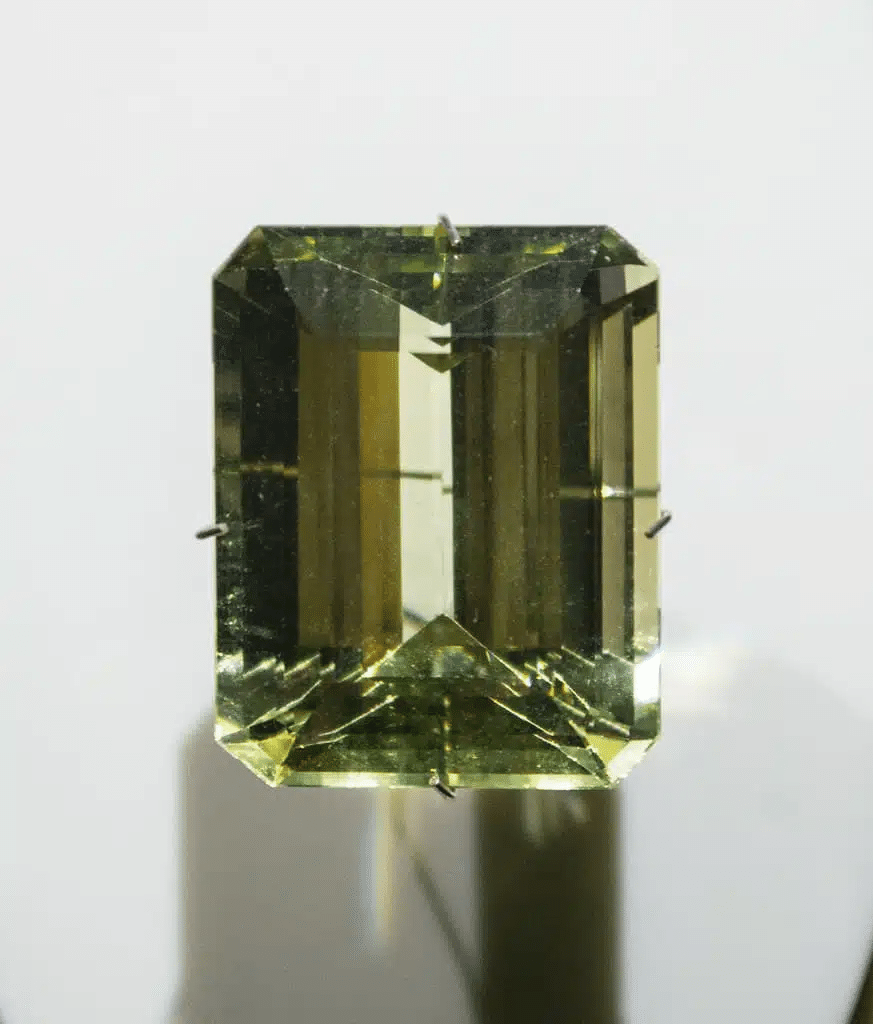
Emerald shows vitreous (glassy) luster and ranges from transparent to translucent. Light passes through emerald crystals, creating the “fire” and brilliance that makes faceted emeralds sparkle.
The color in emerald appears most intense when viewing down the length of the crystal (the c-axis). Cutters orient emeralds to maximize this effect, which is why most emeralds use step cuts rather than brilliant cuts.
Emerald inclusions, called jardin from the French word for garden, create patterns that look like vines or moss inside the stone. These internal fractures, liquid-filled cavities, and crystal inclusions are so common that gemologists consider them proof of natural origin. A completely clean emerald raises suspicion of synthetic origin or heavy treatment.

Lucky. Minimalist. Authentic. Natural. Gift-worthy.
The finest emerald color shows 75-80% tone (on a scale where 0% is white and 100% is black) with vivid saturation and a slightly bluish-green hue. Colombian emeralds from Muzo mines display this coveted bluish-green color, while Zambian emeralds tend toward pure green with less blue.
Jade Appearance
Jade shows waxy to greasy luster and ranges from opaque to semi-translucent. Light doesn’t pass through most jade, it reflects off the surface or penetrates just a few millimeters before scattering.
Imperial jadeite achieves semi-translucency that creates an inner glow when light penetrates the stone. This “lit from within” quality makes imperial jade the most valuable type, commanding higher prices than any emerald at auction.
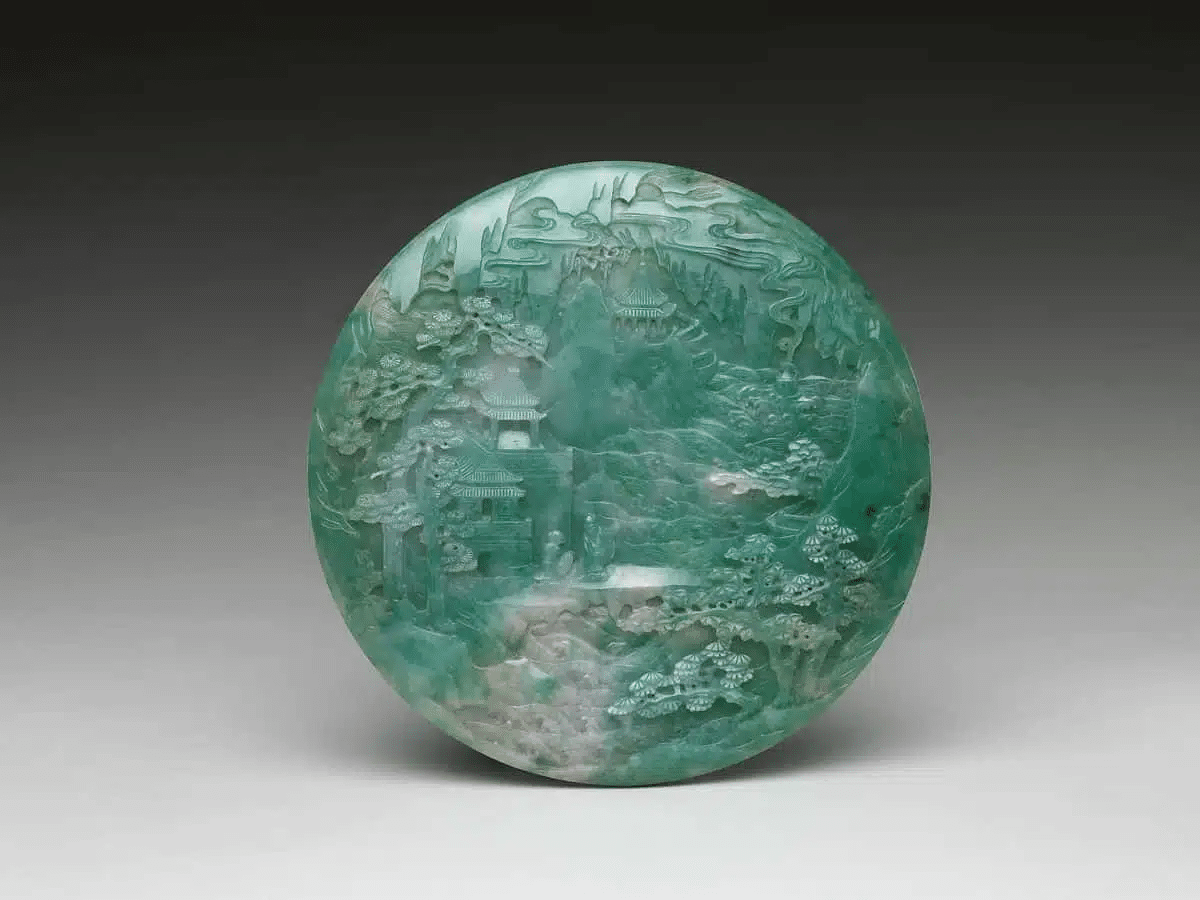
Jade color comes from various mineral impurities: chromium creates emerald-green jadeite, iron produces white to dark green nephrite, manganese yields lavender jadeite. Unlike emerald’s limited green range, jade occurs in white, lavender, yellow, orange, honey brown, dark brown, blue-green, and black.

Best-selling. Matching. Romantic. Sparkly. Recommended.
The texture in jade appears smooth and even rather than crystalline. High-quality jadeite shows fine-grained texture with uniform color, while nephrite displays fibrous texture visible under magnification.
Most jade is opaque, which is why jade cutters create cabochons (smooth, rounded cuts) rather than facets. The material doesn’t have the transparency needed for brilliant cuts, but the toughness allows intricate carving that would shatter emerald.
Durability: The Hardness vs Toughness Paradox
This is where emerald and jade defy expectations.
Understanding Hardness vs. Toughness
Hardness measures scratch resistance on the Mohs scale. Toughness measures resistance to breaking, chipping, or cracking from impact.
A material can be hard but not tough, like glass, which resists scratches but shatters easily. Conversely, a material can be tough but not hard, like jade, which scratches more easily than emerald but almost never breaks.

Chic. Sparkling. Feminine. Luxurious. Eye-catching.
Emerald: Hard But Brittle
Emerald rates 7.5-8 on the Mohs hardness scale. Only diamond (10), corundum/sapphire (9), and topaz (8) scratch emerald. For comparison, quartz dust rates 7, so emerald won’t scratch from normal dust exposure.
But emerald has imperfect cleavage in one direction. This means the crystal structure has weak planes where atoms bond less strongly. A hard knock on an emerald ring can split the stone along these cleavage planes.
The jardin inclusions that characterize natural emerald create additional weak points. Internal fractures that reach the surface allow impact forces to propagate through the crystal, causing chips or breaks.
Jewelers protect emeralds by setting them in bezel settings or protective prong arrangements. The “emerald cut” with its trimmed corners originated specifically to reduce chipping risk at vulnerable points.

Jade: Softer But Nearly Unbreakable
Jadeite rates 6.5-7 on the Mohs scale. Nephrite rates 6-6.5. Both types scratch more easily than emerald.
But jade has no cleavage, the interlocking crystal structure distributes impact forces throughout the material rather than concentrating stress at weak planes. This makes jade one of the toughest natural materials known.
The microscopic crystals in jade interlock like felt fibers. When you try to break jade, you must break millions of tiny crystal connections simultaneously. This structure makes jade incredibly resistant to shattering.
Ancient Chinese craftsmen discovered jade’s toughness when they carved it into tools and weapons. A jade axe blade could withstand impacts that would shatter stone or splinter wood. Modern tests confirm jade bangles can survive drops that would destroy most gemstones.
For daily wear jewelry, jade’s toughness matters more than emerald’s hardness. You won’t scratch jade with keys or metal objects (hardness 5-6.5), but you can scratch emerald with quartz dust. However, you might chip or crack an emerald if you bump it against granite (hardness 6-7), while jade will survive the same impact without damage.

Elegant. Sparkling. Premium. Timeless. Gift-ready.
Value Comparison: Which Gemstone Costs More?
The price difference between emerald and jade depends entirely on quality.
Emerald Pricing
Entry-level emeralds cost $200-$500 per carat. These show light color, low clarity, and visible inclusions. Most come from Brazil or smaller African deposits.
Mid-range emeralds cost $1,000-$5,000 per carat. These display good color saturation, moderate clarity, and acceptable jardin patterns. Sources include Zambia, Ethiopia, and lesser Colombian mines.
Top-quality Colombian emeralds cost $10,000-$100,000+ per carat. Stones from Muzo or Chivor mines with bluish-green color, minimal inclusions, and strong saturation command premium prices.
The highest recorded emerald price reached $5.51 million for the 18.04-carat Rockefeller Emerald at Christie’s 2017 auction, $305,516 per carat. This Colombian emerald belonged to the Rockefeller family for 70 years and showed exceptional color with minimal treatment.
Colombian emerald prices exceed other origins by 20-50% for comparable quality. The bluish-green color and historical reputation drive the premium.

Spiritual. Natural. Healing. Affordable. Unique.
Nephrite Jade Pricing
Entry-level nephrite costs $5-$100 per carat. This includes commercial-grade material from Canada and Russia used in affordable jewelry and carvings.
Mid-range nephrite costs $100-$500 per carat. Better color saturation and fine texture characterize this grade, popular for bangles and pendants.
Top nephrite rarely exceeds $1,500 per carat. Even exceptional “mutton fat” jade (creamy white nephrite) costs less than mid-grade jadeite.
Jadeite Pricing
Entry-level jadeite costs $50-$300 per carat. Commercial green jadeite with opaque appearance and moderate color makes up this category.
Mid-range jadeite costs $500-$3,000 per carat. Good color saturation, some translucency, and fine texture define this quality level.
Imperial jadeite costs $30,000-$3,000,000+ per carat. The most expensive jade ever sold, the Cartier Hutton-Mdivani Imperial Jade Necklace, reached $27.44 million at Sotheby’s 2014 Hong Kong auction. This single-strand necklace featured 27 perfectly matched imperial jadeite beads, establishing jade’s potential to exceed any emerald price.

What Drives the Price Difference?
Emerald value depends on:
- Color intensity and hue (bluish-green most valuable)
- Clarity and jardin pattern (eye-clean stones exponentially more expensive)
- Origin (Colombian commands premium)
- Size (prices increase geometrically above 3 carats)
- Treatment (untreated or minor oil treatment preferred)
Jadeite value depends on:
- Color saturation (vivid emerald-green most valuable)
- Translucency (light penetration depth)
- Texture (fine-grained preferred)
- Uniformity (even color distribution)
- Carving artistry (intricate work increases value significantly)
The jade market is less standardized than emerald. Two jadeite pieces with similar color might differ 10x in price based on translucency. A masterfully carved nephrite sculpture might exceed the value of uncarved imperial jadeite.
For investment purposes, top-quality emeralds offer more liquid markets with established pricing. Imperial jadeite offers higher absolute prices but depends heavily on Asian market demand.

Bridal. Sparkling. Elegant. Glam. Budget-friendly.
Geographic Origins and Their Impact on Quality
Location determines gemstone quality more than most buyers realize.
Emerald Sources
Colombia produces 70-90% of world emerald supply from three main regions:
The Muzo mine yields emeralds with coveted bluish-green color from trace amounts of vanadium. Muzo crystals form in calcite veins within black shale, creating the distinctive color and inclusion patterns that experts recognize.
The Chivor mine produces emeralds with slightly more yellowish-green color from chromium. Chivor stones often show cleaner clarity than Muzo emeralds.
The Coscuez mine delivers emeralds with color between Muzo and Chivor characteristics.
Zambia emerged as the second-largest emerald producer in the 1970s. Zambian emeralds show pure green to slightly bluish-green color with higher clarity than Colombian stones. The Kagem mine in Zambia produces 25% of world emerald supply.
Brazil offers emeralds from multiple states including Bahia, Goiás, and Minas Gerais. Brazilian emeralds typically show lighter color than Colombian stones but better clarity.
Afghanistan, Zimbabwe, and Madagascar produce smaller quantities of emeralds with varying quality characteristics.
Origin affects emerald prices by 20-50% for comparable quality. A 2-carat Colombian emerald might cost $15,000 while an identical-looking Zambian stone costs $10,000.

Trending. Best-sellers. Stackable. Stylish. Giftable.
Jade Sources
Myanmar (Burma) produces 70% of world jadeite supply from the Hpakant region in Kachin State. Imperial jade comes almost exclusively from Myanmar, making Burmese jadeite the most valuable.
Burmese jadeite forms in serpentinized ultramafic rocks along the collision zone where the Indian plate meets the Eurasian plate. The high-pressure conditions create the tight crystal structure that allows light penetration in imperial jade.
China historically supplied nephrite from Xinjiang province for thousands of years. Chinese nephrite ranges from white “mutton fat” jade to deep green varieties. Today, China imports most jadeite from Myanmar for its domestic market.
Russia produces nephrite from Siberian deposits, primarily dark green to black varieties used in affordable jewelry and carvings.
Canada supplies light to medium green nephrite from British Columbia, popular in commercial jade jewelry.
Guatemala produces jadeite that ancient Maya civilizations carved 3,000 years ago. Modern Guatemalan jadeite appears in jewelry but rarely matches Myanmar quality.
Origin matters more for jadeite than emerald. Myanmar jadeite commands 50-200% premiums over other sources due to superior translucency and color saturation.

Vintage. Bold. Sparkly. Statement. Affordable.
Cuts, Uses, and Jewelry Applications
The physical properties of emerald and jade determine how jewelers cut and use each stone.
Emerald Cutting

Emerald-cut. Elegant. Sparkling. Classic. Best-value.
Emerald’s transparency suits faceted cuts that maximize brilliance. The “emerald cut” (rectangular step cut with trimmed corners) originated specifically for emerald to reduce chipping risk while displaying color.
Other popular emerald cuts include:
- Step cuts (baguette, Asscher) that showcase color with large flat facets
- Brilliant cuts (round, oval, pear) that maximize fire in cleaner stones
- Cabochon cuts for heavily included emeralds or emerald cat’s-eye
Jewelers set emeralds in protective mountings, bezel settings or six-prong settings that guard vulnerable corners. Three-stone emerald rings place the emerald between protective diamonds.
Emerald jewelry applications:
- Engagement rings (requires careful wear and maintenance)
- Cocktail rings (special occasion wear)
- Pendants (low-impact setting)
- Earrings (safe from daily impacts)
- Bracelets (not recommended for active lifestyles)
Explore emerald engagement ring designs and settings
Jade Cutting

Romantic. Elegant. Timeless. Sparkling. Gift-perfect.
Jade’s opacity and toughness suit different cutting approaches. Most jade receives cabochon cuts, smooth, rounded domes that highlight color and texture.
Jade bangles demonstrate the material’s toughness. Carvers hollow out solid jade boulders to create seamless circular bangles, a process that would destroy emerald.
Jade cutting applications:
- Cabochons for rings and pendants
- Beads for necklaces and bracelets
- Carvings (animals, deities, decorative objects)
- Bangles (traditional Chinese jewelry)
- Bi discs (ritual objects)
Chinese jade carvers spend months creating intricate sculptures from single jade pieces. The interlocking crystal structure allows undercuts and delicate details impossible in emerald.
Jade jewelry suits daily wear better than emerald. Jade rings withstand impacts that would chip emerald, making jade practical for people who work with their hands.

Luxury. Romantic. Sparkling. Premium. Gift-ready.
How to Tell Emerald and Jade Apart
Distinguishing emerald from jade takes seconds once you know what to examine.
Visual Tests
Hold the stone up to light. Emerald allows light to pass through the crystal (transparent to translucent), while jade blocks light or shows minimal penetration (opaque to semi-translucent).
Examine the luster. Emerald shows glassy, reflective luster like glass or crystal. Jade shows waxy, greasy luster like polished soap.
Look for inclusions. Emerald displays jardin patterns, internal fractures and crystals that look like gardens inside the stone. Jade appears clean or shows fibrous texture rather than discrete inclusions.
Check the cut. Emerald receives faceted cuts with geometric patterns. Jade receives cabochon cuts with smooth, rounded surfaces or carved designs.
Touch Tests
Feel the surface texture. Emerald feels smooth and hard like glass. Jade feels smooth but slightly waxy, almost soapy to the touch.
Jade feels cooler than emerald when first touched because of higher thermal conductivity. The difference is subtle but noticeable.
Density Tests
- Weigh the stone if possible.
- Emerald has a specific gravity of 2.67-2.78.
- Jadeite has a specific gravity of 3.30-3.38.
- Nephrite has a specific gravity of 2.90-3.03.
- A jadeite piece the same size as an emerald weighs 20% more. This density difference helps identify jade even without tools.

Tap jade pieces together and they produce a clear, resonant tone that lasts several seconds. This works because of jade’s interlocking crystal structure.
Emerald produces a duller sound with less resonance when tapped.
Professional Tests
Gemologists use refractometers to measure refractive index.
- Emerald: 1.577-1.583.
- Jadeite: 1.652-1.688.
- Nephrite: 1.600-1.627.
Spectroscopes reveal absorption patterns. Emerald shows chromium absorption lines in the red spectrum. Jade shows different patterns based on composition.
Under UV light, some emeralds show red fluorescence from chromium. Jade typically shows no fluorescence, though some Guatemalan jadeite fluoresces pale blue.

Romantic. Sparkling. Elegant. Best-seller. Gift-ready.
Treatments and Enhancements: What Buyers Should Know
Both emerald and jade undergo treatments that affect value and durability.
Emerald Treatments
Oil and Resin Filling: 95%+ of emeralds receive clarity enhancement with colorless oils or resins that fill surface-reaching fractures. The treatment makes jardin inclusions less visible, improving apparent clarity.
Cedar oil was traditionally used because its refractive index (1.516) closely matches emerald (1.577-1.583), making filled fractures nearly invisible. Modern treatments use synthetic oils or polymer resins that last longer.
Treatment levels affect value:
- None (N) or Minor (M): Highest value, rare
- Moderate (Mo): Common, acceptable
- Significant (S): Reduces value 20-40%
Oil treatments require maintenance. Heat from ultrasonic cleaners, prolonged sun exposure, or jewelry repairs can evaporate the filler, causing fractures to reappear. Treated emeralds need periodic re-oiling.
Heat Treatment: Some emeralds receive low-temperature heating to improve color, though this is less common than clarity treatments.
Dyeing: Low-quality emeralds sometimes receive green dye to improve color. This treatment is considered deceptive and severely reduces value.
Lab-Created Emeralds: Synthetic emeralds grown through hydrothermal or flux methods are real emerald with identical chemical composition. They cost 50-90% less than natural emeralds of comparable quality.

Luxury. Romantic. Sparkling. Premium. Stunning.
Jade Treatments
Type A (Untreated): Natural jadeite with no treatments beyond surface polishing. Type A commands full market value.
Type B (Bleached and Polymer-Impregnated): Jadeite soaked in acid to remove iron staining and lighten color, then impregnated with polymer resin to fill spaces created by acid. Type B reduces value 70-90%.
The polymer in Type B jade degrades over 10-20 years, causing the material to yellow and develop a network of fine cracks as the resin dries out.
Type C (Dyed): Jadeite dyed to improve or change color. Type C reduces value 80-95%.
Type B+C (Bleached, Polymer-Impregnated, and Dyed): Combines Type B and C treatments. Minimal value.
Waxing: Surface waxing improves luster in both jadeite and nephrite. This minor treatment doesn’t affect value significantly.
Nephrite receives fewer treatments because it’s naturally tougher and doesn’t benefit from polymer impregnation like jadeite.
Always ask for treatment disclosure when buying emerald or jade. Reputable dealers provide this information. GIA, AGL, and other gemological laboratories issue reports documenting treatments for valuable stones.

Boho. Vintage. Colorful. Trendy. Great-value.
Cultural and Historical Significance
Emerald and jade hold different meanings across civilizations.
Emerald in Western Culture
Ancient Egyptians mined emeralds from 1500 BC at Cleopatra’s mines in Upper Egypt. Cleopatra adorned herself with emeralds and gave emerald jewelry as gifts to visiting dignitaries.
Romans believed emeralds represented Venus, the goddess of love and beauty. Nero reportedly watched gladiator fights through an emerald lens, either for eye comfort or to display wealth.
Spanish conquistadors discovered Colombian emerald mines in the 1500s and shipped millions of carats to Europe, establishing emerald trade routes that continue today.
Emerald is the birthstone for May and represents the 20th and 35th wedding anniversaries. The stone symbolizes rebirth, fertility, and love in Western gemstone tradition.
The British Crown Jewels include the Delhi Durbar Tiara featuring emeralds from India. Numerous royal families own historic emerald parures passed down through generations.
Jade in Eastern Culture
Chinese civilization carved nephrite jade for 7,000+ years, calling it “yu” (jade) or “shi zhi mei zhe” (the beautiful stone). Confucian philosophy associated jade with five virtues: charity, rectitude, wisdom, courage, and equity.
Ancient Chinese believed jade prevented body decomposition, placing jade pieces in tombs with the deceased. The Jade Burial Suit of Prince Liu Sheng used 2,498 jade pieces sewn with gold thread.
Imperial Chinese seals (stamps used to authorize documents) were carved from the finest jade. Ownership of certain jade seals signified political power and legitimacy.
When Myanmar jadeite entered China in the 1700s, it quickly surpassed nephrite in status due to superior translucency and vivid color. Imperial jade became the stone of emperors.
Mesoamerican civilizations (Maya, Aztec, Olmec) carved jade into masks, figurines, and jewelry 3,000+ years ago. They valued jade above gold, associating it with water, vegetation, and the afterlife.
Māori of New Zealand carved nephrite jade (pounamu) into tools, weapons, and ornamental objects. Pounamu held spiritual significance and was passed down through generations.
Modern jade retains cultural significance in Chinese communities worldwide. Jade bangles given from mother to daughter symbolize protection and blessing. Jade remains more culturally important than emerald in Asian markets.

Unique. Elegant. Symbolic. Stunning. Gift-worthy.
Which Should You Choose: Emerald or Jade?
Your decision depends on how you’ll use and wear the stone.
Choose Emerald If:
- You want transparent brilliance and fire. Emerald’s vitreous luster and transparency create sparkle that jade can’t match.
- You’re creating special occasion jewelry. Emerald engagement rings, cocktail rings, and formal earrings showcase emerald’s beauty for events where the jewelry won’t face rough conditions.
- You prefer faceted gemstones. Emerald cuts, brilliant cuts, and step cuts suit emerald’s optical properties.
- You want a May birthstone. Emerald is the traditional birthstone for May.
- You’re buying for investment with liquid resale markets. Top Colombian emeralds have established pricing and active collector demand.
- Color is your priority over durability. Emerald offers the most intense, vivid green in transparent gemstones.
Choose Jade If:
- You need durability for daily wear. Jade bangles, rings, and pendants withstand impacts that would damage emerald.
- You work with your hands. Jade won’t chip from bumps against hard surfaces.
- You prefer smooth, carved, or cabochon styles. Jade’s opacity suits these cutting methods better than facets.
- You value cultural or spiritual significance. Jade carries deeper cultural meaning in Asian traditions.
- You want variety beyond green. Jade occurs in lavender, white, yellow, orange, and black varieties.
- You’re seeking the highest possible value in rare pieces. Imperial jadeite reaches higher absolute prices than any emerald.
- Your budget is limited. Nephrite jade costs significantly less than comparable-size emeralds.
For Engagement Rings:
Emerald engagement rings require protective settings and careful wear. Choose bezel settings or six-prong mountings. Avoid emerald if you have an active lifestyle or work in environments where the ring might impact hard surfaces.
Jade engagement rings offer better durability but less traditional appearance for Western engagement jewelry. Jade suits couples who value cultural significance or need a ring that survives daily wear without special care.
See emerald engagement ring styles and settings
For Investment:
Colombian emeralds from Muzo or Chivor mines with excellent color and minimal treatment offer stable investment potential with established pricing. Emeralds above 2 carats with good clarity appreciate steadily.
Imperial jadeite from Myanmar offers higher price ceilings but depends on Asian market demand. The jade investment market is less liquid than emerald, requiring expertise to authenticate quality and navigate sales.
Diversifying with both emerald and jade provides exposure to different markets and collector bases.

Recommended. Unique. Sparkling. Artistic. Best-sellers.
Care and Maintenance: Keeping Your Gemstones Beautiful
Proper care extends the life and beauty of emerald and jade jewelry.
Emerald Care
Clean emeralds with lukewarm water and mild dish soap. Use a soft brush to gently clean around settings. Rinse thoroughly and pat dry with soft cloth.
Avoid ultrasonic cleaners and steamers. The heat and vibration can remove oil treatments and potentially fracture the stone along existing jardin patterns.
Remove emerald jewelry before:
- Exercising or sports
- Gardening or housework
- Swimming (chlorine can affect treatments)
- Applying cosmetics, perfumes, or hairspray
Store emerald jewelry separately in soft pouches to prevent scratches from harder stones like diamonds or sapphires.
Have emeralds professionally inspected yearly. Jewelers can check prongs, re-oil treatments if needed, and identify developing issues before stones become damaged.
Jade Care
Clean jade with warm water and soft cloth. Mild soap is safe for jade but not necessary, warm water removes most dirt and oils.
Avoid harsh chemicals and ultrasonic cleaners for Type B or C jade. The treatments can degrade from chemical exposure.
Type A untreated jade withstands more aggressive cleaning, but gentle care prevents unnecessary wear.
Jade bangles benefit from occasional wearing. Body oils create a natural polish that enhances jade’s luster over time. This “养玉” (yang yu, raising jade) process slightly improves appearance through years of wear.
Store jade separately to prevent scratches from harder stones, though jade’s toughness means it won’t chip or crack from normal storage.
Frequently Asked Questions
Is jade the same as emerald?
No. Jade and emerald are completely different minerals. Emerald is transparent beryl colored by chromium, while jade refers to two minerals, jadeite or nephrite. They differ in chemical composition, crystal structure, physical properties, and appearance. The only similarity is that both can appear green.
Which is more valuable, jade or emerald?
Generally, top-quality emeralds cost more per carat than most jade. Colombian emeralds reach $10,000-$100,000+ per carat. However, the highest-grade imperial jadeite exceeds any emerald price, reaching $30,000-$3,000,000+ per carat. The most expensive jade jewelry ever sold was the $27.44 million Cartier Hutton-Mdivani necklace, surpassing any emerald jewelry auction record. For average quality stones, emerald typically costs more.
How can you tell if it’s real jade?
Real jade feels cool to the touch, has waxy luster, and produces a clear resonant sound when pieces are tapped together. Jadeite is denser than glass imitations (specific gravity 3.30-3.38 vs 2.5-2.8). Under magnification, real jade shows fibrous or granular structure rather than bubbles (which indicate glass). Professional testing with refractometers and spectroscopes provides definitive identification. The safest method is buying from reputable dealers who provide gemological laboratory reports.
Can you wear emerald every day?
Emerald can be worn daily with proper care and protective settings. The stone’s hardness (7.5-8 Mohs) resists scratching from normal wear, but the brittle nature and typical inclusions make emerald prone to chipping from hard impacts. Avoid emerald rings if you have an active lifestyle, work with your hands, or participate in activities where the ring might hit hard surfaces. Emerald pendants and earrings suit daily wear better than rings. Choose bezel settings or six-prong mountings that protect vulnerable corners.
What is imperial jade?
Imperial jade is the highest grade of jadeite, showing intense emerald-green color with semi-translucency that allows light to penetrate several millimeters into the stone. The term originated during China’s Qing Dynasty (1644-1912) when emperors reserved the finest jadeite for royal use. True imperial jade comes almost exclusively from Myanmar’s Hpakant region and represents less than 1% of jadeite production. Imperial jade can cost $30,000 to $3,000,000+ per carat, making it one of the most expensive gemstones in the world.
Are lab-grown emeralds real emeralds?
Yes. Lab-grown emeralds are real emeralds with identical chemical composition (beryllium aluminum silicate), crystal structure, and physical properties to natural emeralds. Scientists create them through hydrothermal or flux growth methods that replicate natural formation conditions. Lab emeralds often show better clarity and color than natural emeralds at 50-90% lower cost. The only difference is origin, lab emeralds form in weeks rather than millions of years underground. Both natural and lab-grown emeralds are genuine emerald, just formed in different places.
Which is harder, emerald or jade?
Emerald is harder (7.5-8 Mohs) than both types of jade (jadeite 6.5-7, nephrite 6-6.5). Hardness measures scratch resistance. However, jade is much tougher than emerald despite lower hardness. Toughness measures resistance to breaking or chipping. Jade’s interlocking crystal structure makes it nearly impossible to break, while emerald’s brittle nature and cleavage planes cause it to chip or crack from impacts that jade would survive easily.
How do you clean jade vs emerald?
Clean both emerald and jade with lukewarm water, mild dish soap, and a soft brush. Rinse thoroughly and pat dry. Never use ultrasonic cleaners or steamers on emerald, they can damage oil treatments and fracture the stone. Jade tolerates ultrasonic cleaning better but gentle hand cleaning is safer, especially for Type B or C treated jade. Emerald requires more careful handling due to brittleness, while jade withstands rougher treatment. Remove both before swimming, exercising, or applying cosmetics.
About the Author: Learning Jewelry provides unbiased education about gemstones, diamonds, and jewelry to help you make informed purchase decisions. Our certified gemologists test and research every topic we cover.
Related Guides:
- How to Tell If Jade Is Real: 8 Authentication Tests
- Aventurine vs Jade: Complete Comparison Guide
- Engagement Ring Styles and Settings