You’re looking at a green stone and wondering if it’s aventurine or jade. The confusion is understandable since both minerals share similar green colors, but these stones are completely different.
Aventurine and jade are distinct minerals despite their similar appearance. Aventurine is quartz containing sparkling mica inclusions that create a glittering effect called aventurescence, whereas jade (nephrite or jadeite) has a smooth, waxy appearance without any sparkle. The easiest way to tell them apart is the sparkle test: shine a bright light through the stone and look for metallic flecks. If it glitters, it’s aventurine. If it has a smooth, creamy luster, it’s jade.
Aventurine’s quartz composition makes it lighter and more brittle, while jade’s interlocking fibrous structure creates exceptional toughness despite similar hardness ratings. Aventurine costs $2-50 per carat, making it budget-friendly, whereas jade ranges from $100 to over $10,000 per carat, depending on type and quality. Choose aventurine for affordable everyday jewelry, or choose jade for investment-quality pieces with cultural significance.
How to Tell Aventurine from Jade: 5 Simple Tests
The difference between jade and green aventurine becomes obvious once you know what to look for. You can identify which stone you have using these at-home tests without expensive equipment.
Test 1: The Sparkle Test (Most Reliable)
Hold your stone up to a bright light source like a window or lamp. Look closely at the surface and internal structure.
Aventurine shows: Tiny metallic flecks or glittering speckles throughout the stone. This sparkle comes from mica inclusions and appears as gold, silver, or green shimmer. The technical term for this effect is aventurescence.
Jade shows: Smooth, uniform appearance with no sparkle. Jade has a waxy or creamy luster that looks consistent throughout. You might see color variations or marble-like lines, but never glittering flecks.
The sparkle test works because aventurine’s quartz structure allows flat mica platelets to reflect light, while jade’s dense, interlocking fibers absorb light differently.
Test 2: The Temperature Test
Hold the stone in your closed hand for 30 seconds, then feel how quickly it warms up.
Jade stays cold: Even after holding jade for a minute, it remains noticeably cool to the touch. Jade has higher thermal mass and conducts heat away from your skin. This is why jade rollers are popular for facial massage.
Aventurine warms faster: Quartz minerals warm up more quickly when held. After 30 seconds, aventurine should feel close to body temperature.
This test works best when comparing two stones side-by-side, but jade’s characteristic coolness is distinctive enough to notice on its own.
Test 3: The Sound Test
Gently tap two pieces of the same stone together and listen to the sound they make.
Jade produces: A clear, high-pitched ring similar to glass. The interlocking crystal structure in jade vibrates at specific frequencies, creating a bell-like tone that lasts several seconds.
Aventurine produce: A duller, lower sound that stops quickly. Quartz doesn’t have jade’s fibrous structure, so it absorbs vibrations faster.
You need two pieces of the same material for this test. If you only have one stone, tap it against something hard and listen for the quality of the sound.
Test 4: The Weight Test
Hold similar-sized pieces of aventurine and jade in each hand.
Jade feels heavier: Jade has a specific gravity of 3.0-3.4 g/cm³, making it noticeably denser than aventurine. A jade bangle will feel substantially heavier than an aventurine bangle of the same size.
Aventurine feels lighter: With a specific gravity of 2.64-2.69 g/cm³, aventurine is about 15-20% lighter than jade.
If you’re comparing just one stone, you can estimate: a 1-inch jade sphere should weigh roughly 45-50 grams, while the same size aventurine sphere weighs about 38-40 grams.
Test 5: The Touch Test
Run your fingers across the surface of a polished stone and pay attention to the texture.
Jade feels: Waxy, soapy, or slightly greasy even when completely dry. The surface has a smooth, almost slippery quality. Polished jade often has a matte to medium sheen rather than a glass-like shine.
Aventurine feels: Glass-like and smooth with a vitreous (glassy) luster when polished. The surface feels more like quartz or glass.
This difference exists because of their crystal structures. Jade’s microscopic fibers create that characteristic waxy feel, while aventurine’s crystalline quartz structure produces a harder, glassier surface.
Aventurine vs Jade: Complete Comparison
Here’s everything you need to know about these two green stones side-by-side:
| Feature | Aventurine | Jade |
| Mineral Type | Quartz (silicon dioxide) | Nephrite or Jadeite (silicate minerals) |
| Appearance | Translucent with metallic sparkles | Opaque to semi-translucent, waxy luster |
| Colors | Light to forest green, also blue, peach, red, and orange | Rich green (jadeite), olive green (nephrite), white, lavender |
| Sparkle Effect | Yes – aventurescence from mica | No sparkle |
| Hardness (Mohs) | 7 | 6-7 |
| Toughness | Moderate (can chip) | Exceptional (extremely tough) |
| Density | 2.64-2.69 g/cm³ (lighter) | 3.0-3.4 g/cm³ (heavier) |
| Price Per Carat | $2-50 | $100-$10,000+ |
| Transparency | Translucent to opaque | Opaque to semi-translucent |
| Feel | Glass-like, vitreous | Waxy, soapy, greasy |
| Sound When Tapped | Dull, short | Clear, ringing, sustained |
| Temperature | Warms quickly | Stays cool longer |
| Abundance | Very common | Less common (jadeite rare) |
| Also Known As | Indian jade, Australian jade | Stone of Heaven, true jade |
| Metaphysical | Stone of Opportunity (luck) | Wisdom, protection, harmony |
Why Aventurine Sparkles and Jade Doesn’t
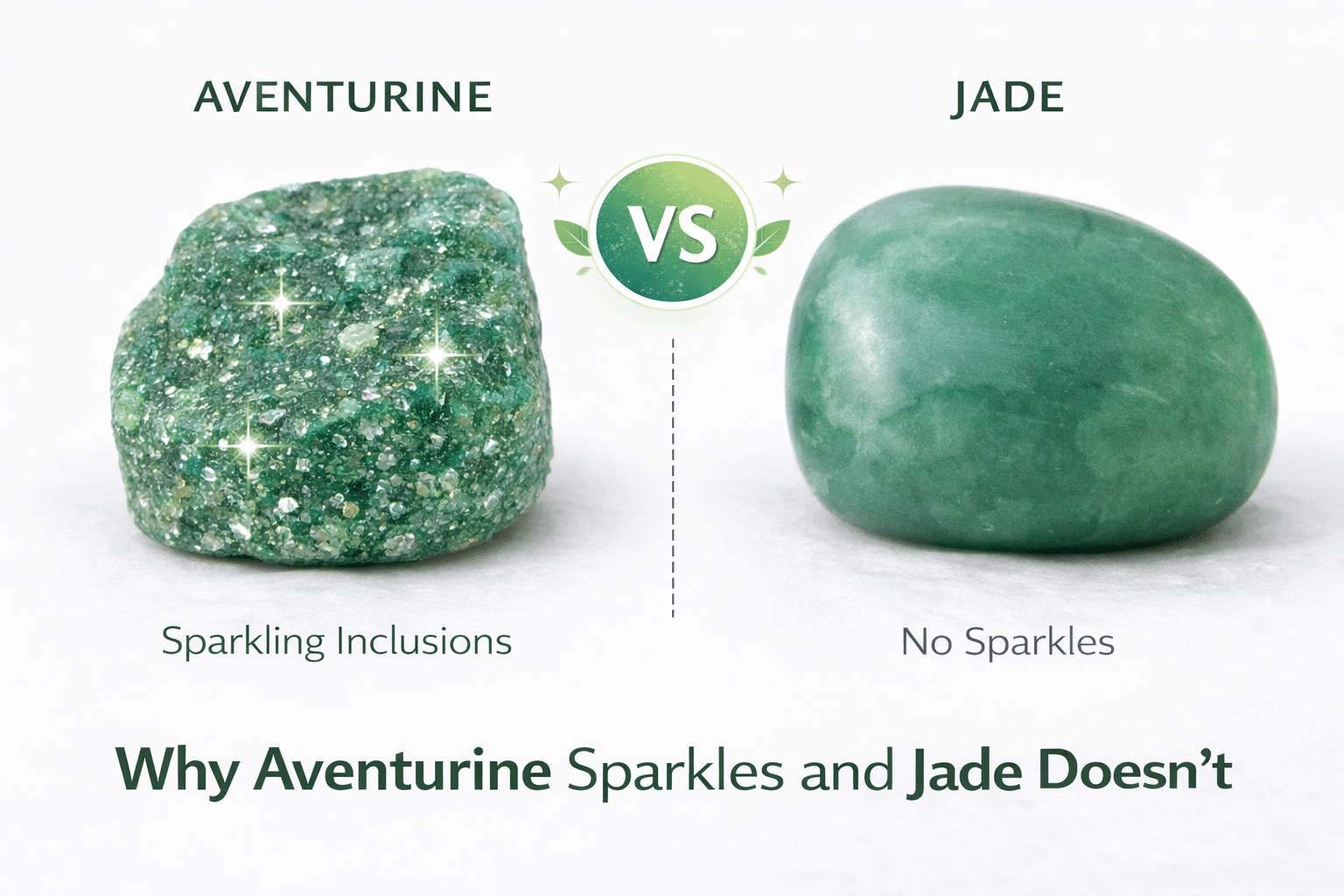
The visual difference between aventurine and jade comes down to their completely different mineral structures.
Aventurine’s Sparkling Secret
Aventurine is a type of quartzite, which means it formed from sandstone under heat and pressure. During this process, small platelets of mica (usually fuchsite or muscovite) became trapped inside the quartz matrix.
These mica inclusions are flat, reflective minerals that act like tiny mirrors inside the stone. When light hits aventurine, it bounces off these platelets at different angles, creating that characteristic sparkle or shimmer. The technical term for this optical effect is aventurescence.
The amount of sparkle depends on the size and concentration of mica inclusions. Some aventurine has heavy sparkle with large, obvious flecks. Other pieces have a subtle shimmer that’s only visible under direct light.
Different inclusions create different colors in aventurine:
- Green aventurine: Contains fuchsite (green mica)
- Orange/brown aventurine: Contains hematite or goethite
- Blue aventurine: Contains dumortierite
Jade’s Fibrous Structure
Jade is the name for two different minerals: nephrite and jadeite. Both have a unique microcrystalline structure that looks nothing like aventurine under a microscope.
Jade forms from interlocking fibrous crystals that weave together like felt. Imagine thousands of tiny fibers tangled and compressed together. This structure is why jade is so incredibly tough despite having a similar hardness rating to aventurine.
The interlocking fibers don’t reflect light like mica platelets. Instead, they absorb and scatter light, creating jade’s characteristic waxy or greasy luster. Light penetrates slightly into the surface before being diffused by the fibrous structure, giving jade that smooth, glowing appearance.
Nephrite jade forms from actinolite and tremolite minerals. It typically has an olive to yellowish-green color with a more opaque appearance.
Jadeite jade forms from sodium and aluminum silicate. It can be more translucent than nephrite and comes in a wider range of colors. The most valuable jadeite is “Imperial jade,” which has a vivid, pure green color.
Both types of jade can have marble-like veining or color variations, but neither will ever show the metallic sparkle that identifies aventurine.
Aventurine vs Jade Price: What You’ll Actually Pay
The price difference between aventurine and jade is substantial. Understanding what drives these prices helps you make informed buying decisions.
Aventurine Pricing
Aventurine is one of the most affordable green gemstones. Quartz is the second most abundant mineral in Earth’s crust, so aventurine deposits are found worldwide.
Small pieces (under 10 carats): $2-10 per carat for commercial quality. You can find aventurine tumbled stones for as little as $1-3 each.
Medium quality (10-50 carats): $10-25 per carat. This grade has good color and visible sparkle, suitable for jewelry.
Best quality (any size): $25-50 per carat. Premium aventurine has a deep, even color and strong aventurescence. Even at this top tier, aventurine remains affordable compared to other gemstones.
Large aventurine cabochons for pendants typically cost $15-40, depending on size and quality. A complete aventurine bracelet might run $20-60.
Aventurine carvings and decorative pieces are priced by weight and artistry rather than per carat. A hand-carved aventurine figurine could cost $50-200+ depending on size and craftsmanship.
Jade Pricing
Jade pricing is complex because “jade” includes two different minerals (nephrite and jadeite) with vastly different values.
Nephrite jade pricing:
- Commercial grade: $50-200 per carat. This includes most “jade” jewelry sold in general retail stores.
- Good quality: $200-500 per carat. Even color, good translucency, minimal inclusions.
- Premium nephrite: $500-1,000+ per carat. Fine color, high translucency, exceptional carving quality.
Jadeite jade pricing:
- Commercial grade: $100-500 per carat. Lower translucency, less desirable colors.
- Good quality: $500-2,000 per carat. Nice green color, moderate translucency.
- Fine quality: $2,000-5,000 per carat. Vivid color, good translucency, minimal inclusions.
- Imperial jade: $5,000-10,000+ per carat. The most valuable jade type features an intense, pure green color with high translucency. Top specimens have sold for over $1 million per carat at auction.
A nephrite jade bangle typically costs $300-3,000, depending on quality. The same bangle in jadeite could cost $3,000-30,000+ for fine quality.
Several factors affect jade prices beyond just the mineral type:
Color: Pure green is most valuable. White, lavender, and yellow jade cost less.
Translucency: More translucent jade commands higher prices. Completely opaque jade is less valuable.
Treatments: Untreated jade (“Type A”) is most valuable. Bleached jade (“Type B”) or dyed jade (“Type C”) sells for much less.
Origin: Burmese jade (Myanmar) traditionally commanded premium prices, though political issues have affected this market. Chinese jade also has cultural value that influences pricing.
Cultural significance: In Asian markets, jade prices can exceed Western market values due to cultural importance and demand.
The price gap between aventurine and jade exists because jade is genuinely rare (especially fine jadeite), has thousands of years of cultural significance, and possesses unique toughness that makes it ideal for carving and heirloom jewelry.
Which Should You Choose: Aventurine or Jade?
Choosing between aventurine and jade depends on your budget, intended use, and what you value in a gemstone.
Choose Aventurine If:
You want affordable green jewelry. Aventurine gives you a beautiful green color at a fraction of jade’s cost. You can buy larger, more impressive pieces without breaking your budget.
You love sparkle. If you’re drawn to that glittering, shimmery effect, aventurine is your stone. Jade will never have that sparkle.
You need casual, everyday jewelry. Aventurine is durable enough for daily wear in earrings, pendants, and bracelets. If you lose or damage a piece, replacement is affordable.
You’re attracted to luck and opportunity symbolism. Aventurine is called the “Stone of Opportunity” and is associated with attracting new possibilities and good fortune.
You want variety. Aventurine comes in many colors beyond green, including blue, red, orange, and peach. Jade has more limited color options.
You’re buying your first green gemstone. Aventurine is an excellent starter stone. You can explore green gemstones without a major financial investment.
Choose Jade If:
You want an investment piece. Quality jade, especially jadeite, holds and increases in value over time. Fine jade is a legitimate investment that can be passed down as an heirloom.
You value cultural and historical significance. Jade has over 7,000 years of history in Chinese culture and Mesoamerican civilizations. The cultural weight adds meaning to your jewelry.
You need exceptional durability. Jade’s interlocking fibrous structure makes it one of the toughest gemstones. It’s nearly impossible to break, making it ideal for bracelets and bangles that get daily wear and impact.
You prefer subtle elegance. Jade’s smooth, waxy luster has a sophisticated appearance. The lack of sparkle gives jade a more refined, traditional look.
You’re drawn to wisdom and protection symbolism. Jade represents balance, harmony, and protection. It’s associated with longevity and spiritual development.
You want a serious statement piece. A fine jade bangle or pendant signals quality and taste. In many cultures, jade jewelry carries social significance.
You’re shopping for a meaningful gift. Jade has strong gift-giving traditions, especially for life milestones like weddings, births, and significant birthdays.
Can You Wear Aventurine and Jade Together?
Yes. Aventurine and jade complement each other well. Many people wear both stones together because they offer different types of energy while both connect to the heart chakra.
Aventurine represents active, forward-moving energy. It encourages taking chances and seizing opportunities. Jade represents passive, stabilizing energy. It promotes wisdom, patience, and emotional balance.
Wearing both stones creates a balance between action and reflection, between moving forward boldly and staying grounded.
Aventurine vs Jade: Metaphysical Properties
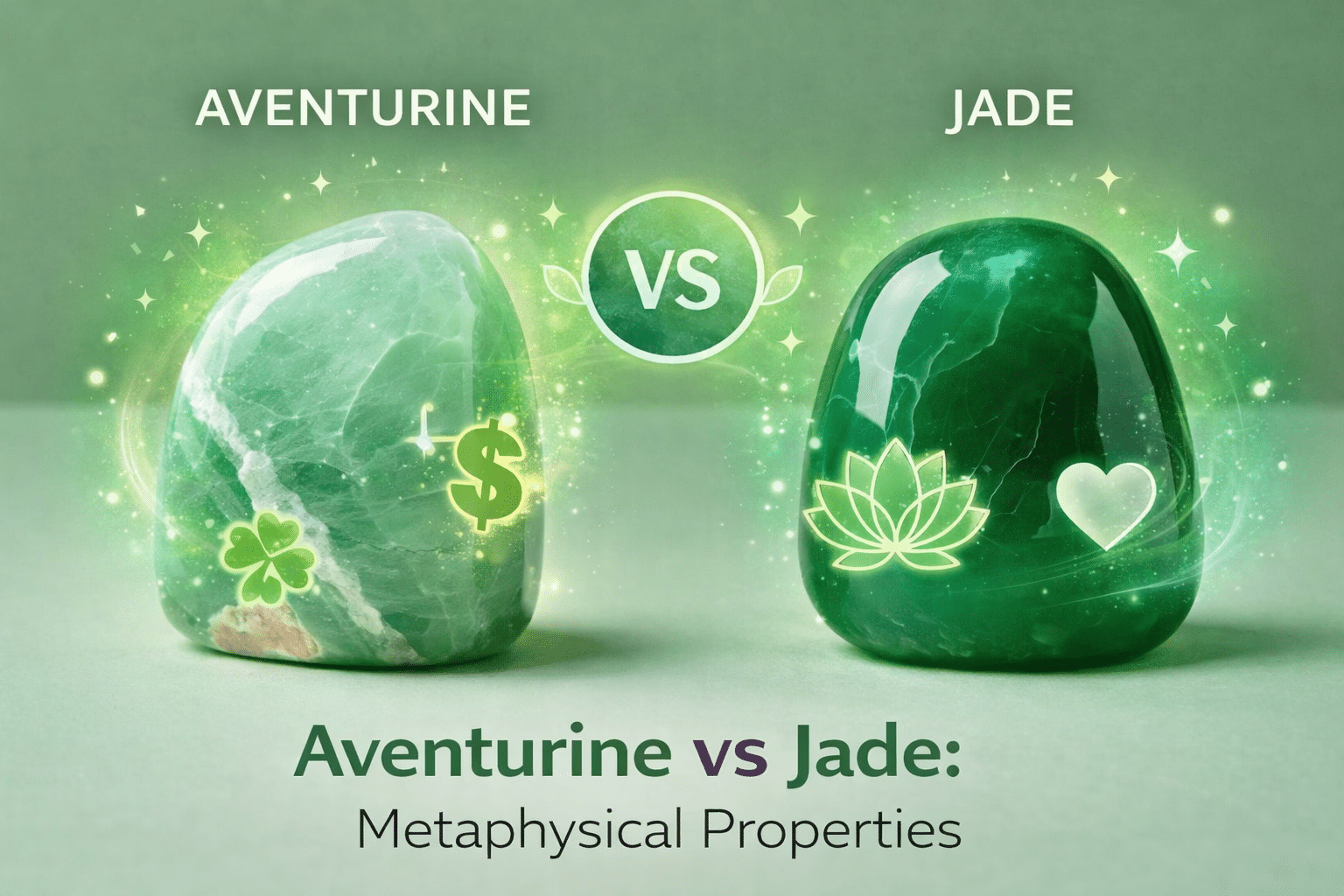
Both green aventurine and jade are associated with the heart chakra, but they offer different kinds of support.
Aventurine’s Properties
Aventurine is known as the “Stone of Opportunity” and is strongly connected to luck, prosperity, and new possibilities.
Mental and emotional benefits: Encourages optimism and confidence, helps release negative thought patterns, promotes motivation, and reduces anxiety. Many use aventurine for emotional recovery from disappointment.
Physical healing claims: Traditionally believed to support heart health, metabolism, and help with skin conditions, allergies, and headaches.
Spiritual uses: Opens and balances the heart chakra, attracts abundance and prosperity, and enhances meditation practice.
Aventurine’s energy is described as active and forward-moving. It’s the stone you reach for when you want to make changes, take risks, or attract new opportunities.
Jade’s Properties
Jade represents wisdom, protection, and harmony. It has been valued in healing practices for thousands of years.
Mental and emotional benefits: Promotes emotional balance and stability, encourages self-acceptance and compassion, helps process negative emotions, and supports mental clarity. Jade calms anxiety and promotes inner peace.
Physical healing claims: Traditionally used to support kidney function and detoxification. Believed to strengthen the immune system and support overall vitality and longevity.
Spiritual uses: Connects to the heart chakra for emotional healing, offers protection from negative energy, supports dream work and insight, and promotes balance between physical and spiritual.
Jade’s energy is described as passive and calming. It’s the stone for reflection, wisdom, and steady growth rather than quick changes.
Using Them Together
Combining aventurine and jade in jewelry or crystal grids provides balanced support. Aventurine pushes you to take action, while jade keeps you grounded and wise in your choices. You might wear aventurine when starting a new business venture and jade to help make sound decisions with opportunities that arrive.
“Indian Jade” Alert: When Aventurine is Mislabeled
One reason people confuse aventurine and jade is deliberate mislabeling in the marketplace.
Aventurine is sometimes sold as “Indian jade” or “Australian jade.” These are trade names, not accurate mineral descriptions. If you see these terms, you’re looking at aventurine, not real jade.
The practice started because aventurine’s green color resembles jade at a glance, especially to buyers unfamiliar with gemstones. Sellers use the word “jade” to suggest higher value, even though they’re selling a completely different and much less expensive stone.
Why does this happen:
- Jade commands higher prices and has cultural prestige
- Aventurine looks similar enough to fool casual buyers
- Many countries don’t regulate gemstone naming strictly
- Some sellers intentionally mislead to increase profits
How to protect yourself:
Ask directly: “Is this nephrite or jadeite jade, or is it aventurine?” Any reputable seller can answer this question.
Check for sparkle. If the stone glitters, it’s aventurine regardless of what the label says.
Compare prices. If “jade” is priced at $20-50, it’s almost certainly aventurine. Real jade starts much higher.
Request certification. Fine jade should come with gemological certification identifying the mineral as nephrite or jadeite.
Buy from reputable sources. Established jewelers and gemstone dealers have reputations to protect and are less likely to mislabel stones.
Other jade look-alikes:
- Serpentine: Sometimes called “New jade” or “olive jade”
- Chrysoprase: A green chalcedony that can resemble jade
- Dyed quartz: Clear quartz dyed green to imitate jade
- Glass: Molded green glass sold as “jade”
The aventurine vs jadeite question is particularly important because jadeite is the more valuable form of jade. If someone is selling “jadeite” at aventurine prices, you’re either getting an incredible deal (unlikely) or being scammed (much more likely).
For a detailed guide on authentication, check out our article on how to tell if jade is real.
Aventurine vs Jade: Final Thoughts
The difference between aventurine and jade is clear once you know what to look for. Aventurine sparkles from mica inclusions and costs $2-50 per carat. Jade has a smooth, waxy appearance and ranges from $100 to over $10,000 per carat.
For quick identification, use the sparkle test: hold the stone up to bright light. If you see metallic glitter, it’s aventurine. If it has a smooth, creamy luster, it’s jade.
Both stones are beautiful and valuable in their own ways. Aventurine offers affordability and eye-catching sparkle. Jade provides exceptional durability, cultural significance, and investment potential.
If you’re interested in how other green gemstones compare, read our guide on emerald vs jade differences.
Frequently Asked Questions
Which is better, jade or aventurine?
Neither stone is objectively “better” – they serve different purposes. Jade is better for investment, heirloom jewelry, and exceptional durability. Aventurine is better for affordable jewelry, a sparkly appearance, and a variety of colors. Choose based on your budget, aesthetic preference, and intended use.
Is aventurine fake jade?
No. Aventurine is real quartz, not fake jade. They are completely different minerals. However, aventurine is sometimes dishonestly sold as “Indian jade” or “Australian jade.” These trade names are misleading because aventurine is not a form of jade.
How can you tell the difference between jade and green aventurine?
Look for sparkle under bright light. Aventurine has glittering mica inclusions that create metallic flecks throughout the stone. Jade has a smooth, waxy appearance with no sparkle. Aventurine also feels lighter and warms up faster in your hand, while jade stays cool and feels heavier.
Is aventurine or jade more expensive?
Jade is significantly more expensive. Aventurine costs $2-50 per carat, while jade ranges from $100 to over $10,000 per carat, depending on type and quality. Imperial jadeite (the finest jade) can exceed $10,000 per carat, while premium aventurine tops out around $50 per carat.
Is jade a crystal?
Jade is a mineral, but not a single crystal. Both nephrite and jadeite are microcrystalline minerals, meaning they’re made of microscopic crystals woven together in an interlocking fibrous structure. This differs from single-crystal stones like quartz (from which aventurine is made).
What does jade look like?
Jade has a smooth, waxy to greasy luster without any sparkle or glitter. Colors range from pale to rich green (most common), but jade also comes in white, lavender, black, and yellow. Jade appears opaque to semi-translucent with a dense, solid appearance. Fine jade may have marble-like veining or cloudy patterns but maintains a uniform, non-sparkling surface.
Can you wear aventurine and jade together?
Yes. Many people wear aventurine and jade together because they offer complementary energies. Aventurine provides active, opportunity-attracting energy while jade offers passive, wisdom-based energy. Both stones connect to the heart chakra and work well in combination.
Is green aventurine a type of jade?
No. Green aventurine is quartz (silicon dioxide), while jade refers to either nephrite or jadeite minerals. They are completely different minerals with different compositions, even though both can be green. The confusion exists because aventurine is sometimes marketed as “Indian jade,” but this is a misleading trade name.
Which is better for luck – aventurine or jade?
Aventurine is traditionally called the “Stone of Opportunity” and is more directly associated with luck and attracting good fortune. Jade represents wisdom, protection, and harmony rather than luck. If your goal is specifically luck and opportunity, aventurine is the traditional choice.
What’s the difference between aventurine and jadeite?
Aventurine is quartz with mica inclusions that create sparkle. Jadeite is one of two minerals called jade (the other being nephrite). Jadeite is much more valuable than aventurine, with prices ranging from hundreds to tens of thousands of dollars per carat. Jadeite has a waxy luster with no sparkle, is denser and tougher than aventurine, and is significantly rarer.