Understanding the strongest types of necklace chains helps you choose jewelry that survives daily wear without breaking, kinking, or requiring constant repairs.

Add a Premium 14K Gold Wheat Chain to Your Collection
Not all chains handle real life equally. Some chain styles break within months of regular wear. Others last decades without issue. The difference comes down to link design, interlocking patterns, and how well the construction distributes stress across the chain.
Choosing a durable chain matters especially for pieces worn daily, chains supporting pendants, or jewelry given as meaningful gifts meant to last. Nobody wants to watch a cherished necklace snap during normal activity or kink beyond repair from simple bending.

Shop the Harriet Lab Diamond Tennis Necklace in 18K White Gold
This guide ranks the most popular chain types by durability, explains what makes certain designs stronger than others, and helps you select chains that match your lifestyle demands.
Juli “Jewels” Church, Certified Diamondologist at LearningJewelry.com, sees durability questions constantly: “Customers return broken chains more than any other jewelry issue. The frustrating part is that most breakages were preventable with better chain selection. Understanding which chains handle stress and which require gentle treatment saves money and heartache.”

Upgrade Your Look with a Wide Gold Herringbone Necklace
What Makes a Necklace Chain Strong?
Chain durability depends on several interconnected factors:
Link Design
The shape and thickness of individual links affect how well chains resist breaking. Rounded links distribute stress more evenly than flat links. Thicker links withstand more force before failing.
Interlocking Pattern
How links connect determines overall chain strength. Tightly interwoven patterns create multiple stress distribution points. Loosely connected links concentrate force on single connection points, creating weak spots.
Flexibility vs Rigidity
Chains need enough flexibility to drape naturally but enough rigidity to resist kinking. Extremely flexible chains like snake and herringbone kink easily. Moderately flexible chains like rope and wheat balance movement with structural integrity.
Metal Considerations
Chain strength also depends on the metal type. 14K gold provides better durability than 18K due to higher alloy content. Platinum offers exceptional strength. Sterling silver falls between gold options. Understanding how thin vs thick gold chains perform differently helps match chain selection to your needs.

Shop the Devon 14K Yellow Gold Paperclip Necklace
Necklace Chain Durability Rankings
Rank | Chain Type | Durability Rating | Best For |
1 | Wheat Chain | Excellent | Daily wear, pendants |
2 | Rope Chain | Excellent | Daily wear, pendants |
3 | Cuban/Curb Chain | Excellent | Daily wear, statement pieces |
4 | Byzantine Chain | Very Good | Daily wear, standalone |
5 | Box Chain | Very Good | Pendants, everyday use |
6 | Figaro Chain | Good | Casual wear, light pendants |
7 | Mariner Chain | Good | Casual wear |
8 | Cable Chain | Moderate | Light pendants, layering |
9 | Belcher/Rolo Chain | Moderate | Casual wear |
10 | Snake Chain | Low | Careful wear only |
11 | Herringbone Chain | Low | Special occasions only |
Strongest Chain Types Explained

1. Wheat Chain, Most Durable Overall

Buy a Classic 14K Gold Wheat Chain Necklace
The wheat chain earns a top ranking for its exceptional construction. Four strands of twisted, tear-shaped links interweave in a single direction, creating a tightly woven structure that distributes stress across multiple connection points.
Why it’s strong:
- Multiple interlocked strands share the load
- Twisted pattern resists kinking
- Smooth surface prevents snagging
- Maintains flexibility despite a tight weave
Best applications: Daily wear, pendant support, active lifestyles
The wheat chain resembles a rope chain in appearance but offers superior kink resistance. Its construction makes it ideal for pendant chains that need to support additional weight reliably.
2. Rope Chain, Classic Strength

Your Go-To Gold Chain for Layering or Solo Wear
Rope chains feature twisted links spiraling around each other like actual rope. This iconic design provides both visual interest and structural integrity, which has made it popular for generations.
Why it’s strong:
- Spiral construction distributes tension
- Multiple contact points between links
- Thickness adds substantial strength
- Resists tangling and kinking
Best applications: Statement pieces, pendant wear, daily use
Thicker rope chains (3mm+) handle heavy pendants without issue. Thinner rope chains remain durable but suit lighter accessories better.
3. Cuban/Curb Chain, Bold and Reliable

Invest in Bold Style with a Classic Cuban Gold Chain
Cuban link chains (also called curb chains) feature interlocking flat links that lie uniformly when worn. Their tight pattern creates exceptional durability alongside bold, masculine aesthetics.
Why it’s strong:
- Flat links interlock tightly
- Even stress distribution across connections
- Substantial link size in most designs
- Simple construction with a few weak points
Best applications: Statement jewelry, daily wear, pendant support
Cuban links work beautifully for both standalone wear and supporting substantial pendants like crosses or medallions.
4. Byzantine Chain, Intricate but Tough

Despite their complex appearance, Byzantine chains offer surprising durability. The intricate interwoven pattern creates multiple connection points that share stress effectively.
Why it’s strong:
- Complex weave distributes force widely
- Tight link connections
- Flexible without being fragile
- Traditional craftsmanship is often superior
Best applications: Fine jewelry, special occasions, careful daily wear
Byzantine chains require quality construction; poorly made versions may have weak connection points. Purchase from reputable retailers to ensure proper craftsmanship.
5. Box Chain, Geometric Durability

this 14K gold box chain from Blue Nile offers everyday elegance
Box chains feature square links connected at corners, creating a clean geometric appearance. Their substantial construction makes them popular for pendant wear.
Why it’s strong:
- Square links resist twisting
- Corner connections distribute stress
- Typically made with thicker metal
- Straightforward repair if needed
Best applications: Pendant support, everyday jewelry, men’s necklaces
Box chains rank among the best options for heavier pendants due to their reliable strength and ability to handle additional weight without stretching.
Moderately Durable Chains
Figaro Chain

this 14K gold Figaro chain from Blue Nile blends strength and style
The Figaro’s alternating pattern (typically two or three small links followed by one elongated link) creates visual interest but introduces potential weak points at transitions. Quality Figaro chains handle daily wear well, though they suit lighter pendants better than heavy ones.
Mariner Chain

14K gold mariner link necklace from Blue Nile
Mariner chains feature oval links with center bars, inspired by anchor chains. This design provides good strength for casual wear but may show wear at the bar connections over time.
Cable Chain

Everyday Elegance Starts with a 14K Gold Cable Chain
Simple cable chains feature uniform oval or round links connected in series. Their straightforward design offers moderate strength suitable for light pendants and layering. Very thin cable chains prove more fragile.
Belcher/Rolo Chain

this 14K gold rolo chain necklace from James Allen brings effortless shine
Rolo chains use D-shaped or round links, creating a balanced, elegant appearance. Durability depends heavily on link thickness; thicker Rolo chains perform well while thin versions require gentler handling.
Weakest Chain Types, Handle with Care
Snake Chain

this 14K gold snake chain from Blue Nile glides effortlessly on the neck
Snake chains create sleek, smooth surfaces through tightly connected rings or bands. While beautiful, their construction makes them prone to kinking when bent sharply. Once kinked, snake chains rarely return to their original condition.
Avoid: Pendant wear, rough handling, bending
Best for: Careful standalone wear, special occasions
Herringbone Chain

Herringbone chains feature flat, zigzag-patterned links creating sophisticated, reflective surfaces. However, they rank among the most delicate chain types, easily kinked, twisted, or damaged by rough handling.
Avoid: Pendant wear, sleeping in jewelry, active wear
Best for: Special occasions, gentle handling, standalone elegance
Factors Beyond Chain Type
Chain Thickness Matters
Within any chain type, thickness dramatically affects durability:
Thickness | Durability | Best For |
Under 1.5mm | Low | Layering, delicate looks |
1.5-2.5mm | Moderate | Light daily wear |
2.5-4mm | Good | Daily wear, light pendants |
4-6mm | Very Good | Statement pieces, pendants |
6mm+ | Excellent | Heavy pendants, bold statements |
Thicker chains within durable designs (rope, wheat, Cuban) create the strongest possible combinations.
Metal Selection
Gold karat affects chain strength:
- 10K Gold: Most durable (highest alloy content)
- 14K Gold: Very durable, excellent balance
- 18K Gold: Moderately durable, richer color
- 24K Gold: Soft, scratches easily, avoid for chains
For maximum durability in gold chains, 14K provides the best combination of strength and appearance.
Construction Quality
Even strong chain designs can fail with poor construction. Quality indicators include:
- Secure clasp mechanisms
- Properly closed links (no gaps)
- Smooth solder points
- Consistent link sizing
- Appropriate weight for design
Purchase from reputable retailers who stand behind their products with warranty coverage.
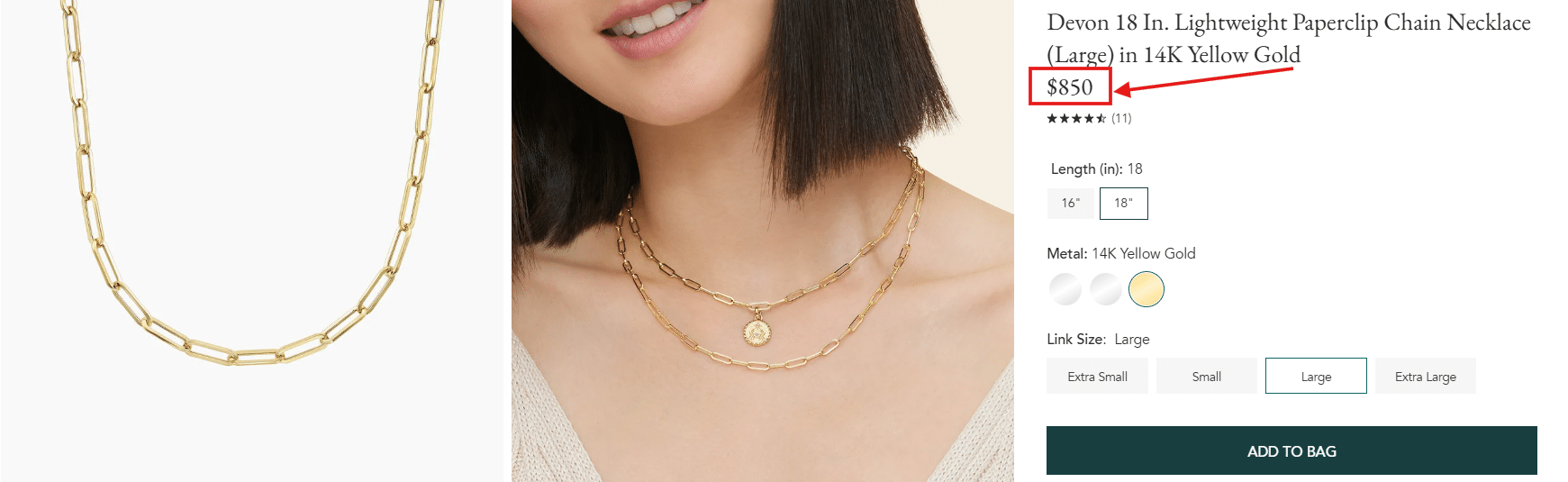
Explore similar link necklaces
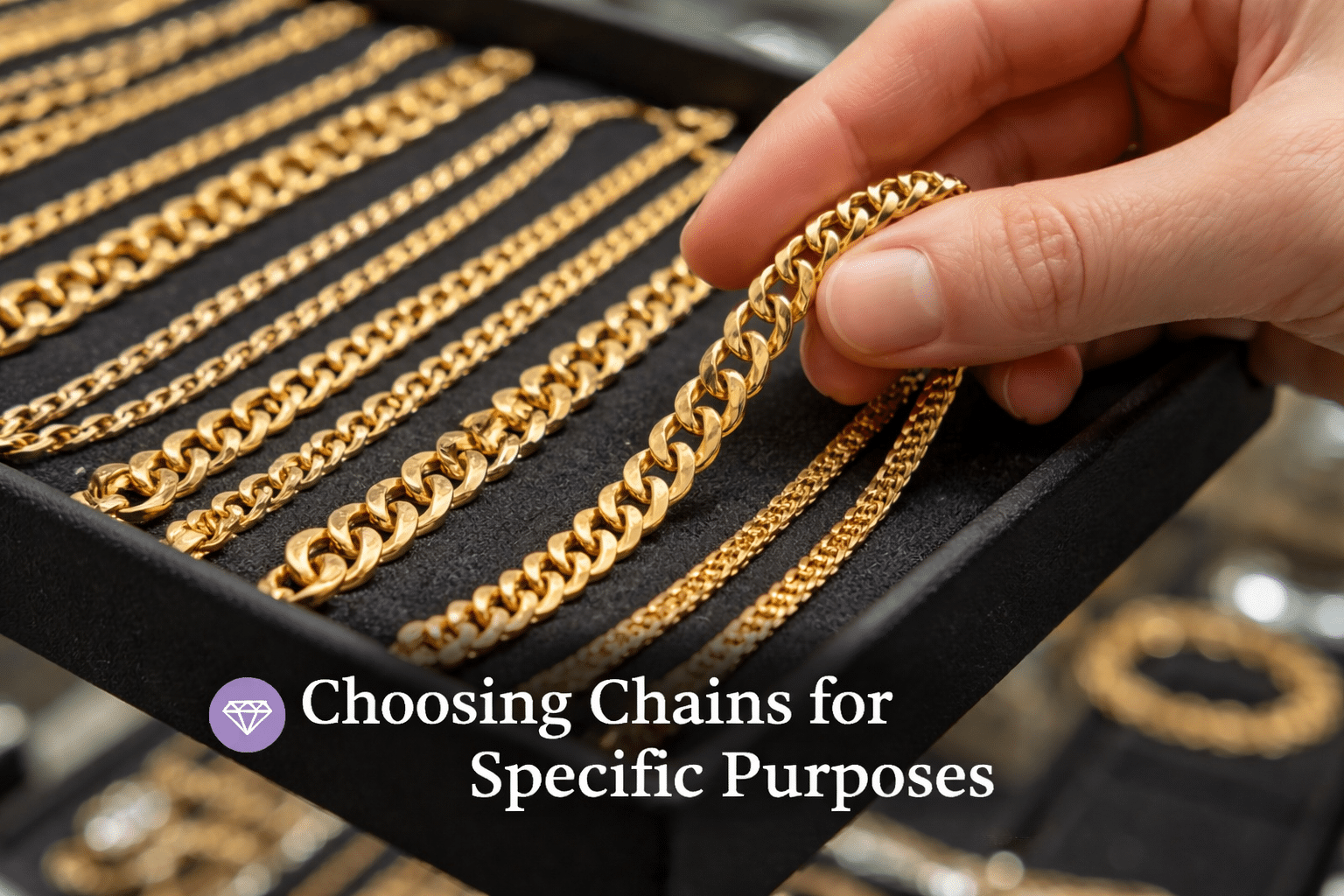
Choosing Chains for Specific Purposes
For Daily Wear
Prioritize wheat, rope, Cuban link, or box chains in 14K gold at 2.5mm+ thickness. These combinations handle constant wear, minor impacts, and regular handling without issue.
For Pendant Support
Select chains rated for pendant weight. Wheat, rope, box, and Cuban chains support pendants reliably. Avoid snake, herringbone, and very thin cables for pendant wear.
For Active Lifestyles
Choose rope or wheat chains in moderate thickness. Their kink resistance and strength handle movement during activities. Avoid delicate chains that might catch or break during physical activity.
For Special Occasions
Herringbone and snake chains work beautifully for events where careful handling is possible. Their elegant appearance justifies the extra attention required.

View today’s diamond necklace price
Case Study: Jennifer’s Chain Selection
Jennifer, a 34-year-old teacher from Denver, learned about chain durability through experience:
“My first gold necklace was a beautiful herringbone chain, sleek and sophisticated. Within three months, it had multiple kinks from normal wear. Sleeping in it once created damage I couldn’t fix. The jeweler said repair was impossible.
My second attempt was a thin cable chain for a pendant my grandmother gave me. Six months later, the chain snapped during a hug from a student. The pendant survived, but I felt terrible.
After researching properly, I bought a 3mm wheat chain in 14K gold. That was four years ago. I wear it daily, including during teaching, exercise, and sleep (though I try not to). Zero issues. No kinks, no breaks, no repairs needed.
The wheat chain cost about $400, more than my previous chains combined. But it has lasted longer than both already and shows no signs of wear. I added my grandmother’s pendant to it, and the chain handles the weight perfectly.
My advice: invest in durability upfront. A strong chain worn daily for years costs less per wear than fragile chains that break and require replacement.”
Video Resource for Strongest Necklace Chain
For visual comparison of chain durability: