
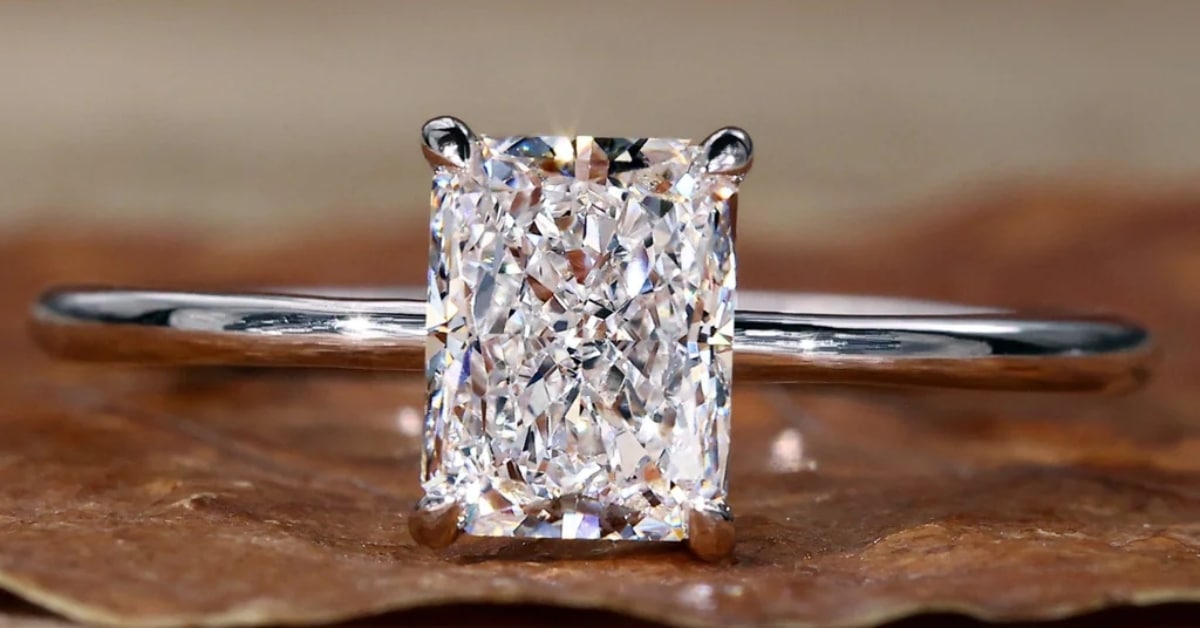
“Maximum sparkle, modern cut.”
Radiant cut diamonds occupy a unique position in the diamond world. They combine the elegant rectangular silhouette of emerald cuts with the brilliant sparkle of round diamonds. This hybrid approach delivers a distinctive look that neither shape achieves independently.
Lab grown radiant cut diamonds have gained substantial traction among buyers seeking something beyond traditional round or princess shapes. The cut’s versatility, impressive light performance, and forgiving nature make it particularly appealing for engagement rings.

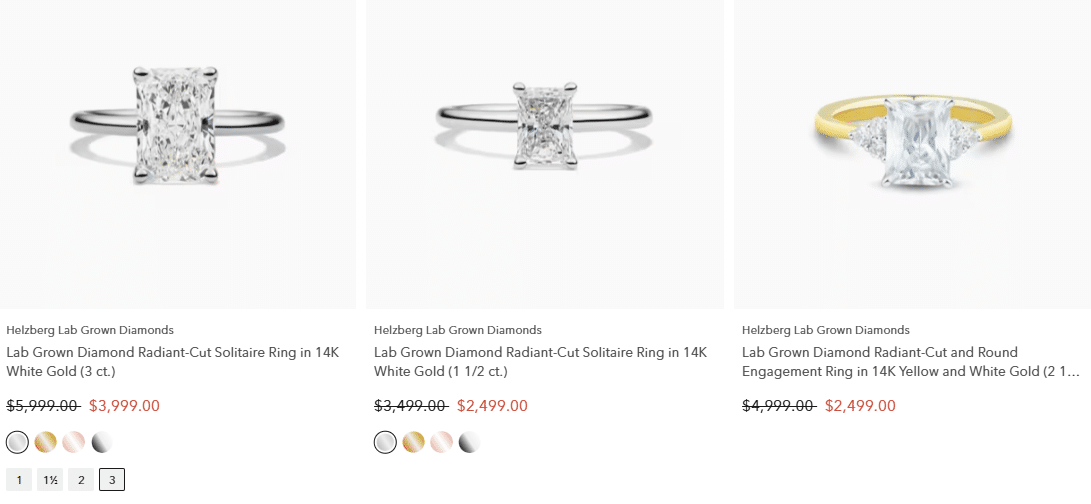
“Elegant trio, endless sparkle.”
Juli “Jewels” Church, Certified Diamontologist at LearningJewelry, offers her perspective: “Radiant cuts give buyers the best of both worlds. You get that sophisticated rectangular outline with brilliance that rivals round diamonds. They hide inclusions exceptionally well, which means buyers can drop clarity grades and save money without visible compromise.”
What Makes Radiant Cut Diamonds Different?
Henry Grossbard invented the radiant cut in 1977, creating the first rectangular diamond with brilliant-style faceting. The cut features 70 facets, more than rounds, ovals, or emeralds, arranged to maximize light return from a rectangular outline.

“Endless sparkle, bold brilliance.”
Cropped corners distinguish radiants from princess cuts, which feature sharp 90-degree corners. These beveled edges reduce chipping risk while adding geometric interest to the overall shape.
Radiant cuts come in two variations: square (length-to-width ratio near 1.00) and rectangular (ratios from 1.20 to 1.50). Both display identical faceting patterns but create different visual impressions on the finger.
The brilliant faceting produces crushed ice appearance in some stones and bold flashes in others. Neither pattern indicates superior quality, personal preference determines which appeals more.

“Three stones. One powerful promise.”
Radiant Cut vs Emerald Cut: Key Differences

Factor | Radiant Cut | Emerald Cut |
Faceting Style | Brilliant (70 facets) | Step Cut (57 facets) |
Light Performance | Fiery Sparkle | Hall of Mirrors |
Inclusion Visibility | Hides Very Well | Shows Clearly |
Color Visibility | Masks Warmth | Shows Color |
Corner Style | Cropped/Beveled | Cropped/Beveled |
Clarity Needed | VS2-SI1 Viable | VS2 Minimum |
Color Needed | H-I Works Well | G-H Recommended |
Price Point | Moderate | Similar |
Personality | Bold, Vibrant | Elegant, Understated |
Popularity Trend | Rising | Stable |
Emerald cuts showcase clarity through their open, step-cut facets. Any inclusion becomes visible through the large table. Radiant cuts scatter light aggressively, masking imperfections that step cuts reveal.
For buyers prioritizing sparkle over understated elegance, radiant cuts deliver. Those preferring sophisticated subtlety gravitate toward emerald cuts.

“Refined lines. Pure sophistication.”
Pros of Radiant Cut Lab Grown Diamonds
Exceptional Brilliance
Radiant cuts produce impressive fire and brilliance despite their rectangular shape. The 70-facet arrangement breaks light into colorful flashes that catch attention from across rooms. Among fancy shapes, radiants rank near the top for light performance.
Superior Inclusion Hiding
The brilliant faceting pattern masks inclusions remarkably well. Buyers can confidently select SI1 or even SI2 clarity grades and achieve eye-clean results. This characteristic translates directly to savings, dropping from VS1 to SI1 at 1.5 carats saves $500-$1,000.
Durability
Cropped corners eliminate the sharp points that make princess cuts vulnerable to chipping. Radiant cuts withstand daily wear better than any pointed fancy shape, making them practical choices for active lifestyles.
Versatile Appearance
Square radiants offer geometric boldness while rectangular versions create finger-lengthening elegance. The same cut serves dramatically different aesthetic preferences based on proportion selection.
Excellent Value
Radiant cuts cost 20-30% less than round brilliants at equivalent specifications. Combined with lab grown diamond pricing, buyers access substantial stones at accessible price points.
Cons of Radiant Cut Lab Grown Engagement Rings

Unlike round diamonds, radiant cuts lack universally accepted ideal proportions. Quality varies significantly between stones with identical grades. Visual inspection through 360° video becomes mandatory rather than optional.
Crushed Ice Controversy
Some radiant cuts display crushed ice patterns, small, fragmented sparkles rather than bold flashes. Neither pattern indicates defects, but buyers often prefer one strongly over the other. Determining pattern type requires video examination.
Color Concentration
While radiants mask color better than emeralds, warmth can concentrate in corners. Rectangular radiants show this tendency more than square versions. Staying in G-H range prevents visible warmth in white metal settings.
Lower Recognition
Radiant cuts remain less familiar to general audiences than rounds or ovals. Some buyers prefer instantly recognizable shapes, finding radiants too unconventional for their taste.

“Double the sparkle. Half the hesitation.”
Radiant Cut Lab Grown Diamond Price Guide
Radiant lab grown diamonds offer strong value across carat weights.
Carat Weight | Color | Clarity | Price Range |
0.75 Carat | G-H | VS2 | $400-$750 |
1.00 Carat | G-H | VS2 | $700-$1,300 |
1.50 Carat | G-H | VS2-SI1 | $1,200-$2,400 |
2.00 Carat | G-H | VS2-SI1 | $2,000-$4,000 |
2.50 Carat | G-H | SI1 | $3,000-$5,500 |
3.00 Carat | G-H | SI1 | $4,500-$8,000 |
Complete engagement ring prices add $600-$2,000 depending on setting style and metal selection.
Comparing lab grown vs natural diamond pricing reveals dramatic differences. A 2 carat natural radiant with comparable specifications costs $10,000-$18,000, four to five times more than lab grown equivalents.
Ideal Proportions for Radiant Cut Diamonds

Since certification labs rarely assign cut grades to fancy shapes, buyers must evaluate proportions independently.
Length-to-Width Ratio:
- Square Radiants: 1.00-1.05
- Classic Rectangle: 1.15-1.30
- Elongated Rectangle: 1.30-1.50
Depth Percentage: Target 60-67% for optimal light return without excessive weight hiding in the pavilion.
Table Percentage: Aim for 61-69% to balance brilliance and fire.
Polish and Symmetry: Excellent or Very Good grades ensure proper light handling.
Examine multiple radiants at your preferred ratio before purchasing. Proportions affect appearance dramatically, a 1.20 ratio looks substantially different from 1.40.

Best Settings for Radiant Cut Engagement Rings
Radiant diamonds suit various setting styles due to their balanced proportions and durable corners.
Solitaire Setting
Solitaire settings let radiant cuts command full attention. Four-prong configurations expose maximum diamond surface while providing secure hold. The clean design emphasizes the radiant’s unique geometric character.
Halo Setting
Halo settings add perceived size and extra sparkle around radiant centers. Rectangular halos maintain shape consistency while round halos create interesting contrast. Either approach adds approximately 0.25-0.50 carats of visual presence.
Three-Stone Setting
Flanking radiants with two smaller diamonds creates substantial, balanced designs. Tapered baguettes complement rectangular radiants beautifully, their step-cut faceting contrasting with the center stone’s brilliance.
Pavé Band
Pavé settings line the band with small diamonds, adding continuous sparkle that complements radiant centers. Thin pavé bands maintain focus on the center stone while contributing extra fire.
Case Study: Jennifer’s Radiant Cut Lab Grown Ring
Jennifer, a 28-year-old architect from Portland, shared her buying experience:
“I wanted something different from the round diamonds everyone seemed to have. Emerald cuts appealed to me aesthetically, but I worried about showing inclusions since my budget required lower clarity grades.
My jeweler suggested radiant cuts as a compromise, rectangular shape with brilliant sparkle that hides imperfections. After researching lab grown options, I found a 1.80 carat radiant through James Allen, H color, SI1 clarity, for $2,600.
The 360° video showed the crushed ice pattern I preferred and confirmed the SI1 inclusions remained invisible. Set in a white gold solitaire, my total cost reached $3,400.
Coworkers assume I spent $10,000 or more based on the size and sparkle. The radiant shape generates more comments than round diamonds I see daily, people find it interesting and distinctive.”
Where to Buy Radiant Lab Grown Engagement Rings
These retailers offer quality radiant cut lab grown diamonds:
Strong radiant selection with competitive pricing. Their comparison tools help evaluate multiple stones efficiently.


Always compare identical specifications across retailers. Price variations of 15-25% occur regularly on equivalent quality stones.

Caring for Radiant Cut Lab Grown Diamonds
Radiant cuts require standard diamond care with attention to their faceting complexity.
Regular cleaning maintains brilliance, the 70-facet arrangement traps oils and lotions more readily than simpler cuts. Weekly cleaning with warm water and mild dish soap prevents buildup that diminishes sparkle.
Professional cleaning every six months reaches debris trapped in prong settings. The cropped corners resist damage well, but inspect settings periodically for loose prongs that could risk stone loss.
Video Resource
For visual guidance on evaluating radiant cut diamonds, watch this helpful breakdown: