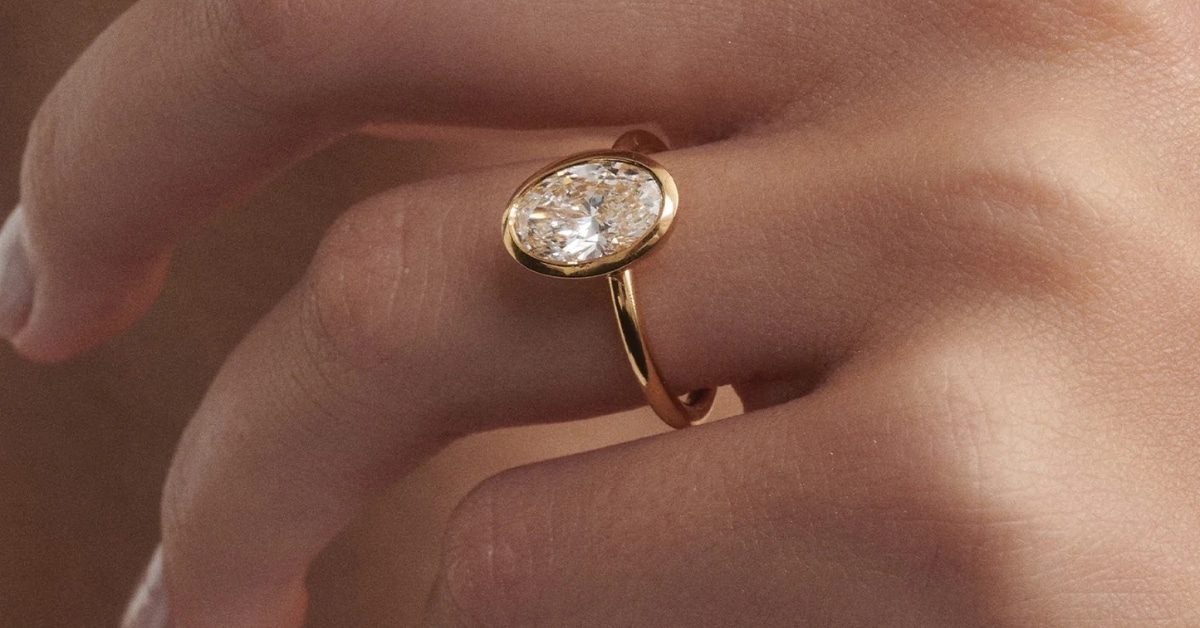
Lab Grown Diamond Bezel Rings feature bezel settings that wrap metal completely around a diamond’s perimeter, creating sleek profiles that protect the stone while delivering a modern, refined aesthetic. This ancient setting technique has experienced renewed popularity among buyers who prioritize durability, security, and contemporary design.
Lab grown diamonds paired with bezel settings create particularly compelling combinations. The protective metalwork addresses durability concerns while lab grown diamond pricing makes premium bezel craftsmanship financially accessible.

Modern bezel diamonds, crafted for everyday brilliance
Juli “Jewels” Church, Certified Diamontologist at LearningJewelry, recommends bezels for specific buyers: “Bezel settings suit active lifestyles perfectly. Nurses, teachers, athletes, fitness enthusiasts, anyone working with their hands benefits from that protective metal rim. Lab grown diamonds let these buyers afford quality stones in settings that actually accommodate their daily lives.”
What Defines Bezel Setting Rings?
Bezel settings secure diamonds using thin metal walls encircling the entire girdle (the diamond’s widest edge). Unlike prong settings that hold stones at specific points, bezels create continuous contact between metal and diamond.
This construction originated thousands of years ago when metalworking techniques could not produce the delicate prongs modern settings feature. Ancient jewelers pressed soft metals around gemstones for security. Contemporary bezels refine this approach using precision manufacturing for clean, consistent results.

Vintage bezel elegance with modern diamond sparkle
Full bezels encircle diamonds completely. Partial bezels (also called semi-bezels or half-bezels) cover portions of the girdle while leaving sections exposed. Both variations offer enhanced protection compared to prong settings.
Bezel Setting vs Prong Setting Comparison
Understanding differences between bezel and prong settings helps buyers select appropriate options for their needs.
Factor | Bezel Setting | Prong Setting |
Stone Security | Maximum Protection | Good with Maintenance |
Snag Risk | Minimal | Moderate to High |
Perceived Diamond Size | Slightly Smaller | Maximum Exposure |
Light Entry | Reduced from Sides | Maximum from All Angles |
Modern Aesthetic | Strong | Classic |
Active Lifestyle Suitability | Excellent | Moderate |
Cleaning Ease | Easier | Requires Attention |
Resizing Difficulty | More Complex | Standard |
Repair Complexity | Specialized | Common |
Price Range | Moderate Premium | Standard |
Prong settings maximize diamond visibility and light performance. Bezel settings prioritize protection and contemporary aesthetics. Neither approach proves universally superior, lifestyle and preferences determine optimal choice.

Benefits of Lab Grown Diamond Bezel Rings
Combining lab grown diamonds with bezel settings creates distinct advantages.
Superior Protection for Active Lifestyles
The continuous metal rim shields diamonds from impacts that would chip or dislodge prong-set stones. Bezels protect the vulnerable girdle area where damage most commonly occurs.
Active professionals particularly benefit. Healthcare workers washing hands repeatedly, fitness enthusiasts gripping equipment, teachers handling classroom materials, all face elevated risk of ring damage. Bezels minimize these concerns substantially.

A subtle twist of timeless diamond elegance
Sleek Contemporary Aesthetics
Bezel settings deliver clean, modern profiles that prong settings cannot replicate. The uninterrupted metal line creates sophisticated minimalism appealing to contemporary tastes.
This aesthetic suits professional environments where understated elegance feels more appropriate than ornate designs. Bezels read as intentionally refined rather than simply plain.
Reduced Snagging
Prongs catch on fabrics, hair, and textured surfaces. Anyone who has snagged a prong-set ring understands the annoyance and potential damage risk. Bezels eliminate this problem entirely, smooth metal profiles glide past materials without catching.

Bold hearts, radiant gold, unforgettable modern romance
Lower Profile Comfort
Bezel-set diamonds sit closer to the finger than elevated prong settings. This lower profile improves comfort during activities requiring grip or manual dexterity. Gloves fit more easily over bezel rings without catching on protruding prongs.
Easier Maintenance
Prong settings trap debris beneath diamonds and between prong bases. Bezels create simpler geometry that cleaning reaches more effectively. Less buildup accumulates in fewer crevices.
Cost-Effective Premium Design
Bezel settings require more skilled craftsmanship than basic prong settings, commanding modest price premiums. Lab grown diamond savings offset these premiums easily, making professional-grade bezel work accessible within average budgets.

Drawbacks of Bezel Settings to Consider

Honest evaluation requires acknowledging bezel limitations.
Reduced Perceived Size
Metal surrounding the diamond’s perimeter slightly reduces visible stone area. A 1 carat bezel-set diamond appears marginally smaller than the same stone in prong settings. Buyers prioritizing maximum size perception may find this disappointing.

Decreased Light Performance
Diamonds derive brilliance from light entering through multiple angles. Bezels block side light entry, reducing overall brilliance compared to prong settings that expose maximum diamond surface.
Well-cut diamonds in bezel settings still sparkle beautifully, but direct comparisons against prong-set equivalents reveal differences. Buyers prioritizing maximum sparkle above protection should consider alternative settings.

Limited Style Versatility
Bezel settings create specific aesthetic impressions, modern, sleek, minimalist. Buyers wanting vintage character, romantic flourishes, or ornate details find limited options within bezel designs.
Halo settings, cathedral settings, and pavé bands offer design flexibility bezels cannot match.
Resizing Challenges
Bezel settings integrate more completely with band construction than prong settings. Significant size adjustments require more extensive metalwork, increasing resizing costs and complexity. Accurate initial sizing matters more for bezel rings.
Repair Complexity
Damaged bezels require specialized repair techniques. Not all jewelers possess bezel repair expertise, potentially limiting local service options. Prong repairs remain more universally available.

Best Diamond Shapes for Bezel Settings
Certain diamond shapes complement bezel settings particularly well.
Round Brilliant
Round diamonds pair naturally with circular bezels. The matching geometry creates visual harmony while the brilliant faceting compensates somewhat for reduced side light entry. Round bezels represent the most popular and versatile combination.
Oval
Oval diamonds in elongating bezel frames flatter fingers effectively. The smooth metal perimeter follows oval curves elegantly. Oval lab grown diamonds offer excellent value in bezel settings.
Cushion
Cushion cuts feature soft, rounded corners that bezels accentuate naturally. The pillow-like diamond shape appears framed rather than constrained by surrounding metal. Cushion bezels create romantic yet modern impressions.
Emerald
Emerald cut diamonds display step-cut faceting showcasing clarity over brilliance. Since bezels already reduce brilliance somewhat, emerald cuts lose less comparative sparkle in bezel settings than brilliant cuts do.
The geometric emerald shape pairs well with clean bezel lines. Consider higher clarity grades for emerald cuts since step faceting reveals inclusions readily.
Princess
Princess cuts feature sharp corners vulnerable to chipping. Bezels protect these corners completely, addressing the shape’s primary durability weakness. The geometric princess silhouette complements modern bezel aesthetics effectively.

Choosing Quality for Bezel Set Lab Grown Diamonds
Diamond selection for bezel settings follows standard guidelines with specific considerations.
Cut Quality Matters More
Since bezels reduce light entry, cut quality becomes even more critical. Excellent or Ideal cut grades maximize the light that does enter the diamond. Poor cuts in bezel settings appear notably duller than in prong settings.
Never compromise cut quality for bezel-set diamonds. The reduced light entry amplifies cut deficiencies.
Color Considerations
Bezel metal frames diamonds visually. White metal bezels can make warmer diamond colors appear more yellow by contrast. G-H color grades work well in white gold or platinum bezels.
Yellow gold bezels complement warmer colors effectively. I-J grades appear balanced in yellow gold frames without visible color issues.
Clarity Flexibility
Bezels frame diamonds without adding visual complexity nearby. This clean presentation potentially makes inclusions more noticeable than busy prong settings would. However, VS2 and SI1 clarity typically produce eye-clean results regardless of setting style.
Use retailer video tools from James Allen or similar vendors to evaluate specific inclusions before purchasing.

Lab Grown Diamond Bezel Ring Prices
Bezel settings cost modestly more than basic prong settings due to increased metalwork and craftsmanship requirements.
Center Stone Size | Setting Style | Lab Grown Diamond (G-H, VS2) | Total Price Range |
0.75 Carat | Full Bezel Solitaire | $600-$1,000 | $1,200-$1,800 |
1.00 Carat | Full Bezel Solitaire | $900-$1,500 | $1,600-$2,400 |
1.50 Carat | Full Bezel Solitaire | $1,500-$2,500 | $2,300-$3,500 |
2.00 Carat | Full Bezel Solitaire | $2,500-$4,000 | $3,400-$5,200 |
1.00 Carat | Bezel with Pavé Band | $900-$1,500 | $2,000-$3,000 |
1.50 Carat | Bezel with Pavé Band | $1,500-$2,500 | $2,700-$4,100 |
Bezel settings add approximately $100-$300 compared to equivalent prong settings. Lab grown diamond savings dwarf this premium, making bezel craftsmanship accessible within modest budgets.
Natural diamond equivalents in bezel settings cost $6,000-$18,000 for comparable specifications, three to four times lab grown pricing.

Full Bezel vs Partial Bezel Options
Both bezel variations offer distinct characteristics.
Full Bezel
Complete metal encirclement provides maximum protection. The uninterrupted rim creates the cleanest aesthetic lines. Full bezels suit buyers prioritizing security and modern minimalism above all else.
Trade-offs include maximum light blockage and slightly smaller perceived size. Full bezels represent the most protective but least brilliant option.
Partial Bezel (Semi-Bezel)
Partial bezels cover portions of the diamond perimeter while leaving sections exposed. This compromise increases light entry while maintaining significant protection.
Common configurations include bezels covering two opposite sides or bezels protecting only the most vulnerable areas (points on fancy shapes). Partial bezels balance protection with brilliance more evenly than full bezels.
Half-bezels work particularly well for shapes with vulnerable points, marquise, pear, and princess cuts benefit from targeted protection at tips while maintaining light entry elsewhere.

Metal Options for Bezel Rings
Metal selection affects bezel ring appearance and performance.
Platinum: Maximum durability for demanding lifestyles. Platinum bezels withstand wear exceptionally well without thinning over time. Naturally white color requires no maintenance. Premium pricing reflects superior longevity.
White Gold: Popular choice offering platinum appearance at lower cost. 14k white gold provides excellent durability for bezel construction. Rhodium plating maintains brightness, requiring periodic renewal.
Yellow Gold: Classic warmth complementing many skin tones. Yellow bezels create distinctive character differing from prevalent white metal designs. 14k or 18k options balance durability with color richness.
Rose Gold: Contemporary favorite with romantic undertones. Rose gold bezels deliver unique personality distinguishing rings from common designs. The pink-toned metal flatters various skin tones beautifully.
Case Study: Rachel’s Bezel Set Lab Grown Ring
Rachel, a 33-year-old emergency room nurse from Phoenix, shared her experience:
“Working twelve-hour shifts handling patients, equipment, and constant handwashing destroyed my first engagement ring. Prongs loosened repeatedly, and I eventually lost a side stone during a code situation.
When my husband proposed upgrading my ring for our fifth anniversary, I researched durable alternatives thoroughly. Bezel settings addressed every concern I had experienced.
We selected a 1.25 carat round lab grown diamond, G color, VS1 clarity, in a full platinum bezel from Blue Nile. Total cost reached $3,100 including the setting.
Three years later, my bezel ring shows zero damage despite constant hospital wear. Gloves slide on easily over the smooth profile. I never worry about snagging during patient care. The sleek design actually draws more compliments than my original traditional ring.
The IGI certification documented all specifications. We spent half what natural diamond options cost while getting a ring that actually survives my profession.”
Where to Buy Lab Grown Diamond Bezel Rings

These retailers offer quality bezel setting options:




Examine bezel construction carefully before purchasing. Quality bezels feature consistent metal thickness and precise diamond fit without gaps.
Caring for Bezel Set Rings
Bezel settings simplify maintenance compared to complex prong arrangements.
Regular cleaning with warm water and mild soap maintains brilliance effectively. Soft brushes reach the junction between bezel and diamond where minimal debris accumulates.
Professional inspection annually verifies bezel integrity. While bezels rarely loosen like prongs do, metal can thin over years of wear. Early detection prevents eventual stone loss.
The lower profile and smooth construction minimize damage risk during daily activities, reducing overall maintenance requirements.
Video Resource
For visual comparison of bezel versus prong settings: