

Not sure how gold-plated pieces compare to other types of gold jewelry? Here’s how gold-filled differs from gold-plated, especially when it comes to durability.
That beautiful gold-plated necklace looked stunning when you bought it. Fast forward a few months, and the golden shine has faded to a dull, brassy color. Sound familiar? You are not alone; this experience frustrates countless jewelry buyers who expected their gold-plated pieces to maintain their original beauty.
The short answer to whether gold-plated jewelry tarnishes: yes, it does. But understanding why tarnishing occurs, how quickly it happens, and what you can do about it helps set realistic expectations and extend the life of your pieces.
Juli “Jewels” Church, Certified Diamondologist at LearningJewelry.com, hears this complaint regularly: “Customers bring in gold-plated jewelry asking why it changed color. They assumed gold plating would last like solid gold. Once they understand how thin that gold layer actually is, the tarnishing makes sense, and they make smarter purchasing decisions going forward.”

Why Gold-plated Jewelry Tarnishes
Gold itself does not tarnish. Pure gold remains chemically stable and maintains its color indefinitely. So why does gold-plated jewelry lose its shine?
The problem lies beneath the surface. Gold-plated jewelry consists of a base metal, typically copper, brass, or nickel, covered by an extremely thin layer of real gold. This gold layer measures just 0.5 to 2.5 microns thick, which is thinner than a human hair.
When this microscopic gold layer wears away through normal use, the base metal underneath becomes exposed to air and moisture. These base metals react chemically with oxygen, sulfur compounds, and acids in sweat, causing oxidation. This oxidation process creates the discoloration we call tarnish.
The thinner the gold layer, the faster tarnishing begins. Flash-plated jewelry with gold layers under 0.5 microns may start showing wear within weeks of regular use.

How Quickly Does Gold-plated Jewelry Tarnish?
Tarnishing timelines vary based on several factors, but most gold-plated pieces show noticeable wear within 6 months to 2 years.
Factor | Faster Tarnishing | Slower Tarnishing |
Gold Layer Thickness | Flash plating (<0.5 microns) | Heavy plating (2+ microns) |
Wear Frequency | Daily wear | Occasional use |
Skin Chemistry | Acidic sweat | Neutral pH levels |
Moisture Exposure | Frequent water contact | Kept dry |
Chemical Contact | Perfumes, lotions, cleaners | Minimal product exposure |
Storage Method | Open air, touching other jewelry | Individual pouches, dry environment |
Climate | Humid environments | Dry climates |
Activity Level | Exercise, manual work | Sedentary activities |
Heavy gold plating (2.5+ microns) over sterling silver, known as vermeil, lasts longer than standard plating over brass or copper bases.
Signs Your Gold-plated Jewelry Is Tarnishing
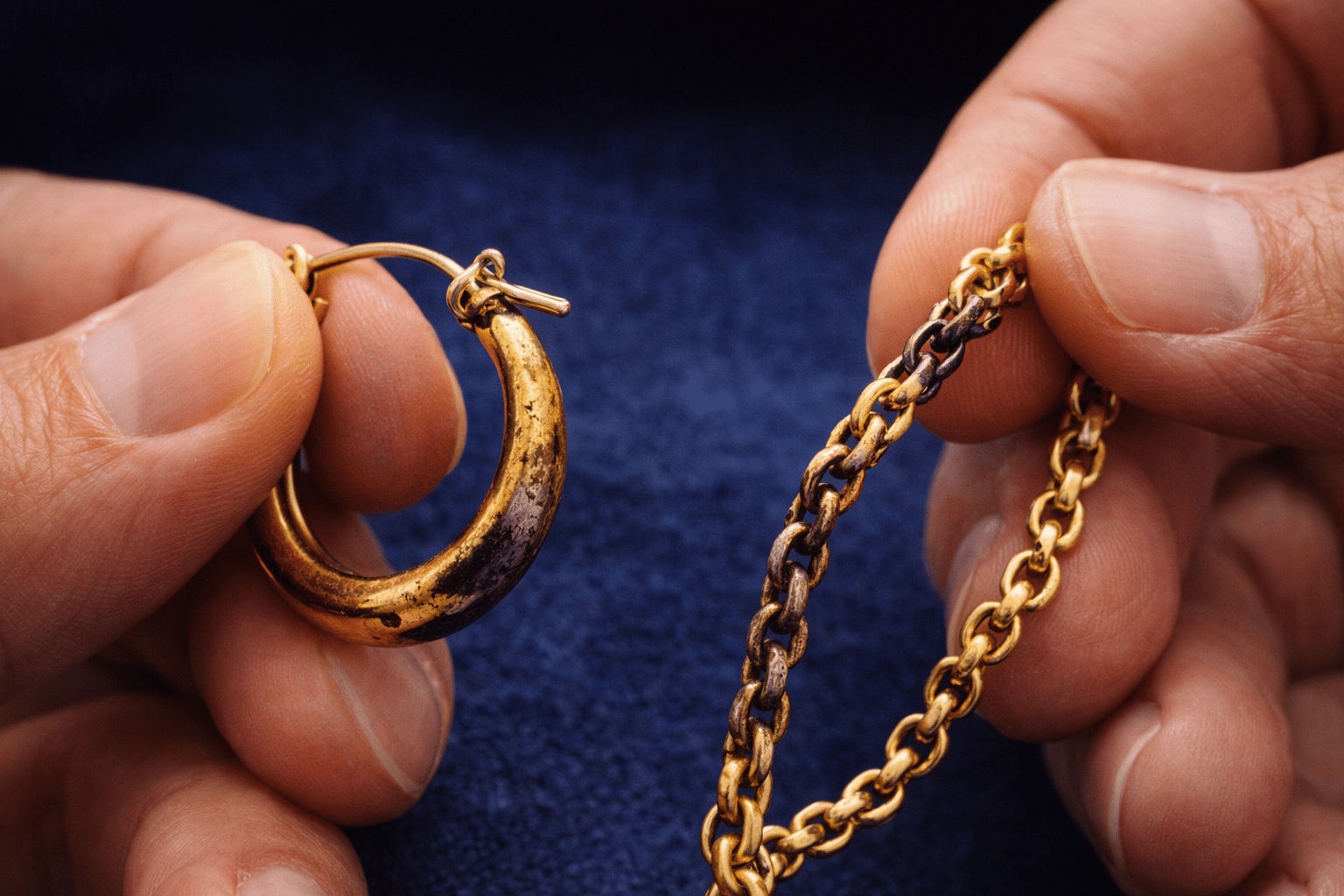
Recognizing early tarnish signs helps you take action before damage worsens.
Color Changes
The most obvious sign appears as color shifting from bright gold to:
- Dull, muted gold tones
- Brassy or bronze undertones
- Greenish discoloration (especially with copper bases)
- Dark spots or patches
These changes typically start at high-friction areas, clasps, chain links, ring bands, and anywhere jewelry contacts skin frequently.

Surface Changes
Beyond color, watch for:
- Rough texture where smooth gold existed
- Flaking or peeling at the edges
- Visible base metal showing through
- Sticky or tacky feeling from oxidation buildup
Skin Reactions
Tarnishing gold-plated jewelry often causes skin issues. When base metals become exposed, your jewelry may turn skin green or irritate. This reaction signals that the protective gold layer has worn through completely in contact areas.

What Causes Gold-Plated Jewelry to Tarnish Faster?
Several everyday factors accelerate the tarnishing process.
Body Chemistry
Your individual body chemistry significantly impacts tarnishing speed. People with more acidic sweat experience faster plating deterioration. Medications, diet, and hormonal changes all affect sweat acidity.
Some people can wear gold-plated jewelry for months without issues. Others notice tarnishing within weeks. This variation explains why the same necklace might last years for one person and months for another.

Herringbone and rope chain layering set
Water and Moisture
Water accelerates tarnishing dramatically. Showering, swimming, washing hands, and sweating during exercise all introduce moisture that penetrates the thin gold layer and reaches base metals beneath.
Chlorinated pool water and saltwater prove especially damaging, both contain chemicals that attack gold plating aggressively.

Chemicals and Products
Beauty products wreak havoc on gold plating:
- Perfumes and colognes
- Lotions and moisturizers
- Hairsprays and styling products
- Sunscreens
- Cleaning chemicals
These products contain compounds that react with both the gold layer and base metals, accelerating wear and discoloration.
Friction and Abrasion
Physical contact wears through thin gold layers quickly. Areas experiencing regular friction, ring bands against fingers, bracelet clasps, necklace chains against skin, show tarnishing first.
Sleeping in jewelry, exercising, and manual work increase friction exposure substantially.
Gold-plated vs Gold-filled: Tarnish Comparison
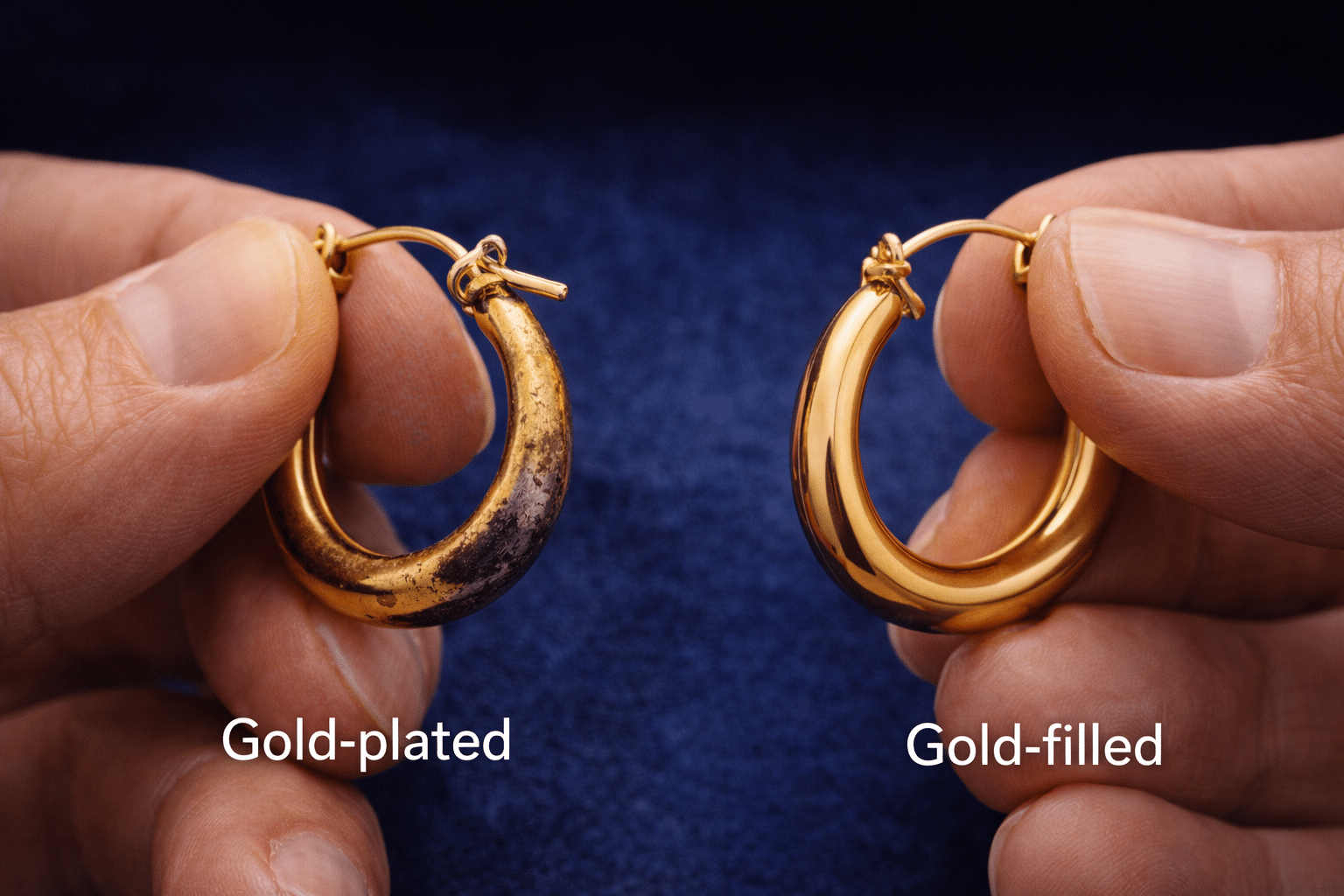
If tarnishing concerns you, understanding how gold-plated compares to gold-filled jewelry helps inform better purchasing decisions.
Tarnish Factor | Gold-plated | Gold-filled |
Tarnish Resistance | Poor | Excellent |
Time to Tarnish | Months to 2 years | Rarely tarnishes |
Gold Layer Thickness | 0.5-2.5 microns | 50-100+ microns |
Gold Content | <0.05% | 5%+ minimum |
Lifespan | 6 months – 2 years | 10-30 years |
Water Resistance | Poor | Good |
Base Metal Exposure | Common | Rare |
Gold-filled jewelry contains a much thicker gold layer mechanically bonded to the base metal. This substantial thickness means the gold rarely wears through during normal use, making tarnishing far less likely.
For jewelry you plan to wear daily, gold-filled offers better long-term value despite a higher upfront cost.

How to Prevent Gold-plated Jewelry from Tarnishing
While you cannot prevent tarnishing entirely, proper care for gold-plated jewelry significantly extends its lifespan.
Remove Before Water Exposure
Take off the gold-plated pieces before:
- Showering or bathing
- Swimming in pools or the ocean
- Washing dishes
- Exercising heavily
- Any activity causing significant sweating
Apply Products First
Put on lotions, perfumes, hairsprays, and sunscreens before wearing jewelry. Allow products to absorb completely, at least 10-15 minutes, before adding your gold-plated pieces.
Clean Regularly
Gentle cleaning removes buildup that accelerates tarnishing:
- Use a soft, lint-free cloth after each wear
- Occasionally, clean with mild soap and water
- Dry thoroughly before storing
- Avoid abrasive cloths or chemical cleaners
Store Properly
Storage conditions affect tarnishing significantly:
- Keep pieces in individual soft pouches
- Store in dry, cool locations
- Avoid humid bathrooms
- Use anti-tarnish strips in jewelry boxes
- Keep pieces separated to prevent scratching
Rotate Your Jewelry
Wearing the same piece daily accelerates wear. Rotating between multiple pieces gives each item rest time and extends its overall lifespan.

Can You Fix Tarnished Gold-plated Jewelry?
Once gold plating tarnishes significantly, options become limited.
Light Tarnishing
Surface tarnish from buildup (not actual gold wear) can sometimes be cleaned away. Gentle polishing with a soft cloth may restore some shine.
Moderate to Severe Tarnishing
When the gold layer has worn through to the base metal, cleaning will not help. The gold simply is not there anymore.
Replating remains the only solution for severely tarnished pieces. Professional jewelers can apply new gold layers through electroplating. However, replating costs often approach or exceed the original purchase price of inexpensive gold-plated jewelry, making replacement more practical for budget pieces.
When to Replace
For pieces under $30-$50, replacement typically makes more financial sense than replating. Reserve professional replating for sentimental pieces or higher-quality items worth preserving.

14K gold diamond tennis bracelet
Case Study: Jennifer’s Gold-plated Necklace Experience
Jennifer, a 29-year-old marketing professional from Austin, shared her experience:
“I purchased a beautiful gold-plated layered necklace for $35. It looked amazing with my work outfits, so I wore it almost daily.
Within two months, I noticed the chain turning slightly darker where it touched my neck. By month four, distinct brassy patches appeared. The clasp looked completely different from the rest of the necklace, clearly showing copper underneath.
I tried cleaning it with jewelry cleaner, but that made things worse. The remaining gold seemed to come off faster after that.
After researching, I learned my body chemistry runs acidic; I apparently produce sweat that attacks gold plating quickly. I also realized I had been applying perfume after putting on the necklace, which accelerated damage.
For my next purchase, I invested in a gold-filled necklace for $85. That was eighteen months ago, and it still looks brand new despite daily wear. The extra $50 saved me from buying multiple replacements.
Now I keep a few inexpensive gold-plated pieces for occasional wear and special outfits, but my everyday jewelry is all gold-filled. Understanding how to tell gold-filled from gold-plated changed my entire approach to jewelry shopping.”

14K gold diamond tennis bracelet
When Gold-plated Jewelry Makes Sense Despite Tarnishing
Tarnishing does not make gold-plated jewelry worthless. It simply requires realistic expectations.
Good uses for gold-plated jewelry:
- Trendy pieces you will wear for one season
- Special occasion accessories are worn rarely
- Testing styles before investing in quality versions
- Budget-friendly costume jewelry
- Pieces matching specific outfits
Choose gold-filled instead for:
- Daily wear items
- Jewelry worn during physical activity
- Pieces for sensitive skin
- Long-term wardrobe staples
- Gifts meant to last
Video Resource
For visual demonstration of gold-plated tarnishing: