Understanding how gold-filled and gold-plated jewelry is made helps explain why their care needs differ. See our comparison of these two types for a breakdown.
That beautiful gold necklace deserves more than getting tossed on your nightstand at the end of each day. How you treat your jewelry directly impacts how long it maintains its beauty, and whether you get months or decades of wear from each piece.

14K gold diamond tennis bracelet
Gold-filled and gold-plated jewelry require different care approaches because their construction differs dramatically. Gold-plated pieces need gentle, protective handling to preserve their thin gold layer as long as possible. Gold-filled pieces tolerate more, but proper care still extends their already impressive lifespan.
Learning the right care techniques takes minimal effort but delivers maximum results. Simple daily habits protect your investment and keep your jewelry looking fresh far longer than neglected pieces.

Juli “Jewels” Church, Certified Diamondologist at LearningJewelry.com, emphasizes care fundamentals: “Most jewelry damage comes from avoidable situations, wearing pieces in the shower, sleeping in necklaces, exposing jewelry to harsh chemicals. Basic awareness prevents the majority of premature wear. Proper care transforms gold-plated jewelry from disposable fashion accessories into pieces lasting years rather than months.”
Why Care Requirements Differ
Understanding construction differences explains why each type needs specific care approaches.
Gold-plated Care Challenges
Gold-plated jewelry features an extremely thin gold layer, just 0.5-2.5 microns thick. This microscopic coating provides minimal protection against wear, moisture, and chemical exposure.
Every friction point, every water droplet, every chemical contact gradually removes gold particles from this thin layer. Once worn through, base metals beneath become exposed, leading to tarnishing and green skin discoloration.
Protective care aims to slow this inevitable wear, extending the piece’s attractive lifespan as long as possible.

Gold-filled Care Advantages
Gold-filled jewelry contains gold layers measuring 50-100+ microns, roughly 100 times thicker than gold plating. This substantial thickness provides natural resilience against normal wear.
Gold-filled jewelry lasts 10-30 years, even with regular use. Proper care pushes this toward the higher end of that range, potentially extending lifespan to multiple decades.
Care for gold-filled focuses less on damage prevention and more on maintaining optimal appearance throughout its naturally long life.

Care Comparison: Gold-filled vs Gold-plated
Care Factor | Gold-filled | Gold-plated |
Water Tolerance | Moderate, occasional exposure okay | Poor, avoid all water contact |
Cleaning Frequency | Every few weeks | After each wear |
Cleaning Method | Soap and water are safe | Dry cloth only is preferred |
Chemical Sensitivity | Low | High |
Storage Requirements | Basic protection | Maximum protection |
Handling Needs | Normal care | Gentle handling |
Professional Cleaning | Every 1-2 years | Rarely worthwhile |
Overall Maintenance Level | Low | High |
Daily Care Habits for Both Types
Consistent daily practices protect all gold jewelry regardless of construction type.
Put Jewelry On Last
Apply all body products before adding jewelry:
- Lotions and moisturizers
- Perfumes and body sprays
- Hairsprays and styling products
- Sunscreens
- Makeup and cosmetics
Allow products to absorb completely, at least 10-15 minutes, before putting on jewelry. Chemical compounds in these products attack gold surfaces, accelerating wear on both gold-filled and gold-plated pieces.

Minimal diamond huggies for everyday shine
Take Jewelry Off First
Remove jewelry before:
- Showering or bathing
- Swimming in pools or the ocean
- Exercising or sports activities
- Cleaning with household chemicals
- Washing dishes
- Sleeping
These activities expose jewelry to moisture, chemicals, friction, and pressure that cause unnecessary wear.
Handle With Clean Hands
Natural oils from skin accumulate on jewelry surfaces, dulling their appearance over time. Handle pieces with clean, dry hands whenever possible. Avoid touching jewelry faces and gemstones, hold pieces by edges and bands instead.

Modern layered gold chains with herringbone shine
Cleaning Gold-plated Jewelry

Gold-plated pieces require gentle cleaning methods, protecting their thin gold layer.
After Each Wear
Wipe gold-plated jewelry with a soft, dry, lint-free cloth after every wearing. This removes body oils, light perspiration, and surface dust before they accumulate and cause damage.
Microfiber cloths work excellently for this purpose. Avoid paper towels or tissues that can scratch delicate surfaces.
Weekly Cleaning (Regular Wear Items)
For pieces worn frequently:
- Dampen a soft cloth slightly with plain water
- Gently wipe all surfaces
- Immediately dry completely with a separate soft cloth
- Allow to air dry fully before storing
Avoid soaking gold-plated jewelry. Extended water exposure penetrates thin gold layers and attacks base metals beneath.

Classic herringbone shine in 14K gold
Deep Cleaning (Monthly or As Needed)
When surface grime accumulates:
- Mix a tiny amount of mild dish soap with lukewarm water
- Dip a soft cloth in the solution and wring nearly dry
- Gently wipe jewelry surfaces
- Rinse cloth with plain water, wring nearly dry
- Wipe away soap residue
- Dry immediately and thoroughly with a clean soft cloth
Never scrub gold-plated jewelry. Abrasive action removes gold particles from the already-thin layer.

Luxe lab diamonds with a refined drop finish
What to Avoid
Never use on gold-plated jewelry:
- Jewelry cleaning solutions (too harsh)
- Ultrasonic cleaners (damage thin plating)
- Polishing cloths (abrasive compounds remove gold)
- Toothpaste or baking soda (abrasive)
- Ammonia-based cleaners
- Alcohol or acetone
- Abrasive brushes or scrubbers
Cleaning Gold-filled Jewelry
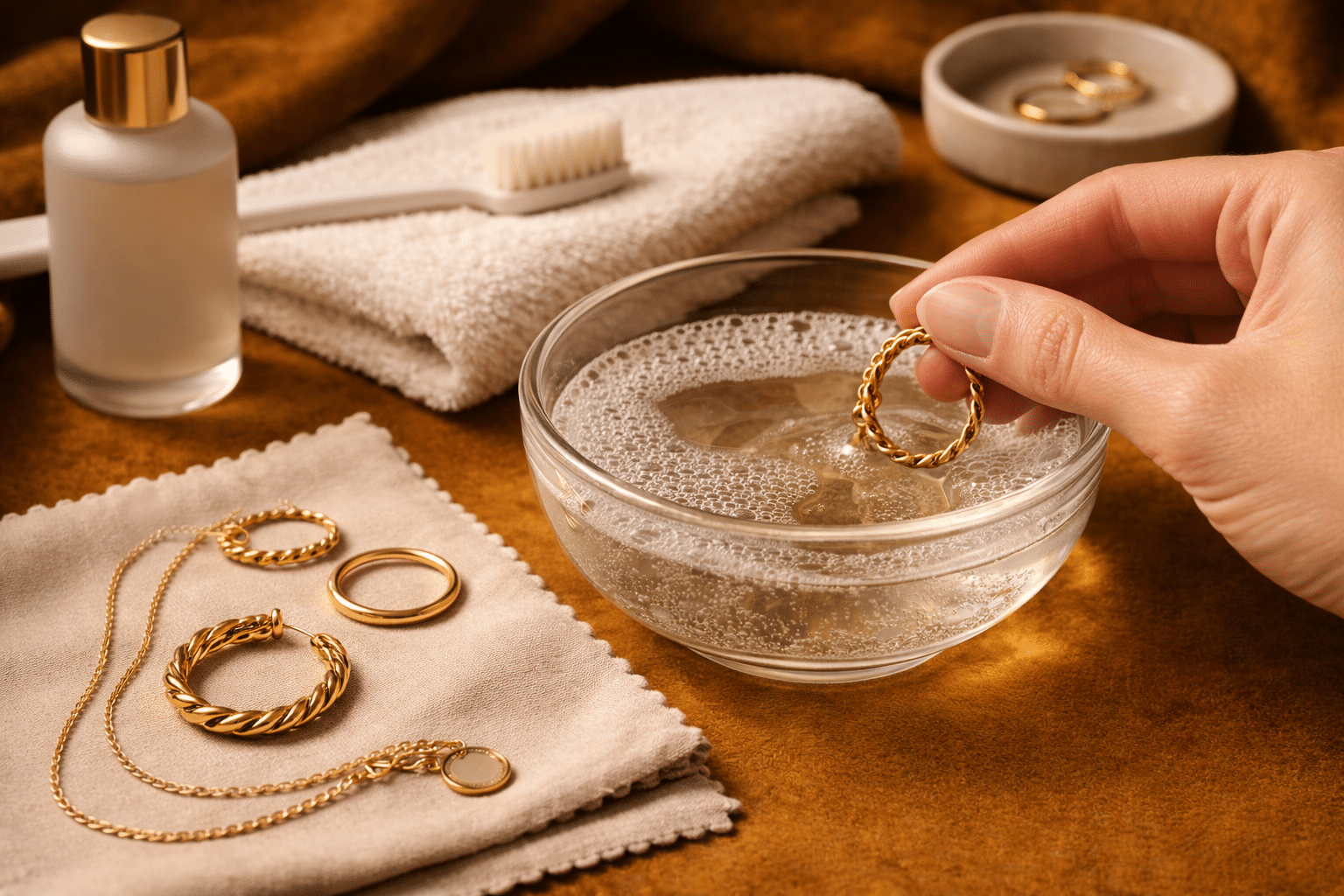
Gold-filled tolerates more thorough cleaning methods due to its thick gold layer.
Regular Cleaning (Every Few Weeks)
- Mix mild dish soap with warm water
- Soak jewelry for 5-10 minutes
- Gently brush with a soft-bristled brush (a soft toothbrush works well)
- Pay attention to crevices, chain links, and detailed areas
- Rinse thoroughly under clean running water
- Dry completely with a soft, lint-free cloth
- Allow to air dry fully before storing

Deep Cleaning (Every Few Months)
For gold-filled pieces needing extra attention:
- Prepare warm water with a mild soap solution
- Soak jewelry for 15-20 minutes
- Gently brush all surfaces and crevices
- For stubborn grime, soak additional 10 minutes
- Rinse thoroughly
- Dry completely
Professional Cleaning
Professional ultrasonic cleaning works safely on quality gold-filled jewelry. Schedule professional cleaning every 1-2 years for pieces worn regularly.
Jewelers can also inspect for wear points, tighten clasps, and address minor issues before they become problems.

Polishing Gold-filled
Soft jewelry polishing cloths work safely on gold-filled pieces. Gentle polishing restores shine without removing significant gold.
Avoid aggressive polishing compounds or motorized polishing tools that remove gold faster than necessary.
Storage Best Practices
Proper storage prevents unnecessary damage between wearings.
Gold-plated Storage (Maximum Protection)
Gold-plated jewelry needs protective storage, preventing scratches and environmental exposure:
- Store each piece individually in soft cloth pouches
- Use jewelry boxes with separate, lined compartments
- Keep away from humidity (avoid bathroom storage)
- Include anti-tarnish strips in storage containers
- Store flat rather than hanging to prevent stress
- Keep away from direct sunlight and heat sources

Gold-filled Storage (Standard Protection)
Gold-filled tolerates less stringent storage while still benefiting from proper practices:
- Store in a lined jewelry box or soft pouches
- Separate from harder jewelry that could scratch
- Keep in a dry location away from humidity
- Avoid tangling chains by storing them individually or using chain holders
Storage Mistakes to Avoid
Both types suffer from:
- Storing in humid bathrooms
- Leaving jewelry in direct sunlight
- Piling pieces together where they scratch each other
- Storing in plastic bags that trap moisture
- Leaving jewelry on counters exposed to air and dust

Classic 14K gold chain bracelets
Protecting Jewelry During Activities
Certain activities pose particular risks to gold jewelry.
Exercise and Sports
Remove all jewelry before physical activity. Sweat accelerates chemical reactions, attacking gold surfaces. Physical impacts risk bending, breaking, or scratching pieces.
If you prefer wearing jewelry during exercise, consider dedicated athletic pieces you expect to replace, not your quality gold-filled items.
Swimming
Chlorinated pool water and saltwater both damage gold jewelry. Chlorine attacks gold surfaces chemically. Salt creates abrasive particles and promotes corrosion.
Remove all jewelry before swimming, regardless of construction type.
Household Cleaning
Cleaning chemicals attack gold surfaces aggressively. Remove jewelry before using:
- Bleach and bleach-containing products
- Ammonia-based cleaners
- Abrasive scrubbing products
- Oven cleaners and degreasers
- Toilet bowl cleaners
Even “gentle” cleaning products can damage jewelry over time.
Gardening and Yard Work
Soil contains abrasive particles and moisture. Physical activity causes sweating. Fertilizers and pesticides introduce harsh chemicals.
Remove jewelry before outdoor work to prevent unnecessary exposure.

Traveling With Gold Jewelry
Travel presents unique challenges for jewelry care.
Packing Jewelry
- Use a dedicated jewelry roll or travel case with separate compartments
- Wrap individual pieces in soft cloth if a travel case is unavailable
- Pack jewelry in carry-on luggage, never checked bags
- Avoid extreme temperature exposure in vehicles
Hotel Storage
- Use a room safe for valuable pieces
- Avoid leaving jewelry in the bathroom where humidity accumulates
- Do not leave pieces on counters where housekeeping might move them
Activity Considerations
Plan which jewelry suits your travel activities. Beach vacations may call for inexpensive pieces you will not worry about. Business trips may warrant your quality gold-filled items for a professional appearance.

Case Study: Lisa’s Jewelry Care Transformation
Lisa, a 42-year-old real estate agent from Phoenix, transformed her jewelry care habits:
“For years, I treated all jewelry the same, carelessly. Pieces lived on my bathroom counter. I showered wearing necklaces. I never cleaned anything unless it looked obviously dirty.
My gold-plated jewelry lasted maybe three months before looking terrible. I assumed that was normal and just kept buying replacements.
When I invested in gold-filled pieces, I decided to actually learn proper care. The difference amazed me.
My care routine now:
Daily: Remove jewelry before showering. Wipe pieces with a soft cloth before storing. Apply perfume and lotion before putting on jewelry.
Weekly: Quick inspection of clasps and closures. Light cleaning with a barely damp cloth for any pieces showing fingerprints or dullness.
Monthly: Proper soap and water cleaning for gold-filled pieces. Very gentle wipe-down for any gold-plated fashion pieces.
Storage: Everything in a lined jewelry box with anti-tarnish strips. Individual pouches for my favorite gold-filled pieces.
Results after two years of proper care: My gold-filled pieces look nearly identical to when I bought them. Even my gold-plated fashion jewelry lasts much longer, some pieces going on 18 months now.
The time investment totals maybe five minutes daily. The payoff in jewelry longevity and appearance makes those minutes worthwhile many times over.”

When Professional Help Makes Sense
Certain situations warrant a professional jeweler’s attention:
- Clasps or closures are becoming loose or difficult
- Visible damage requiring repair
- Stubborn tarnish or discoloration not responding to home cleaning
- Chains developing kinks or tangles
- Settings appearing loose around stones
- Annual inspection and cleaning for frequently worn pieces
Professional services cost relatively little compared to replacement and help maintain jewelry in optimal condition.
Video About: Care for Gold-filled and Gold-plated Jewelry
For visual demonstration of jewelry cleaning techniques: