

When selecting the best necklace chain types for pendants, choosing the wrong chain leads to breakage, stretching, or visual imbalance that ruins both chain and pendant presentation.
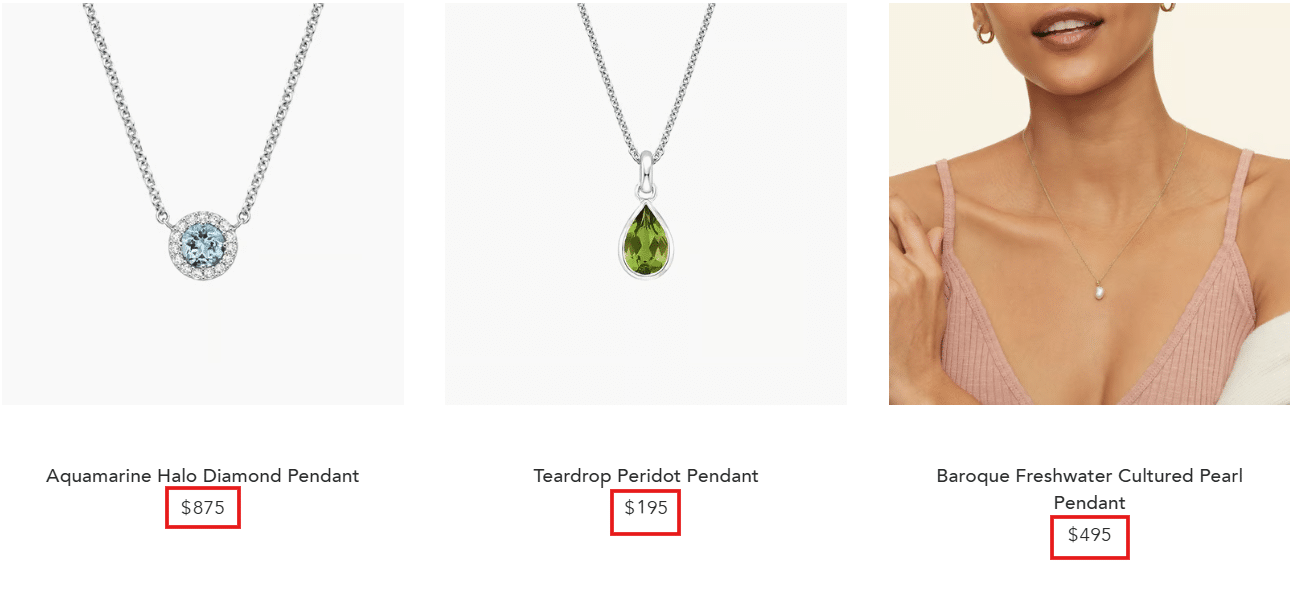
Pendants add personal meaning to necklaces, family heirlooms, religious symbols, commemorative pieces, or simply beautiful designs you love. But the chain supporting your pendant matters as much as the pendant itself. A chain too weak breaks under pendant weight. A chain too thin looks imbalanced. A chain too decorative competes with the pendant for attention.
The right pendant chain disappears visually while providing reliable support. It complements the pendant without overshadowing it. It handles the additional weight and movement stress that pendant wear creates. Getting this combination right protects your investment and showcases your pendant beautifully.
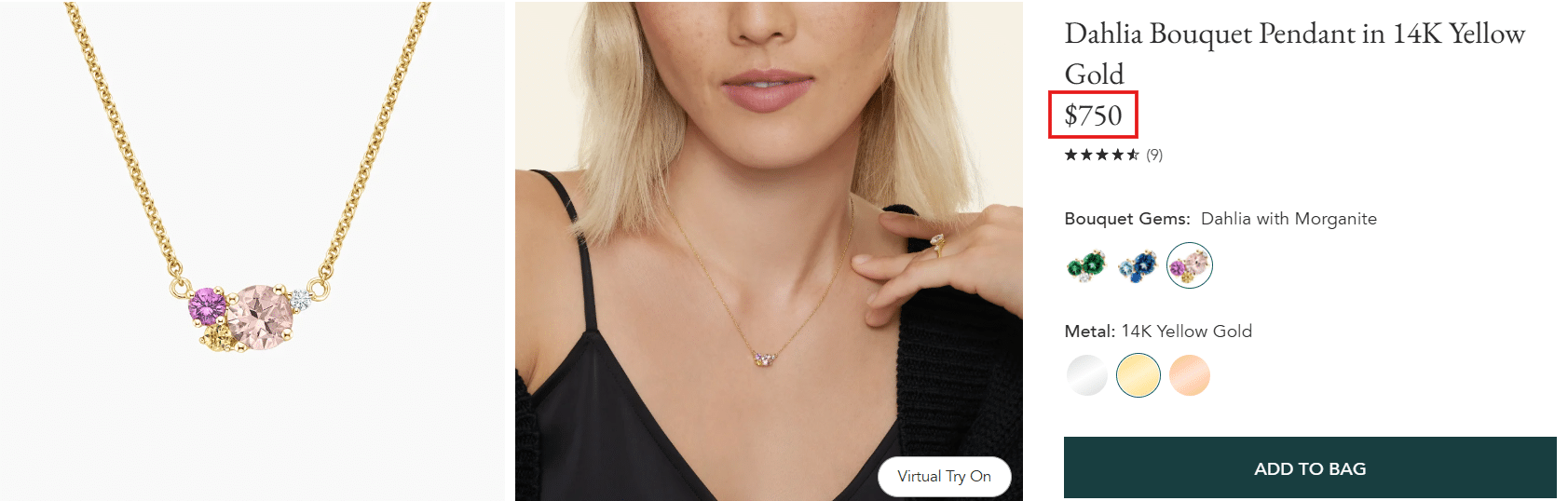
This guide identifies the best chain types for pendant wear, explains what makes certain chains succeed or fail, and helps you match chain selection to your specific pendant needs.
Juli “Jewels” Church, Certified Diamondologist at LearningJewelry.com, sees pendant chain failures regularly: “Broken pendant chains account for more repair requests than almost any other jewellery issue. The frustrating part is that these breaks are preventable. Matching chain strength to pendant weight and choosing appropriate designs eliminates most failures before they happen.”
What Makes a Good Pendant Chain?
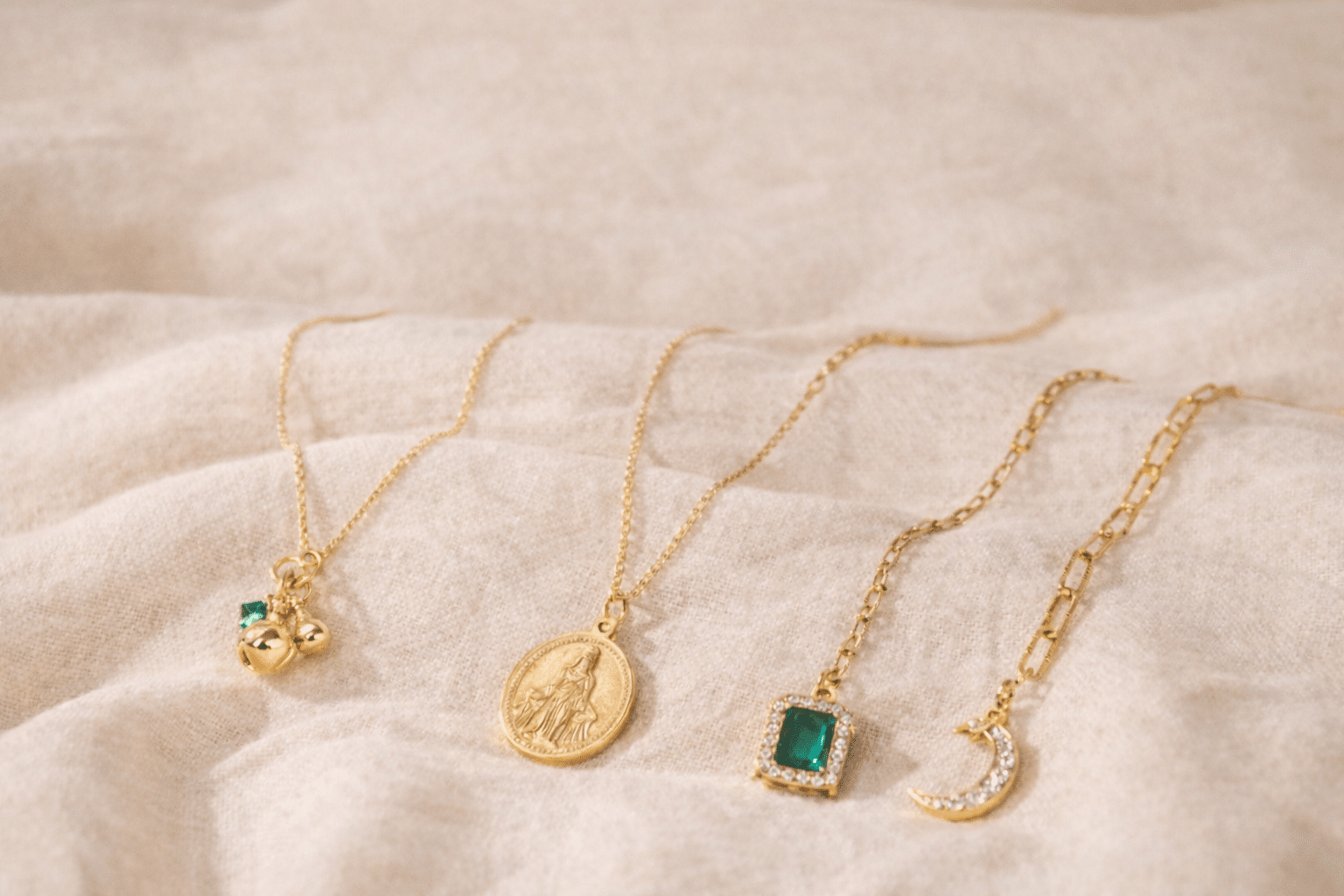
Successful pendant chains share several characteristics:
Strength and Durability
Pendants add weight and create movement stress that standalone chains never experience. The pendant swings, pulls, and creates leverage forces at connection points. Chains must handle this additional stress without stretching, kinking, or breaking.
For detailed durability comparisons, see our guide to the strongest necklace chain types.

Floating Lab Emerald Solitaire Pendant in 18K Yellow Gold | Buy Now
Visual Balance
The chain should complement the pendant size without overwhelming or underwhelming it. A delicate 1mm chain looks lost supporting a substantial pendant. A bold 5mm chain overpowers a small, delicate charm.
Smooth Pendant Movement
Pendants need to slide freely along chains and hang properly. Some chain designs catch pendant bails, causing awkward positioning or wear at contact points.
Understated Design
Decorative chains compete with pendants for attention. The best pendant chains feature simple designs that showcase the pendant rather than themselves.

Minimalist Round Diamond Solitaire Pendant in 18K Yellow Gold – Buy Now
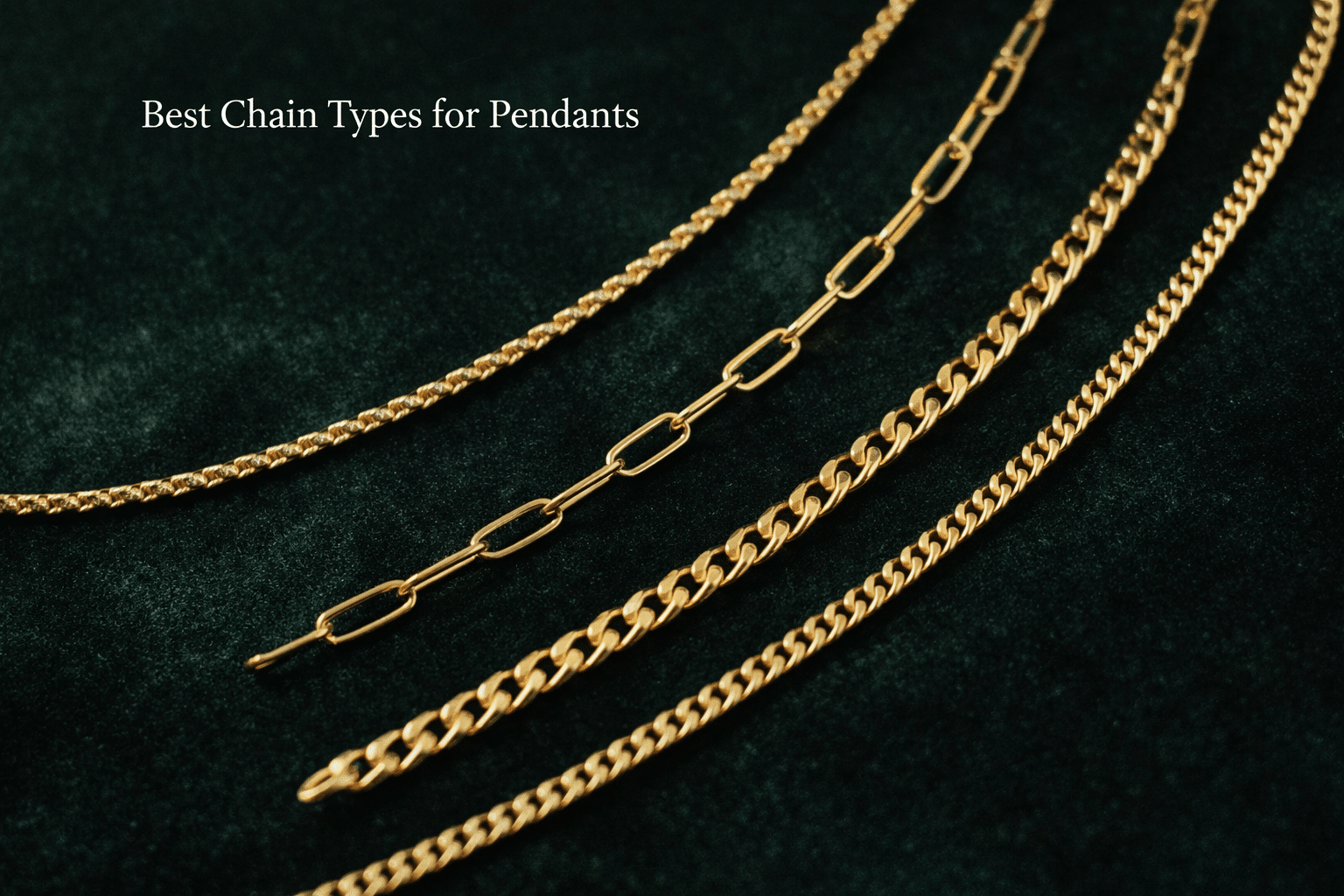
Best Chain Types for Pendants
Cable Chain, The Reliable Classic
Cable chains feature simple oval or round links connected in alternating directions. This straightforward design makes them ideal pendant supporters.
Why it works:
- A simple design does not compete with pendants
- Pendant bails slide smoothly along links
- Available in a wide range of thicknesses
- Strong link connections resist stress
- Easy to repair if damage occurs
Best for: All pendant weights when properly sized
Recommended width: 1.5mm – 3mm, depending on pendant weight
Box Chain, Geometric Strength

Box Chain Necklace in Solid 14K Yellow Gold – Buy Today
Box chains use square links connected at corners, creating clean lines and substantial strength for their apparent delicacy.
Why it works:
- Square links distribute weight evenly
- Geometric design complements modern pendants
- Smooth surface allows easy pendant sliding
- Sturdy construction handles significant weight
- Professional appearance suits all occasions
Best for: Medium to heavy pendants, professional settings
Recommended width: 1.5mm – 2.5mm for most pendants
Rope Chain, Textured Durability

Rope Chain Necklace in 14K Yellow Gold – Shop Now
Rope chains feature twisted links spiralling together, creating a texture that catches light while providing excellent strength.
Why it works:
- Multiple twisted strands share the load
- Excellent strength-to-weight ratio
- Texture adds visual interest without overwhelming
- Resists kinking and tangling
- Handles heavy pendants reliably
Best for: Heavy pendants, statement pieces
Recommended width: 2mm – 4mm, depending on pendant size
Wheat Chain, Maximum Strength

Dakota Wheat Chain Necklace in 14K Yellow Gold
Wheat chains feature four interwoven strands, creating exceptional durability. This design handles the heaviest pendants safely.
Why it works:
- Strongest common chain construction
- Multiple strands distribute pendant weight
- Smooth texture does not catch pendant bails
- Resists stretching under heavy loads
- Elegant appearance despite substantial strength
Best for: Heavy pendants, irreplaceable pieces
Recommended width: 2mm – 3.5mm for heavy pendant support
Curb/Cuban Chain, Bold Support

Elevate your everyday look with this 14K gold curb chain choker from Blue Nile
Curb chains feature interlocking flat links providing substantial strength with masculine aesthetic appeal.
Why it works:
- Flat links create strong connection points
- Handles very heavy pendants
- Bold appearance suits larger pendants
- Durable construction resists daily wear and stress
- Widely available in various widths
Best for: Heavy pendants, masculine styling, large statement pieces
Recommended width: 3mm – 6mm for pendant wear

Timeless Solitaire Diamond Necklace – Add to Cart
Chain Types to Avoid for Pendants
Snake Chain, High Risk
Snake chains feature tightly connected rings, creating smooth, sleek surfaces. While beautiful, they handle pendant wear poorly.
Why it fails:
- Kinks easily when the pendant swings
- Cannot be repaired once kinked
- Limited strength for weight support
- Pendant bail may catch and damage links
Risk level: High, avoid wearing any pendant
Herringbone Chain, Fragile Construction
Herringbone chains feature flat, zigzag-patterned links creating elegant, reflective surfaces. Their construction makes pendant wear problematic.
Why it fails:
- Flat construction cannot support hanging weight properly
- Extremely prone to kinking and twisting
- Pendant movement creates stress at the link connections
- Damage typically irreparable
Risk level: Very high, never use for pendants
Very Thin Chains (Under 1.5mm)
Regardless of design, extremely thin chains struggle with pendant stress.
Why they fail:
- Insufficient metal to handle the weight
- Stretch permanently under load
- Break at stress points
- Links may open under tension
Risk level: Moderate to high, depending on pendant weight
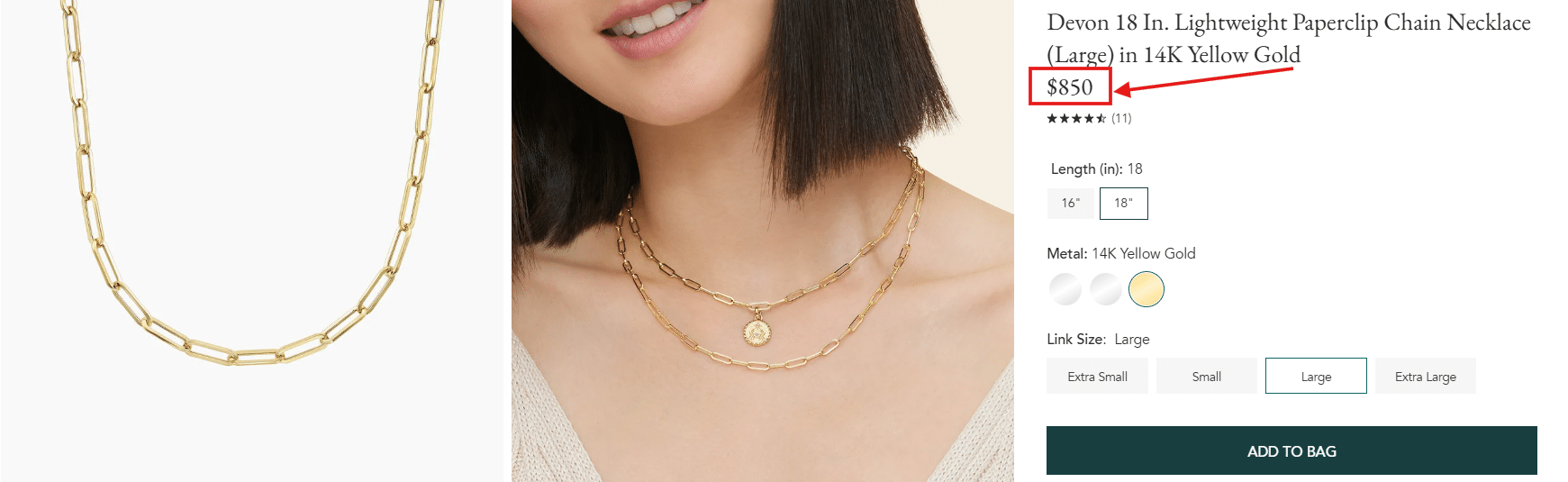
Explore similar link necklaces
Matching Chain to Pendant Weight
Pendant Weight | Minimum Chain Width | Recommended Chain Types |
Very Light (under 2g) | 1mm+ | Any sturdy design |
Light (2-5g) | 1.5mm+ | Cable, box, rope |
Medium (5-15g) | 2mm+ | Cable, box, rope, wheat |
Heavy (15-30g) | 3mm+ | Rope, wheat, curb |
Very Heavy (30g+) | 4mm+ | Wheat, curb, thick rope |
Always err toward stronger chains when uncertain. A slightly thick chain looks better than a broken pendant on the floor.

Minimal Bezel Set Diamond Pendant in 14K White Gold
Chain Length Considerations for Pendants
Chain length affects both pendant positioning and weight distribution.
Length | Pendant Position | Best For |
16″ | At collarbone | Small pendants, choker styling |
18″ | Just below the collarbone | Most pendant sizes are versatile |
20″ | Upper chest | Medium to large pendants |
22″ | Mid-chest | Statement pendants, layering |
24″+ | Lower chest | Large pendants, dramatic looks |
Longer chains create more pendant movement, increasing stress on chain connections. Heavier pendants on longer chains require proportionally stronger construction.
For detailed length guidance, see our chain necklace length guide.

Aquamarine Diamond Halo Necklace – Add to Cart
Pendant Bail Compatibility
The bail (loop connecting pendant to chain) must work with your chosen chain type:
Open Bails
Simple loops that slide onto chains. Works with most chain types but may catch on decorative links.
Tube Bails
Cylindrical tubes through which chains thread. Require chains thin enough to pass through the tube diameter.
Fixed Bails
Permanently attached loops. The chain must fit through the opening. Check dimensions before purchasing.
Enhancer Bails
Hinged bales that open to clip onto chains. Most versatile, but adds bulk to the pendant’s appearance.
Compatibility tip: When buying chains for existing pendants, bring the pendant to compare bail fit before purchasing.

Luxury 2.00 CT Lab-Grown Diamond Pendant
Signs Your Chain Is Wrong for Your Pendant
Watch for these warning indicators:
Stretching
The chain appears longer than when purchased. Links have permanently elongated under pendant weight. Replacement is needed before breakage occurs.
Link Gaps
Individual links show gaps where they should be closed completely. Pending failure, stop wearing immediately.
Kinking
Permanent bends that will not straighten. Common in snake and herringbone chains. Usually irreparable.
Clasp Strain
The clasp area shows unusual wear or deformation. Pendant weight may be stressing the clasp beyond its capacity.
Discolouration at Bail Contact
Unusual wear patterns where the pendant bail contacts the chain. Friction is damaging the chain, considera different chain type.

Sparkling Lab-Grown Diamond Halo Pendant – Add to Cart
Quality Considerations for Pendant Chains
Metal Selection
14K Gold: Optimal balance of strength and appearance for pendant chains. Higher alloy content provides durability without sacrificing beauty.
18K Gold: Suitable for lighter pendants with careful wear. Softer than 14K, monitor for stretching with heavier pieces.
Gold-filled: Excellent budget alternative with good durability. Thick gold layer handles pendant wear well.
Gold-plated: Avoid for valued pendants. Plating wears quickly at high-friction bail contact points.
Construction Quality
Soldered links: Links welded closed provide maximum strength. Essential for heavy pendant support.
Open links: Unsoldered links may open under stress. Avoid for anything beyond very light pendants.
Clasp quality: Lobster clasps provide security for pendant chains. Spring rings work for lighter pieces but may open under strain.

Add this layered gold set to your look
Case Study: Maria’s Pendant Chain Journey
Maria, a 45-year-old nurse from Phoenix, learned pendant chain selection through a difficult experience:
“My mother left me a beautiful gold cross pendant, a substantial piece, probably 20 grams. I put it on a delicate 1.5mm cable chain I already owned because it looked elegant together.
Three weeks later, the chain broke during my shift. The pendant fell somewhere in the hospital; I never found it. Losing my mother’s cross devastated me far more than losing expensive jewellery normally would.
After grieving, I found an identical cross through an estate jewellery dealer. Cost me $800, but having my mother’s piece back (or its twin) mattered more than money.
This time I researched properly. A 20-gram pendant needs at least 3mm chain width in a sturdy design. I chose a 3.5mm wheat chain, not as delicate looking as my original choice, but rated for pendants up to 35 grams.
That was three years ago. I wear the cross daily, including 12-hour nursing shifts with constant movement. The wheat chain shows zero wear. The pendant hangs perfectly. No anxiety about losing it again.
My advice: never prioritise aesthetics over function for pendant chains. A slightly heavier chain that keeps your pendant safe beats a delicate chain that drops it forever. Learn from my mistake, I paid $800 to learn this lesson.”
Video Resource about Gold Chain Types for Pendants
For visual guidance on pendant chain selection: