

SI1 (Slightly Included 1) is the last clarity grade on the GIA scale, where eye-clean diamonds are commonly found. Inclusions are noticeable under 10x magnification but invisible in normal wear for most round brilliant stones under 1.5 carats. Eye-clean status is not guaranteed by the grade alone; inclusion location, type, color, and diamond shape determine whether a specific stone passes the unaided-eye test.

G or H color paired with SI1 clarity represents the most common buyer combination. It delivers excellent real-world appearance at 18–25% less than VS2 at the same carat weight. Finding a genuinely eye-clean SI1 requires viewing per-stone 360° video; the grade on a certificate alone tells you nothing about what you will actually see.
“At Kay and Zales, staff described SI1 as ‘borderline’ to move buyers toward VS2. That framing was deliberate, and it cost buyers hundreds of dollars they didn’t need to spend.”,Juli Church, Certified Diamondologist, 6+ years, Kay and Zales
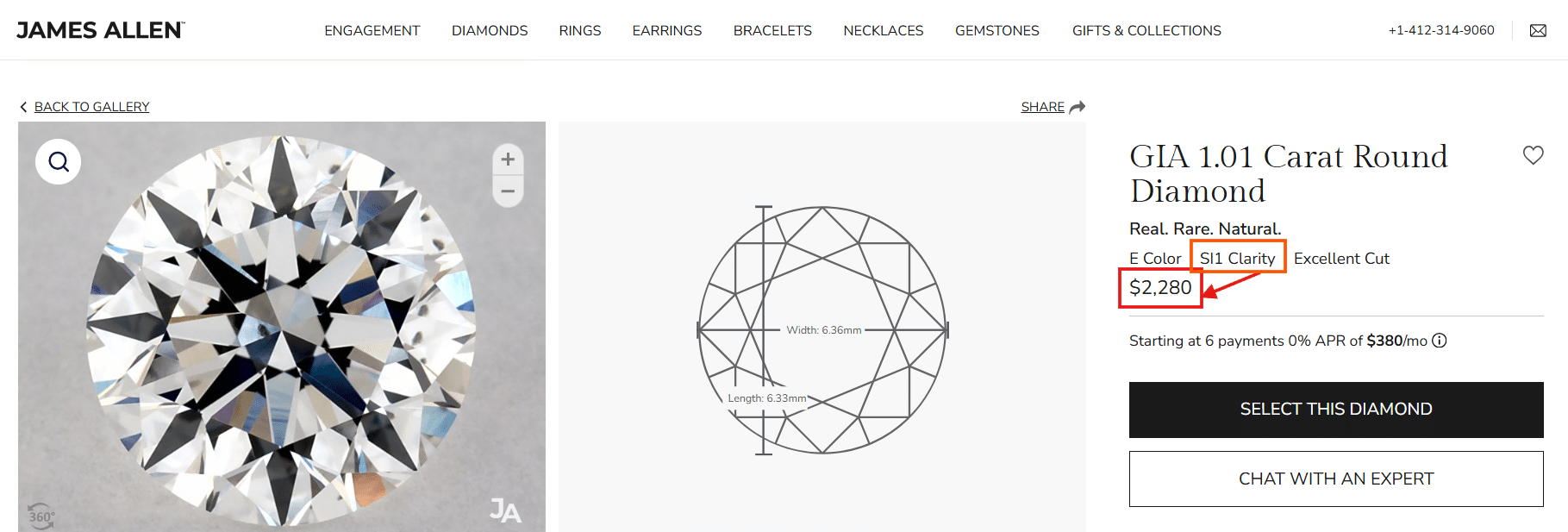
What SI1 Clarity Means on a GIA Grading Report
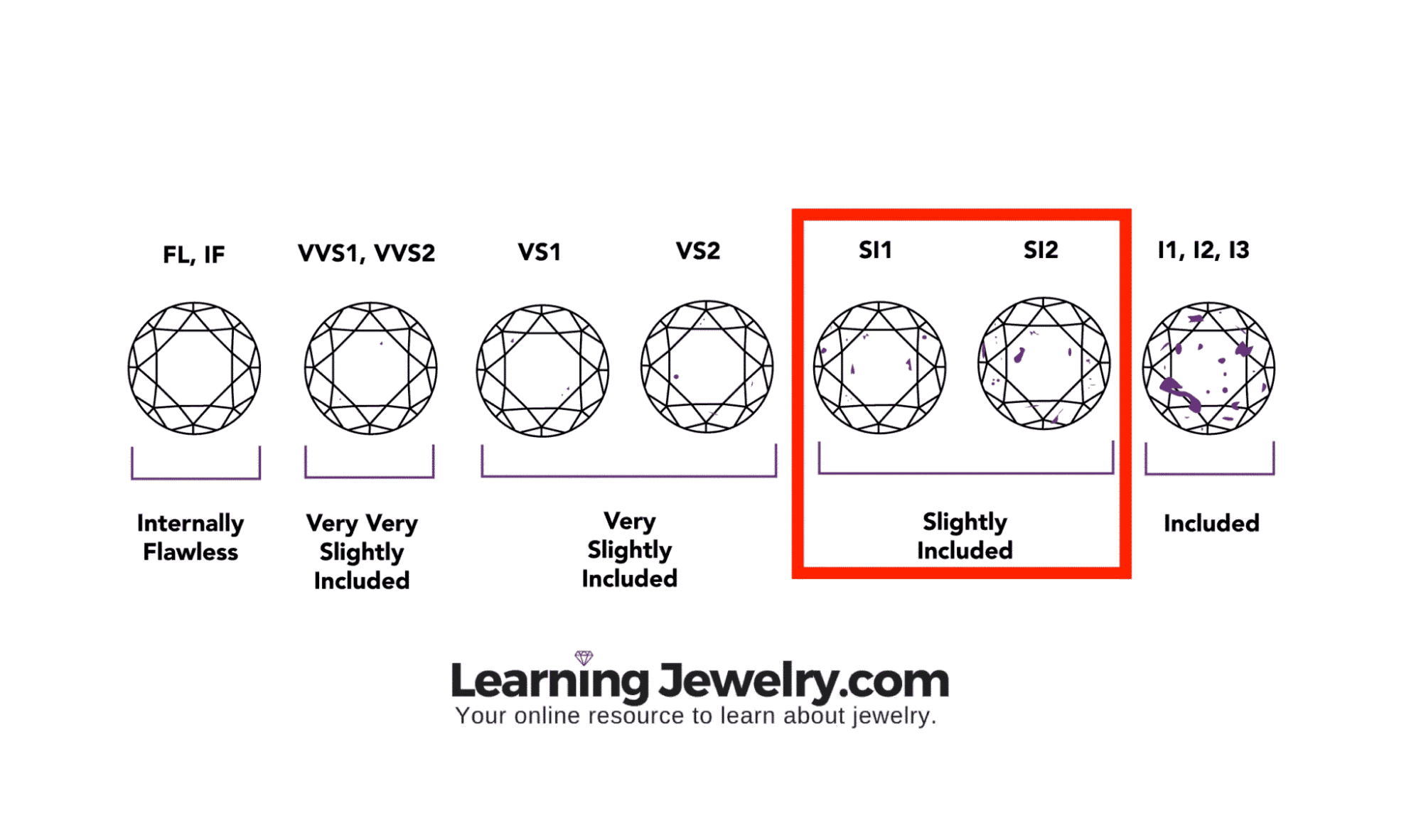
SI1, Slightly Included 1, sits at position seven on GIA’s eleven-point clarity scale. It falls directly above SI2 and below VS2. A trained grader can locate its inclusions easily under standard 10x magnification.
The full GIA clarity scale: FL → IF → VVS1 → VVS2 → VS1 → VS2 → SI1 → SI2 → I1 → I2 → I3
SI1 is the last grade where eye-clean stones are commonly found. Below SI1, finding a visually clean stone gets harder fast. Below I1, visible inclusions are essentially guaranteed.
Grade | Inclusions at 10x | Eye-Clean Status | Price vs SI1 |
VS1 | Difficult to locate | Always | +25–35% |
VS2 | Minor, easy at 10x | Always | +18–25% |
SI1 | Noticeable at 10x | Usually | Baseline |
SI2 | Easy at 10x, sometimes naked eye | Sometimes | −10–15% |
I1 | Obvious, often naked eye | Rarely | −25–40% |
The full diamond clarity chart from FL to I3 shows how every grade sits within the complete scale, and what each step costs.

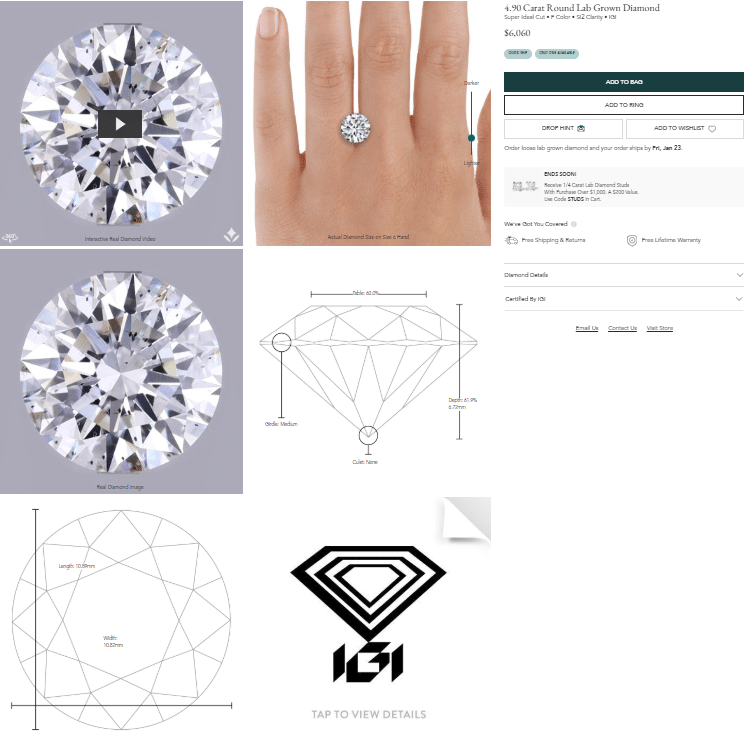
Add this 1.31 carat diamond today
Are SI1 Diamonds Eye-Clean? The Honest Probability
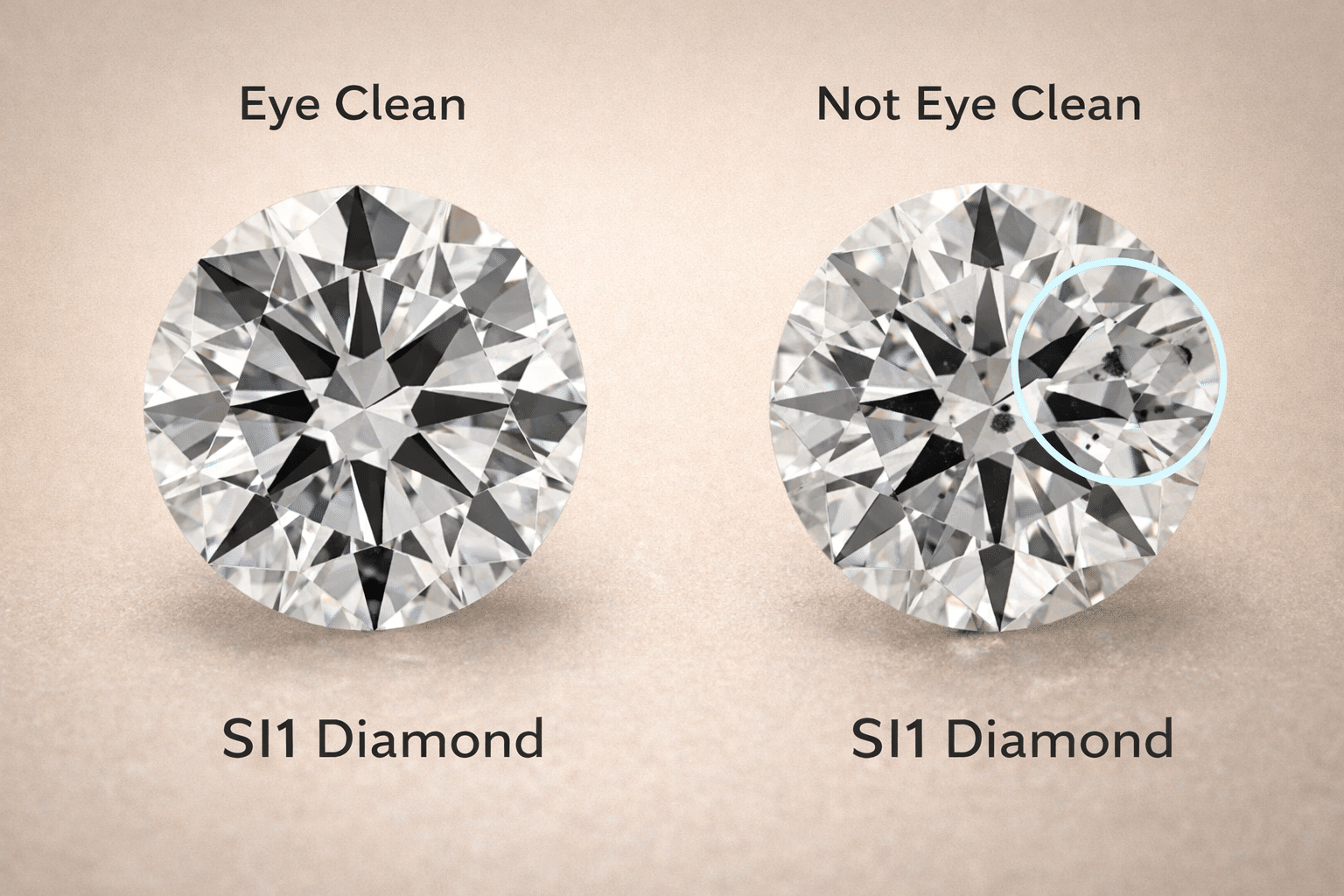
Most SI1 diamonds are eye-clean in round brilliant cuts under 1.5 carats. “Most” is not “all.” The grade on a GIA certificate tells you nothing about what the specific stone actually looks like.
Google’s AI Overview states: “Nearly half of SI1 diamonds appear completely clean to the naked eye.” That number undersells it for round brilliants and oversells it for step cuts. Five variables determine whether a specific SI1 stone passes the naked-eye test.
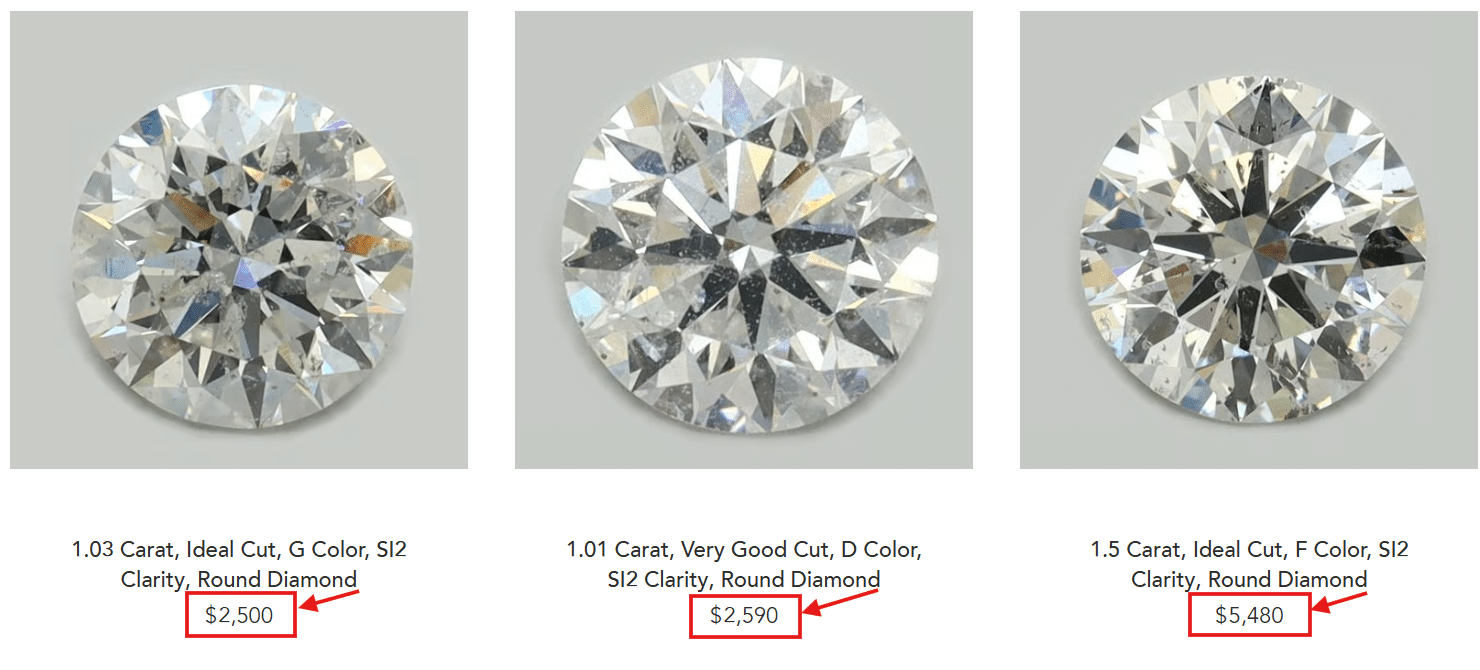
The five variables that decide eye-clean status:
Inclusion location is the most important factor. Inclusions near the girdle edge can hide under prong settings. Inclusions centered under the table facet have nowhere to go. Any SI1 stone with a dark inclusion centered under the table is high-risk.
Inclusion color matters just as much. White or transparent inclusions, clouds, needles, scatter into the stone’s light return and disappear. Black or dark crystal inclusions absorb light. They show as visible spots. Reject any stone with dark inclusions regardless of where they sit.
Inclusion type changes visibility. Feathers and clouds disperse visually under facets. Single crystals and knots concentrate visual contrast. A scattered cloud of pinpoints often reads cleaner than one medium-sized crystal in the same position.
A smart choice for modern buyers
The diamond shape is the factor most buyers underestimate. Round brilliants have 58 facets. Light breaks into thousands of reflection paths. Inclusions scatter and disappear. Emerald and Asscher cuts have large, flat facets that work like windows into the stone. Inclusions have nowhere to hide.
Cut quality creates the masking effect. Excellent cut grades return more light. More light return means more brilliance, and more effective hiding of minor inclusions. A well-cut SI1 consistently outperforms a poorly-cut VS2 in real-world appearance.
Eye-clean probability by shape, with the mechanism:
Shape | Eye-Clean Likelihood | Why |
Round brilliant | High | 58 facets scatter inclusions into the light return |
Princess | High | Brilliant faceting disperses inclusions effectively |
Cushion | Moderate–High | Depends on facet pattern (brilliant vs. modified) |
Oval | Moderate | The bow-tie effect can make inclusions more apparent |
Pear | Moderate | Pointed tip draws visual attention toward edge inclusions |
Emerald | Low | Open flat facets act as inclusion windows |
Asscher | Low | Step-cut structure exposes inclusions at 1ct+ |
Juli’s call: “I watched buyers walk out of Kay with SI1 emerald cuts that had visible inclusions they’d only discover at home. The staff knew. The 360° video that online retailers provide would have shown it in 30 seconds.”
Compare today’s prices & explore the latest designs
Is G Color and SI1 Clarity a Good Diamond Combination?
G color paired with SI1 clarity is the most practical combination for buyers, maximizing carat size and cut quality. G color reads colorless in most settings. SI1 in a round brilliant delivers eye-clean appearance at a budget that VS2 or VS1 cannot match at the same carat weight.
This is the combination most buyers encounter when filtering James Allen or Blue Nile at the 1-carat mark. It is also the combination of chain stores that actively discouraged buyers from considering.

See today’s prices & discover the newest designs
G color vs H color, what actually changes with SI1:
G color sits one step below colorless (D–F). It reads white facing up in almost all settings. Yellow gold masks its slight warmth entirely. In white gold or platinum, a G color at 1ct looks fully colorless.
H color is warmer than G but still faces up white in yellow gold settings. H/SI1 saves an additional 8–12% over G/SI1 at the same carat weight and cut. In yellow gold, H/SI1 is a strong value pairing. In white gold at 1ct, G/SI1 is the safer choice.
The G and H combination with SI1:
Combination | Setting | Eye-Clean | Savings vs G/VS2 |
G/SI1 + Excellent cut | Yellow gold | High (round brilliant) | 18–25% |
G/SI1 + Excellent cut | White gold/platinum | Moderate–High (1ct round) | 18–25% |
H/SI1 + Excellent cut | Yellow gold | High (round brilliant) | 25–32% |
H/SI1 + Excellent cut | White metal | Moderate (1ct, round only) | 25–32% |
G/SI1 or H/SI1 | Any setting | Low | Do not use in emerald or Asscher |
The complete diamond buying guide, how to choose between G, H, and F color at your budget, covers every 4C interaction in detail.
Juli’s call: “G/SI1 was the combination I pointed budget-conscious buyers toward when they needed to reach 1.25ct without VS2 money. In a yellow gold solitaire with Excellent cut, that stone looks as clean as anything on the shelf at twice the price. The staff next to me would never say that.”

SI1 Diamond Price at 1 Carat, What You Actually Pay in 2026
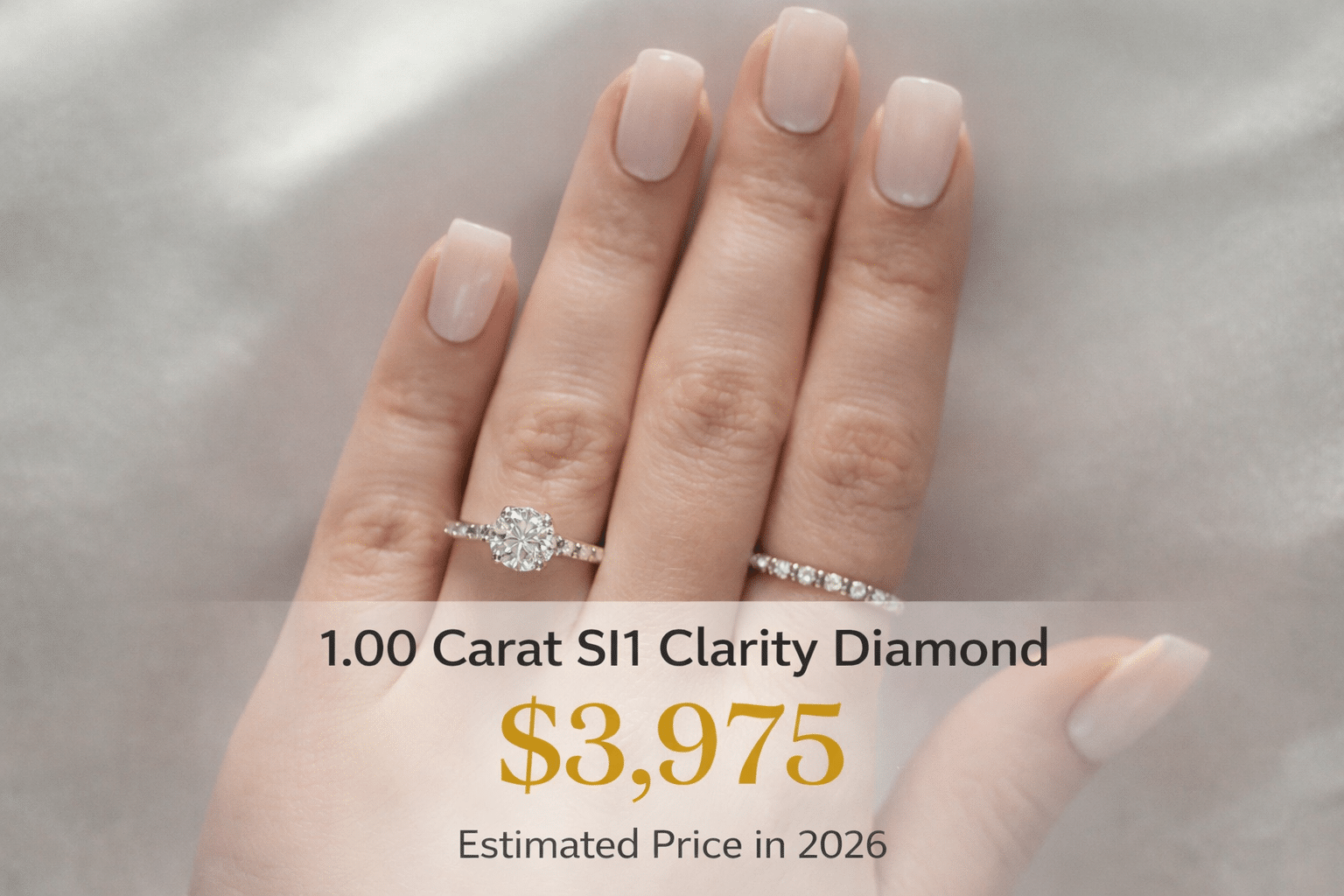
A 1-carat G color SI1 diamond with Excellent cut costs $3,500–$7,500 at major online retailers in 2026. That is 18–25% less than VS2 at the same specifications, with no visible difference in normal wear for round brilliants.

See how a classic solitaire looks at today’s price
Natural diamond pricing (G color, Excellent cut):
Carat | SI1 Price Range | VS2 Price Range | SI1 Savings |
0.50ct | $900–$2,000 | $1,100–$2,400 | 15–20% |
1.00ct | $3,500–$7,500 | $4,500–$9,000 | 18–22% |
1.50ct | $6,500–$13,000 | $8,500–$16,000 | 20–25% |
2.00ct | $11,000–$22,000 | $14,000–$28,000 | 20–25% |
Lab-grown SI1 pricing (IGI certified, G color, Excellent cut):
Carat | Lab SI1 | Natural SI1 | Lab Savings |
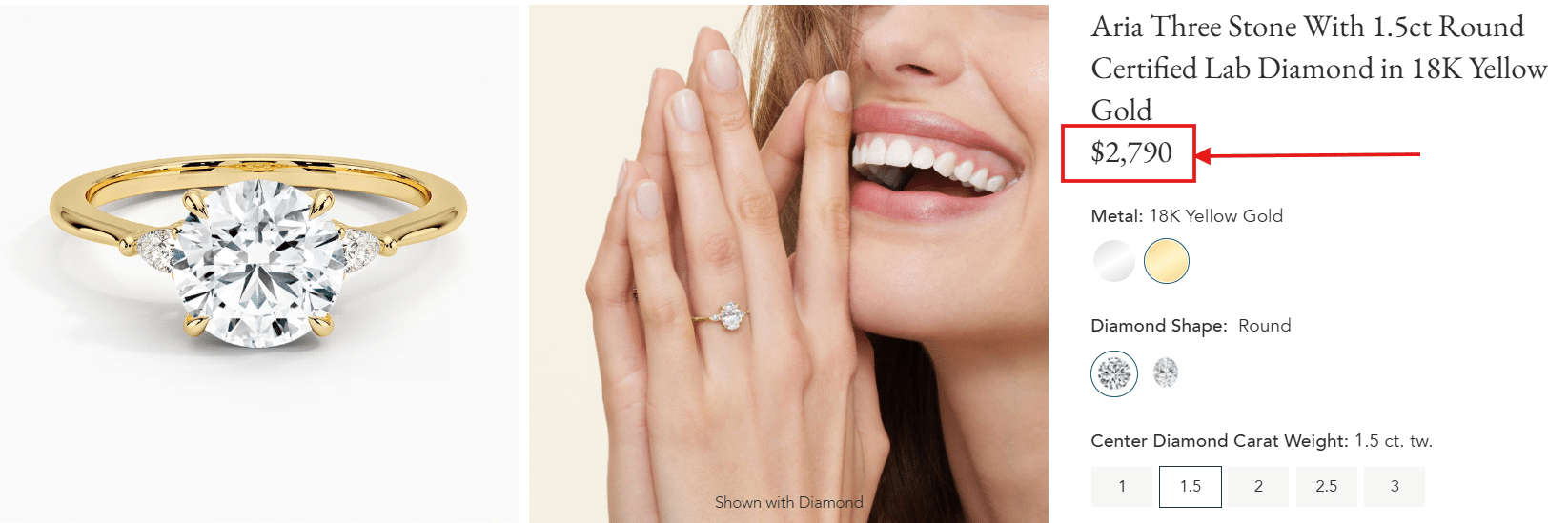
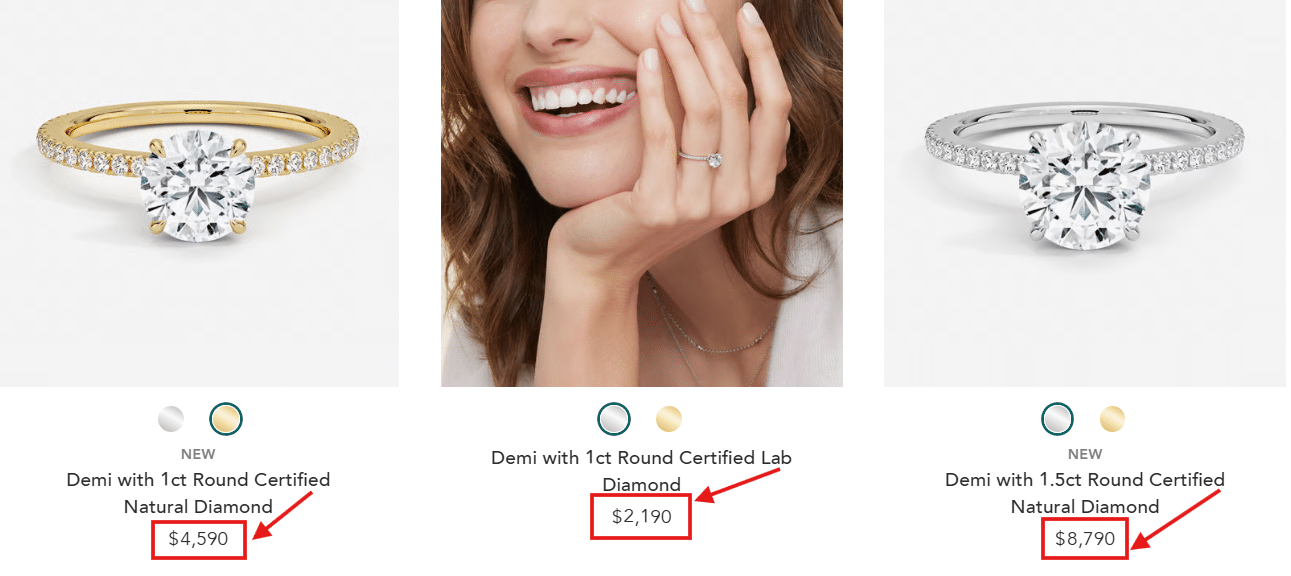
1.00ct | $800–$1,800 | $3,500–$7,500 | ~75% |
1.50ct | $1,200–$2,800 | $6,500–$13,000 | ~80% |
What $1,000–$1,500 saved from VS2 actually buys:
- 0.15–0.20ct additional carat weight at the same budget
- A cut upgrade from Very Good to Excellent
- A setting upgrade from plain solitaire to pavé band
All three changes are visible. The VS2 clarity upgrade over SI1 is not, in round brilliants under 1.5ct.
Carat weight and risk: SI1 inclusions become proportionally more visible in round brilliants above 1.5ct as the stone face-up diameter grows. Above 2ct, VS2 provides meaningful protection. Below 1.5ct, well-positioned SI1 inclusions stay invisible at any normal viewing distance.
How to Find an Eye-Clean SI1 Diamond, The James Allen Method
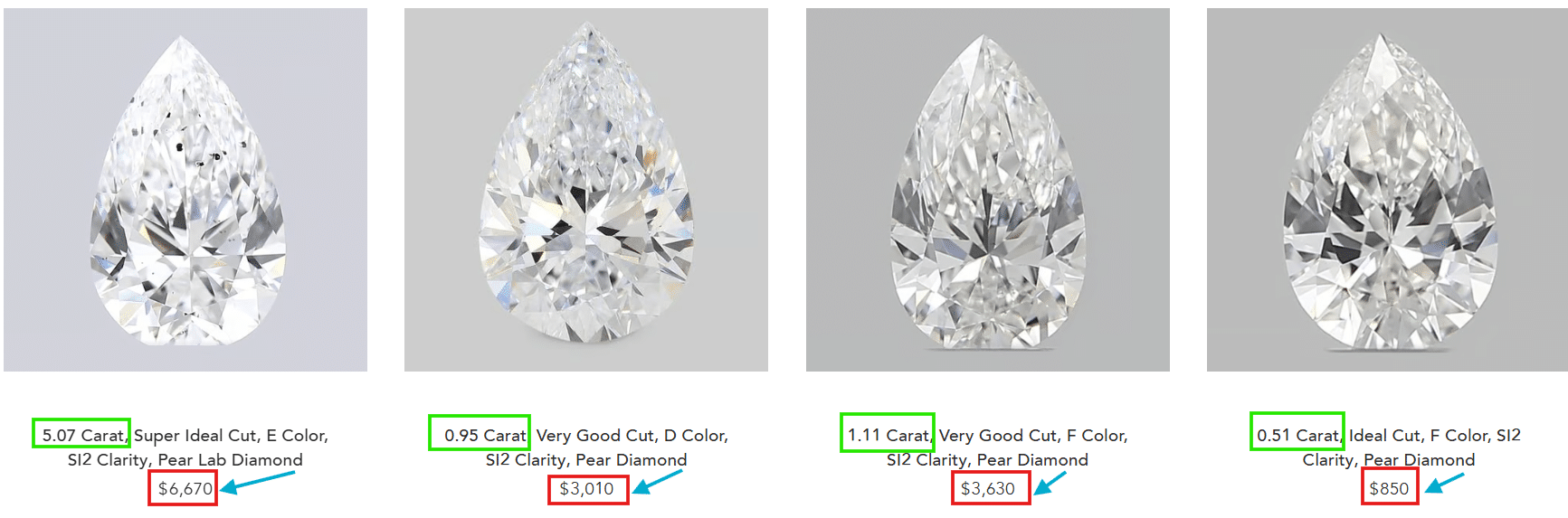
Finding an eye-clean SI1 diamond requires a per-stone 360° video evaluation. No certificate, grading plot, or retailer description substitutes for seeing the specific stone at 20x magnification, then zooming out to verify at normal viewing scale.

The five-step SI1 evaluation process:
Step 1: Filter by SI1 clarity + Excellent cut + G or H color + your target carat range. This eliminates stones that fail cut and color before you examine a single individual stone.
Step 2: Open the 360° viewer. Zoom to 20x. Look for the inclusion location first, not size. Edge inclusions near the girdle are low-risk. Table-centered inclusions are high-risk.
Step 3: Check inclusion color. White or transparent inclusions scatter into brilliance and disappear. Dark or black inclusions concentrate contrast. Reject any stone with dark inclusions regardless of position.
Step 4: Zoom out to normal viewing scale. A 1ct round brilliant measures approximately 6.5mm face-up. If the inclusion disappears at that scale, you have an eye-clean stone.
Step 5: Cross-reference the GIA clarity plot on the certificate with what you see in the video. If the plot shows a table-centered inclusion you cannot locate in the video, zoom back in at that marked position before confirming.
Prong placement advantage: When your chosen setting uses 4 or 6 prongs, mention the inclusion position to the retailer. Prongs placed over the girdle-edge inclusions cover them permanently. A borderline SI1 stone in a mounted prong setting often becomes fully eye-clean.
Metal color interaction: Yellow gold warms the stone visually and reduces apparent inclusion contrast. A borderline SI1 stone in a yellow gold solitaire reads cleaner than the same stone in a white gold or platinum setting. White metal removes all color masking; it is the most demanding context for any SI1 stone.
Juli’s call: “The chain store floor had no 40x zoom video for every stone. Buyers couldn’t verify what they were paying for. That’s the entire reason online retailers changed the SI1 equation; you can now see exactly what you’re purchasing before spending a dollar.”
SI1 vs VS2 vs SI2, Which Grade Fits Your Budget?
VS2 guarantees eye-clean status without per-stone evaluation. SI1 delivers the same result in most round brilliants at 18–25% less. SI2 requires the most careful selection but offers the largest per-carat savings when a genuine eye-clean stone is found.
Factor | SI2 | SI1 | VS2 |
Eye-clean: round brilliant | Sometimes | Usually | Always |
Eye-clean: emerald/Asscher | Rarely | Low | Moderate |
Per-stone evaluation needed? | High effort | Moderate | Minimal |
Price vs VS2 | −25–35% | −18–25% | Baseline |
Best buyer profile | Maximum value + patience | Value + moderate effort | Peace-of-mind |
The VS2 vs SI1 choice is not a quality decision for round brilliants under 1.5ct. Both grades produce stones that look identical in mounted settings under normal lighting. VS2 eliminates selection risk. SI1 rewards buyers willing to spend 20 minutes on per-stone evaluation with $800–$2,000 in savings.
Reddit r/Diamonds consensus (high-upvote thread): “For clarity, SI1/VS2 is the sweet spot for price. The signal-to-noise ratio of finding an eye-clean stone in SI2 is too low.” SI1 is the practical value ceiling. VS2 is the guarantee ceiling.
When SI1 Is the Wrong Clarity Choice, Juli’s Warning List
SI1 fails as a clarity choice in four specific scenarios: step-cut shapes at any carat weight, round brilliants above 2ct, white metal settings with low cut quality, and any purchase made without per-stone video verification.
Do not buy SI1 in these situations:
Emerald or Asscher cuts, large flat facets expose inclusions that round brilliants would mask. VS2 is the practical minimum for step cuts. VS1 is the safer floor above 1.5ct.
Round brilliants above 2ct, the face-up diameter exceeds 8mm. Inclusions are proportionally more visible at this size. VS2 is the recommended clarity floor above 2ct in any shape.
Without a 360° video, buying SI1 from a certificate alone is the single decision that generates buyer regret. The grade range is wide. Individual stone evaluation is not a suggestion. It is the entire method.
Pavé or channel settings with low cut quality, surrounding diamonds do not mask a center stone’s inclusions. Poor cut reduces brilliance masking. In this combination, SI1 inclusions that would disappear in an Excellent-cut solitaire can become visible.
Juli’s call: “The buyers who regretted SI1 had one thing in common, they bought from a certificate. The buyers who were happy verified the stone first.”
What “SI1 Real or Fake” Actually Means, Certificate Verification
SI1 is a real GIA clarity grade. The accuracy of that grade depends entirely on which laboratory issued the certificate. Not all certificates on SI1 stones in chain stores carry the same standards as GIA.
The query “si1 diamond real or fake” comes from buyers who received a certificate they cannot verify. This is not about natural vs lab-grown. It is about whether the SI1 grade reflects GIA or IGI standards, or a loser in-house grading system.
Certification | SI1 Standard | Reliability |
GIA | Most conservative, genuinely slightly included | Highest |
IGI | Marginally less conservative than GIA | High (lab-grown standard) |
AGS | Equivalent to GIA | High |
EGL, HRD, in-house | Significantly looser, SI1 may equal GIA I1 in practice | Avoid |
Juli’s retail floor signal: “I saw chain store stones graded by labs I’d never heard of, sold at SI1 prices with I1-level inclusions by any GIA standard. The certificate looked official. Buyers had no way to know.”
How to verify: Look for the lab name at the top of the certificate. GIA certificates carry a report number verifiable at gia.edu. IGI certificates are verified at igiworldwide.com. Any certificate without a verifiable report number from a recognized lab should be treated as unconfirmed.
Juli Church’s Verdict on SI1
SI1 clarity delivers genuine eye-clean results in most round brilliant diamonds under 1.5 carats. The grade is not a compromise. It’s a strategy, and buyers who verify individual stones consistently get more diamond for their money without sacrificing anything visible.
The decision is straightforward:
- Round brilliant under 1.5ct → verify SI1 with 360° video,high probability of eye-clean result
- Any step cut (emerald, Asscher) → VS2 minimum, VS1 above 1.5ct
- Above 2ct in any shape → VS2 is the clarity floor
Juli’s closing call: “If someone sat across from me today and asked what to buy at $5,000 for a 1ct round brilliant, G, SI1, Excellent cut, James Allen viewer confirmed. That’s the answer I gave buyers when I wasn’t standing on a sales floor with a quota.”
LearningJewelry.com exists to give buyers the information that chain store training programs are designed to suppress.
Ready to apply this framework? The complete diamond buying guide, every 4C explained with budget-first frameworks, covers the full decision from clarity to cut to carat. For a grade-by-grade visual reference, the full diamond clarity chart from FL to I3 shows exactly where SI1 sits, and what each upgrade above it actually costs.
Frequently Asked Questions About SI1 Diamond Clarity
Q1: What does “VS2/SI1 clarity” mean when I see both grades listed together?
Some retailers list a clarity range rather than a single grade. “VS2/SI1” means the retailer is offering stones within that band as a category. A GIA or IGI certificate always shows one specific grade. If a retailer lists a range, request the individual stone’s grading report before evaluating. A certified VS2 and a certified SI1 are priced and graded differently.
Q2: Can you see SI1 inclusions without a magnification tool?
In most round brilliant diamonds under 1.5ct with well-positioned inclusions, no. A trained gemologist under controlled lighting at close range may detect certain inclusions in borderline SI1 stones. The critical variable is inclusion position. Table-centered inclusions are more likely to be visible than girdle-edge inclusions in any lighting condition.
Q3: Is SI1 clarity good for a 1.5-carat diamond?
SI1 remains viable at 1.5ct in round brilliants, but requires more careful per-stone selection than at 1ct. The larger face-up diameter (approximately 7.4mm vs 6.5mm at 1ct) makes inclusions proportionally more apparent. At 1.5ct, prioritize light-colored inclusions positioned near the girdle. Above 2ct, VS2 is the recommended clarity floor.
Q4: Does SI1 clarity affect a diamond’s sparkle?
SI1 clarity has no direct effect on sparkle or light return. Brilliance comes from cut quality, proportions, symmetry, and polish. A well-cut SI1 outperforms a poorly-cut VS1 in every light condition. Excellent cut quality produces the brilliance that masks SI1 inclusions most effectively. Budget toward cuts before clarity upgrades.
Q5: How do lab-grown SI1 diamonds compare to natural SI1 in appearance?
The appearance is identical for equivalent cut quality and color. SI1 in lab-grown and natural diamonds refers to the same GIA/IGI grading standard. Lab-grown SI1 stones may have slightly different inclusion types,growth-related characteristics vs mineral crystals in natural stones, but neither type is visible in normal wear. Price difference: lab-grown SI1 costs 75–80% less than natural SI1.
Q6: Is there a difference between GIA SI1 and IGI SI1?
Yes, in practice. GIA is the most conservative and consistent grading standard. A GIA SI1 stone is genuinely slightly included by the strictest interpretation. IGI applies the same grade labels but grades marginally less conservatively, meaning an IGI SI1 may have slightly more visible inclusions than a GIA SI1 on paper. For natural diamonds, GIA is the higher-reliability standard. For lab-grown, IGI is the accepted industry benchmark.
Q7: Why do jewelry stores steer buyers away from SI1?
Chain store sales staff are trained to position SI1 as “borderline” clarity. That framing moves buyers toward VS2 and VS1, which carry higher margins. “Borderline” has no basis in GIA grading standards. SI1 is a clearly defined grade where most round brilliant diamonds achieve eye-clean status. Online retailers with per-stone 360° video removed the information gap that made this positioning effective.
Q8: Should I choose SI1 or VS2 for a diamond in a pavé setting?
For round brilliant center stones in pavé settings, SI1 remains a viable choice when verified by 360° video. Surrounding pavé diamonds do not mask a center stone’s inclusions, but Excellent cut quality in the center stone still creates sufficient brilliance to hide well-positioned SI1 inclusions. For step-cut center stones in any setting, upgrade to VS2 regardless of surround style.